studio / on-this-day / Dec 11
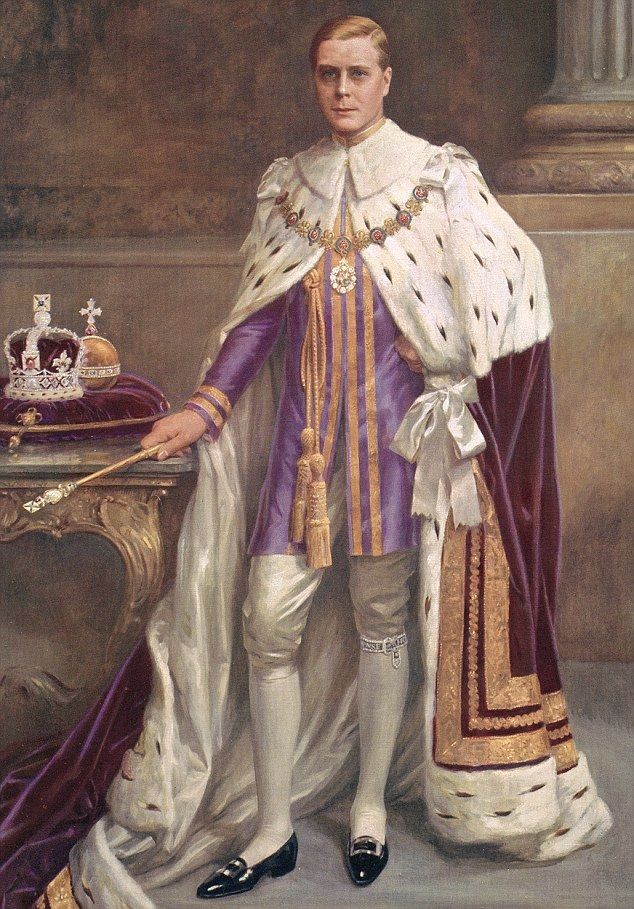
King Edward VIII, official portrait, 1936. Albert H Collings, Public domain, via Wikimedia Commons
The King Who Chose Love
On this day in 1936 — Edward VIII gave up the throne to marry, choosing a single person over an entire system.
3 min read
On December 11, 1936, King Edward VIII of the United Kingdom addressed the nation via radio and announced his abdication. He had been king for 326 days. The reason was simple: he wanted to marry Wallis Simpson, an American socialite who was divorced twice. The British government, the Church of England, and the dominions opposed the marriage. A king could not marry a divorcée and remain head of the Church, which did not recognize divorce. Edward had a choice: marry Wallis or remain king. He chose Wallis. In doing so, he became the first British monarch to voluntarily abdicate since the system was formalized. He traded the crown for the person he loved.
Edward's decision was framed as romantic, and in many ways it was. His radio address included the line: "I have found it impossible to carry the heavy burden of responsibility and to discharge my duties as king as I would wish to do without the help and support of the woman I love." It was a public declaration of personal priority over institutional duty. The monarchy is not a job you quit. It's a role you inherit and occupy until death. Edward broke that expectation. He treated the throne as negotiable, something you could walk away from if the terms were unacceptable.
But the abdication was also a constitutional crisis. Britain's government is structured around a constitutional monarchy. The king is head of state, but power rests with Parliament and the Prime Minister. Edward's desire to marry Wallis created a conflict between personal will and constitutional framework. Prime Minister Stanley Baldwin made it clear: if Edward married Wallis, the government would resign, triggering a political collapse. Edward could have fought, but he didn't. He abdicated, and his younger brother, Albert, became King George VI. The system adapted, continuity was preserved, and Edward left for exile.
What makes the abdication interesting from a design perspective is how it tested the monarchy's fault tolerance. Systems have rules, constraints, and failure modes. The British monarchy is a system designed to survive individual actors. Kings die. Heirs are unprepared. Scandals emerge. The system has mechanisms to absorb disruption: regents, councils, abdication procedures. Edward's choice triggered those mechanisms. The system bent, reconfigured, and continued. George VI, who never expected to be king, took the throne and led Britain through World War II. His daughter, Elizabeth II, became one of the longest-reigning monarchs in history. Edward's abdication, which seemed catastrophic in 1936, became a footnote.

Wallis Simpson, 1936. White House Photo Office, Public domain, via Wikimedia Commons
Edward's life after abdication was anticlimactic. He was given the title Duke of Windsor. He married Wallis in France in 1937. They lived in exile, mostly in France, and were largely excluded from royal life. During World War II, Edward's sympathies toward Nazi Germany became a liability. He was appointed Governor of the Bahamas, a role that kept him far from Europe and politically irrelevant. After the war, he and Wallis lived quietly, hosting parties and traveling. He died in 1972. Wallis died in 1986. Neither returned to prominence. The romance that cost him the throne became a long, uneventful marriage.
Historians debate whether Edward's decision was principled or selfish. Some see it as an act of personal integrity: he refused to live a lie. Others see it as dereliction of duty: he abandoned his role because it was inconvenient. The truth is probably both. Edward wanted a life he could control. The monarchy offers power but demands sacrifice. He made a trade. The system survived. The person who made the choice lived with the consequences.
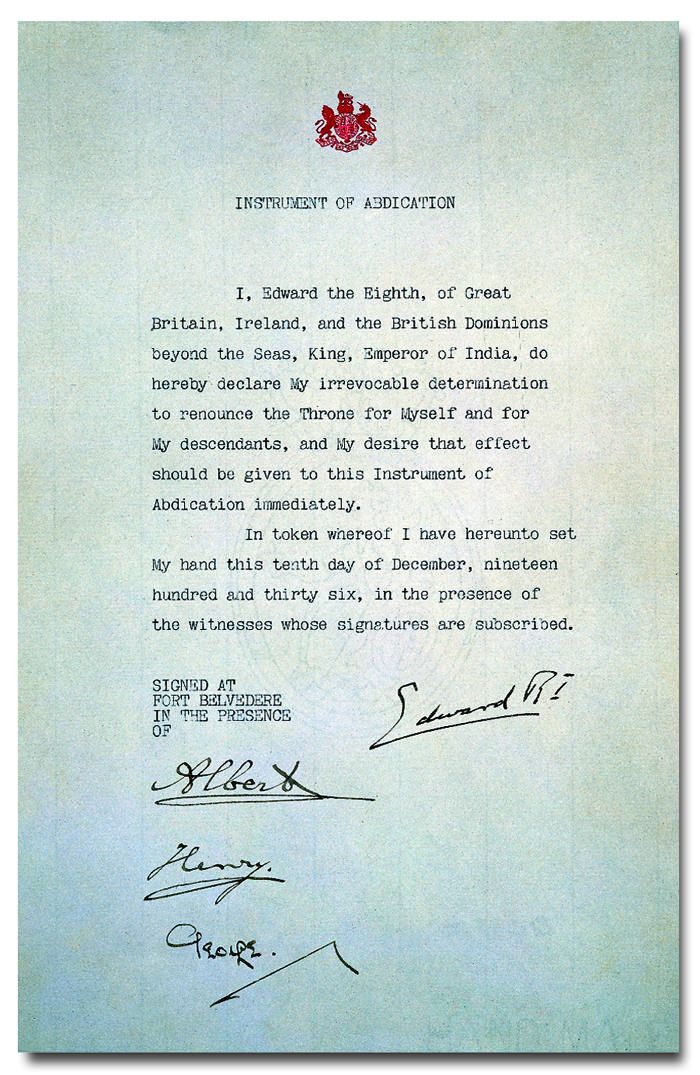
The instrument of abdication, signed by Edward VIII and witnessed by his three brothers. The National Archives UK, Public domain, via Wikimedia Commons
The abdication also highlighted the tension between individual agency and institutional expectations. Systems need people to operate, but they also constrain those people. Edward's abdication was a rare moment when the individual said no to the system. He refused the script. He exited the role. And the system, designed to be resilient, continued without him. From a structural perspective, that's what makes the abdication significant. Not the romance. Not the scandal. But the demonstration that even the most rigid, tradition-bound systems have exit conditions. Edward found his. And the monarchy, designed to outlast individuals, proved once again that it could.
studio / on-this-day / Dec 11