studio / on-this-day / Nov 3
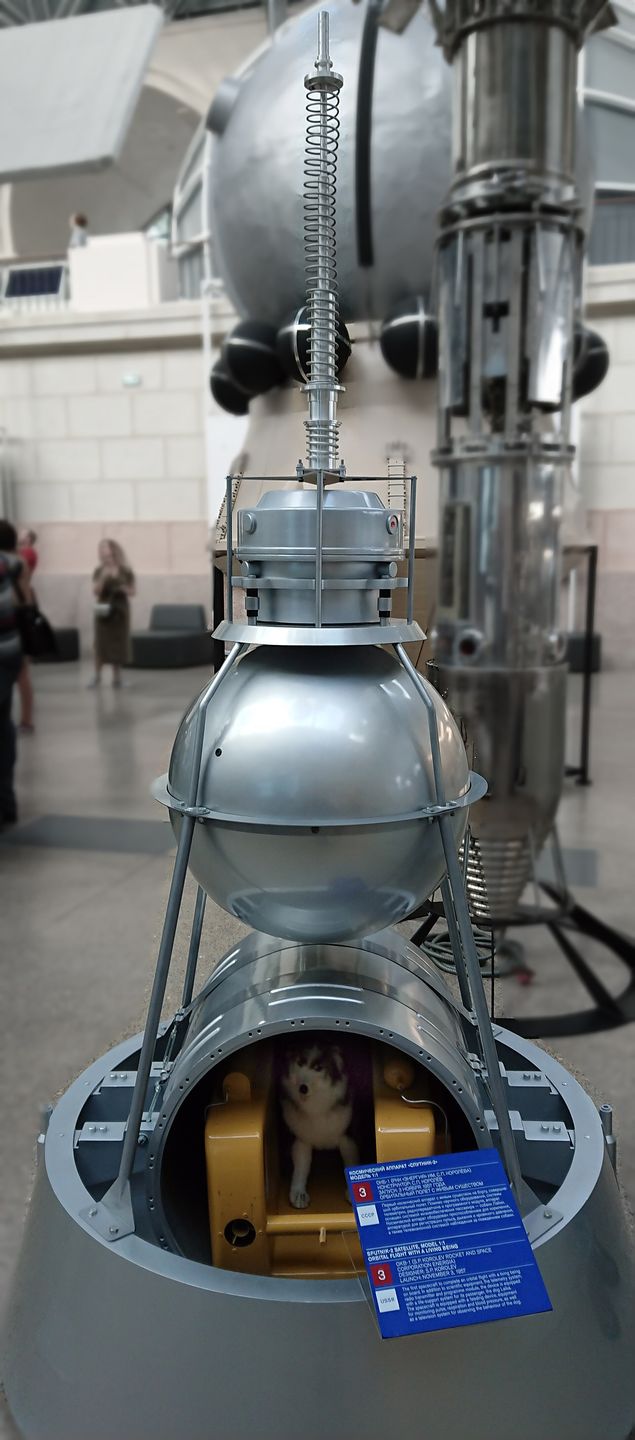
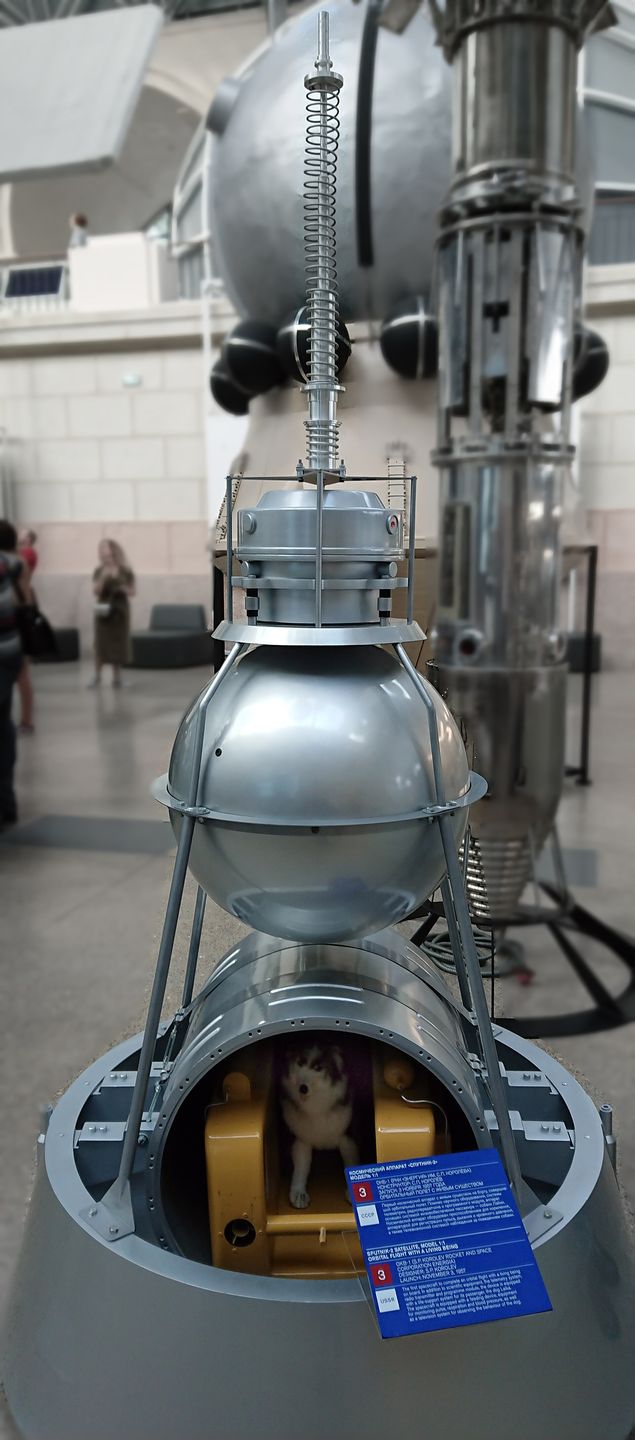
A model of Sputnik 2, the spacecraft that carried Laika into orbit. Stanislav Kozlovskiy, CC BY-SA 4.0, via Wikimedia Commons
The Dog Who Became a Star
On this day in 1957 — the Soviets launched Laika, the first animal to orbit the Earth, on a flight from which she was never meant to return.
3 min read
Laika was a stray dog from the streets of Moscow, part terrier, part husky, weighing about 13 pounds. On November 3, 1957, Soviet engineers strapped her into a capsule the size of a washing machine and launched her into orbit aboard Sputnik 2. She became the first living creature to orbit Earth. She also became the first to die there.
The mission was rushed. Just a month earlier, the Soviet Union had shocked the world by launching Sputnik 1, the first artificial satellite. Premier Nikita Khrushchev wanted another propaganda victory to coincide with the 40th anniversary of the Bolshevik Revolution. Engineers had weeks, not months, to design and build a spacecraft capable of sustaining life. They chose a dog because dogs could be trained to endure confinement and stress. They chose a stray because strays were already accustomed to harsh conditions.
Laika's training was brutal by necessity. She was placed in progressively smaller cages to prepare her for the capsule's tight quarters. She was spun in centrifuges to simulate the violent G-forces of launch. She was fed a gel-like substance that would provide nutrition and hydration in zero gravity. The engineers grew attached to her. One scientist took her home to play with his children before the mission, wanting to give her a few final hours of kindness.
The capsule had no reentry capability. This was known from the start. Laika was always going to die. The official story was that she survived for several days in orbit before her oxygen ran out, dying peacefully. This was a lie. Declassified documents revealed in 2002 that she died within hours, possibly minutes, from overheating and panic. A thermal control system failed shortly after launch, and the cabin temperature soared past 100 degrees Fahrenheit. Her heart rate tripled. She stopped moving.
Soviet stamp commemorating Laika and Sputnik 2. Stanislav Kozlovskiy, CC BY-SA 4.0, via Wikimedia Commons
Laika's death sparked debate about the ethics of using animals in research. The mission succeeded in its primary goal: proving that a living being could survive launch and weightlessness, at least briefly. This data paved the way for Yuri Gagarin's flight in 1961, the first human to orbit Earth and return alive. Laika's sacrifice, intentional or not, was part of the engineering process. You test with something expendable before you risk something irreplaceable.
The Soviet Union launched dozens more dogs into space over the following years. Some returned safely. Belka and Strelka orbited Earth 17 times in 1960 and came home to a hero's welcome. Strelka later had puppies, one of which was given to President Kennedy's children. But Laika remained the most famous, the pioneer, the one whose mission had no return plan.
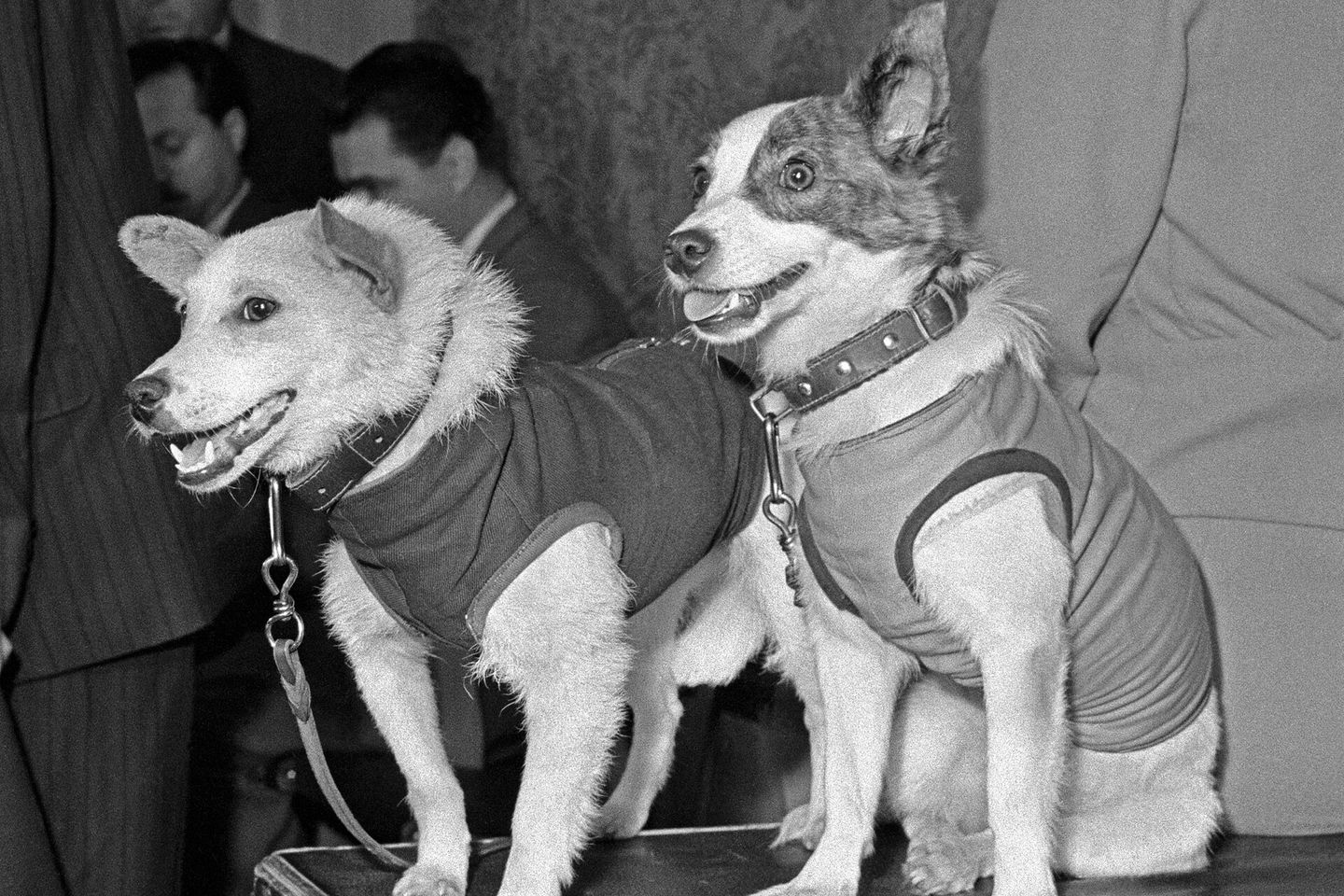
Belka and Strelka, who orbited Earth 17 times in 1960 and came home alive. Музей космонавтики / Главархив Москвы, CC BY 4.0, via Wikimedia Commons
Sputnik 2 stayed in orbit for five months before burning up on reentry in April 1958. Laika's body, frozen and desiccated, disintegrated in the atmosphere along with the spacecraft. There is no grave, no marker, just a plaque at a Moscow research facility and statues in her memory. What remains is the knowledge she helped produce: that life can exist beyond Earth, at least for a while, and that the price of exploration is sometimes paid by those who never chose to go. Laika became the first astronaut the hard way, by being drafted into history and never given a choice to decline.
studio / on-this-day / Nov 3