studio / on-this-day / Nov 2
EMI television camera, 1936. Spudgun67, CC BY-SA 4.0, via Wikimedia Commons
The Beginning of Scheduled Reality
On this day in 1936 — the BBC began the first regular television service, and broadcasting acquired something new: a schedule.
3 min read
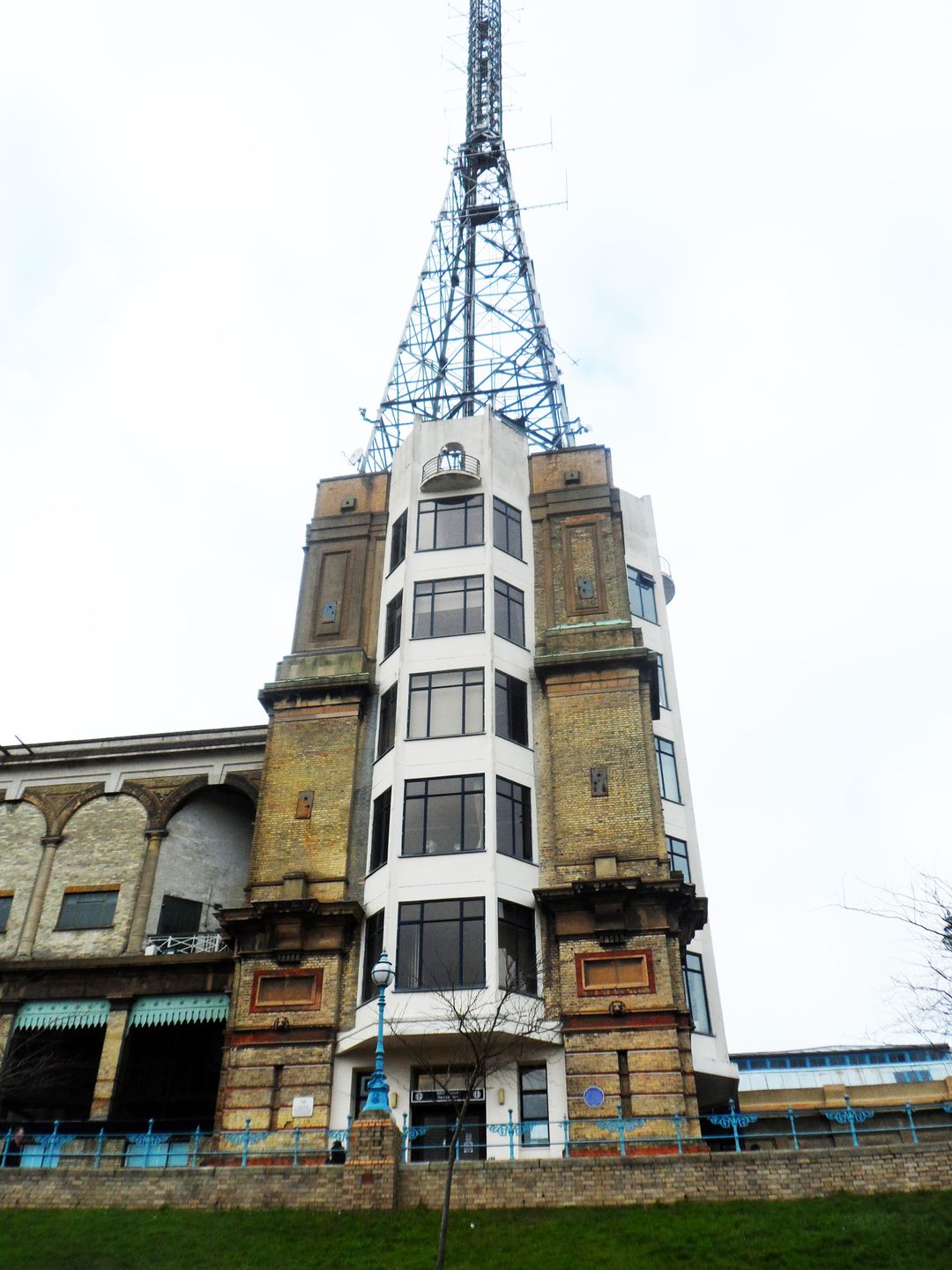
At 3:00 PM on November 2, 1936, the BBC turned on the world's first regular high-definition television service from Alexandra Palace in North London. Television had existed in experimental forms for years, but this was different. This was scheduled. This was daily. This was the beginning of broadcast television as a designed experience, where someone decided what you watched and when you watched it.
The first broadcast opened with a variety show featuring British Movietone News, a speech from the BBC's director, and performances by singers and dancers. The initial transmission reached perhaps a few hundred television sets within a 25-mile radius of the transmitter. Most people still thought of television as a laboratory curiosity, something that might never leave the engineer's bench. The BBC made a bet that it would become a mass medium, and they designed the infrastructure accordingly.
The service alternated between two competing systems: the 240-line Baird system and the 405-line Marconi-EMI system. The BBC broadcast with one system one week, then switched to the other. It was a live A/B test at industrial scale. By February 1937, they settled on the EMI system, which offered better resolution and reliability. The losing Baird system was quietly retired, and television had its first technical standard.
What made this moment significant wasn't just the technology. It was the concept of programming as a designed sequence. The BBC created a schedule, a rhythm to the day. News at certain hours. Variety shows in the evening. The audience didn't control the flow of content. They tuned in at appointed times to receive what had been prepared for them. This was different from radio in one crucial way: television demanded your full attention. You couldn't listen while doing something else. The screen required you to sit and watch.
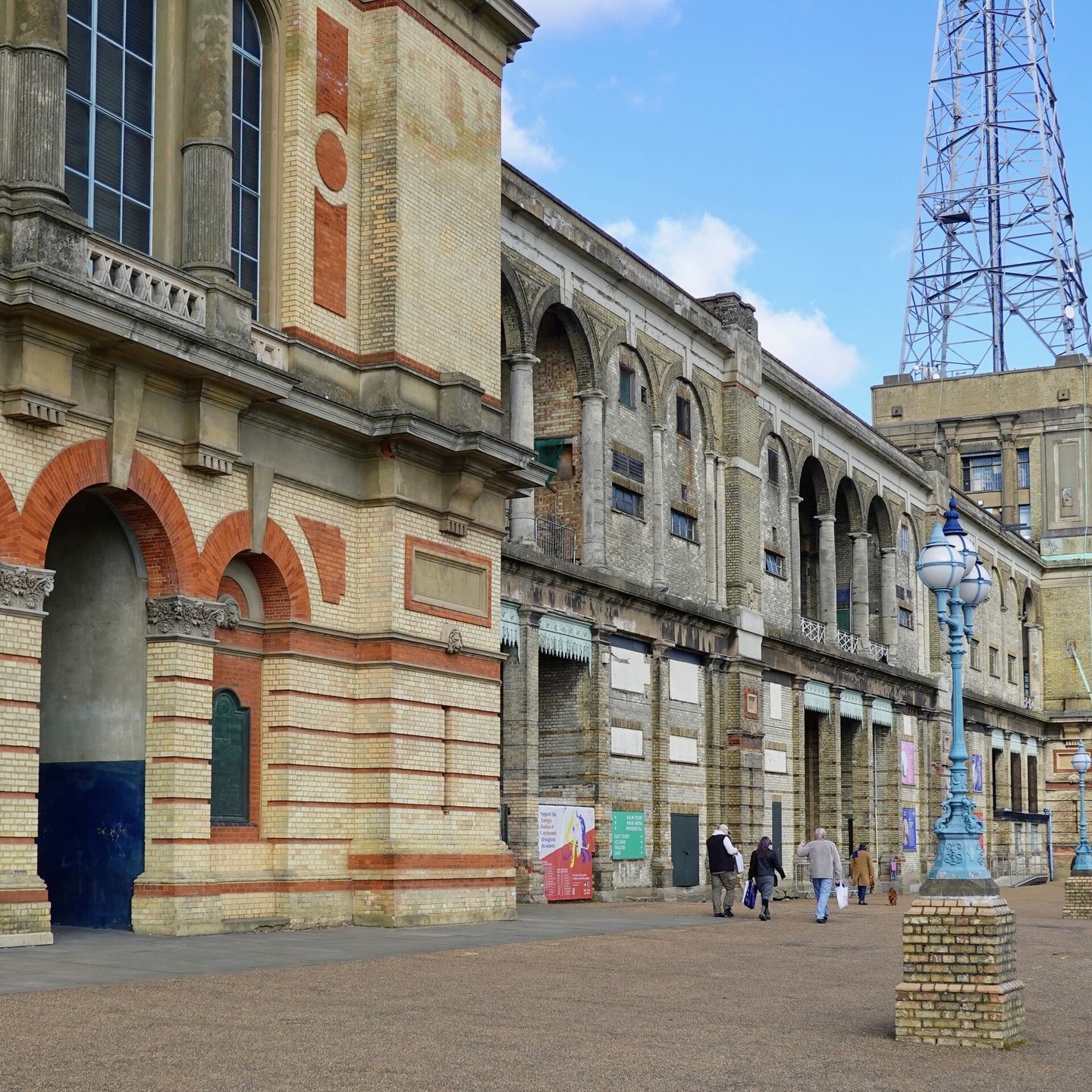
Alexandra Palace, home of the BBC television service. Robert-brook, CC0, via Wikimedia Commons
The early broadcasts were live and unrepeatable. If you missed it, it was gone. There was no recording, no rewind, no on-demand. This created a shared temporal experience. Everyone watching saw the same thing at the same time. Television became a synchronized social ritual, a designed appointment with the entire viewing public. This scarcity of content created value through ephemerality, something the internet would later invert completely.
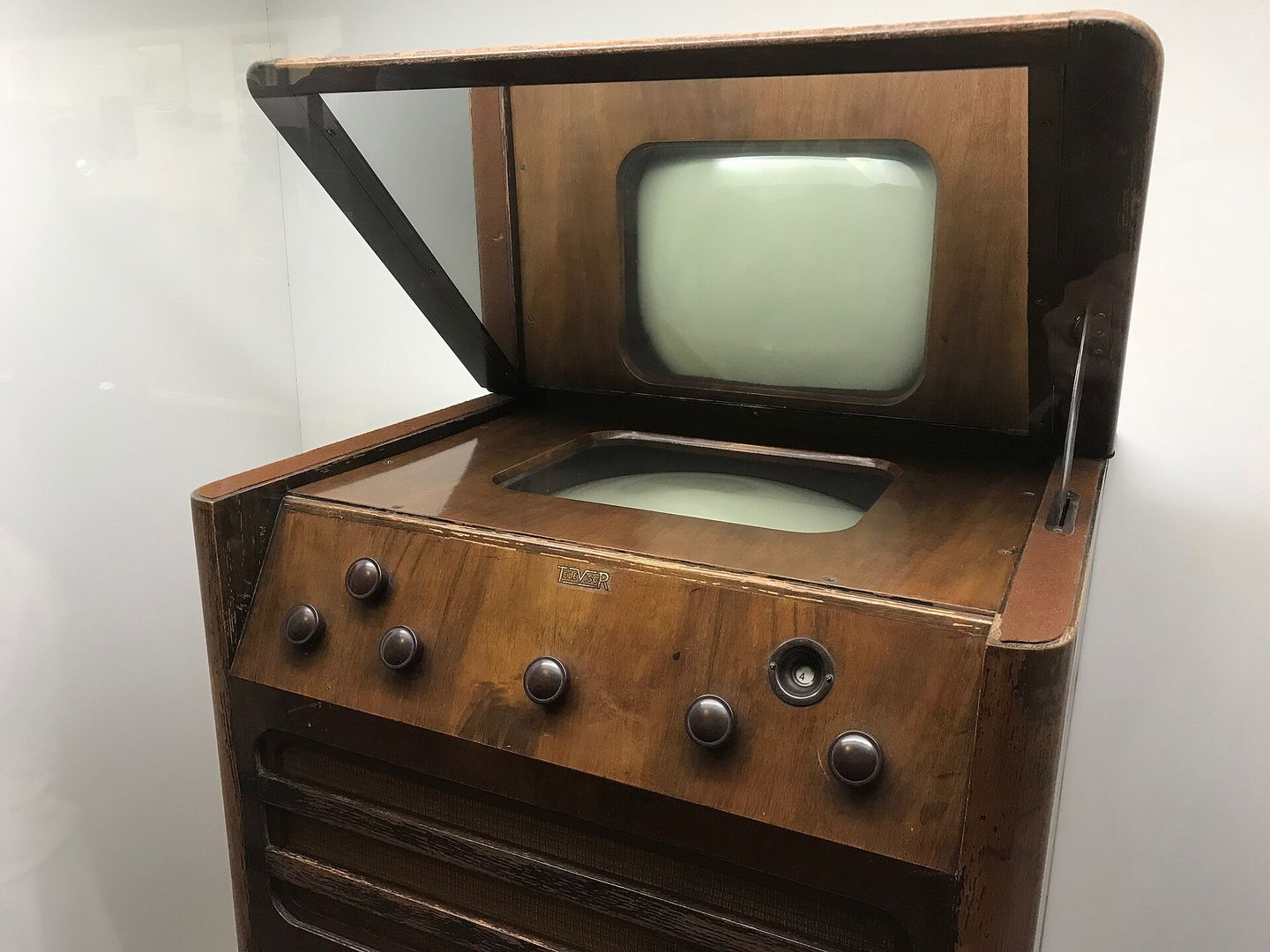
A Baird mirror-lid television receiver, 1936 — the kind of set early viewers tuned in on. Matt Brown, CC BY 2.0, via Wikimedia Commons
The service shut down on September 1, 1939, when World War II began. The BBC feared that the television transmitter signal could guide German bombers to London. When the service resumed on June 7, 1946, it picked up exactly where it had left off, in the middle of a Mickey Mouse cartoon. Seven years of silence, and then continuity, as if nothing had happened.
Television would go on to reshape culture, politics, advertising, and the very concept of public space. It turned living rooms into theaters and created a new kind of celebrity. It made certain events feel universal: moon landings, royal weddings, national tragedies. But it all started with a decision to broadcast on a schedule, to design time itself as a programmable medium. The BBC didn't just invent a service. They invented the idea that visual media could be a daily utility, as regular and expected as electricity or water. We've been watching ever since.
studio / on-this-day / Nov 2