studio / on-this-day / Nov 4
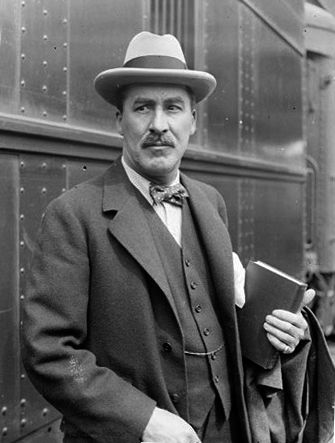
Howard Carter examining Tutankhamun's sarcophagus. Chicago Daily News, Inc., photographer, Public domain, via Wikimedia Commons
Three Thousand Years in the Dark
On this day in 1922 — Howard Carter uncovered the tomb of Tutankhamun, three thousand years of design sealed and preserved under the sand.
3 min read
On November 4, 1922, a water boy working for British archaeologist Howard Carter struck a stone step beneath the sand in Egypt's Valley of the Kings. Carter had been searching for the tomb of Tutankhamun for nearly a decade, funded by Lord Carnarvon, an English aristocrat with more patience and money than most. When Carter arrived at the site, he ordered his team to excavate. Twelve more steps emerged. At the bottom was a sealed doorway bearing the necropolis seal and, critically, the name of a king: Tutankhamun.
Carter cabled Carnarvon in England. The message was terse: "At last have made wonderful discovery in Valley; a magnificent tomb with seals intact; re-covered same for your arrival; congratulations." Then he waited. It took Carnarvon three weeks to reach Egypt. On November 26, they broke through the second sealed door. Carter held up a candle and peered inside. Carnarvon asked if he could see anything. Carter's reply became the most famous sentence in archaeology: "Yes, wonderful things."
What Carter saw was a room filled wall-to-wall with objects. Golden couches shaped like animals. Chariots. Alabaster vases. Statues of the king. A throne overlaid with gold and inlaid with glass and semiprecious stones. Everything was jumbled, the result of ancient robberies that had been interrupted. But unlike every other royal tomb in the Valley of the Kings, this one had never been fully looted. It was, by the standards of Egyptology, intact.
Tutankhamun had been a minor pharaoh, a boy king who ruled for about ten years during the 14th century BC and died at 19. His tomb was small compared to those of more significant rulers. Yet it contained over 5,000 objects, many of which were works of staggering craftsmanship. The famous golden burial mask, which weighs 22 pounds and is made of solid gold inlaid with lapis lazuli and carnelian, became the face of ancient Egypt in the modern imagination. It was designed not for public display but to be sealed in darkness forever, seen only by the gods.
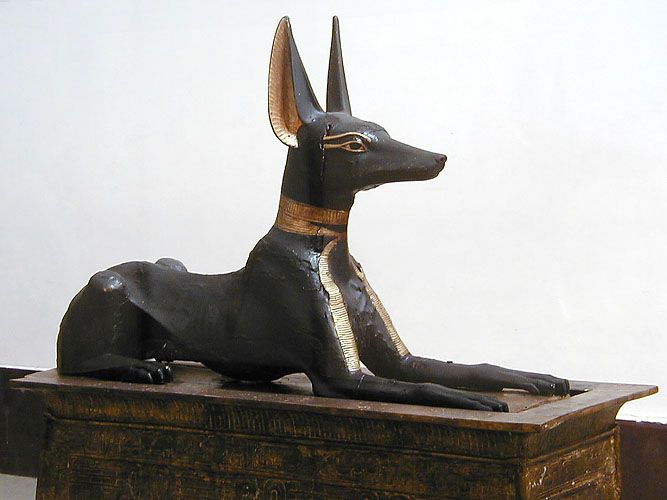
Anubis statue guarding the burial chamber. Jon Bodsworth, Copyrighted free use, via Wikimedia Commons
The discovery turned Egyptology into a global phenomenon. News of the tomb spread quickly, fueled by photographs and breathless newspaper reports. Tourists flooded Egypt. Museums clamored for artifacts. Carter spent the next ten years meticulously cataloging and removing the tomb's contents, a process that required as much engineering as archaeology. The nested coffins alone weighed over 2,000 pounds and had to be disassembled with extreme care. The innermost coffin was solid gold.
What made the tomb extraordinary wasn't just the gold. It was the completeness of the picture it provided. Ancient Egypt had always been studied through fragments: damaged statues, looted tombs, inscriptions worn smooth by time. Tutankhamun's tomb was a time capsule. It showed how a pharaoh was buried, what objects he was thought to need in the afterlife, how the rituals were performed. It was a design system for immortality, executed with obsessive detail and then hidden from the world.
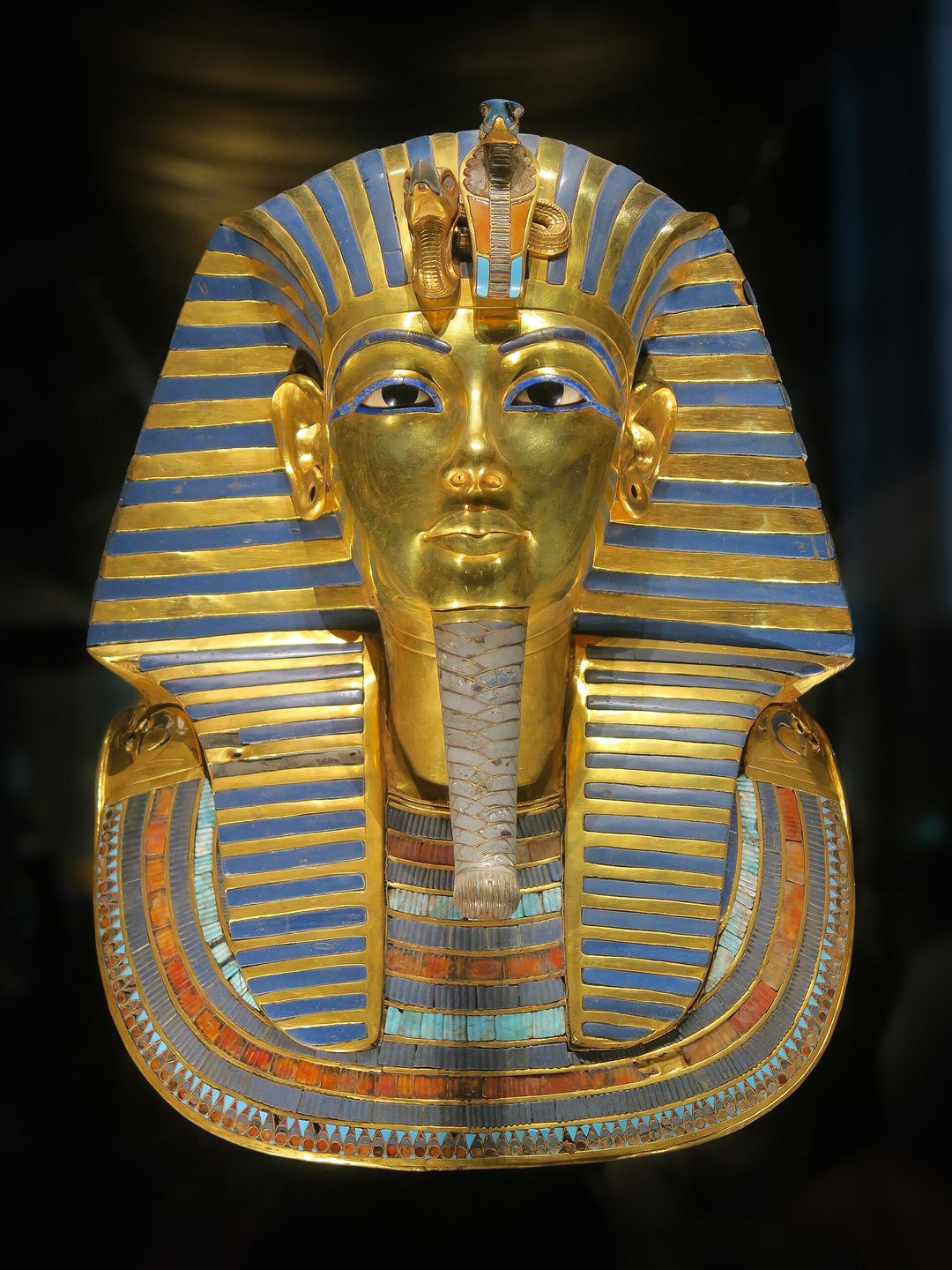
The golden burial mask, solid gold inlaid with lapis lazuli and carnelian. Thomas Clouet, CC BY-SA 4.0, via Wikimedia Commons
The tomb also highlighted a tension at the heart of archaeology: preservation versus access. The objects were designed never to be seen again. Removing them violated the intentions of their creators. But leaving them in place meant hiding knowledge from the world. Carter chose documentation over sanctity, and we inherited his choice. The mask, the throne, the golden shrines,they sit in museums now, viewed by millions. They were made for one person's eternity. Instead, they became everyone's past, a reminder that the best-designed objects sometimes outlive the civilizations that built them by 3,000 years.
studio / on-this-day / Nov 4