studio / on-this-day / Oct 6
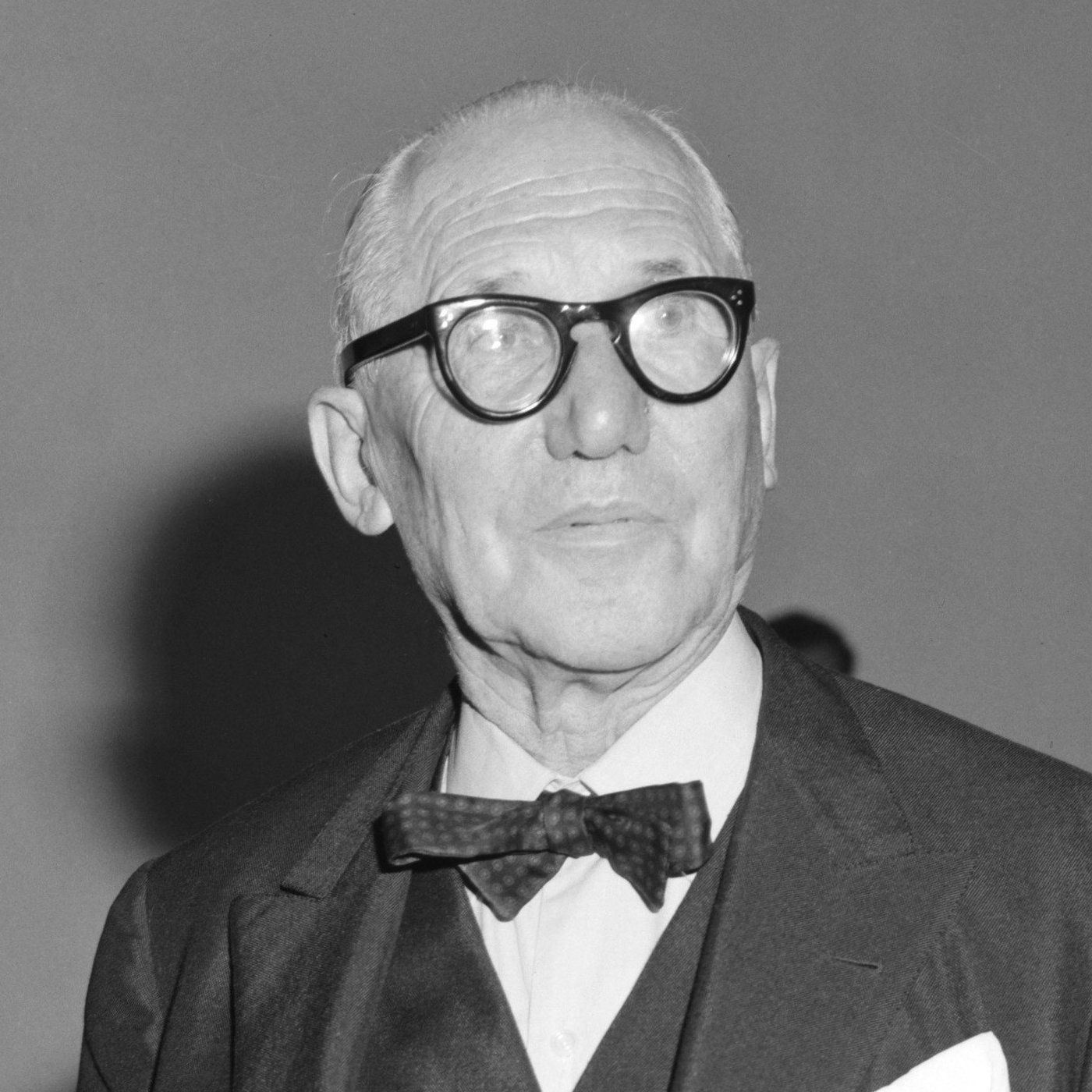
Le Corbusier, 1964. Joop van Bilsen for Anefo, CC0, via Wikimedia Commons
Machines for Living
On this day in 1887 — Le Corbusier was born, and would call a house a machine for living in, treating architecture as engineering.
3 min read
Charles-Édouard Jeanneret was born on October 6, 1887, in La Chaux-de-Fonds, a watchmaking town in the Swiss Jura mountains. He would later adopt the pseudonym Le Corbusier and become one of the most influential and controversial architects of the 20th century. His most famous declaration was also his most polarizing: "A house is a machine for living in." He meant it as a compliment to both houses and machines.
Le Corbusier believed that architecture should be functional, efficient, and rational. Buildings should serve their occupants with the same precision that a clock serves its owner. Ornament was waste. Form should follow function. Living spaces should be designed with the clarity of an engineer solving a technical problem. This was modernism in its purest, most uncompromising form.
His vision found expression in the "Five Points of Architecture," principles he articulated in the 1920s. Pilotis (columns) to lift buildings off the ground. Free design of the floor plan, enabled by structural supports rather than load-bearing walls. Free design of the facade, independent of structure. Horizontal windows for maximum light. Roof gardens to reclaim the green space covered by the building's footprint. These were not aesthetic choices. They were optimizations.
Le Corbusier designed the Villa Savoye in 1929, a house that embodied his principles so perfectly it became a manifesto in built form. The structure floats above the ground on slender columns. The facade is smooth, white, and unadorned. Long horizontal windows wrap around the building. The rooftop terrace offers open space and sky. It is breathtaking in its clarity. It is also cold, stark, and unforgiving of human imperfection. The roof leaked. The heating system failed. The clients moved out within a decade.
Villa Savoye, poissy, France. Jeanbaptisteparis from Cambridge, MA, USA, CC BY-SA 2.0, via Wikimedia Commons
His urban planning was even more ambitious and more problematic. Le Corbusier proposed demolishing much of central Paris and replacing it with identical tower blocks surrounded by green space. He called it the "Radiant City," a vision of order and efficiency scaled up to the level of the metropolis. The towers were never built in Paris, but variations of his vision were implemented in cities worldwide. Many became notorious for crime, poverty, and social isolation. When you design for efficiency alone, you tend to design out the messiness that makes communities work.
Le Corbusier was also complicit in darker political currents. He courted fascist and authoritarian regimes, believing they could implement his grand visions without the delays of democratic process. He collaborated with the Vichy government in France during World War II. His architectural philosophy and his political instincts both favored top-down control, systems imposed rather than grown. This is the risk of treating human environments as engineering problems. People are not widgets. Cities are not machines.
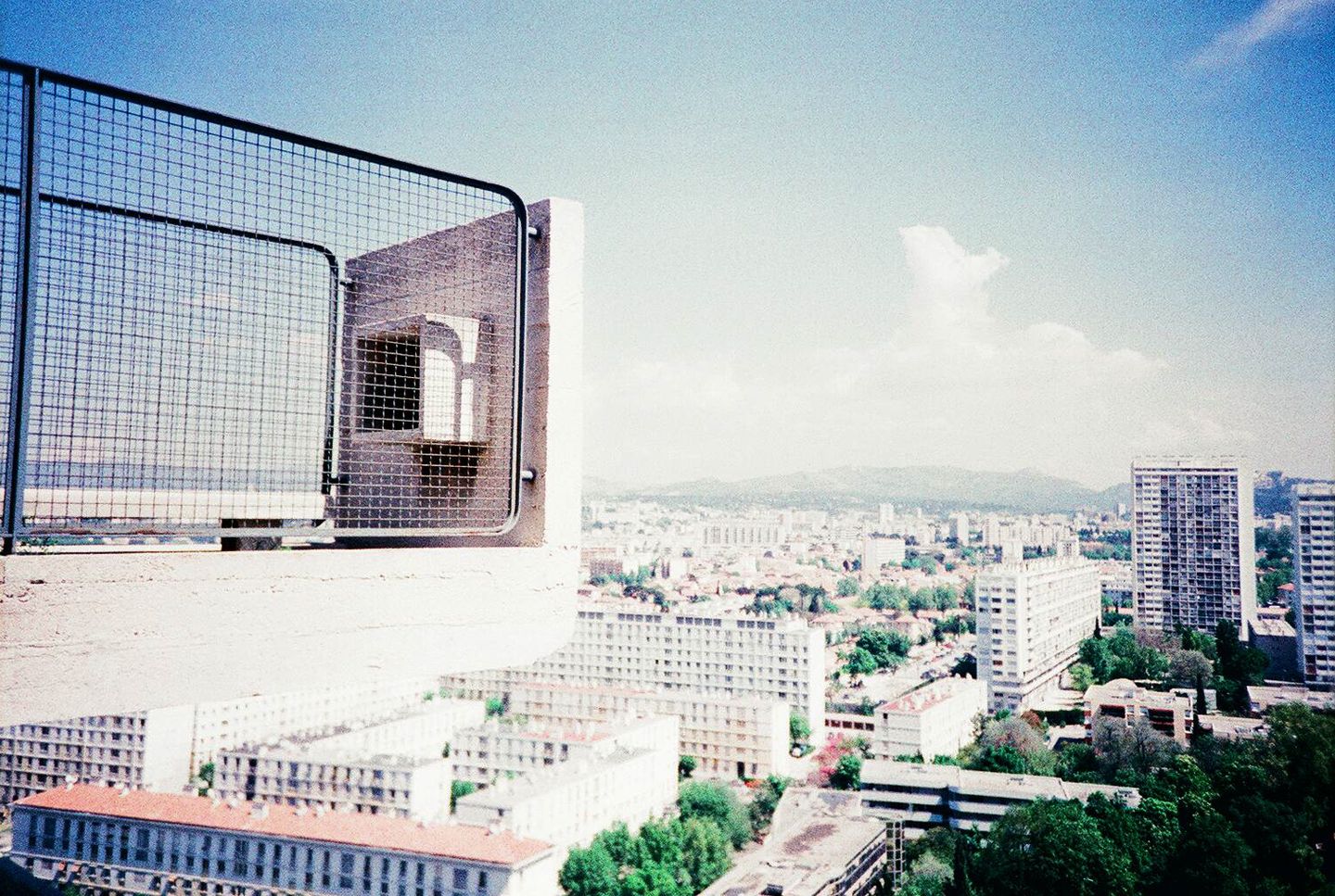
The unité d'Habitation, Marseille — Le Corbusier's vertical "Radiant City" in built form. Cyril Caton, CC BY 2.0, via Wikimedia Commons
And yet, his influence is undeniable. Almost every modernist building owes something to Le Corbusier's ideas. The clean lines, open floor plans, and integration of indoor and outdoor space that define contemporary architecture all trace back to his work. The problem was not the principles themselves but the rigidity with which they were applied. A machine for living is a powerful metaphor. But living is more than what machines can account for.
Le Corbusier died on August 27, 1965, while swimming in the Mediterranean. He left behind a legacy that continues to divide opinion. His buildings are celebrated and condemned, sometimes simultaneously. He proved that architecture could be a form of systems design, that living spaces could be optimized like industrial processes. Whether they should be is a different question.
October 6, 1887, marks the birth of someone who reimagined what architecture could be. Le Corbusier taught us that design is a tool for rethinking how we live. He also taught us, inadvertently, that efficiency alone is not enough. A house may be a machine for living, but living is more than a mechanical process. The tension between those two ideas is still with us, built into every city, every building, every designed environment we inhabit.
studio / on-this-day / Oct 6