studio / on-this-day / Oct 3
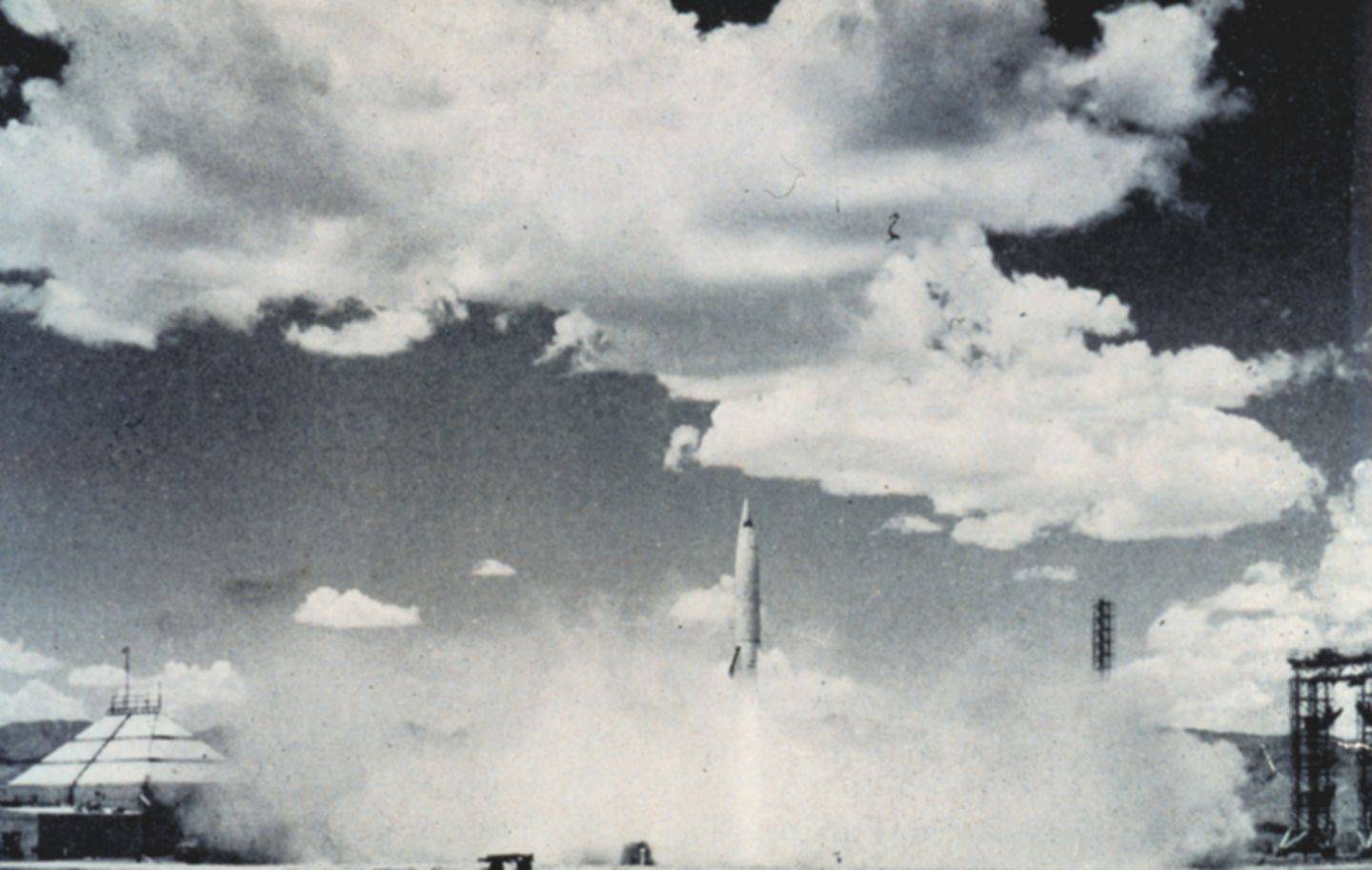
V-2 rocket launch. NOAA, Public domain, via Wikimedia Commons
Trajectory
On this day in 1942 — the first V-2 rocket flew, a weapon of war that would soon be repurposed to carry humans toward space.
3 min read
On October 3, 1942, a 46-foot missile lifted off from Test Stand VII at Peenemünde, a remote facility on the Baltic coast of Germany. It climbed for five minutes, reached an altitude of 53 miles, and traveled 118 miles downrange before impacting the sea. The V-2 rocket became the first human-made object to reach space. It was designed to carry a one-ton warhead into the heart of enemy cities. Technology has no morality. Only trajectory.
The V-2, or Vergeltungswaffe 2 (Vengeance Weapon 2), was the culmination of decades of rocketry research led by Wernher von Braun and his team. Liquid-fueled, supersonic, and guided by gyroscopes, it was more sophisticated than anything else in the air. The rocket traveled faster than sound, so there was no warning before impact. By the time you heard it, you were already safe. Someone else had died.
Between September 1944 and March 1945, Germany launched over 3,000 V-2 rockets at Allied targets, primarily London and Antwerp. The weapons killed an estimated 9,000 people, mostly civilians. More people died building the rockets than were killed by them. Slave laborers from the Mittelbau-Dora concentration camp assembled the missiles in underground factories. The conditions were brutal, the work lethal. An estimated 20,000 workers died during production.
The V-2 was militarily ineffective. It was expensive, inaccurate, and arrived too late in the war to alter the outcome. But as a proof of concept, it was transformative. The rocket demonstrated that guided missiles could travel hundreds of miles, cross the edge of space, and strike with unprecedented speed. After the war, the technology became the foundation for both ballistic missiles and space exploration.
When the war ended, the United States and Soviet Union raced to capture V-2 technology and the scientists who built it. Operation Paperclip brought von Braun and over 1,600 German engineers to America, where they were given new identities, immunity from prosecution, and jobs developing missiles for the U.S. military. The Soviets captured the Peenemünde facilities and used remaining hardware to reverse-engineer their own rocket program.
Von Braun's team went on to design the Saturn V rocket that carried Apollo astronauts to the moon. The same principles that guided a warhead into London in 1944 guided humans to another world in 1969. The technology was repurposed, the intent redesigned, but the lineage remained unbroken. Every space launch carries this legacy, whether acknowledged or not.
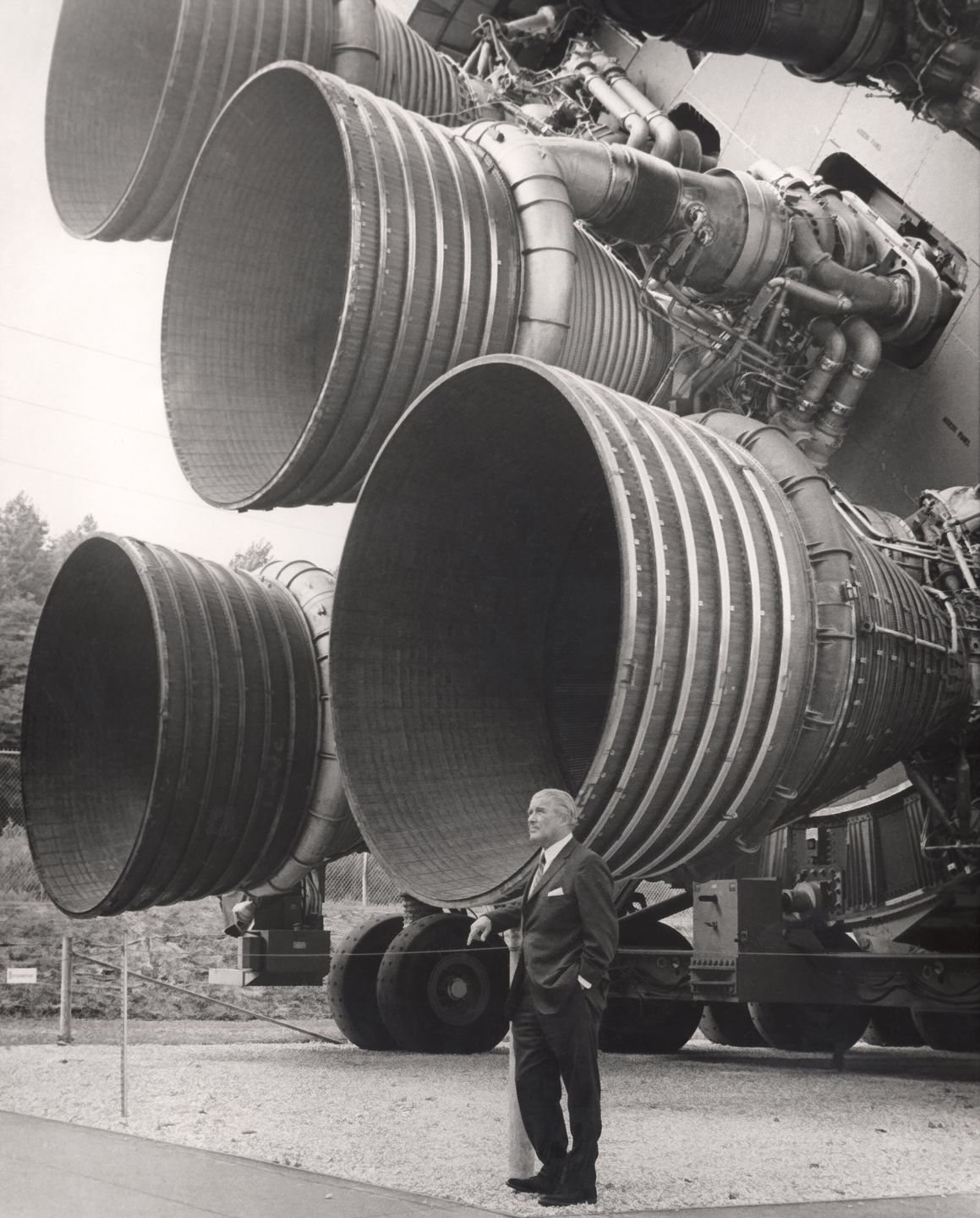
Wernher von Braun with the Saturn v first-stage engines. NASA, Public domain, via Wikimedia Commons
There is a tension here that never fully resolves. The V-2 was a weapon of terror, built by enslaved people, used to kill civilians. It was also the first step toward spaceflight, toward satellites, toward the infrastructure that enables global communication, weather forecasting, and GPS navigation. You cannot separate the achievement from the atrocity. Both are true.
Rocketry, like many technologies, was born from military necessity and later found civilian application. The designers often claim they were only interested in the stars, not the targets. Von Braun famously said his rockets landed on the wrong planet. But he knew what they were for when he built them. The question of whether a designer is responsible for how their work is used has no simple answer. It depends on what you knew, what you could have known, and what you chose to ignore.
October 3, 1942, is the day we learned that space was reachable. The rocket that proved it was built to destroy. The same design can carry a warhead or a scientific instrument. The same trajectory can end in devastation or discovery. The only thing that changes is intent, and intent is a choice we make every time we build something powerful enough to matter.
studio / on-this-day / Oct 3