studio / on-this-day / Oct 4
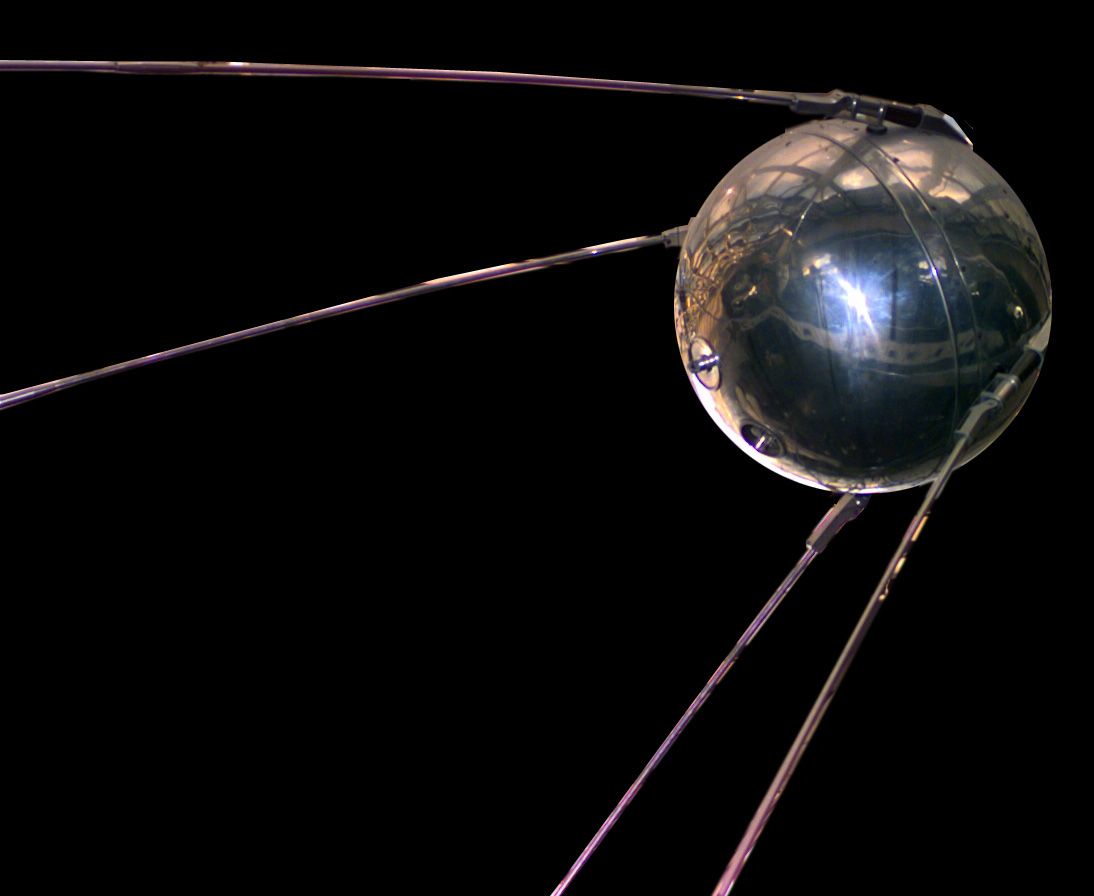
Sputnik 1 replica. NSSDC, NASA[1], Public domain, via Wikimedia Commons
A Beep Heard Around the World
On this day in 1957 — Sputnik went up, and the space age opened with nothing more than a beeping metal sphere the size of a beach ball.
3 min read
On October 4, 1957, at 7:28 p.m. Moscow time, a modified R-7 intercontinental ballistic missile lifted off from the Baikonur Cosmodrome in Kazakhstan. Mounted on top was a polished metal sphere, 23 inches in diameter, weighing 184 pounds. Four antennas trailed behind it like whiskers. It reached orbit 98 minutes later, becoming the first artificial satellite to circle Earth. Its name was Sputnik, Russian for "traveling companion."
The satellite did nothing but beep. Its radio transmitter sent a simple pulse at 20.005 and 40.002 MHz, detectable by amateur radio operators around the world. The signal was functional, designed to confirm the satellite had reached orbit and to measure the density of the upper atmosphere. But the effect was psychological. Every 96 minutes, Sputnik passed overhead, its steady beep a reminder that the Soviet Union had beaten America into space.
The reaction in the United States was immediate and visceral. If the Soviets could put a satellite into orbit, they could put a nuclear warhead on a missile that could reach American cities. The same rocket that launched Sputnik could carry a weapon. The space race was not about exploration. It was about demonstrating capability. Science was the byproduct. Security was the goal.
Sputnik orbited Earth for three weeks before its batteries died. The signal stopped, but the satellite continued circling for another two months before atmospheric drag pulled it down. It burned up on reentry on January 4, 1958. The mission lasted 92 days. The consequences lasted decades.
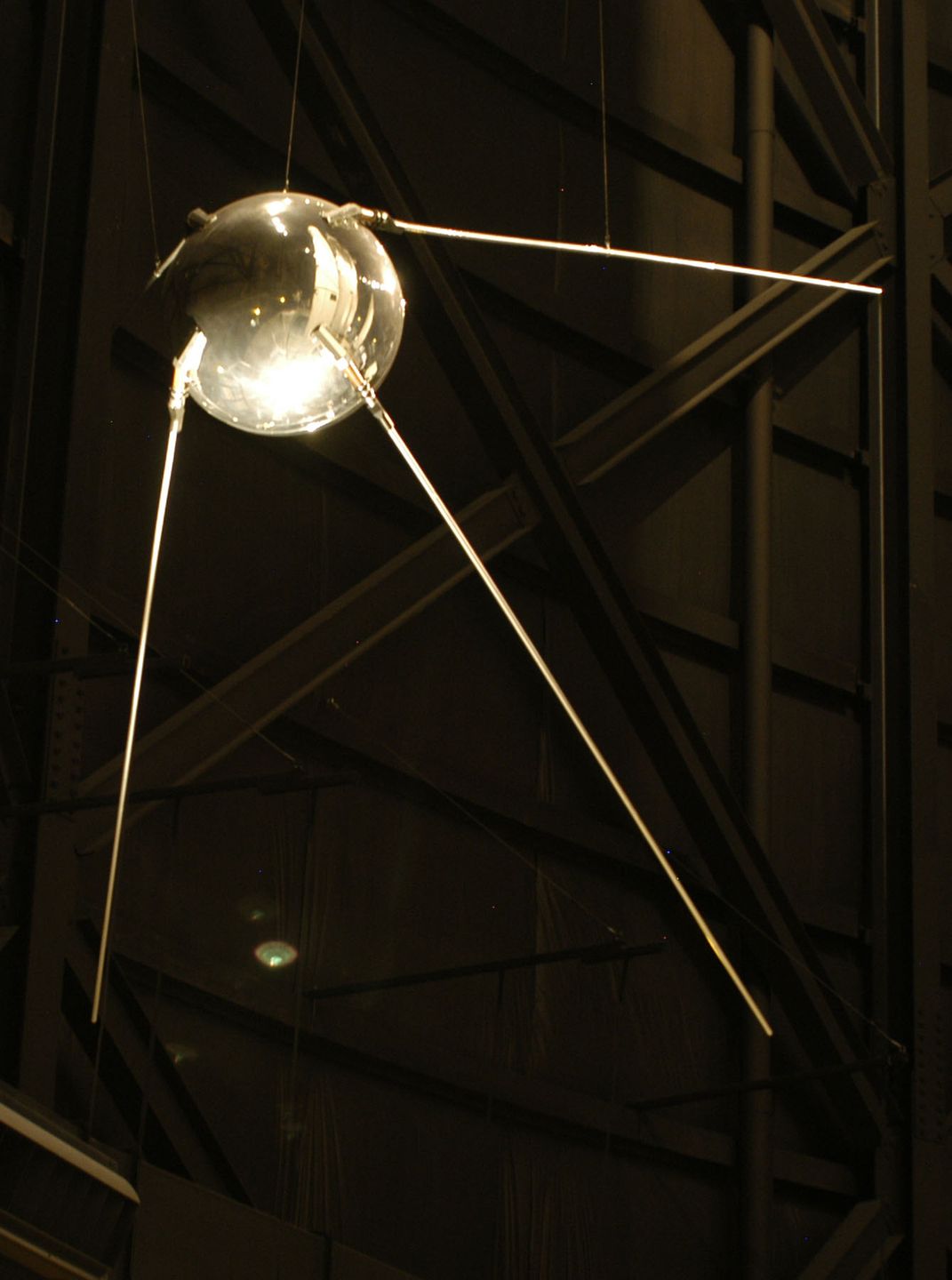
Sputnik 1 engineering model. U.S. Air Force photo, Public domain, via Wikimedia Commons
The launch triggered what became known as the Sputnik Crisis. American politicians, educators, and military leaders panicked. How had the Soviet Union pulled ahead? What had gone wrong with American science and engineering? The response was systemic. Congress passed the National Defense Education Act, funneling money into math and science education. President Eisenhower created NASA in 1958, consolidating the scattered efforts of various agencies into a single civilian space program. The space race became a proxy war, fought with rockets instead of rifles.
Sputnik's design was a masterclass in simplicity. The sphere was pressurized with nitrogen to detect micrometeorite impacts. The antennas were positioned to ensure omnidirectional transmission. The entire satellite was assembled in under a month by a team working around the clock. It was not the first satellite the Soviets had planned to launch. A more sophisticated satellite was in development, but chief designer Sergei Korolev worried the Americans would beat them. He pushed for a simpler design, something that could be built quickly and launched first. He was right.
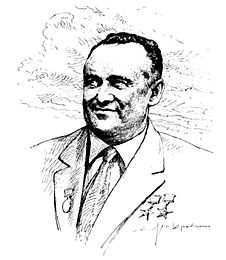
Sergei Korolev, the chief designer who pushed for a simpler satellite. NASA, Public domain, via Wikimedia Commons
The beep was heard by people all over the world, including amateur radio enthusiasts who tracked its signal as it passed overhead. There was something thrilling and terrifying about it. A human-made object, circling the planet, visible to anyone with the right equipment. It was proof that space was no longer theoretical. We had touched it, occupied it, claimed it.
Sputnik changed how we think about the planet. Before, Earth was the world. After, it was a world, one object among many, orbiting a star in a galaxy full of stars. The satellite itself was primitive by today's standards, a metal ball with a radio transmitter. But it represented a threshold. Once crossed, there was no going back. Humanity was no longer confined to the surface. We had become a spacefaring species, whether we were ready or not.
October 4, 1957, is the day we learned that orbit was achievable, that space could be reached, and that the future would be shaped by those who controlled access to it. The same technology that carried Sputnik into orbit could carry weapons or scientific instruments. The choice was ours. The beep was just a signal. What mattered was how we chose to answer it.
studio / on-this-day / Oct 4