studio / on-this-day / Jan 3
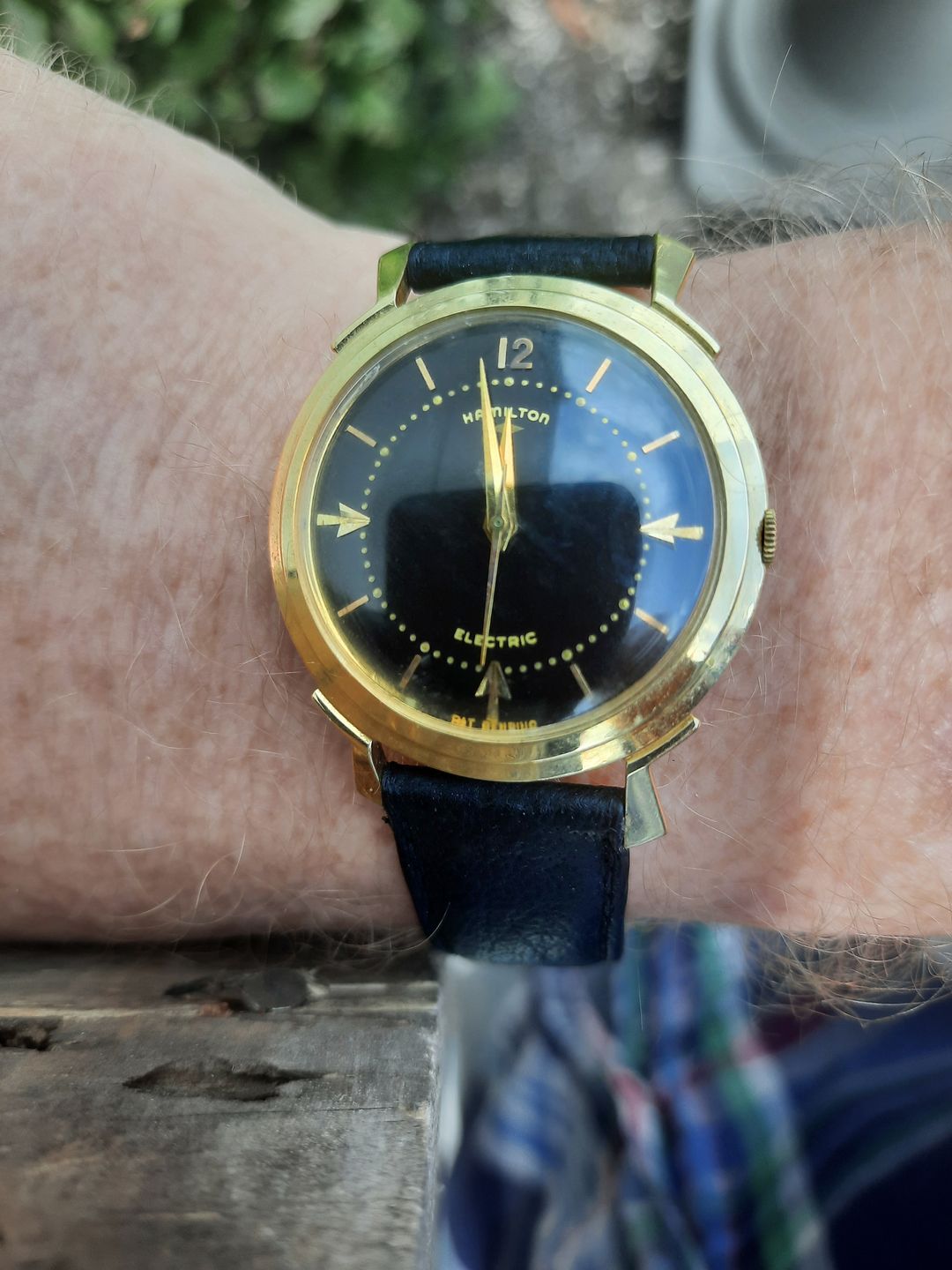
The Hamilton Electric 500, the World's First battery-powered wristwatch, introduced in 1957. MPants at work, CC BY-SA 4.0, via Wikimedia Commons
Time Without Springs
On this day in 1957 — the first electric wristwatch went on sale, trading the mainspring for a battery and beginning the slow retirement of clockwork.
3 min read
For centuries, timekeeping had been a mechanical art. Gears meshed with gears, springs unwound with meticulous precision, and escapements ticked their way through seconds. Watchmakers were craftsmen in the tradition of jewelers and clockmakers, working with tolerances measured in fractions of a millimeter. The Hamilton Watch Company, based in Lancaster, Pennsylvania, had been making pocket watches since 1892 and wristwatches since the First World War. They understood mechanical time.
But on January 3, 1957, Hamilton introduced the Electric 500, a watch with no mainspring. It ran on a tiny battery and used an electromagnet to drive the balance wheel. The movement was still mechanical in the sense that parts moved, but the energy source was electrical. It was a hybrid, a bridge between two eras of timekeeping.
The watch was called the Ventura, and its case was designed by Richard Arbib, a car designer who had worked on Cadillacs and Packards. It looked like nothing else on the market. The case was asymmetrical, vaguely shield-shaped, with a diagonal orientation that made it look like it was leaning forward. It was the kind of design that could only exist because the electric movement inside was smaller and differently shaped than a traditional mechanical movement. Form followed function, but the function had changed.
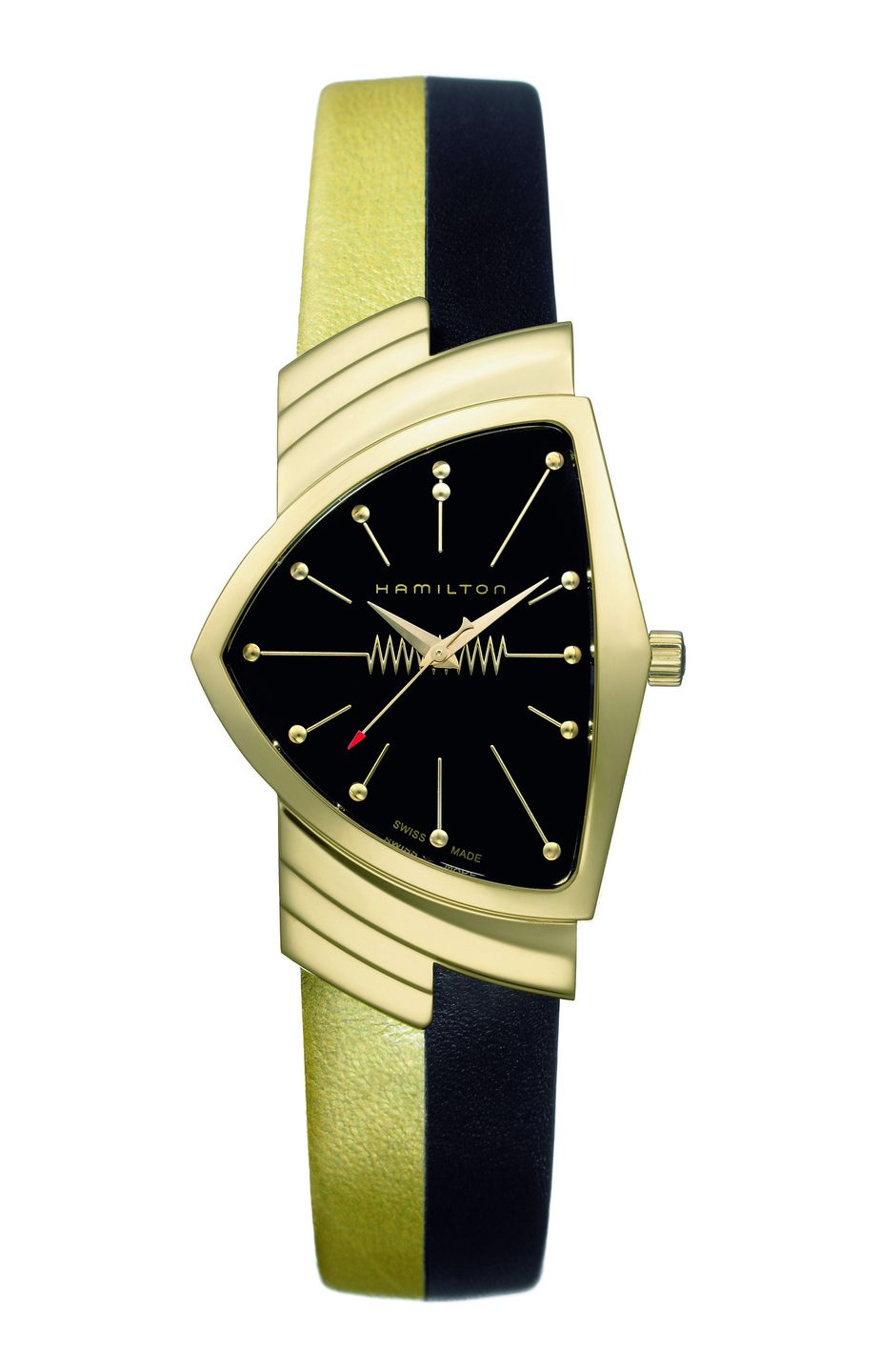
A 1957 Hamilton Ventura, its asymmetrical case designed by Richard Arbib. Hamiltonwatches, CC BY-SA 3.0, via Wikimedia Commons
The Electric 500 wasn't the first electric clock. Electric clocks had existed since the 1840s. But fitting an electric movement into a wristwatch required solving problems of miniaturization and energy efficiency that had never been solved before. The battery had to be small enough to fit in a case you could wear and powerful enough to run for a year. The movement had to be shock-resistant, waterproof, and precise. Hamilton spent over a decade developing it.
The watch didn't sell particularly well at first. It was expensive, retailing for $275 in 1957, about $3,000 in today's money. And it had problems. The batteries leaked. The movements were fragile. Jewelers didn't know how to repair them. But it proved the concept. Within a few years, other companies were making electric watches. By the 1960s, the technology had matured.
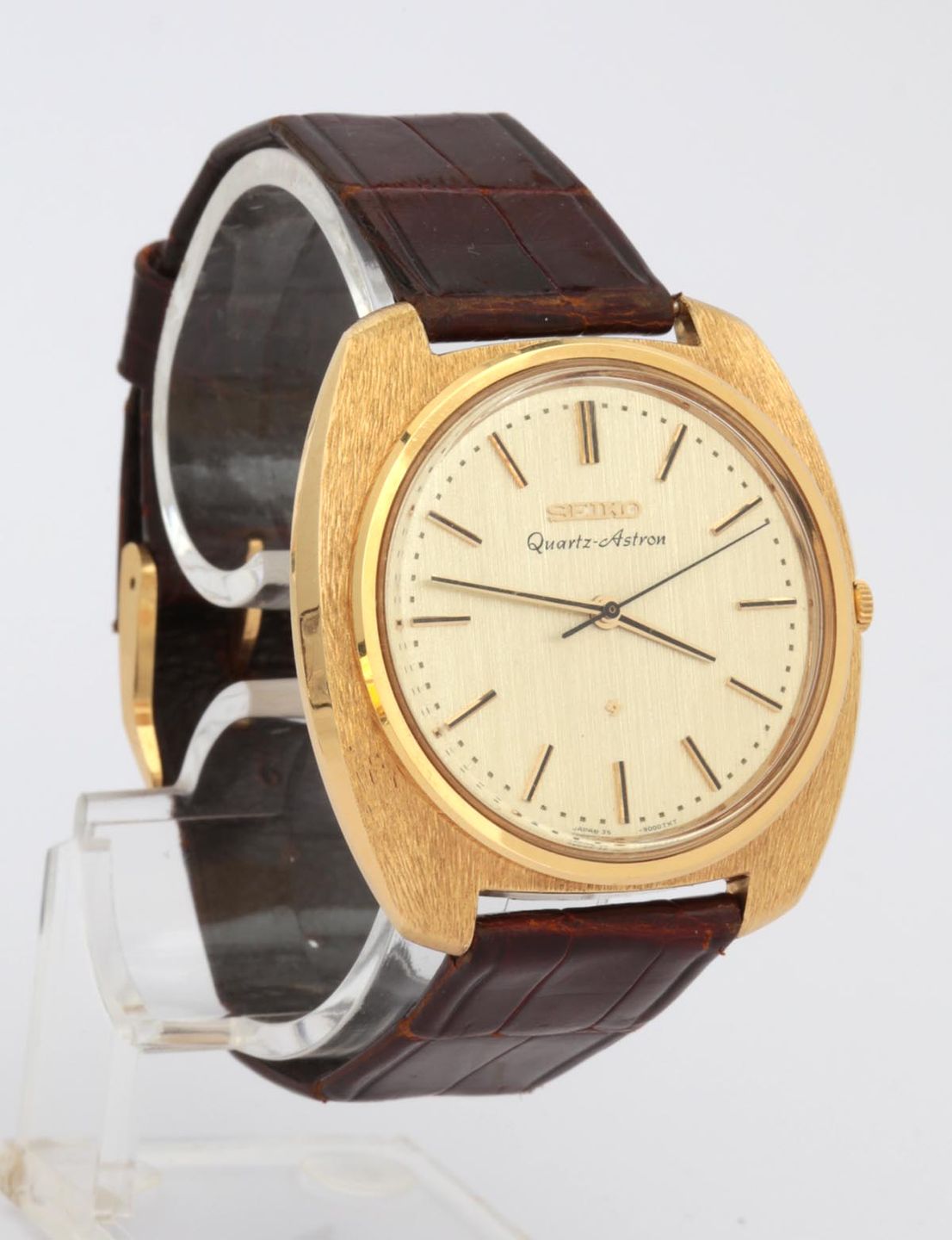
The Seiko Astron, the World's First quartz wristwatch, introduced in 1969. Deutsches-uhrenmuseum, CC BY-SA 4.0, via Wikimedia Commons
Then quartz arrived. In 1969, Seiko introduced the Astron, the first quartz wristwatch. Quartz was more accurate than electric, more reliable, and eventually much cheaper. The electric watch era lasted barely more than a decade before it was obsolete. Hamilton stopped making the Electric 500 in 1969. The Ventura became a design icon, famously worn by Elvis Presley, but as a curiosity, not a technology.
What the Electric 500 did was open a door. It demonstrated that a watch didn't have to be a purely mechanical object, that energy could come from chemistry instead of springs, that the aesthetics of a watch could follow from its internal logic rather than tradition. Just as the iPhone later replaced buttons with a touchscreen, the Electric 500 replaced the mainspring with a battery. The form changed because the mechanism changed.
Today, most watches are quartz or digital. Mechanical watches survive as luxury goods, valued precisely because they are anachronistic, because they preserve a craft that is no longer necessary. The Hamilton Electric 500 sits in between, neither fully mechanical nor fully electronic, a transitional object that pointed toward a future it didn't quite reach. But every smartwatch, every fitness tracker, every device that tells time from a battery owes something to that asymmetrical watch Hamilton introduced in 1957.
studio / on-this-day / Jan 3