studio / on-this-day / Jan 6
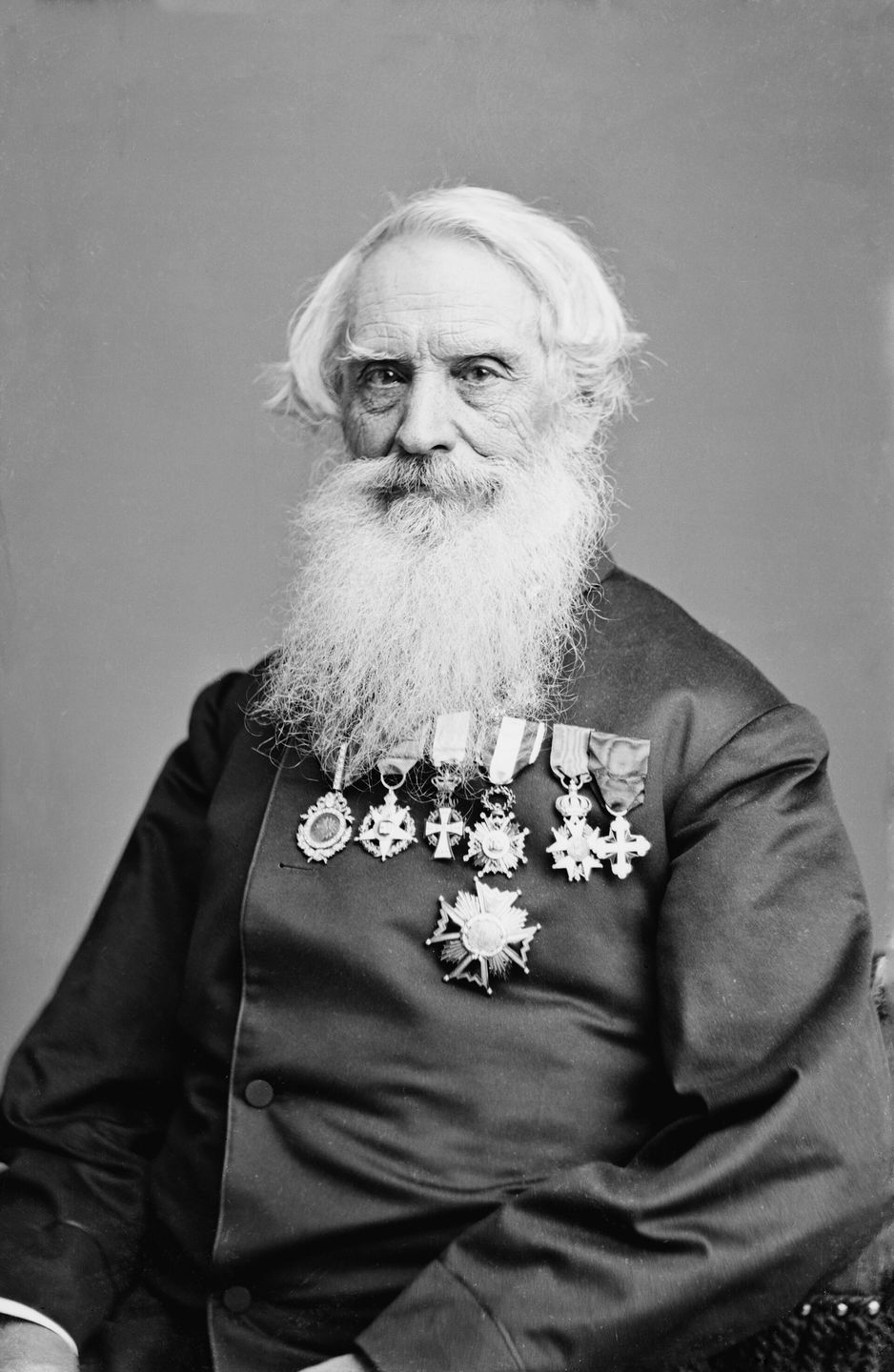
Portrait of samuel f. b. Morse, American painter and inventor of the telegraph and Morse code. Mathew Benjamin Brady, Public domain, via Wikimedia Commons
Dots and Dashes
On this day in 1838 — Samuel Morse first demonstrated the telegraph, compressing language into clicks that could cross a country in a heartbeat.
3 min read
Samuel Morse was a painter before he was an inventor. He studied art at the Royal Academy in London, painted portraits of presidents and historical scenes, and helped found what would become the National Academy of Design. He was reasonably successful, reasonably respected, and completely unprepared for the tragedy that redirected his life.
In 1825, while Morse was in Washington painting a portrait of Lafayette, his wife Lucretia died suddenly in Connecticut. The letter informing him of her illness took days to arrive. By the time he reached home, she had already been buried. The delay haunted him. Information moved at the speed of horses and ships. A person could be dead and buried before their loved ones even knew they were sick.
Morse became obsessed with the idea of instant communication. In 1832, on a ship returning from Europe, he heard about recent experiments with electromagnetism. He began sketching ideas for an electric telegraph. It wasn't an original concept. Other inventors were working on similar systems. But Morse had something they didn't: a code.
Morse code was a language designed for a wire. Letters were represented by combinations of short signals, dots, and long signals, dashes. The most common letters got the shortest codes. E was a single dot. T was a single dash. The code was efficient in a way that anticipated information theory by more than a century. It compressed language into the smallest number of electrical pulses needed to convey meaning.
On January 6, 1838, Morse gave his first public demonstration at the Speedwell Ironworks in New Jersey. He sent a message two miles over a wire. It worked. But nobody seemed to care. He spent the next several years trying to secure funding, pitching Congress, courting investors, demonstrating the system to anyone who would watch. It took six years before Congress finally appropriated $30,000 to build an experimental line between Washington and Baltimore.
On May 24, 1844, Morse sent the first official telegraph message: "What hath God wrought." It was a quote from the Bible, chosen by the daughter of a patent commissioner. The message traveled from the Supreme Court chamber in Washington to a railroad depot in Baltimore in a fraction of a second. Distance had collapsed.
Within a decade, telegraph lines crisscrossed the country. News that used to take weeks to travel now arrived in minutes. Markets synchronized. Railroads coordinated. Armies communicated in real time. The telegraph didn't just speed up existing systems; it made new ones possible. Stock exchanges, wire services, coordinated train schedules, all depended on instant communication.
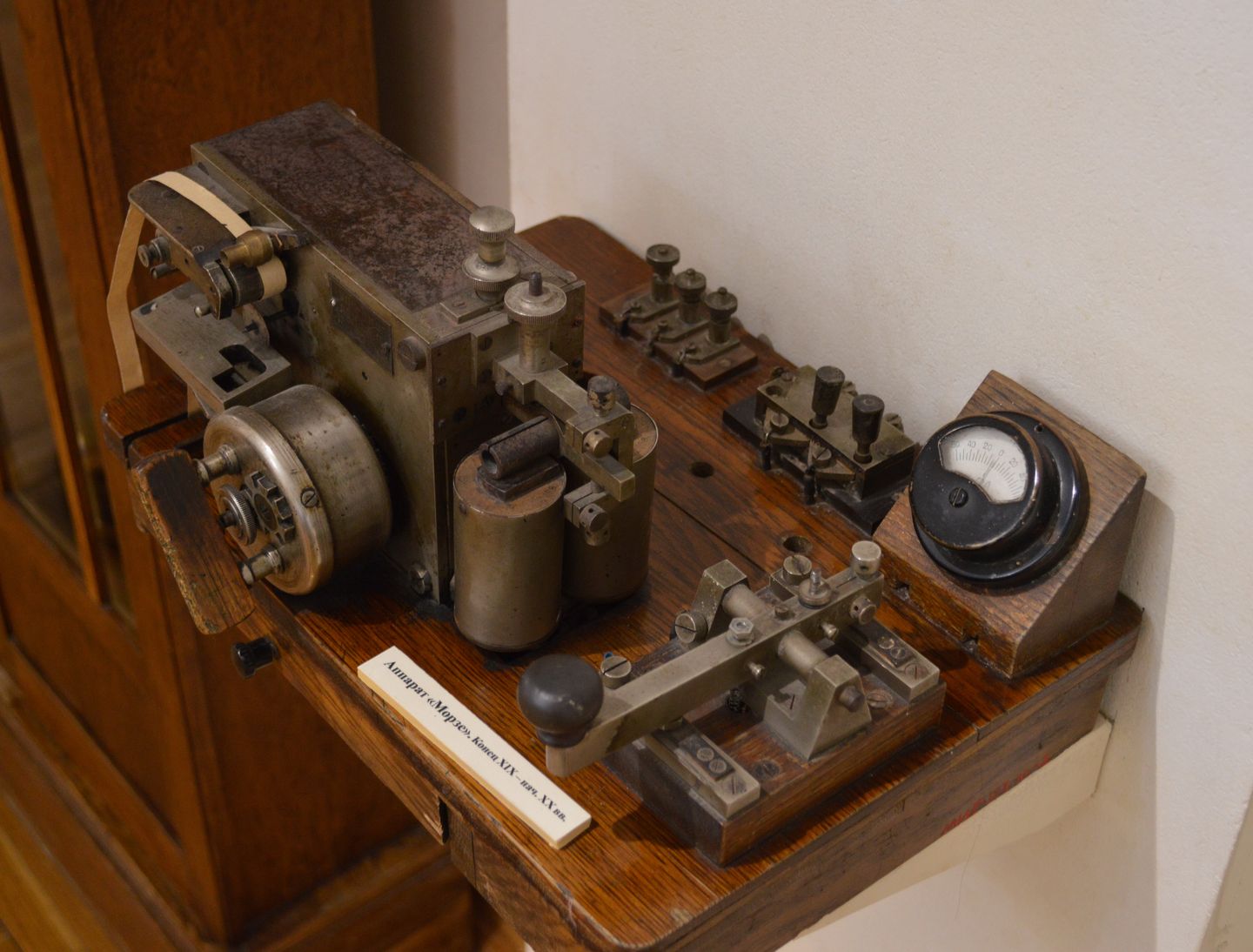
A Morse telegraph apparatus, similar to the instruments used in the first telegraph demonstrations. Лапоть, CC0, via Wikimedia Commons
Morse code itself became a universal language. It worked in any language because it encoded letters, not sounds. It could be transmitted as electrical pulses, light flashes, audio tones, even taps on a wall. It was the first true digital communication system, binary before binary was a concept. Just as TCP/IP later became the invisible protocol of the Internet, Morse code became the invisible language of long-distance communication for more than a century.
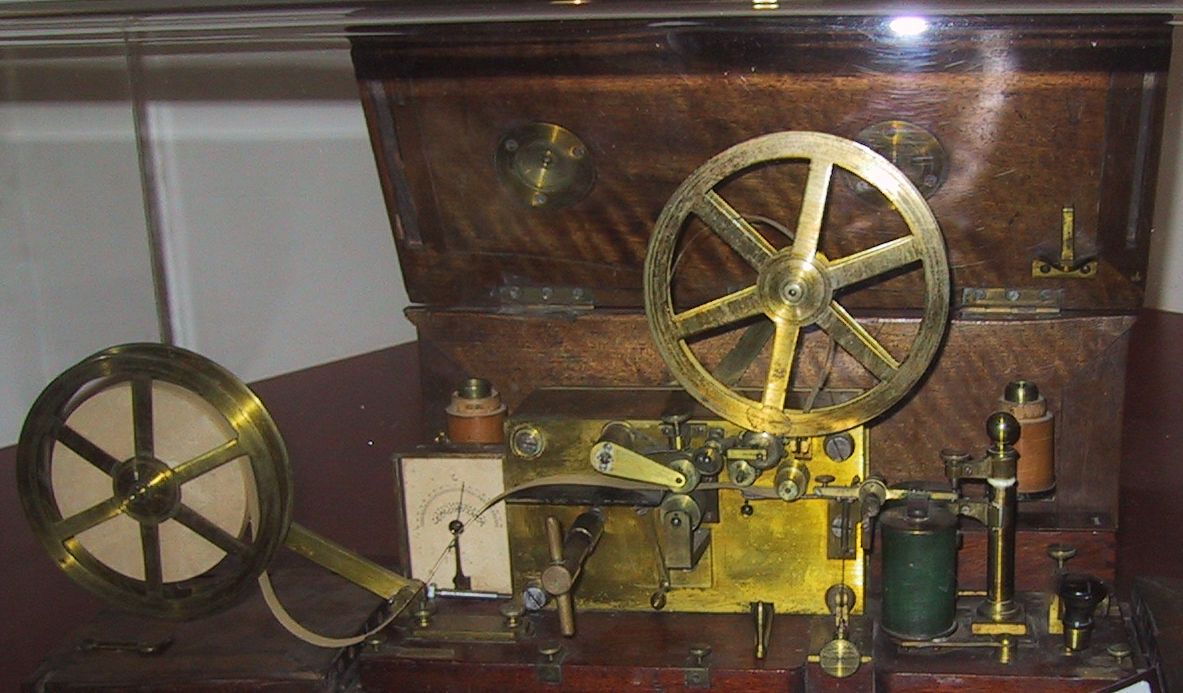
Morse's 1837 telegraph instrument, built in the years before the first public demonstration. Zubro, CC BY-SA 3.0, via Wikimedia Commons
Morse died wealthy and famous in 1872. By then, the telegraph had become infrastructure. It was already being taken for granted, the way all successful technology eventually is. The system he built lasted well into the 20th century. The last commercial Morse code transmission in the United States was sent in 1999. But the principle endures: information wants to move fast, and the tools we build to move it reshape everything else.
studio / on-this-day / Jan 6