studio / on-this-day / Jan 28
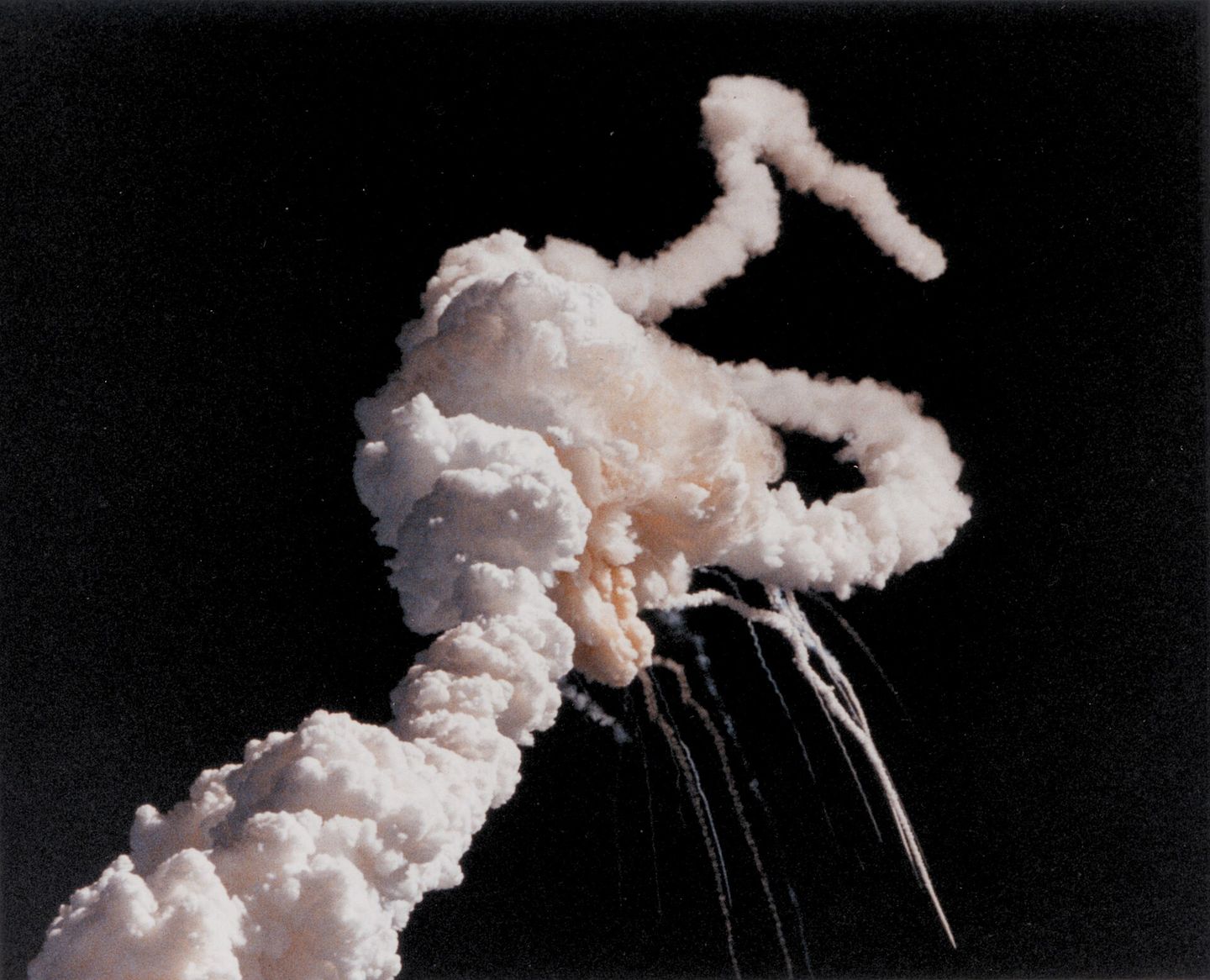
The Space shuttle Challenger breaking apart 73 seconds after launch on January 28, 1986 — a catastrophic failure caused by an o-ring seal in the right solid rocket booster. Kennedy Space Center, Public domain, via Wikimedia Commons
73 Seconds
On this day in 1986 — the shuttle Challenger came apart seventy-three seconds after launch, a reminder that the smallest flaw can be fatal.
3 min read
On the morning of January 28, 1986, the temperature at Kennedy Space Center was 36 degrees Fahrenheit, well below the minimum recommended for shuttle launches. Engineers at Morton Thiokol, the company that manufactured the solid rocket boosters, recommended postponing. They were overruled. At 11:38 AM Eastern Time, Challenger lifted off with seven crew members aboard, including Christa McAuliffe, a schoolteacher selected to be the first civilian in space. Seventy-three seconds into flight, the shuttle disintegrated. Everyone watching saw it happen live.
The cause was a failed O-ring seal in the right solid rocket booster. O-rings are rubber gaskets designed to prevent hot gas from escaping the joints between booster segments. At low temperatures, rubber loses flexibility. The O-rings couldn't maintain a proper seal. Hot gas leaked through the joint, creating a flame that burned through the external fuel tank. The tank ruptured. The shuttle broke apart under aerodynamic stress. The crew cabin remained intact and fell into the Atlantic Ocean. The astronauts likely survived the breakup but died on impact with the water.
The failure wasn't a surprise to everyone. Engineers had documented O-ring erosion in previous flights. They had warned that cold weather increased the risk. But the warnings traveled through layers of management, each layer filtering, summarizing, rephrasing. By the time the concern reached decision-makers, the message had changed from "do not launch" to "some risk exists but within acceptable parameters." This is how organizational structures fail. Information degrades as it moves through hierarchies. Critical signals become background noise.
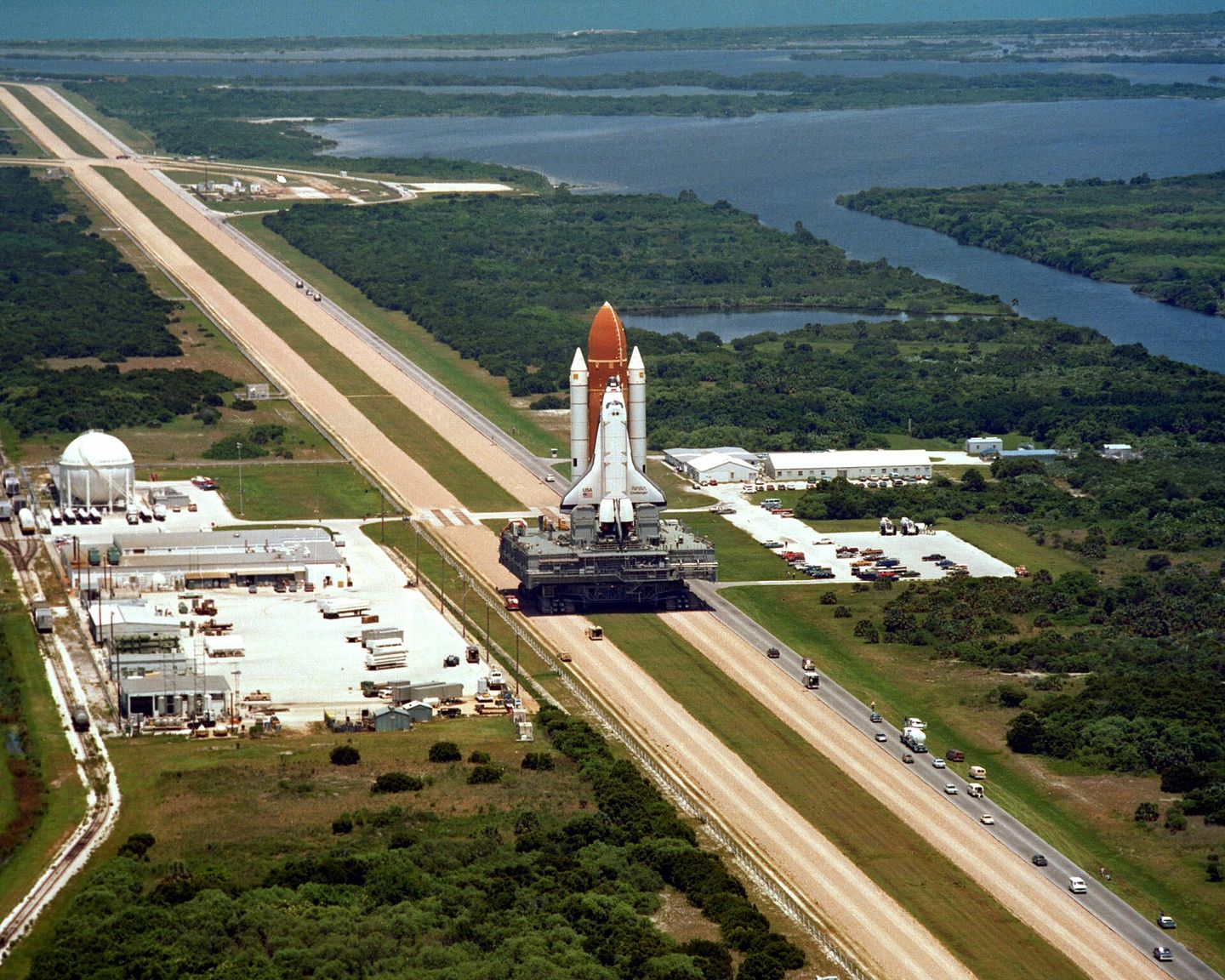
Space shuttle Challenger on the crawler-transporter en route to launch pad 39b before the sts-51-l mission, January 1986. NASA, Public domain, via Wikimedia Commons
The Rogers Commission, tasked with investigating the disaster, found that NASA's decision-making process was fundamentally broken. Launch schedules took precedence over safety assessments. Political pressure to maintain a regular flight cadence made it difficult to delay missions. The shuttle program had become normalized. Twenty-four successful flights created confidence that the system was reliable. Small problems on earlier flights were reclassified as acceptable anomalies rather than warning signs. This is normalization of deviance: the gradual acceptance of risk until catastrophic failure feels sudden even though it was years in the making.
Richard Feynman, the physicist on the commission, demonstrated the O-ring problem during a televised hearing by dunking a piece of the rubber into ice water and showing how it lost elasticity. The cause was simple, mechanical, testable. But the system that allowed the launch to proceed was complex, bureaucratic, resistant to bad news. Feynman's appendix to the commission report is still studied in engineering ethics courses. He wrote that for a successful technology, reality must take precedence over public relations, because nature cannot be fooled.
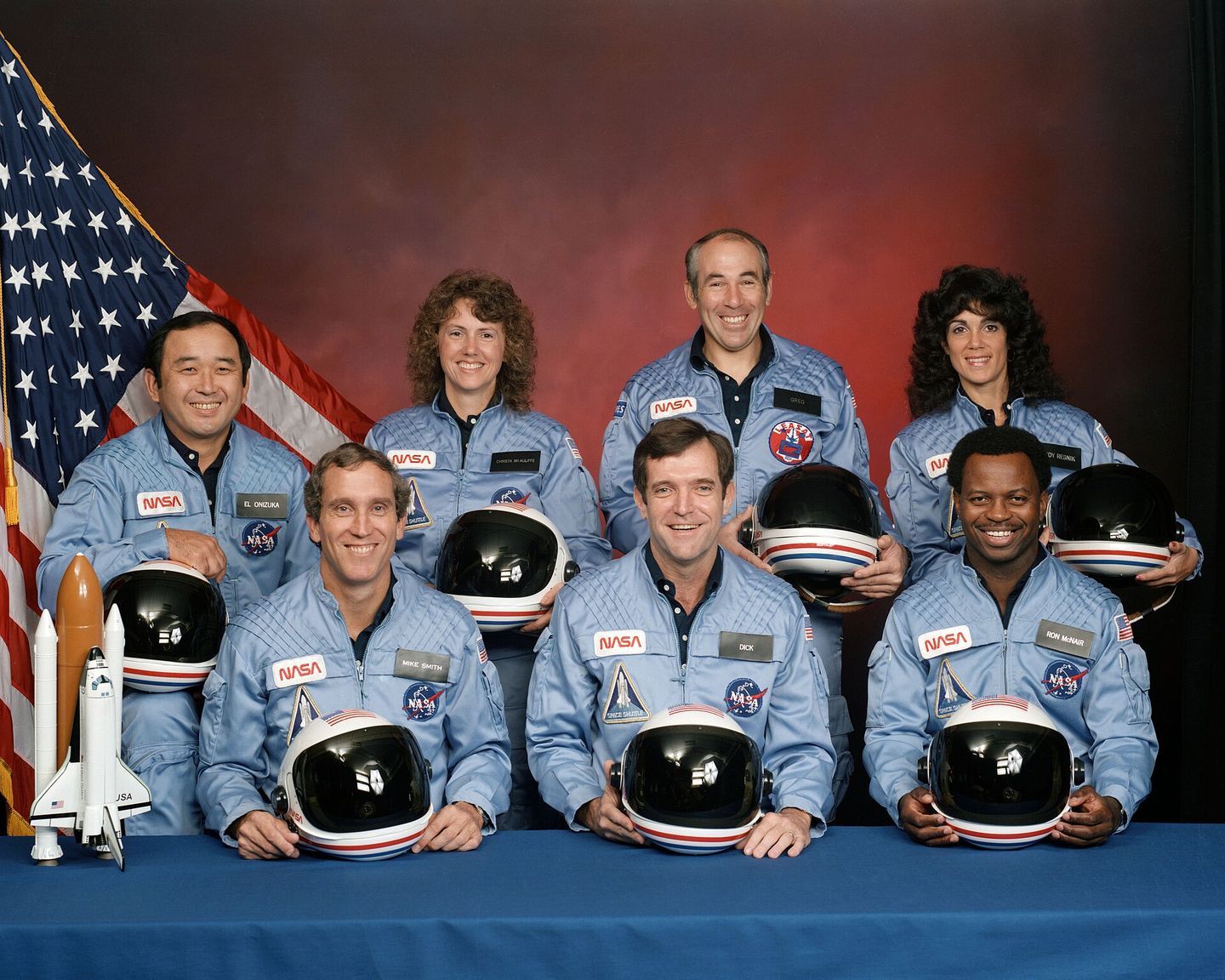
The seven crew members of mission sts-51-l, including teacher Christa McAuliffe (back row, second from left). the design failures discussed here cost every one of them their lives. NASA, Public domain, via Wikimedia Commons
The Challenger disaster didn't end the shuttle program, but it changed it. NASA implemented new safety protocols, revised its organizational structure, and mandated that engineers had direct access to decision-makers. The changes worked until they didn't. Seventeen years later, on February 1, 2003, Columbia disintegrated during reentry, killed by a different technical failure and a similar organizational culture. The lesson was the same: complex systems fail when the people who understand the risks can't effectively communicate with the people who make the decisions.
Every system designed to keep people safe, aircraft, bridges, medical devices, software, operates on the assumption that small failures will be caught before they cascade. But catching failures requires listening to warnings, respecting constraints, and treating anomalies as signals rather than noise. Design isn't just about making things work. It's about making failure visible, making dissent possible, and ensuring that the people closest to the problem have the authority to stop the machine. Challenger taught that lesson at the highest possible cost. The question is whether the systems we build today have learned it.
studio / on-this-day / Jan 28