studio / on-this-day / Jan 29
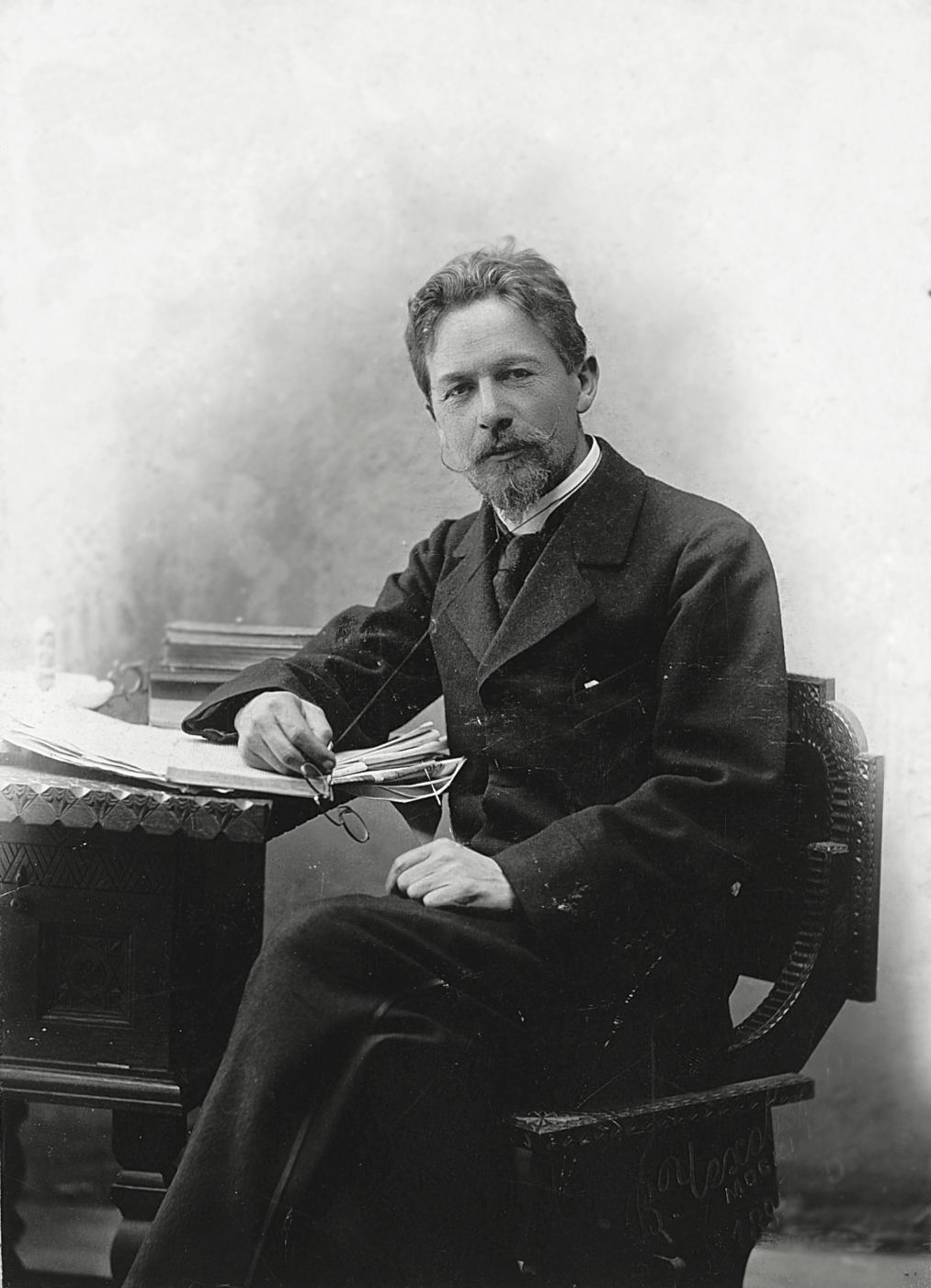
Anton Chekhov in 1889, at age 29 — already the author of hundreds of short stories and beginning work on the plays that would reshape modern drama. V. Chekhovskii, Moscow, Public domain, via Wikimedia Commons
Where Nothing Happens
On this day in 1860 — Anton Chekhov was born, and would write plays in which nothing dramatic happens and everything human does.
3 min read
Anton Pavlovich Chekhov was born in Taganrog, Russia, on January 29, 1860. His father ran a grocery store and was a brutal disciplinarian. Chekhov studied medicine, became a doctor, and wrote short stories on the side to support his family. He published hundreds of pieces in humor magazines under pseudonyms. By his thirties, he was writing plays that barely resembled anything called theater. Nothing dramatic happened in them. No villains, no heroes, no clear resolutions. People talked, drank tea, looked out windows, and felt trapped by circumstances they couldn't articulate. Critics hated it. Audiences were confused. It became the template for modern drama.
Chekhov's most famous plays, "The Seagull," "Uncle Vanya," "Three Sisters," "The Cherry Orchard," are built on absences. The action that would normally drive a plot either happened offstage or didn't happen at all. Characters spend entire acts waiting for things that never arrive, discussing futures that never materialize, mourning pasts they can't recover. The structure is anti-climactic by design. The rising action stalls. The conflicts don't resolve. The endings trail off rather than conclude. This wasn't incompetence. It was a deliberate rejection of theatrical convention.
Before Chekhov, plays followed Aristotelian structure: exposition, rising action, climax, resolution. Heroes made decisions that led to consequences. The arc was clear. Chekhov dismantled that architecture. In "Three Sisters," the sisters never make it to Moscow. In "The Cherry Orchard," the estate is sold and the family scatters. These aren't spoilers because the outcomes are never in doubt. The plays aren't about what happens. They're about the experience of time passing while nothing happens, the slow accumulation of small disappointments, the gap between what people want and what they get.
The dialogue works the same way. Characters talk past each other. Conversations meander. People don't say what they mean. Subtext carries more weight than text. A line about the weather might actually be about loneliness. A discussion about selling an orchard might be about mortality. Chekhov trusted audiences to read between the lines, to notice what wasn't said. This was radically different from the declamatory style of 19th-century theater, where every emotion was announced and every theme was spelled out.
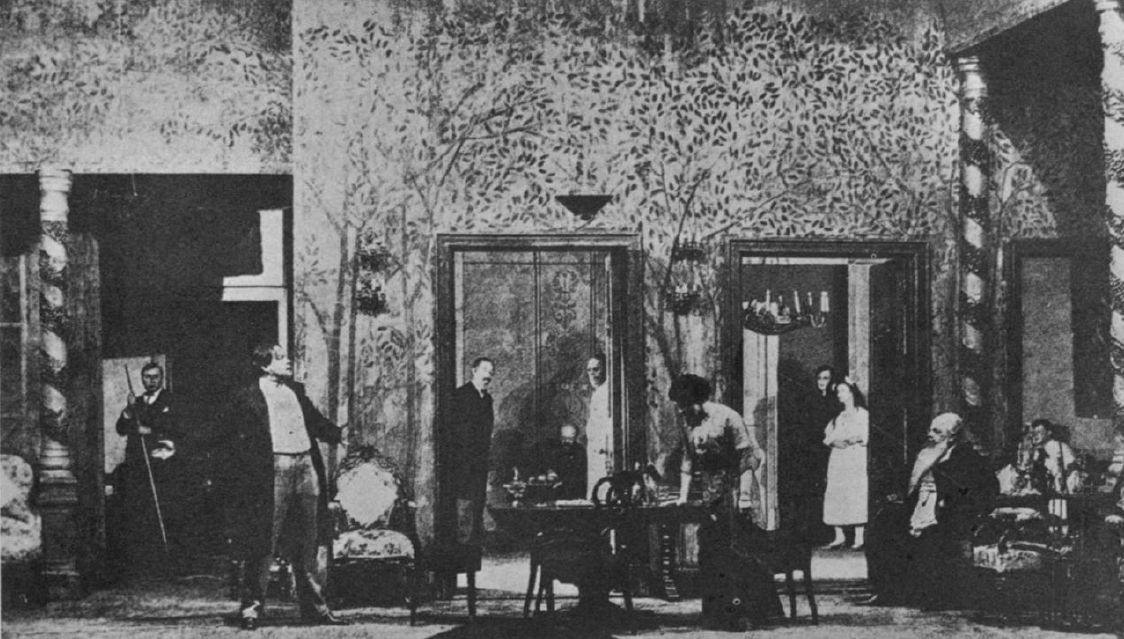
Original Moscow art theatre production of the Cherry Orchard, 1904 — Chekhov's final play, directed by konstantin stanislavski. Alexander Bakshy, Public domain, via Wikimedia Commons
Chekhov's approach to character was equally unconventional. No one in his plays is purely good or evil. Everyone is flawed, contradictory, recognizable. They're selfish and generous, cruel and kind, often in the same scene. They make bad decisions for understandable reasons. They hurt people they love. They fail to change even when they understand what needs changing. This psychological realism, people as complex systems rather than moral archetypes, became the foundation for modern character-driven storytelling.
He died in 1904 at 44 from tuberculosis, the same disease he'd treated as a doctor for years. His plays have been in continuous performance ever since. Directors keep returning to them because the structure is so open it allows endless interpretation. The same script can be tragic, comic, absurd, or mundane depending on how it's staged. The ambiguity is the point. Life doesn't have clear narrative arcs. People don't learn lessons and change. Most of what matters happens in small, undramatic moments that accumulate over time.
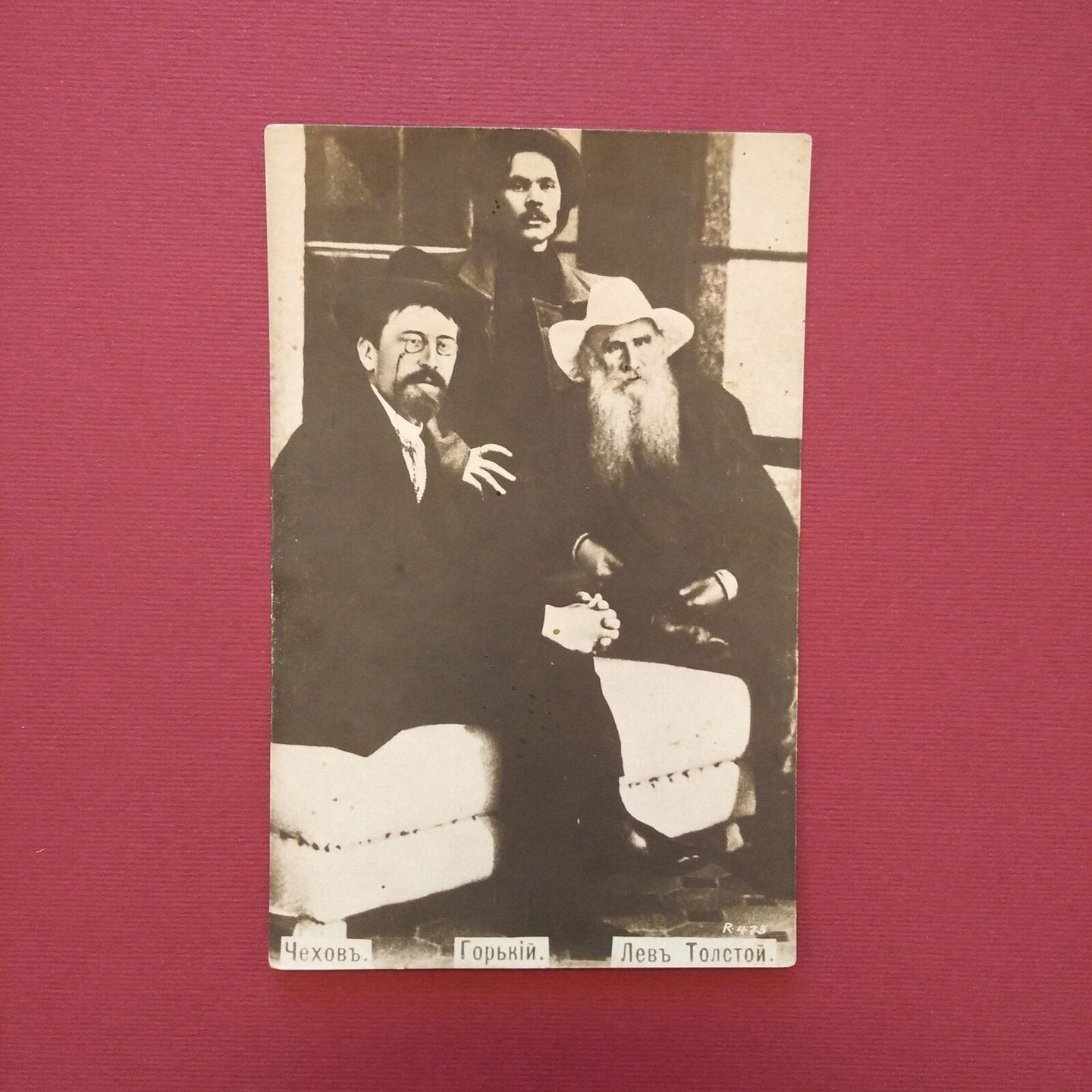
Chekhov (left) with maxim gorky and leo tolstoy in the early 1900s — Three figures at the center of Russian literature in his final years. Главархив Москвы, CC BY 4.0, via Wikimedia Commons
Chekhov's influence extends far beyond theater. Every television drama about ordinary people living ordinary lives, every film that prioritizes mood over plot, every story that ends without resolution, traces back to this shift. He proved that you don't need spectacle or melodrama to create meaning. You just need careful observation, honest depiction, and enough trust in your audience to let them do the interpretive work. Sometimes the most powerful design is the one that gets out of the way and lets the experience speak for itself.
studio / on-this-day / Jan 29