studio / on-this-day / Feb 1
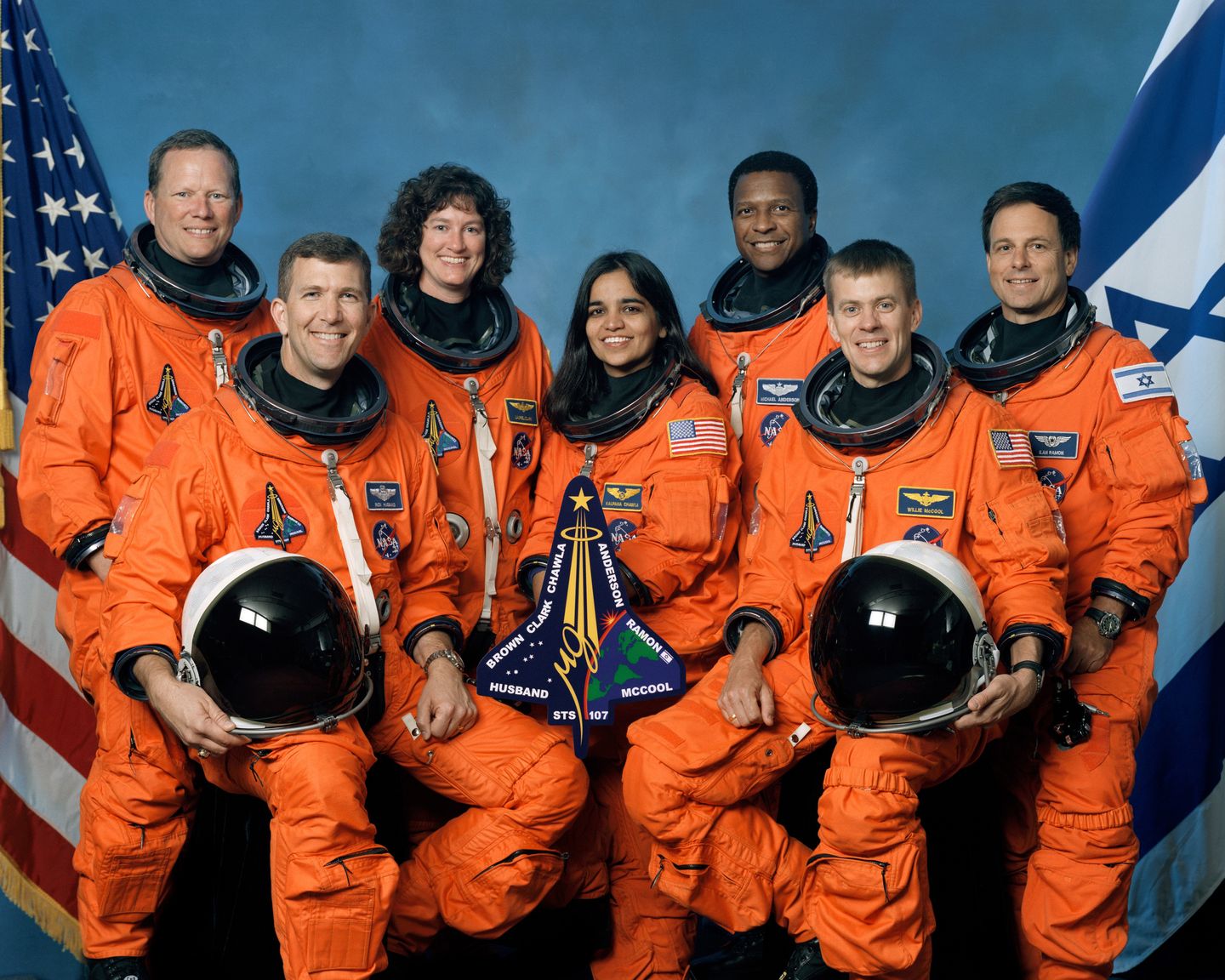
Official crew portrait of STS-107: (front row, l-r) Rick Husband, Kalpana Chawla, William McCool; (back row, l-r) David Brown, Laurel Clark, Michael Anderson, Ilan Ramon. NASA, Public domain, via Wikimedia Commons
Sixteen Days Too Late
On this day in 2003 — the shuttle Columbia broke apart on reentry, undone by a foam strike sixteen days earlier that no one had treated as fatal.
3 min read
The foam struck 82 seconds after launch. A piece of insulation the size of a briefcase broke free from the external fuel tank, moving at 500 miles per hour, and hit the left wing of the Space Shuttle Columbia. The impact created a hole roughly six to ten inches across in the reinforced carbon panel. Engineers on the ground reviewed video of the strike and debated whether it was a problem. They decided it probably wasn't. The shuttle continued its mission.
For sixteen days, Columbia orbited Earth while its seven crew members conducted experiments in microgravity. Commander Rick Husband, pilot William McCool, mission specialists Kalpana Chawla, Michael Anderson, Laurel Clark, and David Brown, and payload specialist Ilan Ramon worked through their schedule. They had no idea the wing was damaged. Mission Control had no way to inspect the damage from the ground, and no contingency plan existed to repair it in orbit.
On February 1, 2003, Columbia began reentry over the Pacific. At 8:54 AM Eastern Time, as the shuttle crossed into Texas airspace at an altitude of 207,135 feet, sensor readings began to fail. The damaged wing was disintegrating. Superheated plasma, hotter than the surface of the sun, was entering the breach. At 8:59 AM, traveling at 12,500 miles per hour, Columbia broke apart over Texas and Louisiana. All seven astronauts were killed.
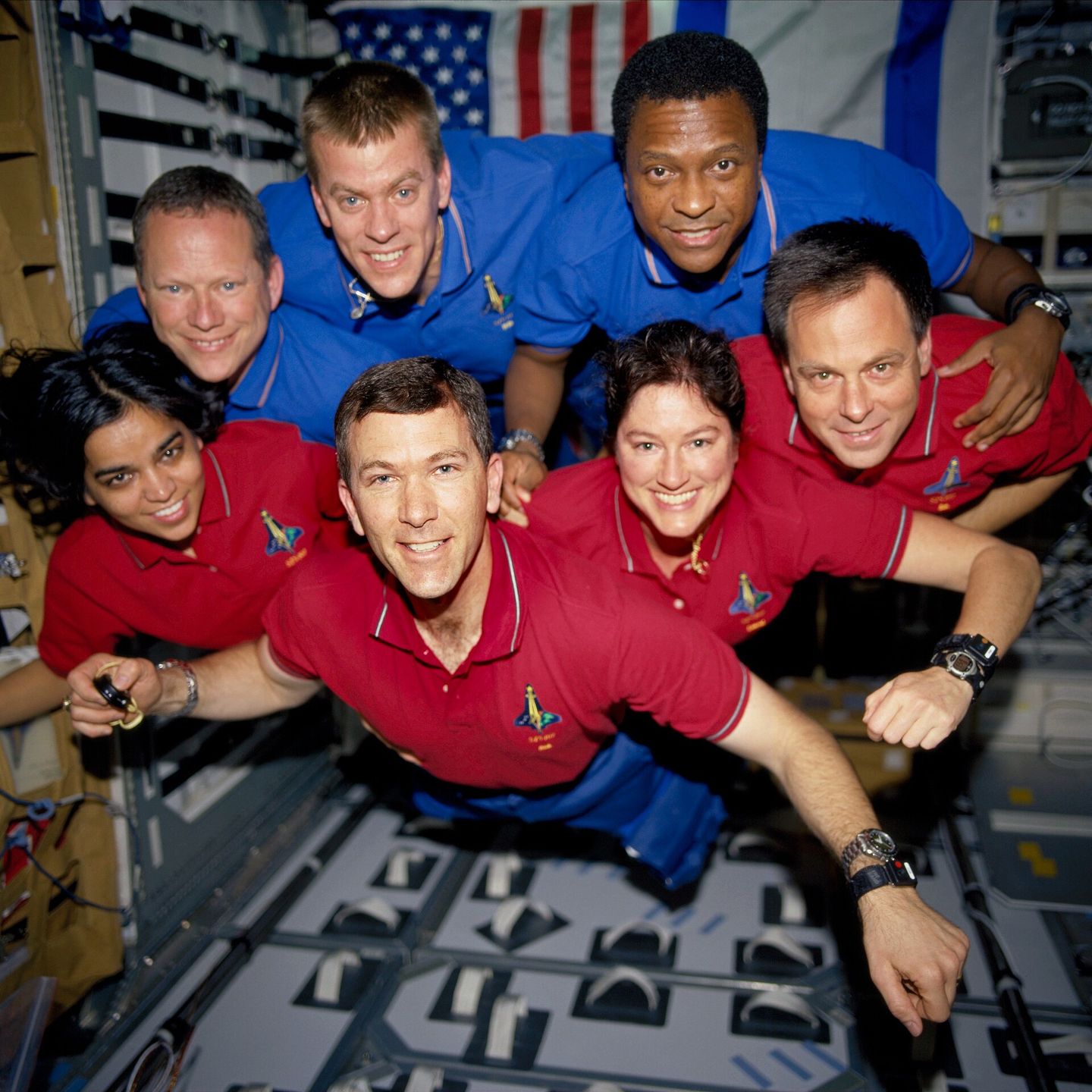
STS-107 crew members in the spacelab research module aboard Columbia during the mission. Public domain, via Wikimedia Commons
The investigation that followed traced the failure back to design decisions made decades earlier. The shuttle's external tank had been redesigned to reduce weight, and foam insulation was sprayed directly onto its surface instead of being applied in panels. Engineers had seen foam strikes before on earlier missions. They had become normalized, treated as an acceptable risk. The culture at NASA had shifted after years of successful flights. Warnings were dismissed. The data was there, but the interpretation was not.
This wasn't a new problem in engineering. Similar patterns appear in the Challenger disaster in 1986, where O-ring failures were known but tolerated. Complex systems don't fail because one thing breaks. They fail because multiple safeguards, each designed to catch errors, all fail in sequence. The foam strike was the trigger. The failure to inspect was the second error. The inability to repair in orbit was the third. The normalization of risk was the foundation beneath all of it.
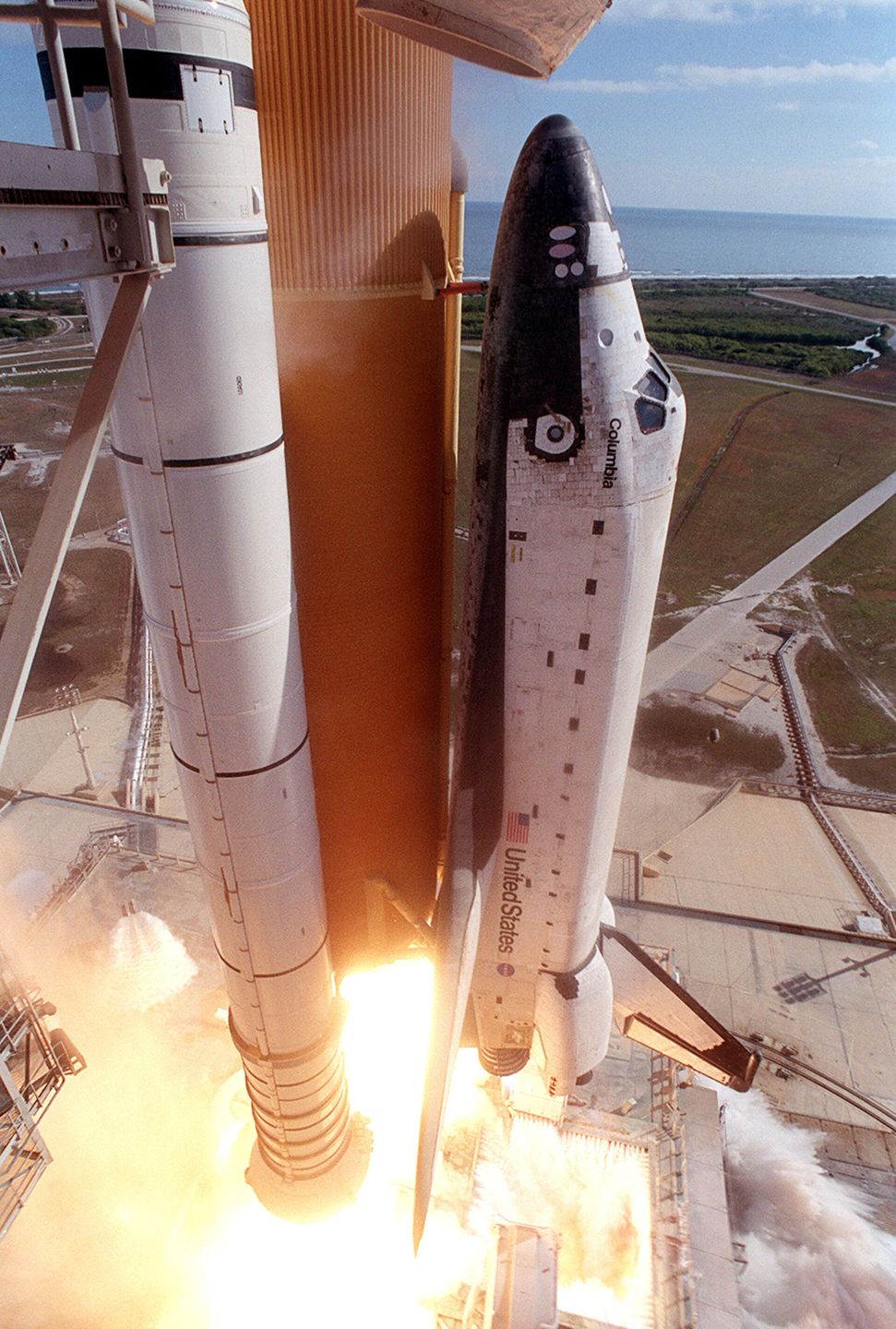
Columbia lifts off on January 16, 2003 at the start of STS-107; the foam strike occurred 82 seconds into this launch. NASA, Public domain, via Wikimedia Commons
Kalpana Chawla became the first Indian-American woman in space on her first mission in 1997. She returned for STS-107 on Columbia. Ilan Ramon was Israel's first astronaut. Laurel Clark had joined the crew after another astronaut was injured in a bicycle accident. These weren't abstract failures of engineering tolerances and risk matrices. They were people doing work that required trust in systems that turned out to be inadequate.
The Columbia Accident Investigation Board issued its report seven months later. It recommended sweeping changes to NASA's safety culture, the inspection process, and the organizational structure that allowed known risks to be ignored. The shuttle program continued for another eight years before retiring in 2011. Every subsequent mission carried repair kits, inspection equipment, and contingency plans for orbital refuge.
What happened on February 1, 2003, was not a random mechanical failure. It was the inevitable outcome of design decisions, risk assessments, and communication structures that valued schedule over safety. Every complex system contains latent failures waiting to align. The question is never whether those failures exist. The question is whether we build systems that can detect them before sixteen days turn into 16 minutes over Texas at 12,500 miles per hour.
studio / on-this-day / Feb 1