studio / on-this-day / Jan 25
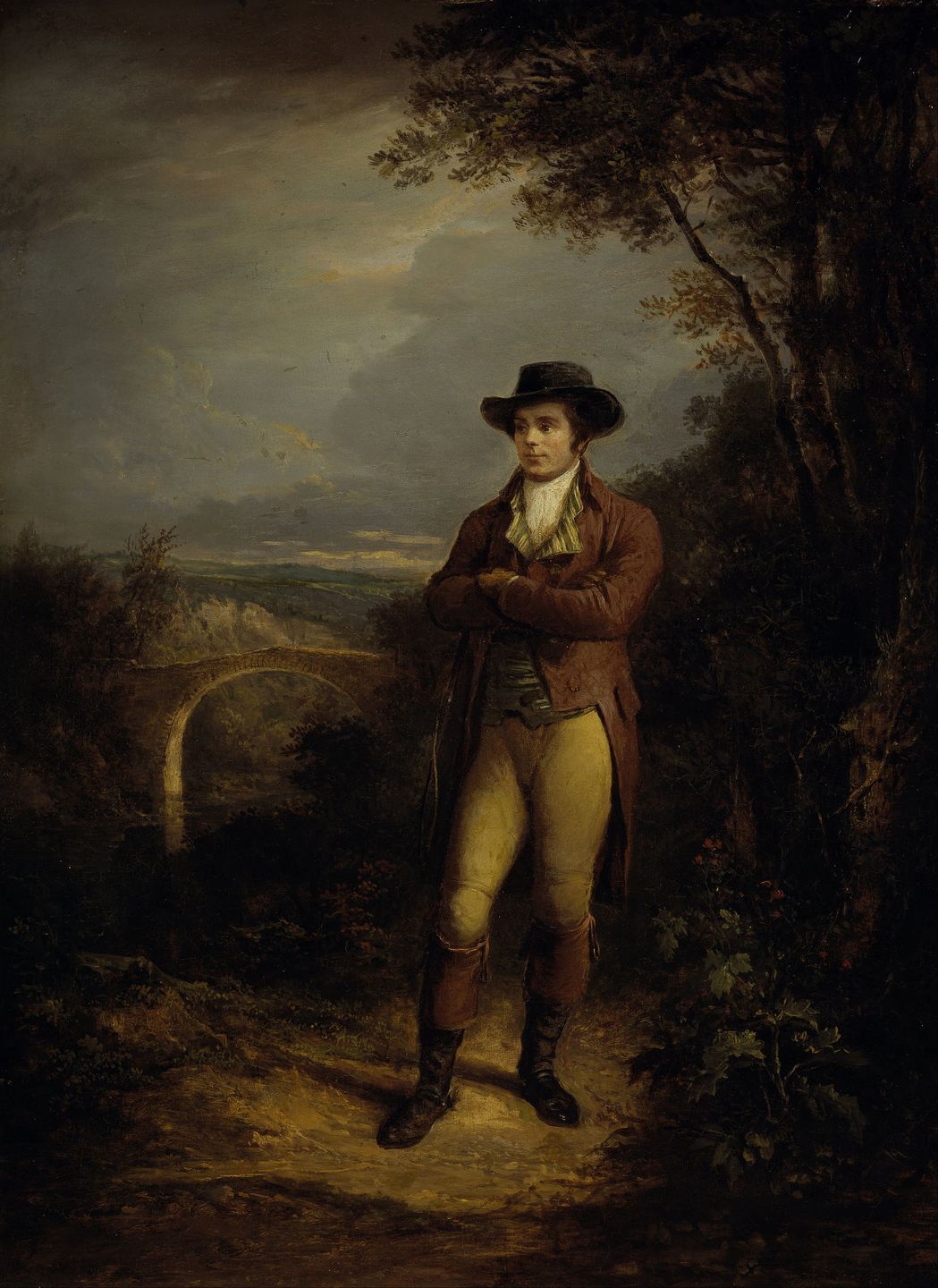
Portrait of robert Burns (1759–1796) by alexander nasmyth, the most familiar likeness of Scotland's national poet. National galleries of Scotland. Alexander Nasmyth, Public domain, via Wikimedia Commons
Dialect as Design
On this day in 1759 — Robert Burns was born, and would prove a nation's poetry could be written in its own ordinary spoken tongue.
3 min read
Robert Burns was born in Alloway, Scotland, on January 25, 1759, in a clay cottage his father built. He grew up poor, worked a farm, read everything he could find, and started writing poetry in his teens. At 27, he published "Poems, Chiefly in the Scottish Dialect" to raise money for passage to Jamaica. The book sold out. Burns became famous overnight, stayed in Scotland, and spent the rest of his life writing in a language the English literary establishment considered provincial and unrefined. He proved them wrong by becoming the most widely read Scottish poet in history.
What made Burns radical wasn't just his subject matter, farmers, field mice, whisky, love, class resentment. It was his deliberate choice to write in Scots, a language with its own vocabulary, grammar, and rhythmic structure. English had colonized Scottish institutions, law, education, government. Writing poetry in Scots was an act of cultural preservation. Burns wasn't translating English thoughts into dialect. He was thinking in a language that carried different emotional textures, different associations, different music.
Language shapes what you can say. Scots has words English doesn't. "Dreich" describes a particular kind of damp, gray, oppressive weather. "Glaikit" means foolish in a specific, endearing way. Burns used these words not for novelty but because they named experiences more precisely than their English equivalents. This is how dialects function: they're optimized vocabularies for specific contexts, refined over generations by people who needed exact language for the world they lived in.
Burns's poems work rhythmically in ways that don't translate. "Auld Lang Syne," sung every New Year's Eve, sounds awkward in standard English: "Should old acquaintance be forgot and never brought to mind?" The Scots version has internal rhymes, vowel patterns, and cadences that feel inevitable when spoken aloud. The form fits the content. This is design thinking applied to language: matching structure to function, sound to meaning, rhythm to emotion.
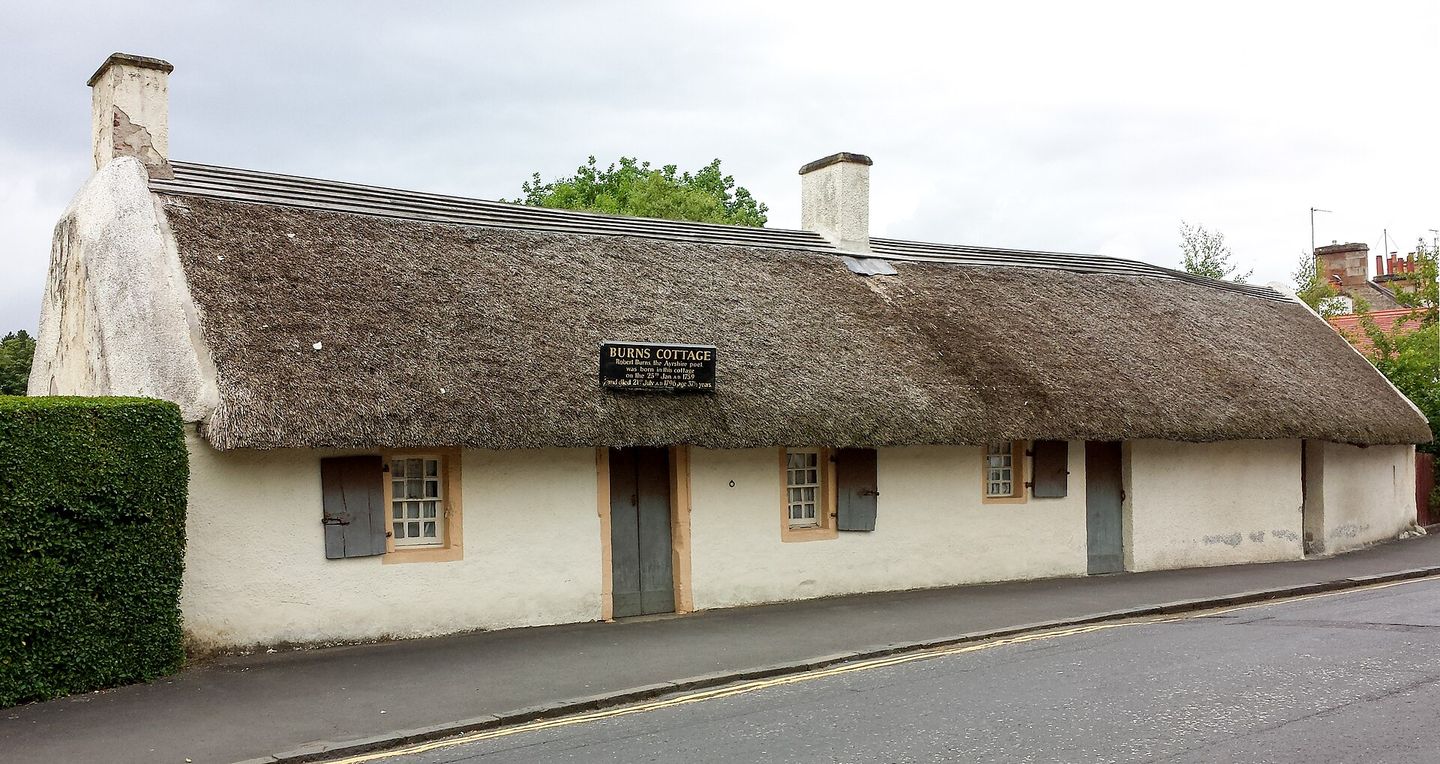
Burns cottage in Alloway, ayrshire — the clay cottage built by robert Burns's father where the poet was born in 1759. DeFacto, CC BY-SA 4.0, via Wikimedia Commons
He wrote for people who worked the land, drank in pubs, dealt with landlords and taxes and bad harvests. His audience wasn't the London literary elite. It was farmers, laborers, tradesmen, people who recognized their own lives in his work. This wasn't populism. It was precision. Burns used the language his readers actually spoke to describe the world they actually inhabited. The result felt more authentic than anything coming out of polite literary circles.
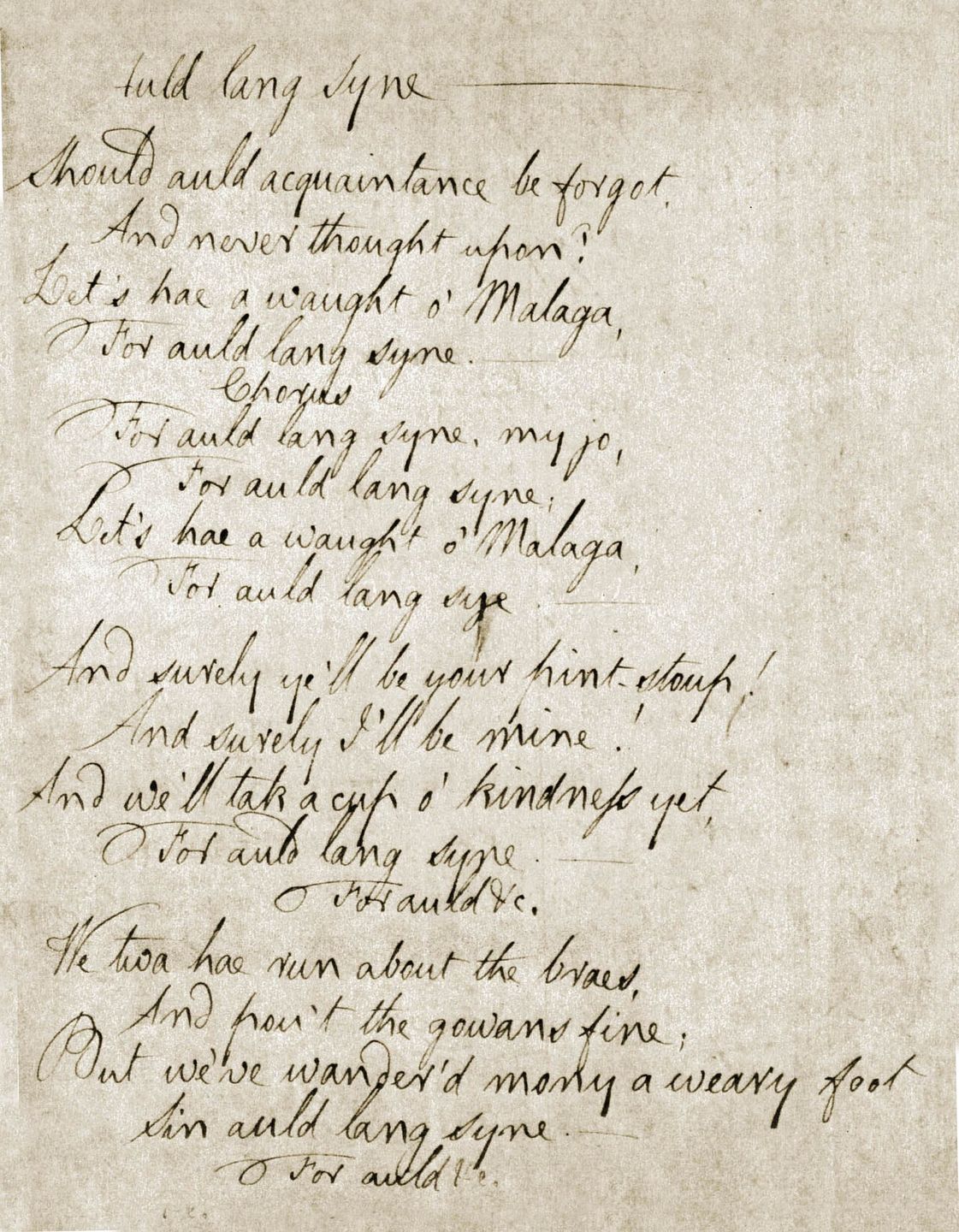
Burns's own manuscript of "auld Lang Syne" — the Scots song he set down for posterity, now sung worldwide every New Year's Eve. Robert Burns, Public domain, via Wikimedia Commons
Burns died at 37 from heart disease, likely worsened by years of hard physical labor. He left behind over 550 songs and poems, many still in print, many still sung. "Auld Lang Syne" is one of the most performed songs in the world. "A Red, Red Rose" remains a standard love poem. "To a Mouse" gave John Steinbeck the title for "Of Mice and Men." Burns's influence extends far beyond Scotland because he demonstrated that local language, when used with precision and care, becomes universal.
Every regional voice, every subculture's slang, every domain-specific jargon exists because general-purpose language isn't precise enough for specialized needs. Code-switching isn't about dumbing things down or dressing them up. It's about choosing the right tool for the job. Burns understood this instinctively. Scots wasn't a limitation. It was the most expressive medium available for what he wanted to say. Sometimes the vernacular is the most sophisticated choice.
studio / on-this-day / Jan 25