studio / on-this-day / Jan 21
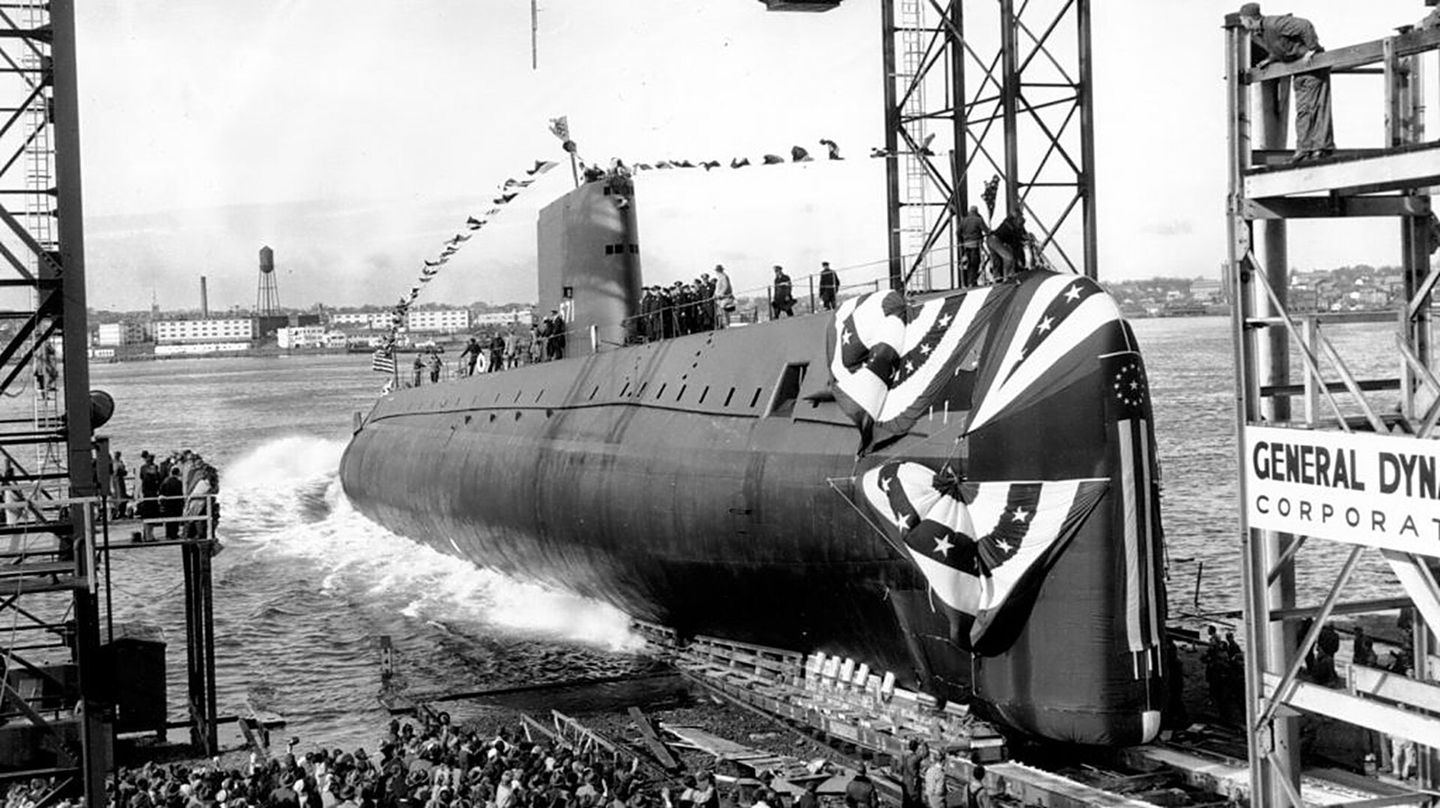
The USS Nautilus at her launch in Groton, Connecticut, January 21, 1954. U.S. navy, public domain, via Wikimedia Commons
The Submarine That Stopped Surfacing
On this day in 1954 — the USS Nautilus, the first nuclear-powered submarine, slid into the water and freed a submarine from ever having to come up for air.
4 min read
On January 21, 1954, in Groton, Connecticut, a black-hulled submarine slid down the ways into the Thames River. It looked like a submarine. It was shaped like one, crewed like one, armed like one. But it was not the kind of machine the world had known, because every submarine before it had been a lie of sorts, and the Nautilus was the first to tell the truth.
The lie was in the word itself. A diesel-electric submarine was really a surface ship that could hide underwater for a while. It ran on batteries when submerged, and those batteries drained in hours, so it had to come up, or raise a snorkel, to run its diesel engines and recharge, gulping air the whole time. A submarine spent most of its life near the surface, listening for the moment it would have to breathe. Underwater endurance was measured in hours, and the surface was where submarines died.
A nuclear reactor changed the arithmetic completely. It needs no air, and almost no fuel; a small charge of uranium runs for years. Admiral Hyman Rickover, difficult and relentless, forced a reactor small enough and safe enough to seal inside a hull, over the objections of nearly everyone who thought it couldn't be done. It boiled water into steam, the steam spun turbines, and the submarine was suddenly free of both the surface and the fuel dock.
The Nautilus proceeded to break every record a submarine had. Its first underway signal, sent in January 1955, read simply: underway on nuclear power. It stayed submerged for weeks, crossed oceans without surfacing, and in 1958 became the first vessel to reach the North Pole, sliding beneath the polar ice cap where no ship could follow. It could run circles, literally, around anything else in the water.
The strategic consequence was enormous and permanent. A submarine that never has to surface, carrying missiles, is very nearly impossible to find, and a weapon that cannot be found cannot be destroyed in a first strike. The nuclear-powered missile submarine became the most survivable leg of the nuclear triad, the quiet guarantor of Cold War deterrence. The prototype for all of it slid into the Thames that January morning.
Rickover's other legacy was cultural. He built the nuclear navy around a discipline so obsessive it became legendary: reliability was not a feature to be balanced against cost, it was the entire point, because the power plant sat sealed inside a hull with a hundred people breathing next to it. That standard, engineering as a moral posture, outlived him and arguably still runs the reactors today.
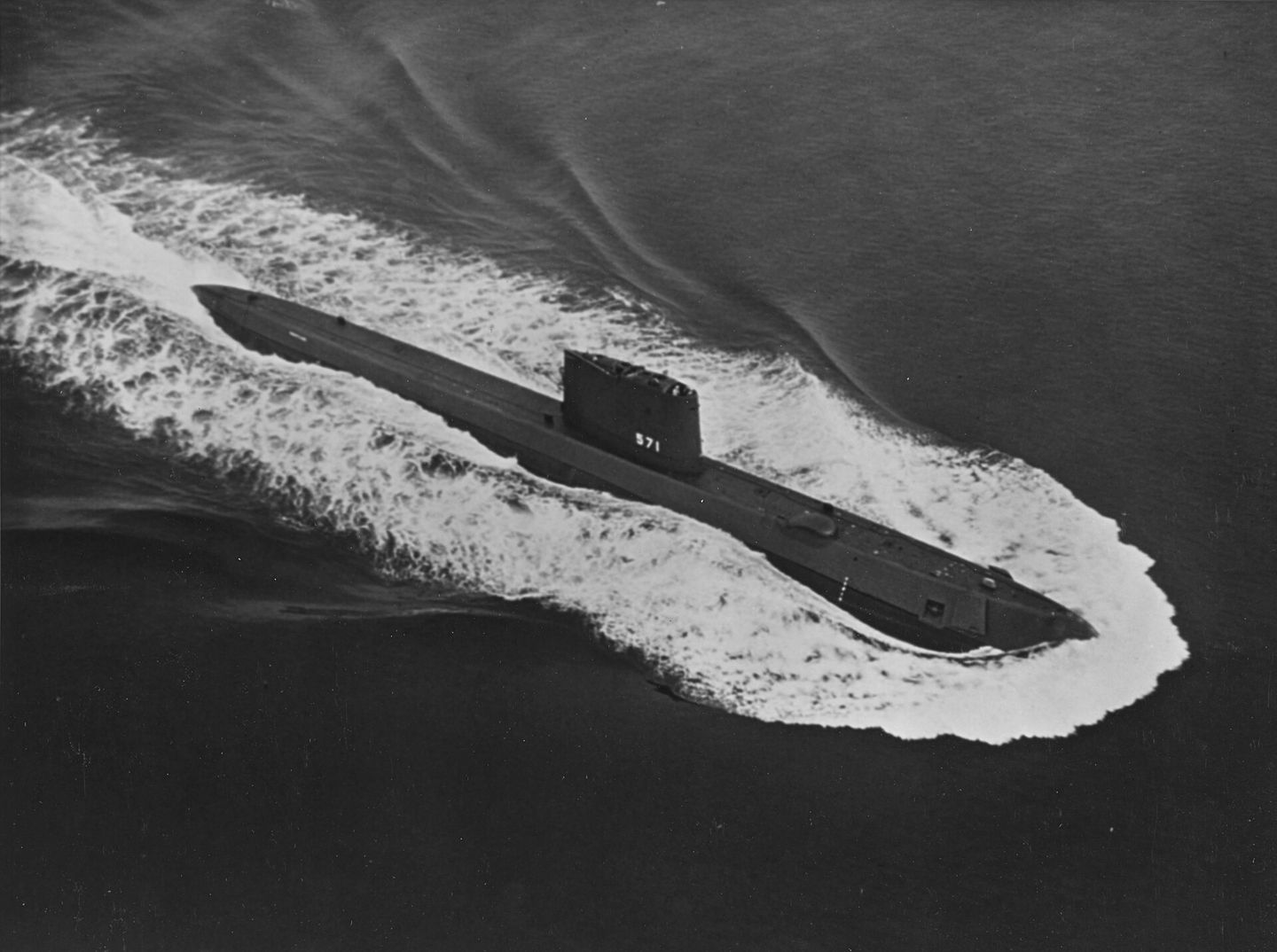
Nautilus underway at sea in 1965. U.S. navy, public domain, via Wikimedia Commons
The Nautilus is a museum now, tied up not far from where it was built. But it is the ancestor of every silent boat circling under the ice with the power to end the world, and it marks the moment the ocean stopped being a place that submarines visited and became a place they could simply live. It took a machine defined entirely by how long it could hold its breath, and it removed the need to breathe.
studio / on-this-day / Jan 21