studio / on-this-day / Jan 20
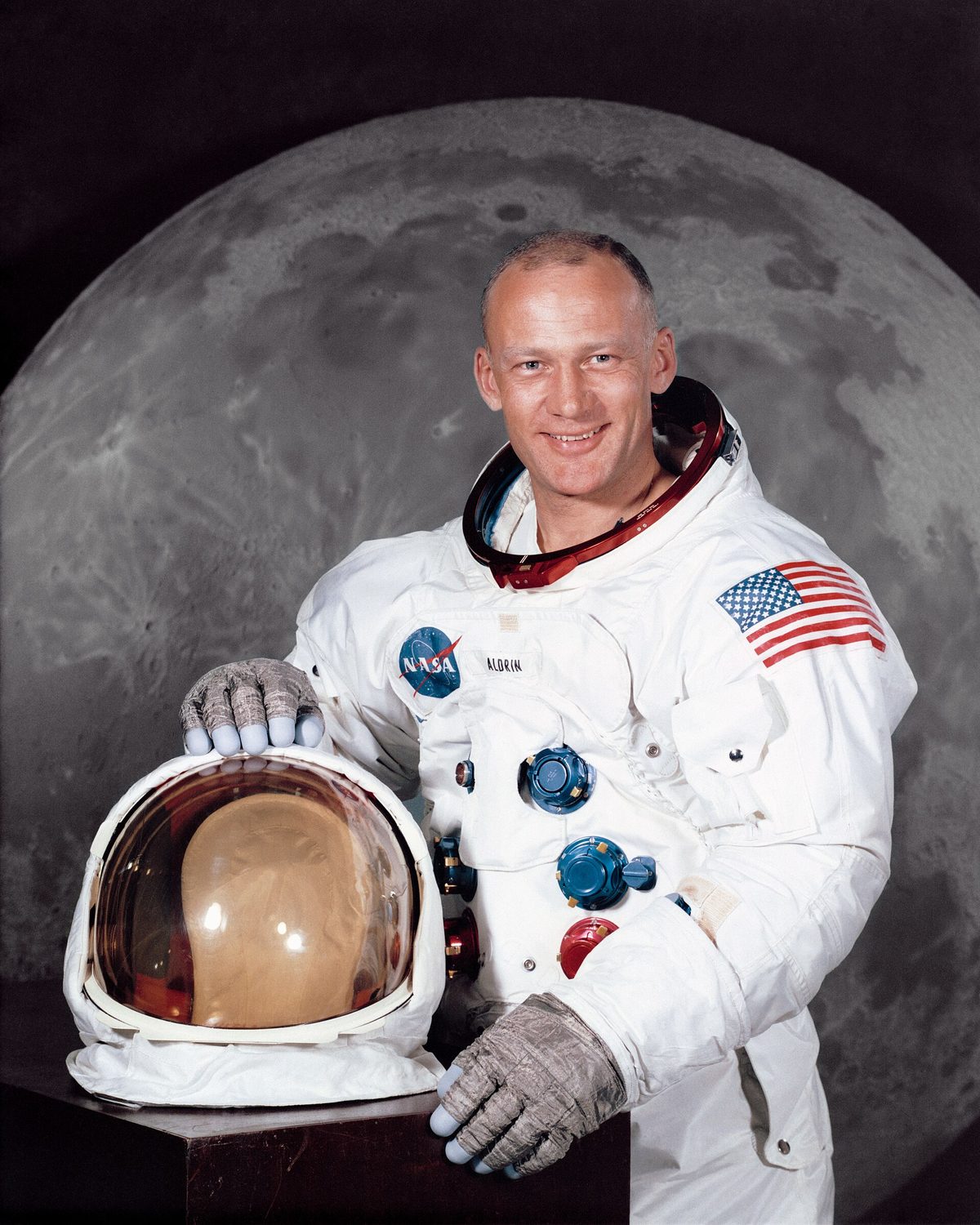
Buzz Aldrin, Apollo 11 lunar module pilot. Public domain, via Wikimedia Commons
Second to the Moon
On this day in 1930 — Buzz Aldrin was born, and would become the second man to stand on the Moon, proof that going second takes its own nerve.
3 min read
Edwin Eugene Aldrin Jr. was born in Glen Ridge, New Jersey, on January 20, 1930. His father was an aviation pioneer who flew with Orville Wright. His mother's maiden name was Moon. Buzz, a childhood nickname that stuck, graduated third in his class from West Point, flew 66 combat missions in Korea, and earned a doctorate in astronautics from MIT. His thesis focused on orbital rendezvous techniques. NASA hired him in 1963 specifically for that expertise.
On July 20, 1969, Aldrin became the second person to walk on the moon, 19 minutes after Neil Armstrong. The order was determined by the layout of the lunar module hatch: Armstrong was closer to the door. That 19-minute gap defined the rest of Aldrin's life. History remembers firsts. Seconds fade into footnotes. Armstrong got the stamp, the statue, the singular mythology. Aldrin got the asterisk.
But being second had its own strange clarity. While Armstrong carried the symbolic weight of all humanity taking its first step, Aldrin had the freedom to just be present. He described the lunar surface as "magnificent desolation." He took communion in the lunar module before the moonwalk, a private ritual he barely mentioned until years later. He photographed his own boot print in the regolith, a quieter counterpoint to the famous image of Armstrong's.
Aldrin understood systems. His doctoral work on orbital mechanics wasn't abstract theory; it was the mathematical foundation for how two spacecraft find each other in three-dimensional space while traveling at 17,000 miles per hour. He designed rendezvous techniques still used today. The reason docking works at all is because engineers like Aldrin turned the problem into repeatable procedures with known tolerances and failure modes.
After the moon, Aldrin struggled. Depression, alcoholism, three divorces. The fame was immense but oddly hollow. He'd done the most extraordinary thing a human could do, and then he had to figure out what to do next for the remaining 50 years of his life. He wrote memoirs, advocated for Mars missions, appeared on sitcoms, and became an unexpected champion for making space accessible rather than mythical. He turned being the second person on the moon into a platform for explaining why the third, fourth, and thousandth person matter just as much.
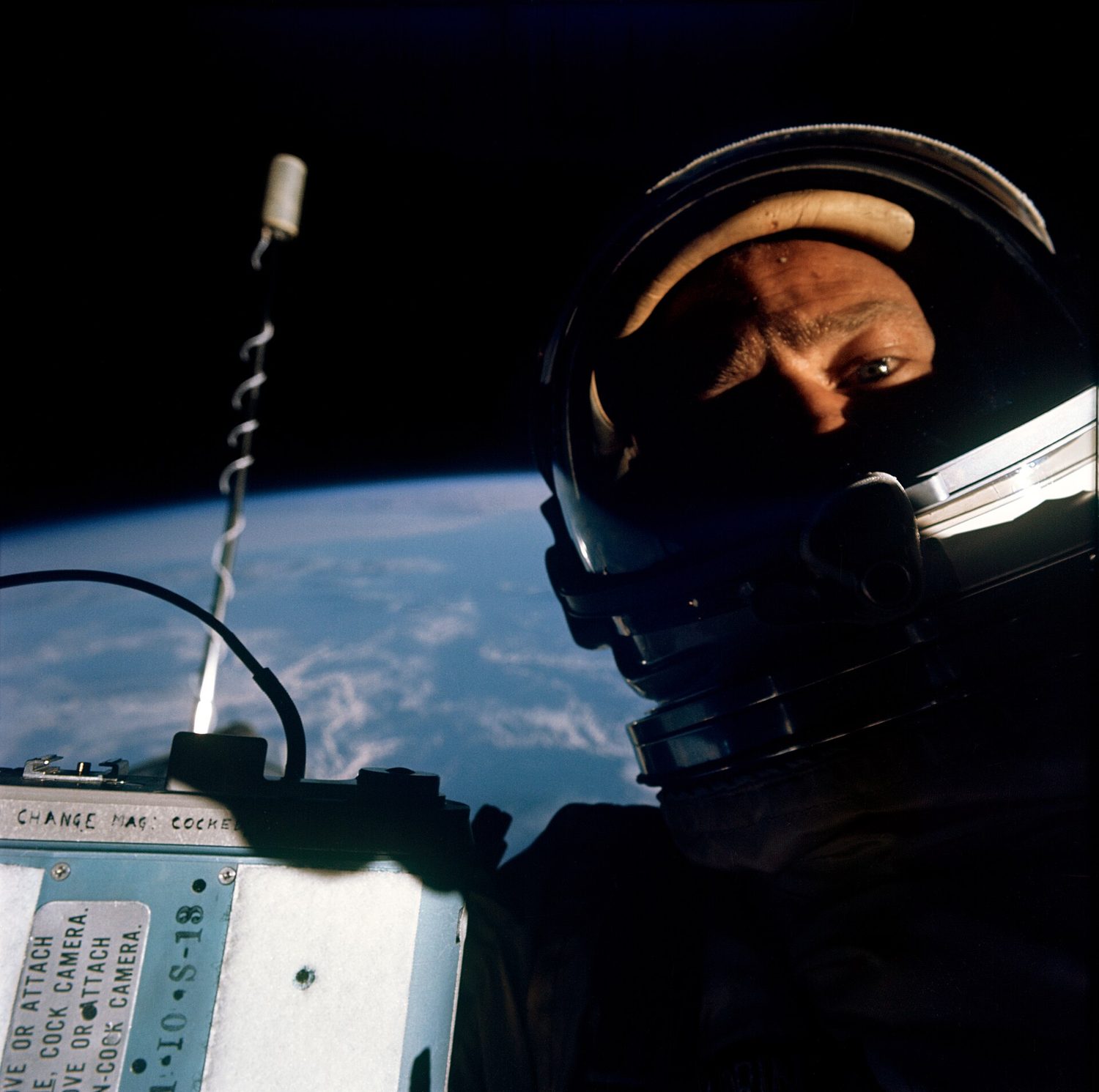
Aldrin on his Gemini 12 spacewalk, three years before the Moon. Public domain, via Wikimedia Commons
There's a design principle here: the second iteration often reveals more than the first. The prototype gets attention, but the production model has to actually work. Armstrong proved it was possible. Aldrin proved it was repeatable. That distinction matters for everything that scales. First contact gets the headlines. Second contact becomes the template.
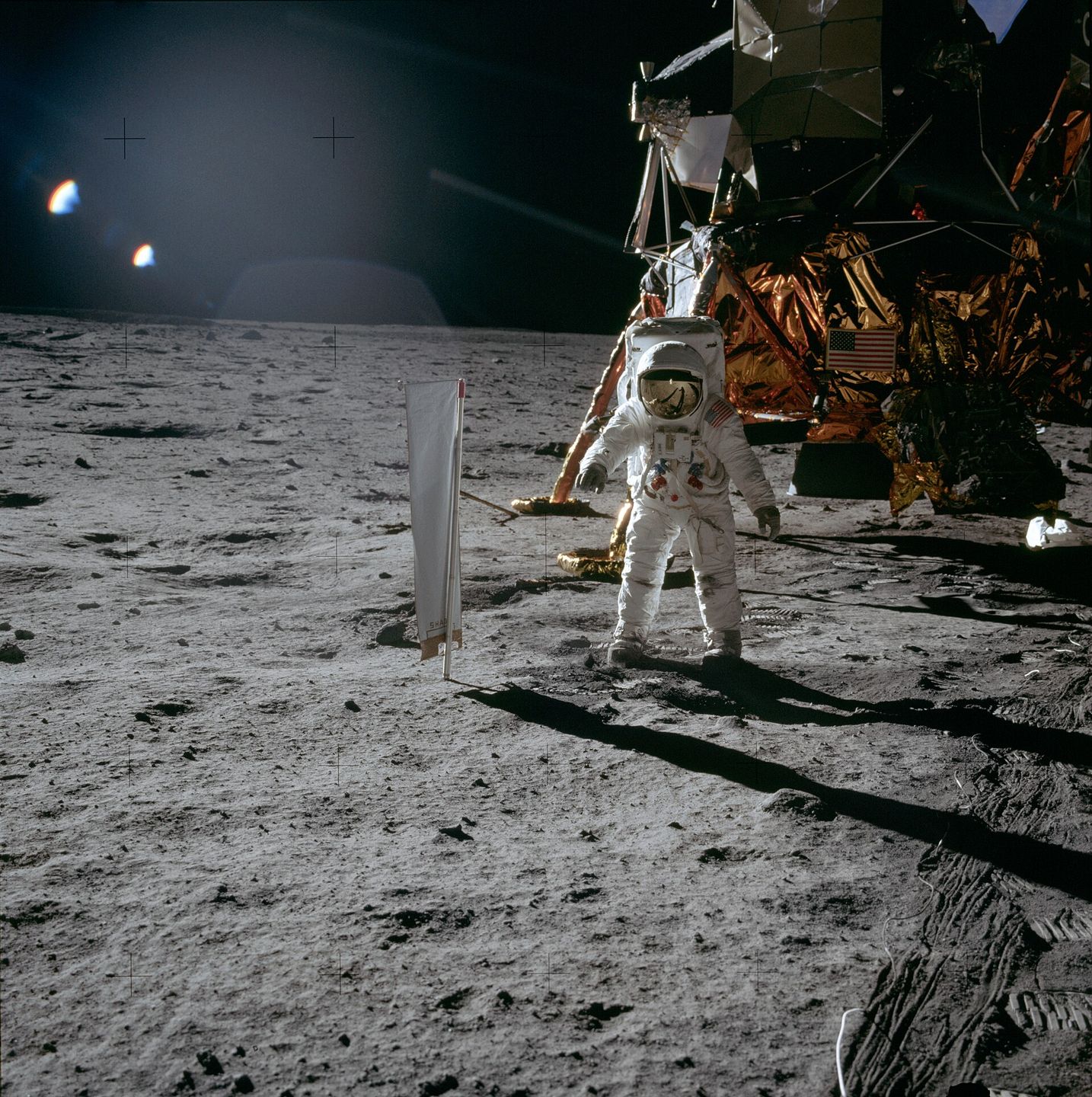
Aldrin setting up the solar wind composition experiment on the lunar surface, July 1969 — the quiet, repeatable engineering work behind the mission. NASA / Neil A. Armstrong, Public domain, via Wikimedia Commons
Aldrin is 96 now, the oldest living person to have walked on the moon. He still advocates for human exploration, still talks about Mars, still insists that space isn't a destination but a process. Being second didn't diminish what he did. It clarified it. The moon wasn't a stunt or a symbolic gesture. It was a repeatable, engineerable achievement. And that might be more important than being first.
studio / on-this-day / Jan 20