studio / on-this-day / Apr 26
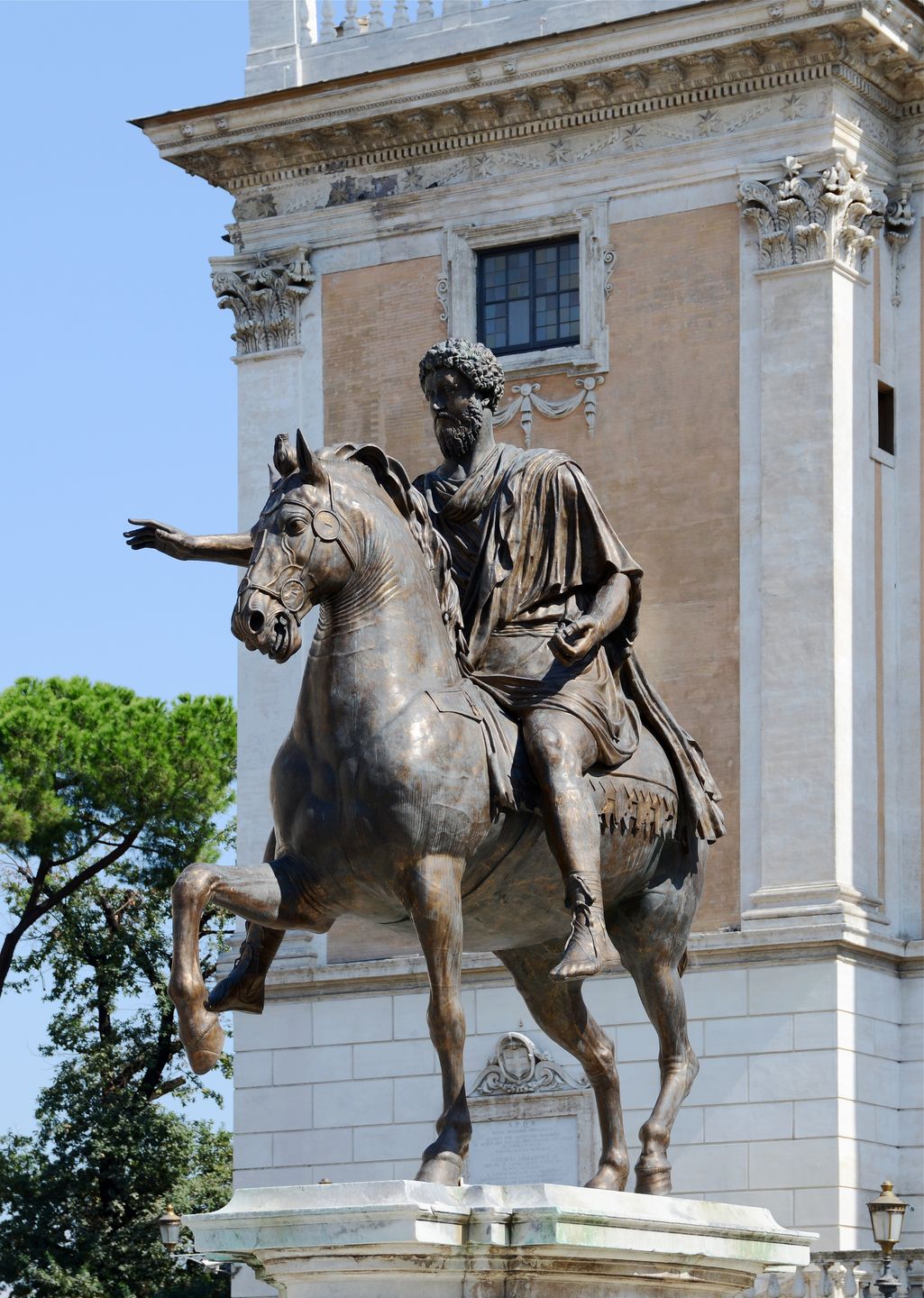
The bronze equestrian statue of Marcus Aurelius, originally gilded, created around 175 ad and now housed in the musei capitolini in Rome. It survived the middle ages because it was mistakenly believed to depict constantine the first. Alvesgaspar, Public domain, via Wikimedia Commons
Notes to Self
On this day in 121 — Marcus Aurelius was born, a Roman emperor who wrote his Meditations as private notes, never meant for our eyes.
3 min read
Marcus Aurelius was born on April 26, 121, in Rome, into a family of wealth and influence. He was adopted by Emperor Antoninus Pius and groomed for power from childhood. He studied rhetoric, philosophy, and law. He became emperor at 40 and ruled for nearly two decades. During that time, he fought wars on the frontiers, managed plagues and famines, and tried to hold together an empire that was beginning to fracture. And at night, in his tent, he wrote notes to himself. Those notes became the Meditations, one of the most enduring works of philosophy ever written, and it was never meant to be published.
The Meditations are not a treatise. They are private reminders, fragments of thought written in moments of exhaustion and frustration. The entries are repetitive, circling the same themes. Control what you can control. Accept what you cannot. Do not waste time on anger or resentment. You will die, and so will everyone else. Remember that. Act accordingly. These are not grand revelations. They are the mental hygiene of a man under immense pressure, trying to stay sane by writing down what he already knows but keeps forgetting.
Stoicism, the philosophy Marcus practiced, is a system for managing adversity. It separates the world into two categories: things within your control and things outside of it. Your actions, your thoughts, your responses, those are yours. Everything else, other people's opinions, the weather, the outcome of events, is not. The discipline is to focus entirely on what you can influence and let the rest go. It is not about suppressing emotion. It is about not being ruled by it. Anger, fear, desire, these are signals. You acknowledge them, but you do not let them dictate behavior. That is the practice.
What makes the Meditations compelling is that Marcus was not a monk. He was not sitting in a garden debating abstract ethics. He was running an empire, making life-and-death decisions, managing betrayal, incompetence, and loss. His son was a disaster. His generals were ambitious. His advisors were sometimes corrupt. And through all of it, he kept returning to the same principles. You do not control outcomes. You control effort. You do not control other people. You control how you respond. That is the framework, and he had to rebuild it every day because it is not intuitive. The mind wants to rage. The mind wants to obsess. Stoicism is the practice of redirecting that energy toward something useful.
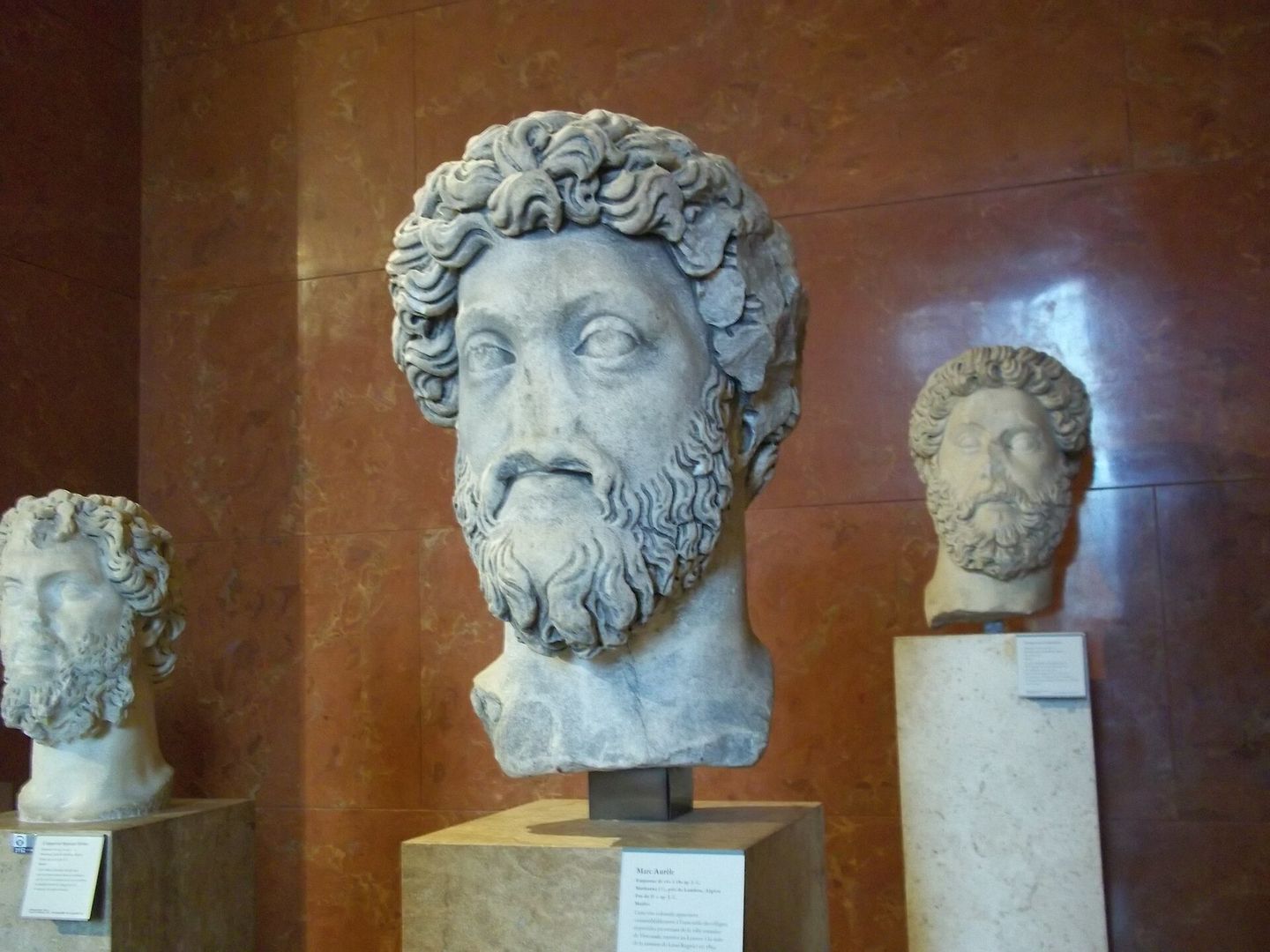
Marble bust of Marcus Aurelius from the louvre, circa 161-180 ad. He ruled for nearly two decades while simultaneously waging the marcomannic wars on the northern frontier and managing a devastating plague. Gunasekar, CC BY-SA 3.0, via Wikimedia Commons
Modern productivity systems are descended from this. David Allen's Getting Things Done separates tasks into actionable and non-actionable, focusing effort only where it matters. Cognitive behavioral therapy teaches that thoughts are not facts, that you can observe your own mental patterns and choose different responses. Mindfulness meditation, stripped of its spiritual context, is just Stoicism with a timer. The core insight is the same: you cannot control the world, but you can control your relationship to it. That reframing is the difference between helplessness and agency.
The reason the Meditations survived is that Marcus died, and someone found his notebooks. They were copied, translated, and passed down. They were not edited for publication. They were not polished. They still read like what they are: private thoughts, written quickly, in Greek, by a tired man trying to remember what matters. That roughness is what makes them work. Philosophical treatises present finished arguments. The Meditations show the process. The same lessons appear over and over, rephrased slightly, as if Marcus is testing different formulations to see which one sticks. It is documentation as practice, writing as a tool for thinking.
What Marcus designed, accidentally, was a protocol for resilience. Write down the principles. Review them regularly. Apply them to specific situations. Iterate. This is how software developers manage complexity. This is how pilots train for emergencies. This is how any high-stakes system maintains reliability. You cannot rely on memory or instinct under pressure. You need external scaffolding, reminders that pull you back to the process when the situation is chaotic. Marcus's scaffolding was a notebook and a philosophy. Yours might be a checklist, a journal, or a set of heuristics you revisit when decisions get hard.
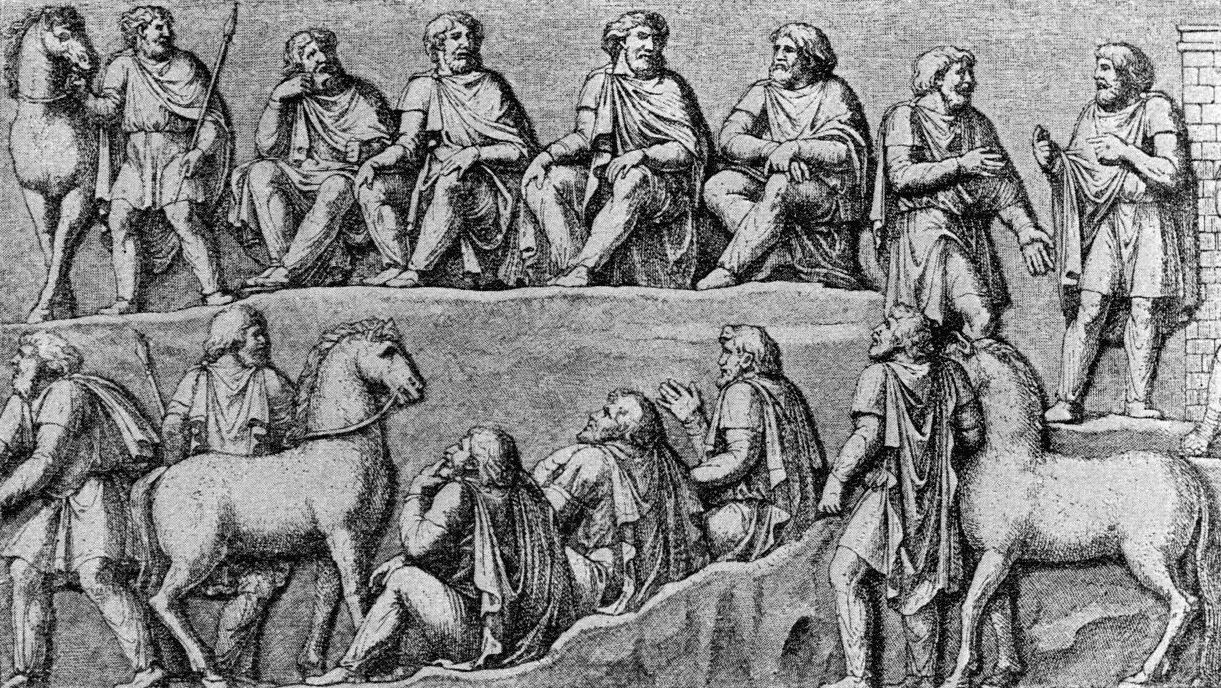
A germanic council assembly carved on the column of Marcus Aurelius in Rome, commemorating his marcomannic wars on the northern frontier. It was on that frontier, writing in his tent, that he composed the Meditations. The original uploader was Wolpertinger at German Wikipedia., Public domain, via Wikimedia Commons
He died in 180, probably from plague, on the northern frontier of the empire. His son Commodus succeeded him and was a tyrant. The empire continued its slow decline. Marcus's philosophy did not save Rome. It saved Marcus. That is all it was designed to do. The rest of us just get to benefit from the fact that he wrote it down. A system for staying sane in an insane world, designed by someone who had every reason to lose his mind and chose not to. That is the artifact. A set of instructions for living that worked once and might work again if you apply them. Not a guarantee. Just a method. That is all philosophy ever is.
studio / on-this-day / Apr 26