studio / on-this-day / Jan 15
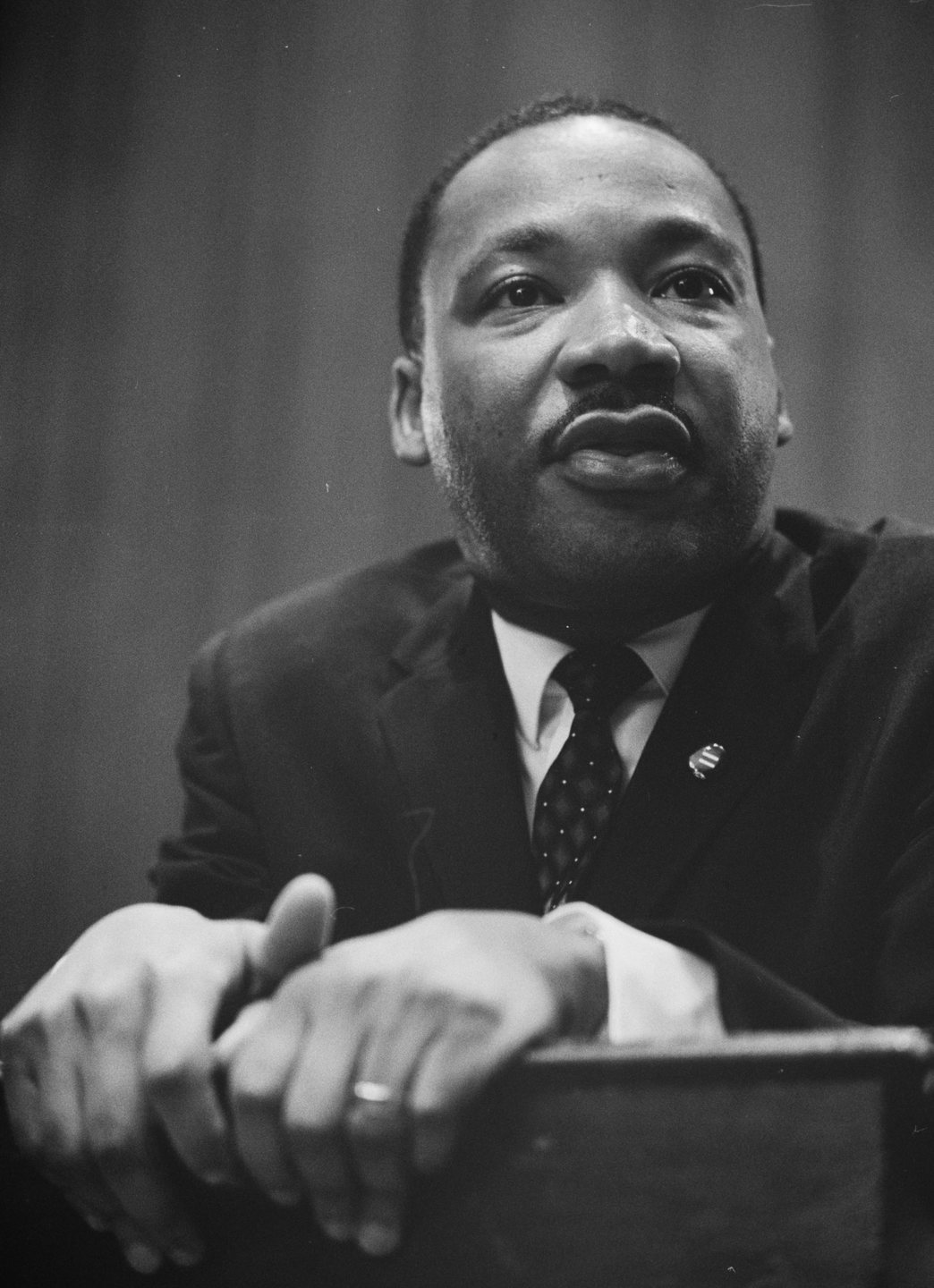
Martin Luther King Jr. in Washington, D.C., 1964. Marion S. Trikosko, U.S. News & World Report / Library of Congress, no known restrictions, via Wikimedia Commons
The Architecture of a Movement
On this day in 1929 — Martin Luther King Jr. was born in Atlanta, and grew into the strategist who turned nonviolent resistance into a disciplined engine for change.
3 min read
Martin Luther King Jr. was born on January 15, 1929, in Atlanta, the son and grandson of Baptist preachers. He grew up inside the cadence of the Black church, studied theology, and earned a doctorate from Boston University. By his mid-twenties he was a pastor in Montgomery, Alabama, about to inherit a problem that had defeated better-funded, longer-running efforts for a century: how to dismantle a system of segregation that was legal, entrenched, and violently defended. His answer was not louder anger. It was method.
That method arrived in December 1955, when Rosa Parks refused to give up her bus seat and the Black residents of Montgomery stopped riding. King, just twenty-six, was chosen to lead the boycott. It lasted 381 days and ended only when the Supreme Court ruled bus segregation unconstitutional. The lesson shaped everything after: ordinary people, organized and disciplined, could apply pressure a government could not ignore. He borrowed the underlying philosophy from Gandhi — nonviolent resistance — and treated it not as a mood but as a system, with rules, training, and objectives.
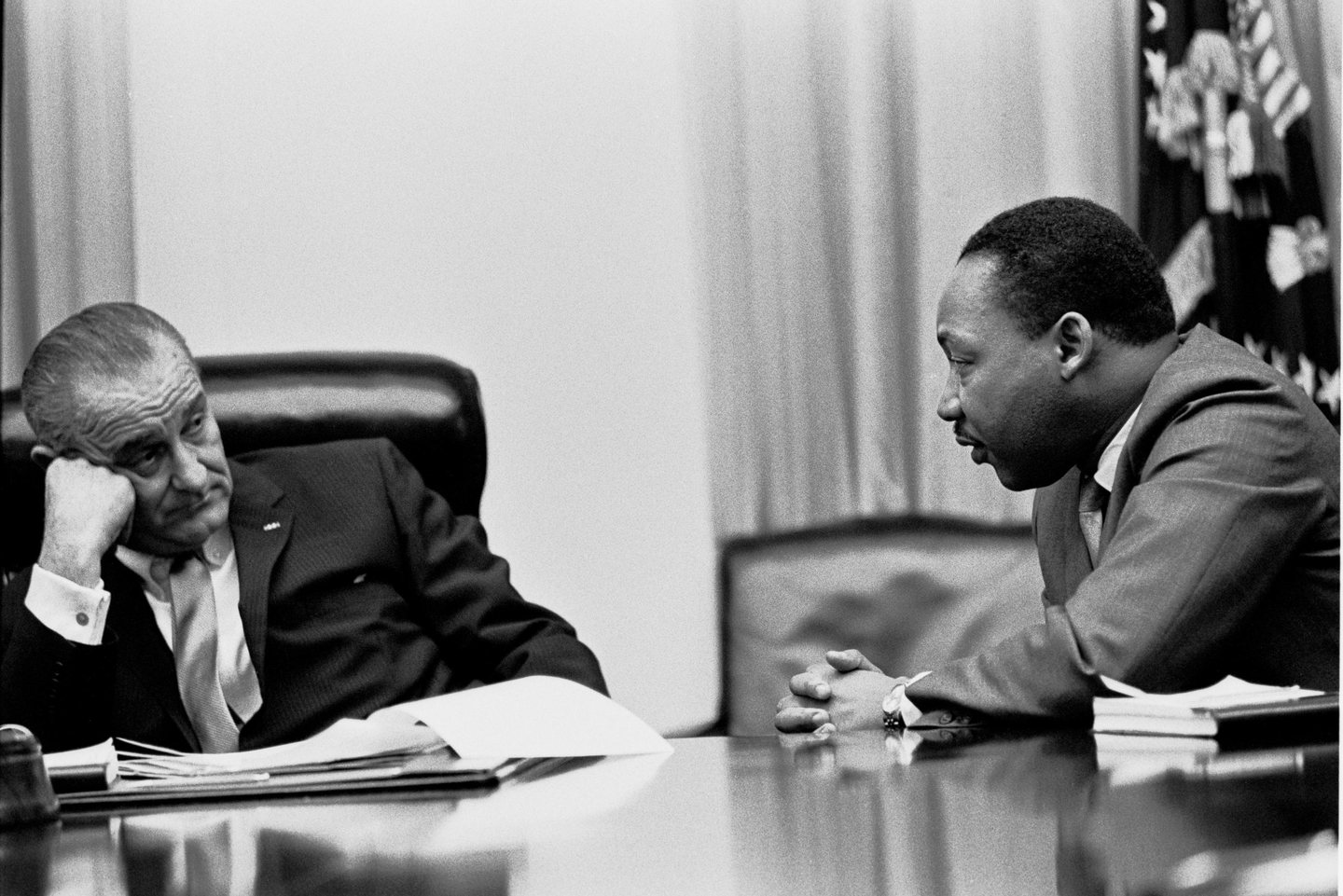
King with President Lyndon B. Johnson at the White House, 1966. Yoichi Okamoto, White House / LBJ Library, Public domain, via Wikimedia Commons
Nonviolent direct action, as King engineered it, was almost architectural. A campaign was planned like a structure: choose a target where the injustice was undeniable, provoke a response that exposed it, and let the contrast between disciplined protesters and brutal reprisal do the persuading. Birmingham in 1963 was the clearest example. Jailed there, he wrote the "Letter from Birmingham Jail," a defense of civil disobedience that still reads like an operating manual for conscience. Months later, at the March on Washington, he delivered the "I Have a Dream" speech to a quarter-million people and a television audience, turning a local struggle into a national reckoning.
The pressure produced what a system could no longer resist. In 1964 King received the Nobel Peace Prize; at thirty-five he was the youngest man to have won it. That same year the Civil Rights Act outlawed segregation in public life, and in 1965 the Voting Rights Act struck down the barriers that had kept Black Americans from the ballot. These were not gifts. They were the outputs of a decade of engineered, sustained, deliberately nonviolent pressure.
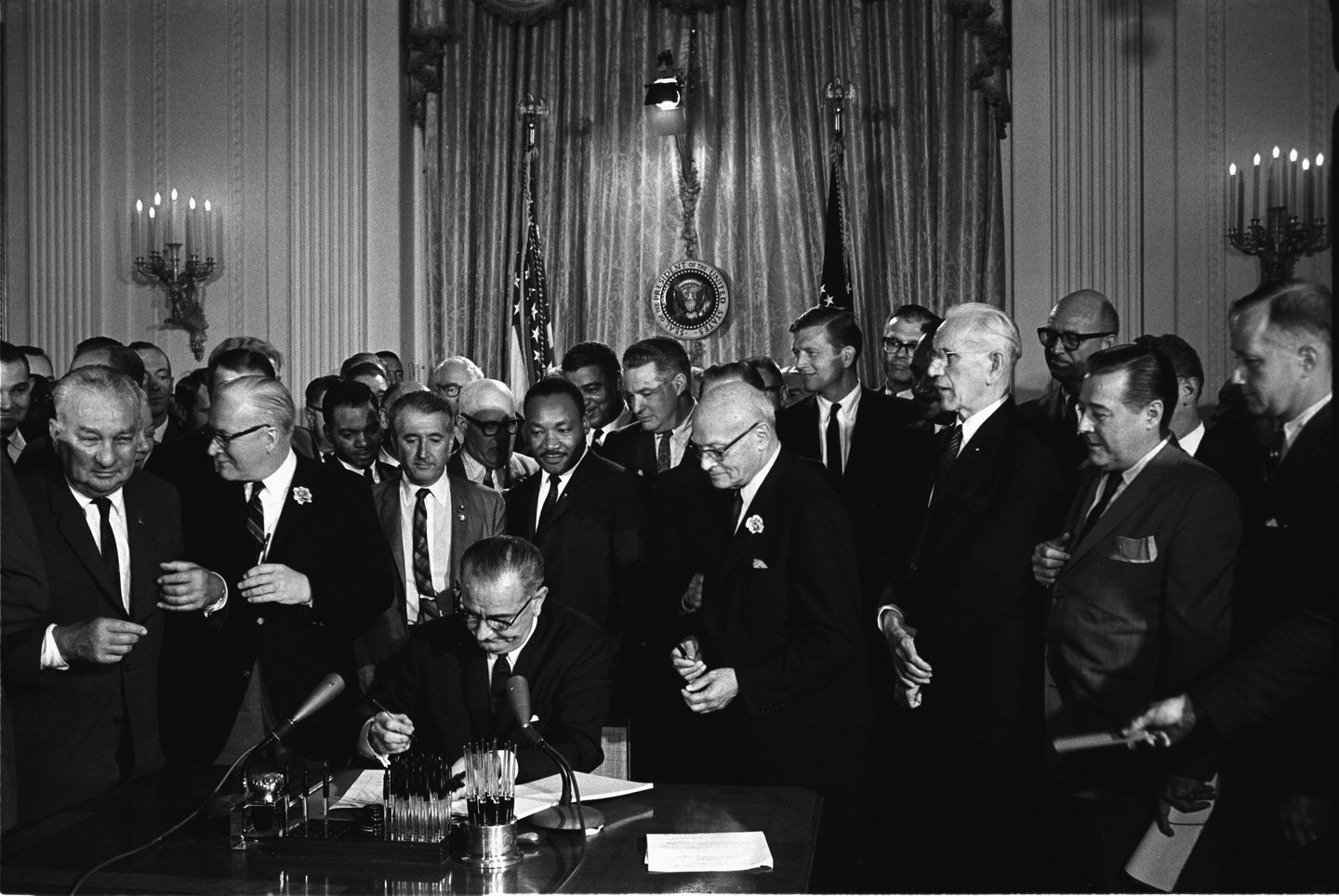
President Johnson signs the Civil Rights Act of 1964 as King looks on. Cecil Stoughton, White House Press Office, Public domain, via Wikimedia Commons
On April 4, 1968, King was assassinated on a motel balcony in Memphis, where he had gone to support striking sanitation workers — a reminder that his work was always about labor and dignity as much as law. He was thirty-nine. What he left behind was not only a set of won rights but a repeatable design: a framework for nonviolent change that has since been studied and reused on every continent. King is remembered for a dream. The more radical thing he built was the machinery to make it real.
studio / on-this-day / Jan 15