studio / on-this-day / Sep 22
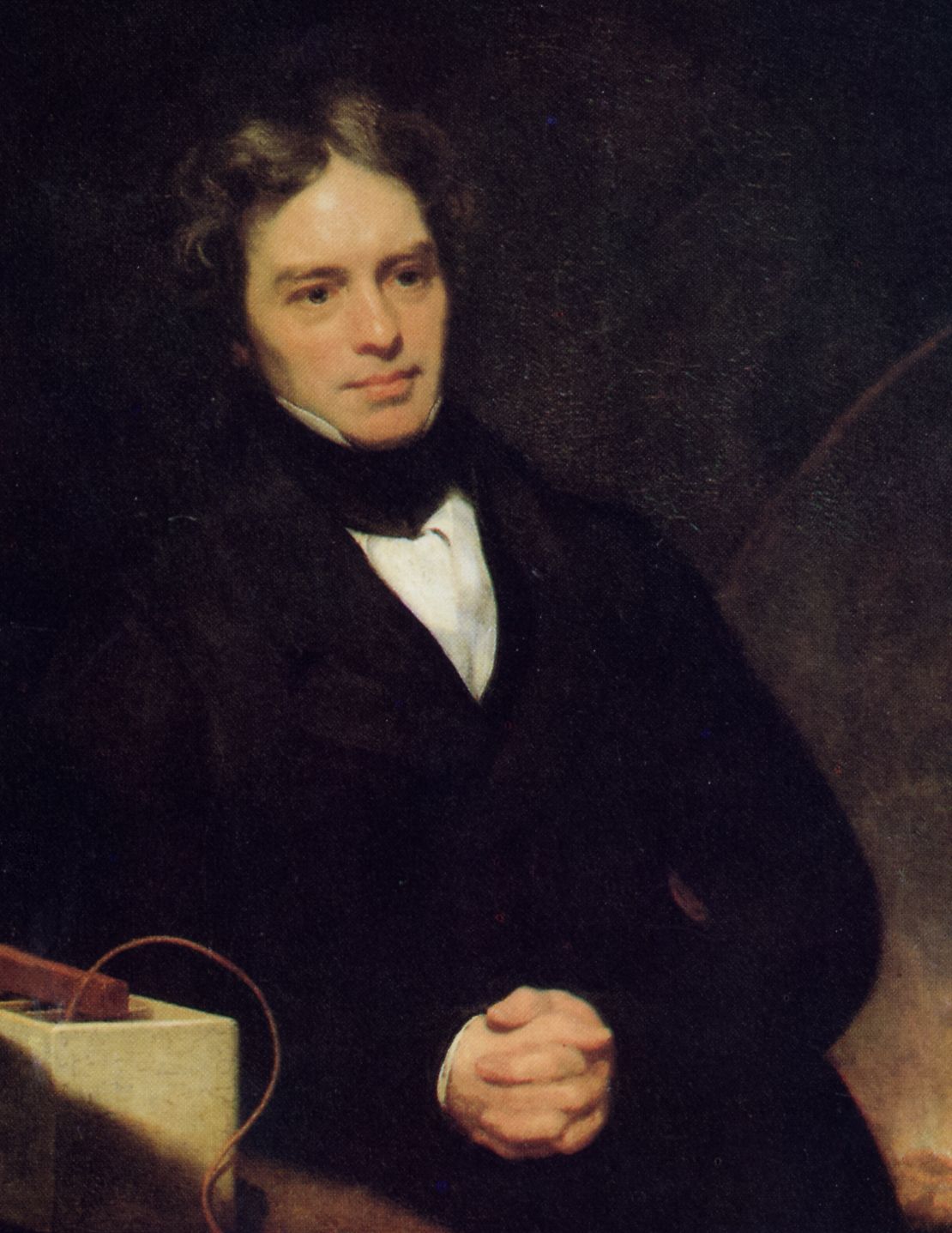
Michael Faraday, Portrait by Thomas Phillips, 1842. Thomas Phillips, Public domain, via Wikimedia Commons
The Bookbinder Who Electrified the World
On this day in 1791 — Michael Faraday was born, a self-taught bookbinder who became the founding figure of electromagnetism.
3 min read
Michael Faraday was born on September 22, 1791, in a small village south of London. His father was a blacksmith who struggled with poor health and inconsistent work. The family was poor. Faraday received only a basic education, mostly learning to read and write. At 14, he was apprenticed to a bookbinder in London. For seven years, he bound books, which meant he also read them. He read everything that came through the shop: science, philosophy, literature. He educated himself in the margins of someone else's business.
One of the books that passed through his hands was an article on electricity in the Encyclopedia Britannica. Faraday became obsessed. He started attending public science lectures whenever he could afford them, including a series by Humphry Davy, one of the leading chemists of the time. Faraday took detailed notes, bound them into a leather volume, and sent them to Davy with a letter asking for a job. Davy was impressed enough to hire him as a laboratory assistant at the Royal Institution in 1813. Faraday was 21 years old, with no formal training and no connections. He walked into the building as a bookbinder and never left.
Faraday's early work was in chemistry. He liquefied chlorine, discovered benzene, and contributed to the understanding of optical glass. But his most important work came in the 1820s and 1830s, when he began experimenting with electricity and magnetism. In 1821, he built the first electric motor, a simple device where a wire carrying current rotated around a magnet. It was a proof of concept: electricity could produce motion. A decade later, he reversed the process and discovered electromagnetic induction, the principle that moving a magnet near a wire generates an electric current. This was the foundation for every generator and transformer that would follow.
Faraday's genius was not in mathematics. He barely used equations. His strength was in visualization and experimentation. He thought in terms of fields and lines of force, imagining invisible structures surrounding magnets and electric currents. This was a radical departure from the prevailing view, which treated electricity as a fluid. Faraday saw it as a relationship between objects in space, a pattern of influence that extended beyond the objects themselves. Decades later, James Clerk Maxwell would take Faraday's ideas and translate them into mathematics, producing the equations that unified electricity and magnetism into a single theory.
Faraday also pioneered the idea of the public science lecture. He started the Christmas Lectures at the Royal Institution in 1825, a series of talks designed to explain scientific concepts to children and the general public. He believed that science should be accessible, that understanding the natural world was not the exclusive domain of the wealthy or formally educated. He gave hundreds of lectures over his career, often demonstrating experiments live on stage. He treated science communication as a design problem: how do you make complex ideas clear without dumbing them down?
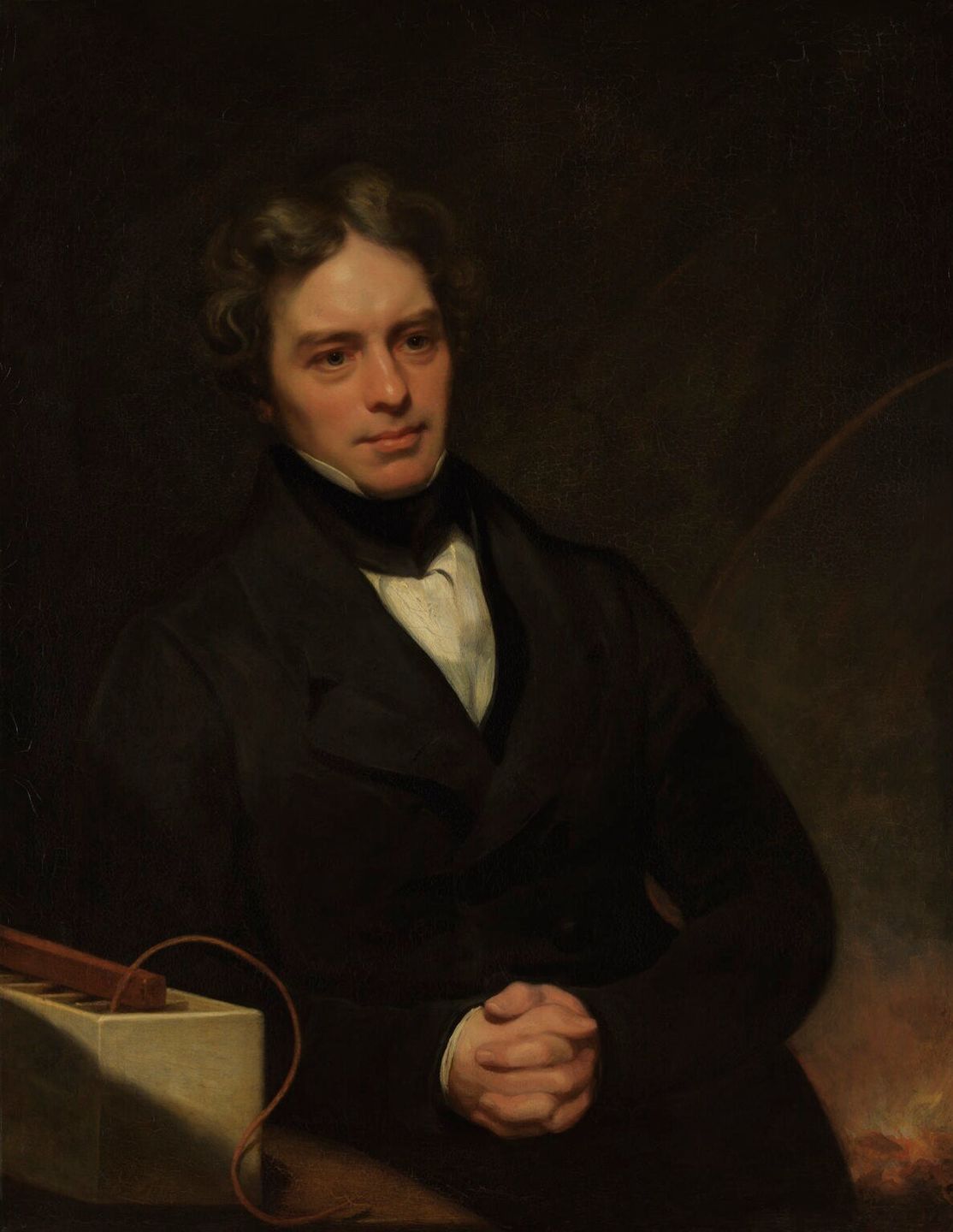
Michael Faraday (1791–1867) — the self-taught bookbinder who became the father of electromagnetism, discovering the principles behind every electric motor and generator. National Portrait Gallery, Public domain, via Wikimedia Commons
Despite his achievements, Faraday remained humble. He turned down a knighthood, preferring to remain "plain Mr. Faraday." He refused the presidency of the Royal Society, saying he wanted to focus on his experiments rather than administrative duties. He lived modestly, in the same small apartment at the Royal Institution for most of his adult life. He belonged to a religious sect called the Sandemanians, which emphasized simplicity and humility. His faith shaped his view of science. He saw his work as uncovering the principles God had embedded in the natural world, a kind of reverence expressed through experimentation.
Faraday's contributions are difficult to overstate. The electric motor, the generator, the transformer, all rely on principles he discovered. Every power station, every electric vehicle, every device that converts motion into electricity or electricity into motion traces its lineage back to experiments Faraday conducted in a small laboratory in London. He did not invent these technologies, he discovered the physics that made them possible. He built the conceptual framework that later engineers would turn into infrastructure.
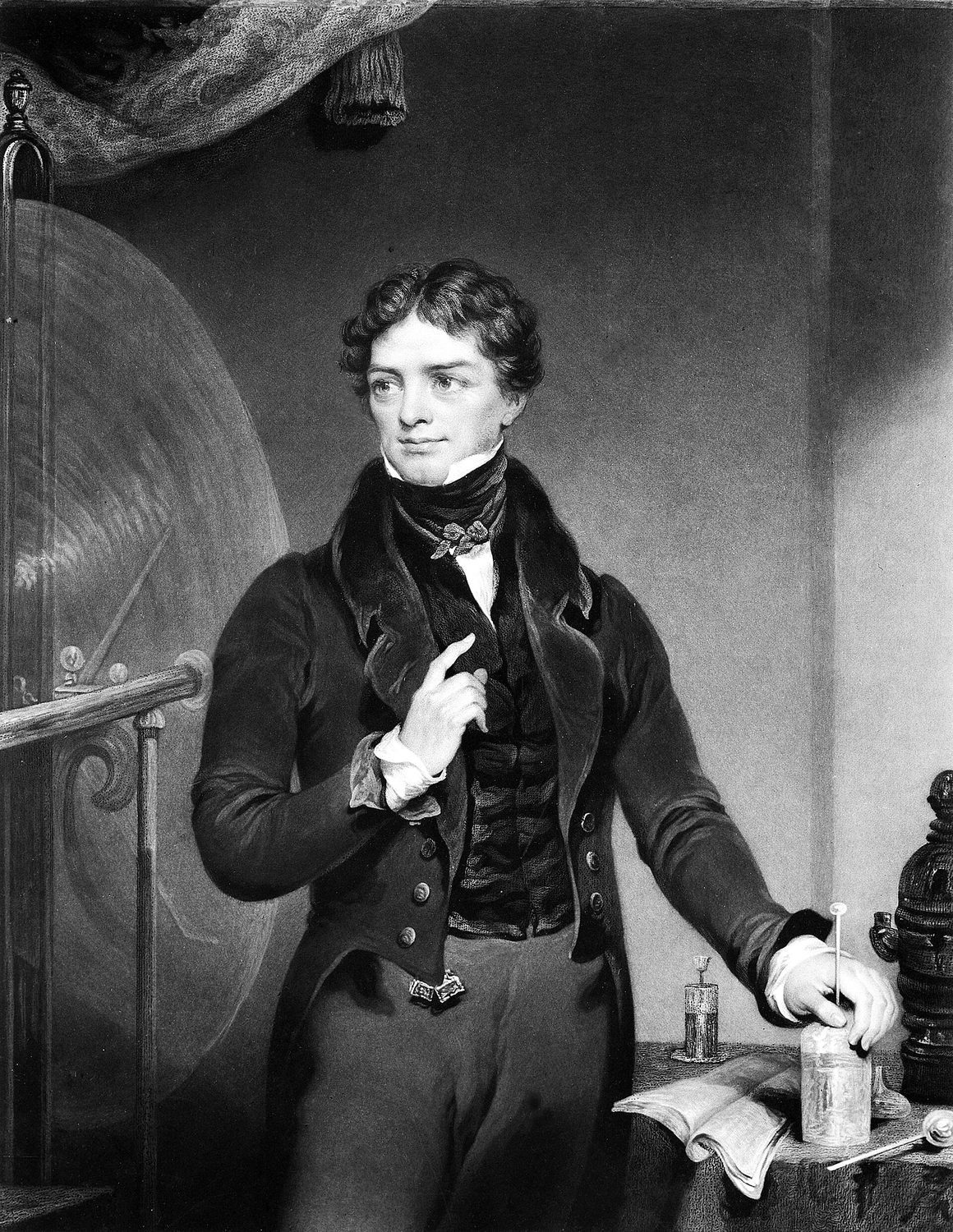
Michael Faraday, the self-taught founder of electromagnetism. Unknown, CC BY 4.0, via Wikimedia Commons
He worked until his memory began to fail in the 1850s. He died in 1867 at the age of 75, having transformed our understanding of energy and its relationship to matter. He started as a bookbinder who read too much and ended as one of the most important experimental scientists in history. He had no formal degree, no mathematical training, and no inherited wealth. What he had was curiosity, discipline, and the ability to see patterns others missed. He electrified the world by paying attention.
studio / on-this-day / Sep 22