studio / on-this-day / Sep 21
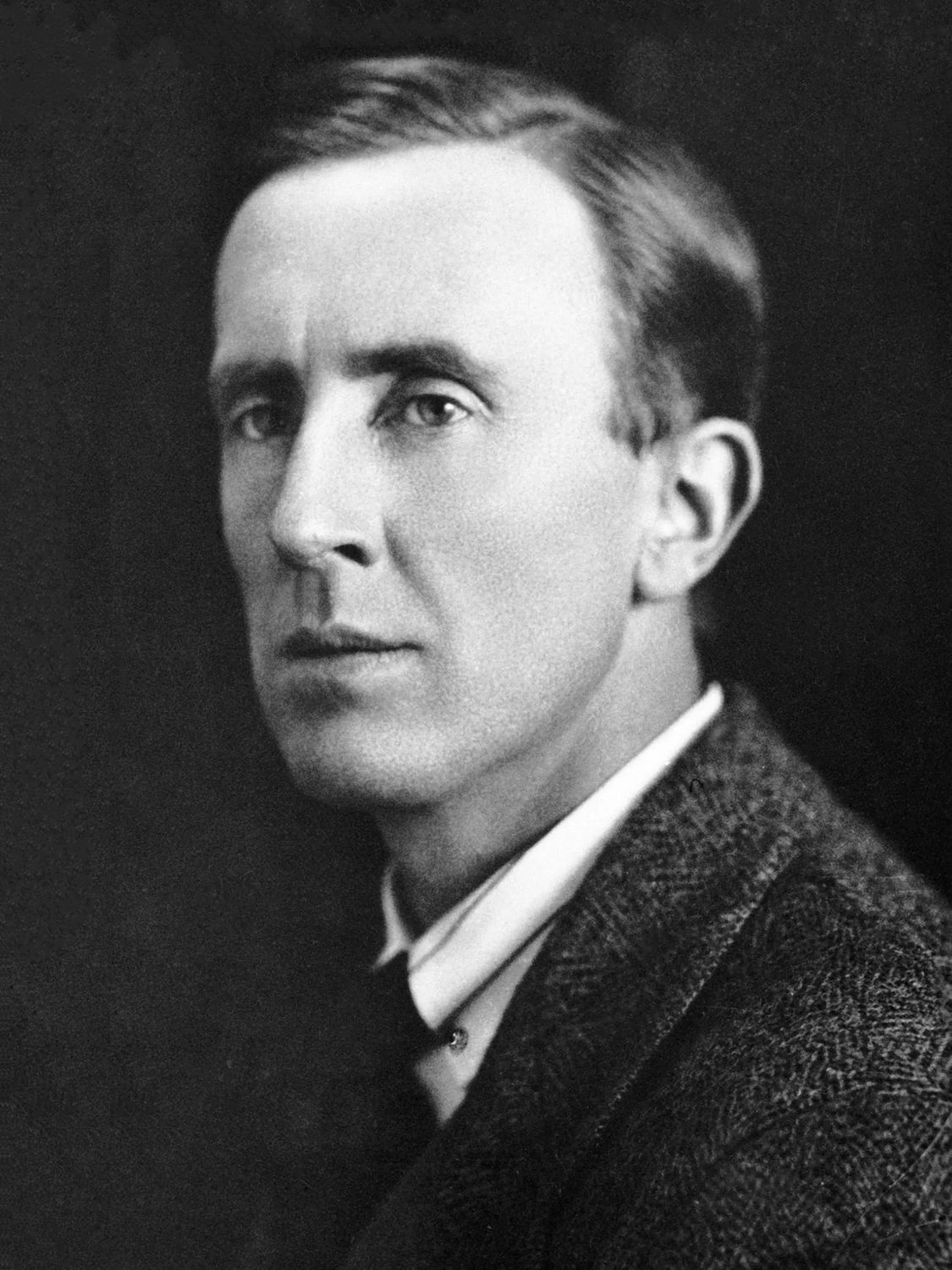
J.R.R. Tolkien around 1925, about the time he was inventing the languages of Middle-earth. Public domain, via Wikimedia Commons
The World Builder Who Started With Language
On this day in 1937 — Tolkien published The Hobbit, having first invented the languages of a world and only then a story to set inside it.
3 min read
On September 21, 1937, George Allen & Unwin published a children's book called The Hobbit, or There and Back Again. The print run was 1,500 copies. The story followed a reluctant adventurer named Bilbo Baggins on a quest involving dragons, dwarves, and a magic ring. The book sold out by December. What readers did not know was that the story was not just a story. It was the surface layer of a much larger construction project that its author, J.R.R. Tolkien, had been building in private for more than two decades.
Tolkien was a philologist, a scholar of languages. He had spent years studying Old English, Old Norse, Finnish, and Welsh, not just as academic subjects but as living systems with internal logic and historical depth. At some point, he stopped analyzing existing languages and started designing his own. He invented Quenya, a language inspired by Finnish, with its own grammar, vocabulary, and sound patterns. He invented Sindarin, influenced by Welsh. He did not create these languages for a story. He created them because he was interested in how languages work, how they evolve, and what it would feel like to speak something that had never been spoken before.
But languages do not exist in a vacuum. They need speakers. They need histories. They need myths and migrations and reasons to split into dialects. So Tolkien built a world to support the languages. He created the Elves, an ancient race of beings who spoke Quenya and Sindarin. He created Middle-earth, a geography with mountains, rivers, and kingdoms where these languages would evolve over thousands of years. He wrote histories, genealogies, creation myths, and songs. He designed alphabets. He drew maps. None of this was for publication. It was personal, almost obsessive work, done in notebooks and on scraps of paper late at night after his day job teaching at Oxford.
The Hobbit was not originally part of this larger mythology. Tolkien wrote it as a bedtime story for his children in the early 1930s. It was lighter in tone, more whimsical, less concerned with the deep history he had been constructing. But as he wrote, elements from his private world started seeping in. The wizard Gandalf, the Elves, the concept of a world with ancient languages and forgotten histories, all of it came from the mythology he had been developing in isolation. The magic ring Bilbo finds in a dark cave would later become the One Ring, the central object in The Lord of the Rings, but in 1937 it was just a useful plot device.
What makes Tolkien unusual is the order of operations. Most world-building in fiction starts with a story and fills in details as needed. Tolkien started with linguistic systems and built the story infrastructure around them. He was not trying to create a setting for an adventure. He was trying to create a setting that felt real, with the kind of depth and internal consistency that comes from languages that have evolved over millennia. He wanted readers to feel that Middle-earth existed before the story began and would continue to exist after it ended.
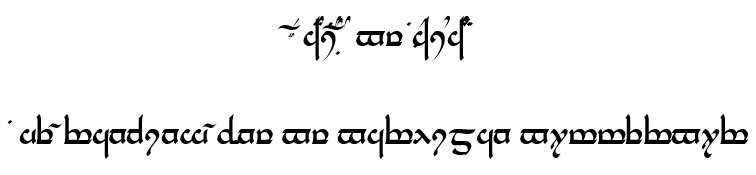
An inscription in Tengwar, the alphabet Tolkien invented for his elvish languages — the kind of constructed writing system that came before the story. Ian Alexander, CC BY-SA 4.0, via Wikimedia Commons
The Hobbit was a commercial success, and the publisher asked Tolkien for a sequel. What Tolkien delivered, more than a decade later, was The Lord of the Rings, a much darker, more complex story that drew heavily on the mythology he had been developing since the 1920s. The book included appendices with historical timelines, linguistic notes, and genealogical tables. It was not just a fantasy novel. It was the visible part of an entire constructed universe that had its own internal logic, its own sense of time, and its own languages with etymologies and grammar rules.
Tolkien's approach influenced how later writers thought about world-building. He demonstrated that depth matters. A world feels more real when it has history, when place names mean something in a constructed language, when cultures have internal consistency shaped by geography and conflict. He treated world-building as a design discipline, not just set dressing. Every detail connected to a larger system. Every name had a meaning rooted in one of his invented languages. Every map reflected the movement of ancient peoples.
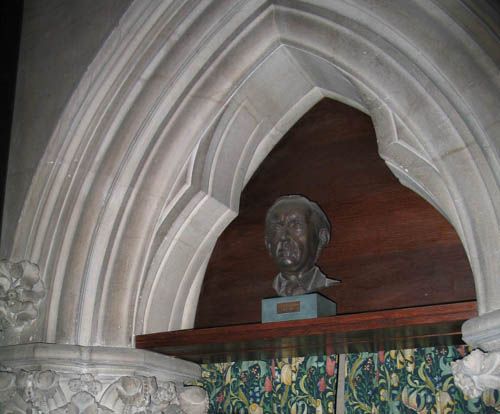
J.r.r. Tolkien at Exeter College, Oxford — the philologist who built Middle-Earth from invented languages outward, publishing the Hobbit on September 21, 1937. The original uploader was Koyn at Chinese Wikipedia., CC BY-SA 1.0, via Wikimedia Commons
The Hobbit was not the most sophisticated thing Tolkien wrote, but it was the entry point. It introduced readers to a world that had been under construction for years, hidden in notebooks and private correspondence. Tolkien never finished his mythology. He revised it constantly, reworking details, adding layers, refining the languages. After his death, his son Christopher spent decades organizing and publishing the unpublished material. The result is thousands of pages of backstory, much of it fragmentary, all of it meticulously constructed. Tolkien built a world the way an architect builds a cathedral, starting with the foundation and working upward, even if most of the foundation would never be visible to anyone but him.
studio / on-this-day / Sep 21