studio / on-this-day / Sep 20
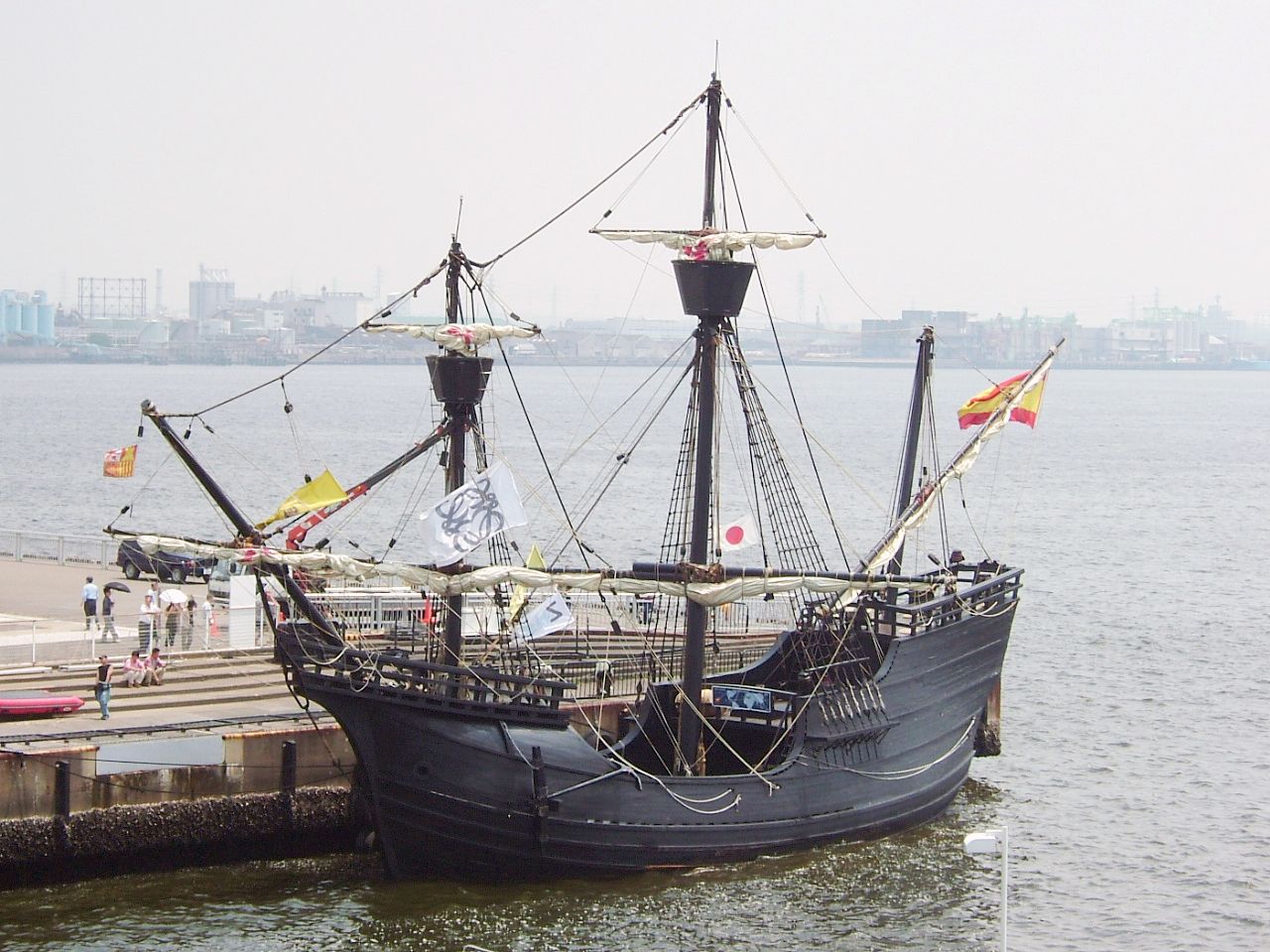
The Victoria, the only ship from Magellan's fleet to complete the circumnavigation. Gnsin, CC BY-SA 3.0, via Wikimedia Commons
Three Years to Circle the World
On this day in 1519 — Magellan's expedition left Spain, and would take three years to prove the Earth was round by simply going around it.
3 min read
On September 20, 1519, five ships left the Spanish port of Sanlúcar de Barrameda and sailed west into the Atlantic. The fleet carried about 265 men, supplies for two years, and a navigation plan that relied on incomplete maps and rumors. The goal was to find a western route to the Spice Islands in what is now Indonesia, bypassing Portuguese-controlled waters. The man leading the expedition was Ferdinand Magellan, a Portuguese navigator sailing under the Spanish flag. Three years later, one ship would return with 18 survivors, having completed the first circumnavigation of the Earth. Magellan was not among them.
The voyage was a disaster by almost every measure. Of the five ships that departed, only one, the Victoria, made it back to Spain. Of the 265 men who set out, fewer than 20 survived the entire journey. Magellan himself was killed in the Philippines in April 1521, caught in a local conflict he had no business involving himself in. The expedition faced mutiny, starvation, scurvy, storms, and navigational errors that pushed them to the edge of survival multiple times. And yet it succeeded in its most fundamental goal: proving that the Earth is round by sailing all the way around it.
Magellan's plan was to find a passage through South America that would allow the fleet to reach the Pacific Ocean without having to sail around Africa, which was controlled by Portugal. After months of searching along the coast of South America, the fleet found a narrow, winding strait at the southern tip of the continent, now called the Strait of Magellan. The passage took 38 days to navigate. One ship deserted and sailed back to Spain. The remaining four entered the Pacific.
The Pacific crossing was worse than anyone had anticipated. The ocean was far larger than European maps suggested. The fleet sailed for over three months without sighting land, running out of food and water. Sailors ate leather, sawdust, and rats. Scurvy killed dozens. When they finally reached Guam in March 1521, the crew was on the verge of total collapse. They resupplied and continued to the Philippines, where Magellan made the fatal decision to involve himself in a local war. He was killed on April 27, 1521, on the island of Mactan, struck down in a skirmish with indigenous warriors.
The expedition continued without him. The remaining ships, now down to three and then two, reached the Spice Islands and loaded up with cloves and other valuable spices. They attempted to return to Spain, but only the Victoria, under the command of Juan Sebastián Elcano, made it. The ship limped back across the Indian Ocean, around the Cape of Good Hope, and up the Atlantic, arriving in Spain on September 6, 1522. The cargo of spices was valuable enough to cover the cost of the entire expedition, but the human cost was staggering.
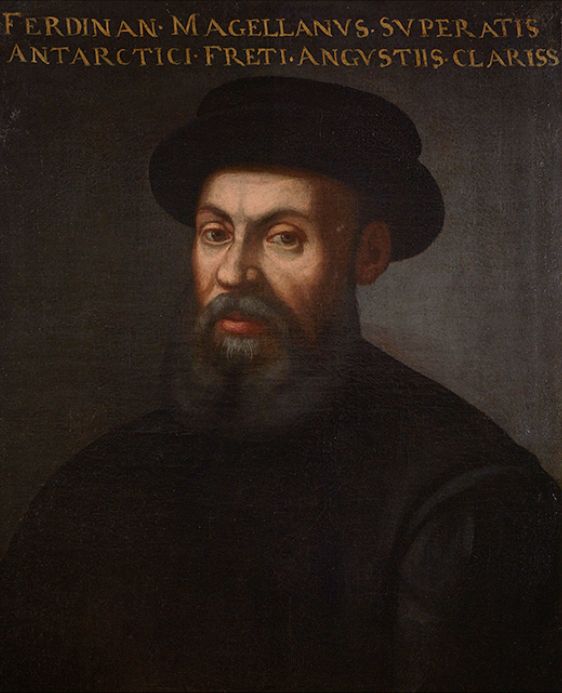
Ferdinand Magellan, whose expedition departed Spain on September 20, 1519 — the first voyage to circumnavigate the globe, though Magellan himself did not survive to complete it. Public domain, via Wikimedia Commons
What Magellan's expedition proved was not that the Earth is spherical, scholars had known that since ancient times. What it proved was that the Earth is navigable as a sphere. You could leave a port, sail west, and eventually return to the same port from the east. The globe was not just a theoretical model. It was a functional map. The expedition also demonstrated just how vast the Pacific is. European maps had severely underestimated its size, imagining Asia to be much closer to the Americas than it actually is. Magellan's crew spent months crossing empty ocean, a navigational challenge that would not be fully understood until later expeditions filled in the blanks.
The journey also had unintended consequences. It revealed that circumnavigating the globe means crossing the International Date Line, though that concept did not yet exist. The crew that returned to Spain insisted they had kept careful records and that it was Wednesday, September 6, 1522. The people in Spain insisted it was Thursday. The crew had lost a day by sailing west around the world, an empirical demonstration of how time zones work long before anyone had formalized the idea.
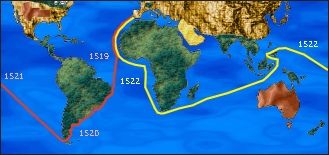
The route of the Victoria, the lone surviving ship, sailing west from Spain and back again to complete the first circumnavigation. Dario de Judicibus, CC BY-SA 3.0, via Wikimedia Commons
Magellan's name is attached to the voyage, but he did not complete it. Elcano did. The expedition was not a heroic adventure. It was a brutal, poorly planned voyage that succeeded almost in spite of itself. But it accomplished something no one had done before: it turned the globe from an idea into a lived experience. The world was round, measurable, and crossable. You could sail away from home and, if you survived long enough, find your way back from the opposite direction. That was not just navigation. It was proof of concept for how the planet actually works.
studio / on-this-day / Sep 20