studio / on-this-day / Mar 12

Tim Berners-Lee, inventor of the World Wide Web. Web Summit, CC BY 2.0, via Wikimedia Commons
A Memo That Became a Universe
On this day in 1989 — Tim Berners-Lee circulated a modest memo proposing the World Wide Web, which his boss filed under vague but exciting.
3 min read
On March 12, 1989, Tim Berners-Lee submitted a document titled "Information Management: A Proposal" to his supervisors at CERN, the European particle physics laboratory in Switzerland. The proposal described a system for managing information across distributed computers using hypertext links. His boss, Mike Sendall, wrote "vague but exciting" on the cover and gave him permission to continue. That vague, exciting idea became the World Wide Web.
Berners-Lee was trying to solve a specific problem. CERN had thousands of researchers using incompatible computer systems, each with its own file formats and documentation standards. Information was siloed. Finding a document meant knowing which system it lived on and how to access that system. Berners-Lee proposed a networked hypertext system where documents could reference each other regardless of location. Click a link, and the computer would retrieve the document from wherever it was stored. The web was not about inventing new technology. It was about making existing technology interoperable.
The proposal outlined three core components: HTML (HyperText Markup Language), a simple format for creating documents with embedded links; URI (Uniform Resource Identifier), a standardized way to address resources on a network; and HTTP (HyperText Transfer Protocol), a set of rules for requesting and delivering documents. None of these ideas was entirely original. Hypertext had existed since the 1960s. Networked file systems were common. What Berners-Lee did was combine them into a coherent, open system that anyone could implement without asking permission.
By 1990, Berners-Lee had built the first web browser, which was also a web editor, and the first web server. The first website went live on a NeXT computer at CERN, explaining what the web was and how to use it. The URL was info.cern.ch. The page was plain text with a few links. It was unremarkable in every way except that it worked. You could click a link and retrieve a document from another computer on the network. That was enough.
Berners-Lee made a crucial decision in 1993. He convinced CERN to release the web's underlying technology into the public domain, free of patents and licensing fees. Anyone could build a browser, host a server, or create a website without paying royalties. This openness was not inevitable. CERN could have patented the technology and licensed it. Other hypertext systems, like Xanadu and HyperCard, were proprietary. The web succeeded in part because it was free to use and free to modify.
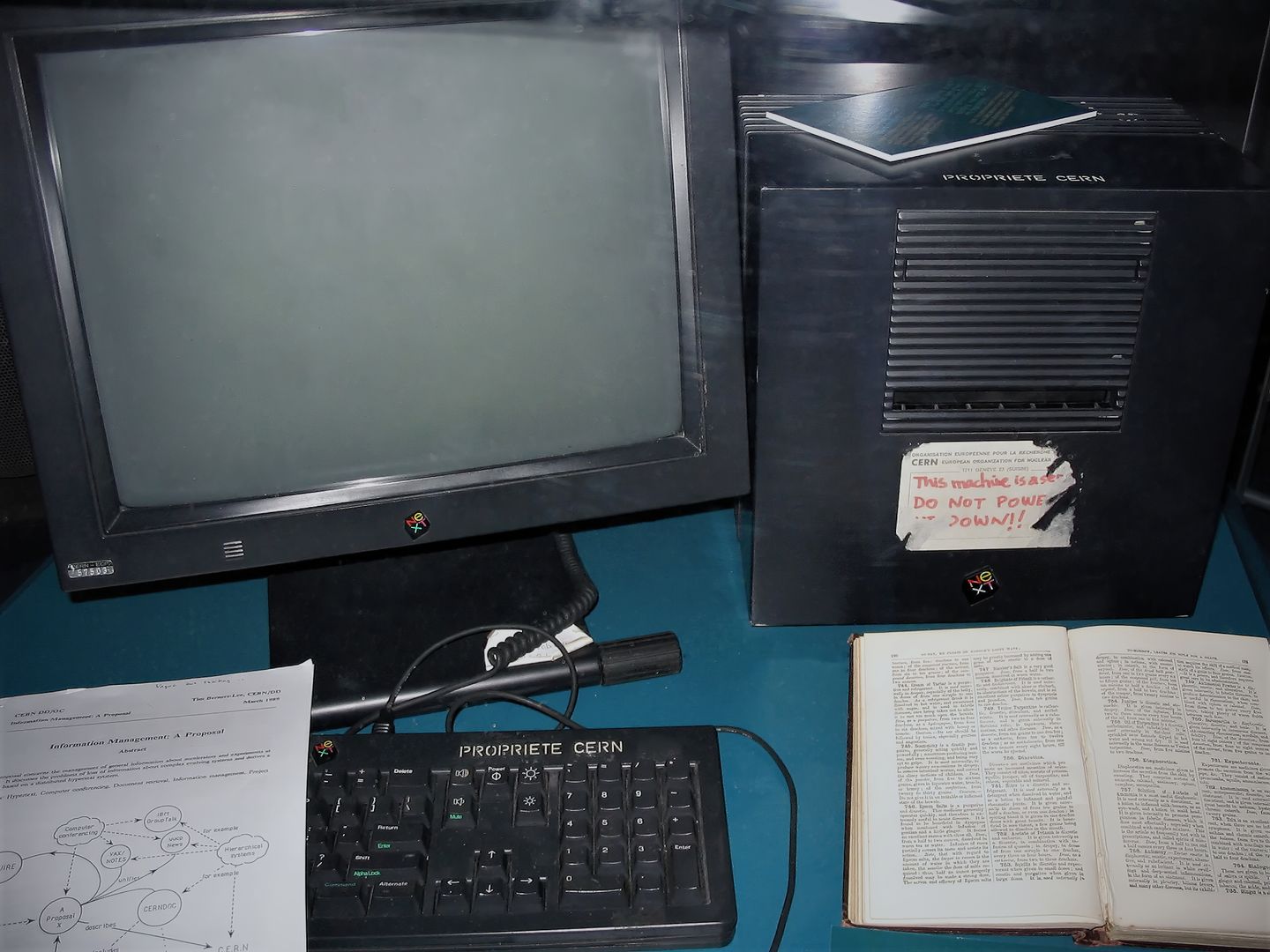
The first Web server at CERN, a NeXT computer with a handwritten label reading "this machine is a server, do not power it down." User:Coolcaesar at en.wikipedia, CC BY-SA 3.0, via Wikimedia Commons
The early web was text-based and academic. Researchers shared papers and datasets. Then in 1993, the Mosaic browser added inline images, and the web became visual. Suddenly, non-technical users could navigate by clicking pictures instead of typing commands. The web stopped being a tool for scientists and became a medium for everyone. Commercial websites appeared. Online stores, news sites, personal homepages. The web grew exponentially, doubling in size every few months.
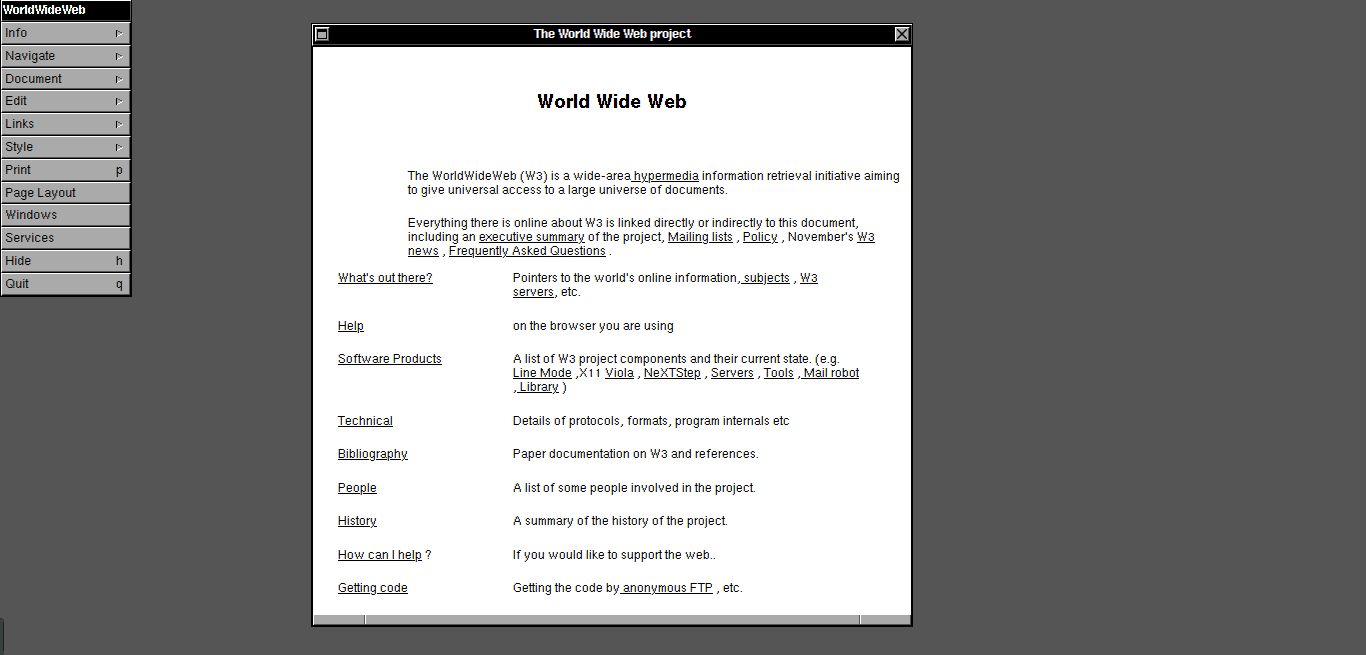
The World's first website, at info.CERN.ch, explaining what the Web was and how to use it. Cern/Tim Berners-Lee, Public domain, via Wikimedia Commons
What Berners-Lee designed was not a finished product but a platform. HTML was simple enough that anyone could learn it in an afternoon. HTTP was stateless, meaning servers did not need to remember previous interactions, which made scaling easier. URIs were human-readable, so you could type them or share them in conversation. The web was designed to be understandable, not just functional. This mattered. If the barrier to entry had been higher, the web would have remained a niche tool.
The web is now the primary interface for accessing information, conducting commerce, and communicating with others. It has been layered with technologies Berners-Lee never anticipated: JavaScript, CSS, video streaming, real-time collaboration, and machine learning models accessible through web APIs. The underlying structure, though, remains the same. A URL points to a resource. A click retrieves that resource. Links connect documents into a network. The simplicity of the design is what allowed it to grow without breaking.
studio / on-this-day / Mar 12