studio / on-this-day / Sep 1
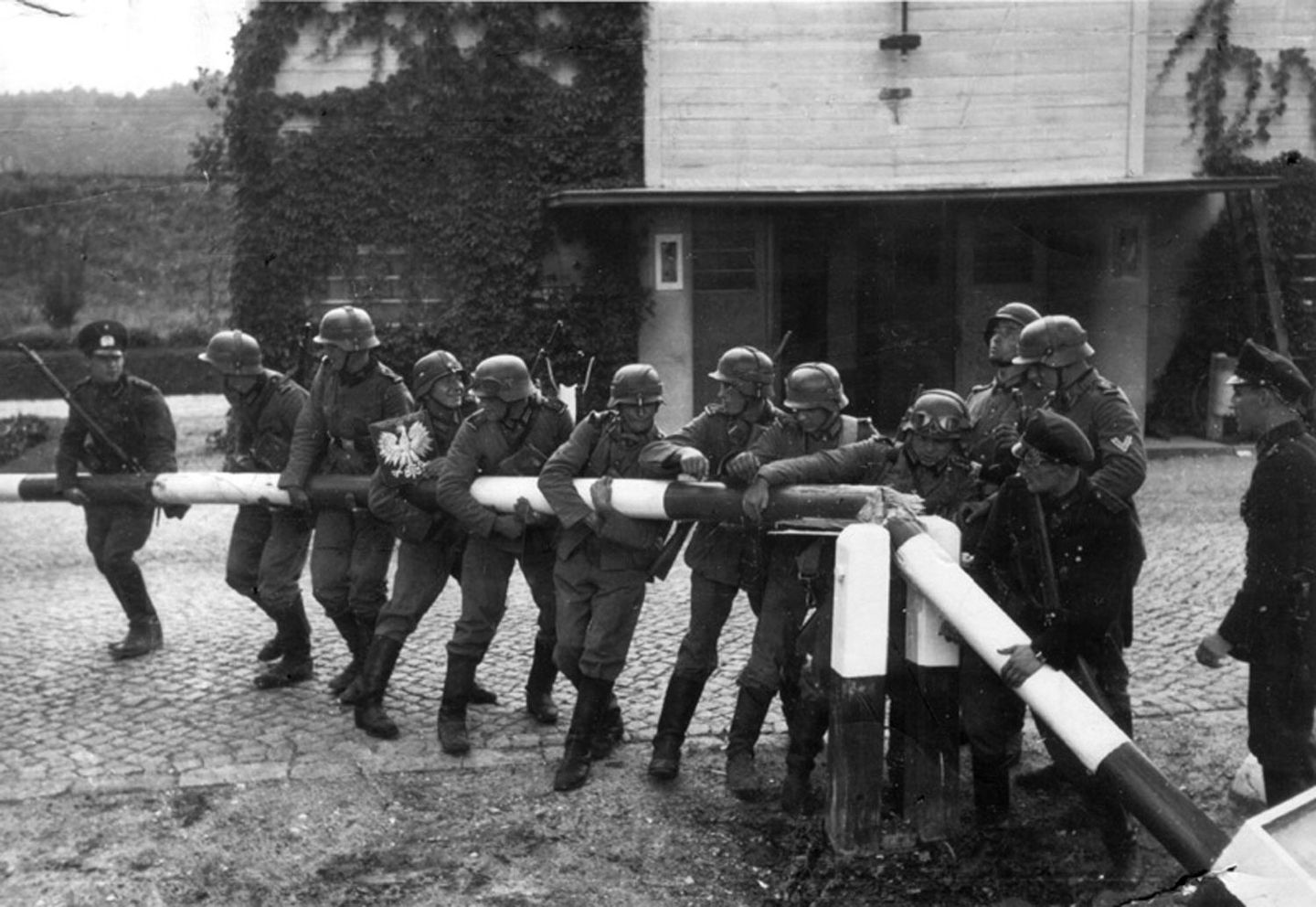
German forces during the invasion of Poland, September 1939. Hans Sönnke, Public domain, via Wikimedia Commons
The Day the System Broke
On this day in 1939 — Germany invaded Poland, and a continent's web of alliances collapsed at once into world war.
3 min read
At 4:45 a.m. on September 1, 1939, German forces crossed into Poland without a formal declaration of war. Within hours, the Luftwaffe had bombed airfields, rail junctions, and civilian targets across the country. By the end of the first day, Poland's air force was largely destroyed on the ground. Two days later, Britain and France declared war on Germany. World War II had begun.
What made this invasion different from earlier European conflicts was not just its brutality, but its architecture. The Germans called it Blitzkrieg, "lightning war," though the term was more journalistic than doctrinal. The concept was simple: concentrate overwhelming force at a single point, break through enemy lines with fast-moving mechanized units, then race deep into the rear to destroy supply lines, command centers, and communications infrastructure. The goal was not to fight the enemy's army so much as to paralyze the system that allowed the army to function.
This was warfare redesigned as a systems problem. Earlier conflicts had been wars of attrition, grinding industrial contests where victory went to whoever could outlast the other. The Blitzkrieg doctrine turned that inside out. Speed, coordination, and disruption replaced firepower and endurance. Tank columns moved faster than foot soldiers could retreat. Dive bombers struck targets that horse-drawn artillery couldn't defend. Radio networks linked ground and air units in real time, creating feedback loops that traditional command structures couldn't match.
Poland's military was not weak. It fielded over a million soldiers and had fought successfully against the Soviet Union less than two decades earlier. But its military doctrine was built for the last war, not this one. Polish cavalry units, still considered elite forces, were overrun by German tanks. Defensive positions designed to hold against infantry became death traps when attacked by coordinated air and ground assaults. The entire command structure, built around centralized decision-making and slow-moving communication chains, collapsed under the speed of the German advance.
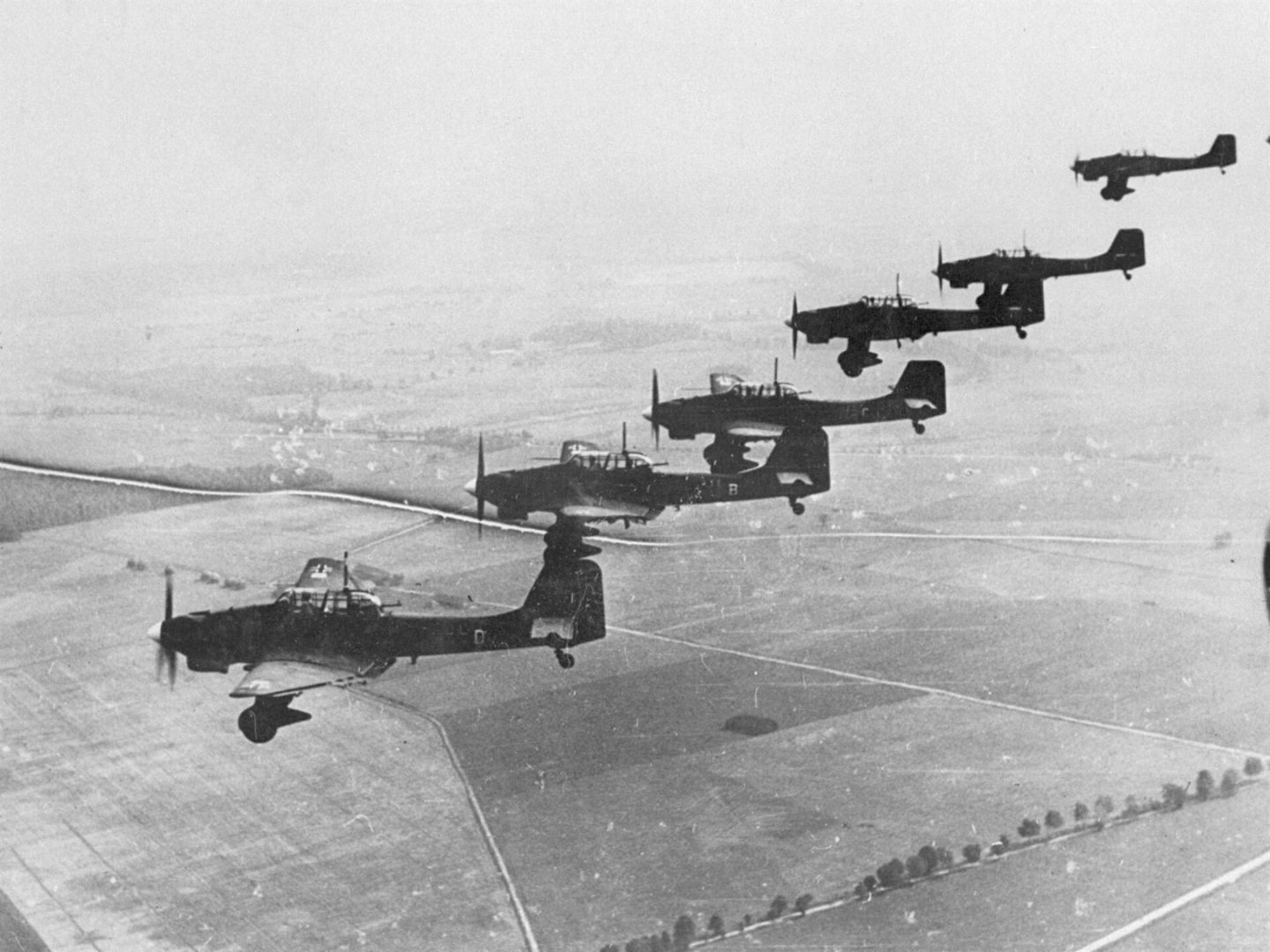
German Junkers Ju 87 Stuka dive bombers in formation over Poland, 1939. Hoffmann, Heinrich, CC BY-SA 3.0 de, via Wikimedia Commons
The invasion was also a demonstration of how technology could be weaponized at scale. The Panzer tank divisions that spearheaded the attack were not fundamentally new machines. Tanks had been used in World War I. What was new was how they were used: not as infantry support scattered across the front, but as concentrated armored fists punching through weak points. The Stuka dive bombers that terrorized Polish forces were not the most advanced aircraft in the world, but their screaming sirens turned physics into psychological warfare, creating terror as a tactical asset.
Within three weeks, Poland's organized resistance had collapsed. On September 17, the Soviet Union invaded from the east, and by early October, the country had been divided between the two totalitarian powers. The speed of the defeat shocked the world. France and Britain, which had guaranteed Poland's independence, watched from the west and did nothing. The system of collective security that was supposed to prevent another European war had failed its first test.
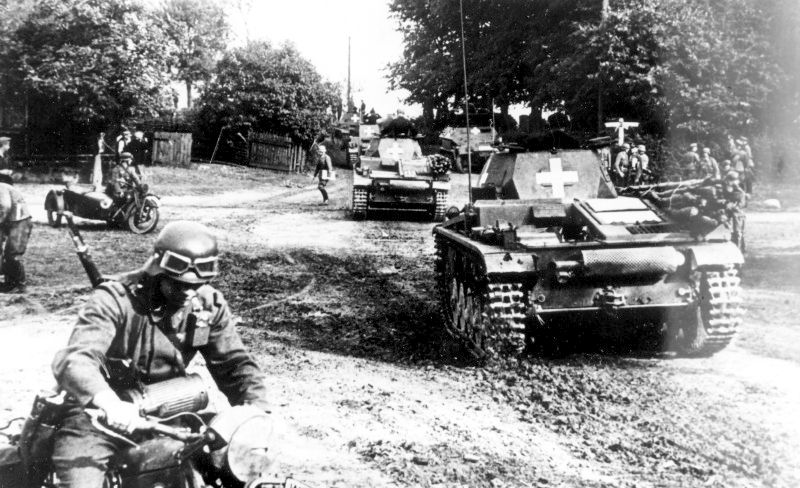
German Panzer II tanks on the advance through Poland, September 1939. Public domain, via Wikimedia Commons
The invasion of Poland was not the deadliest campaign of World War II, nor the most strategically significant. But it was the proof of concept. It demonstrated that modern warfare was no longer about holding lines or winning battles. It was about disrupting systems faster than the enemy could adapt. Every subsequent campaign, from the fall of France to the early German successes in the Soviet Union, followed the same playbook. The Blitzkrieg was not just a tactic. It was a design philosophy applied to destruction, and it worked until it didn't.
What stopped it, eventually, was not a superior design but superior resources. The Soviet Union had enough territory to absorb the initial shock. The United States had enough industrial capacity to overwhelm German production. Britain had enough sea power to keep supply lines open. In the end, the system designed for speed and disruption ran up against systems designed for endurance and scale. But that took six years and tens of millions of lives. On September 1, 1939, none of that was clear yet. What was clear was that the rules had changed, and the old systems were already obsolete.
studio / on-this-day / Sep 1