studio / on-this-day / Aug 8
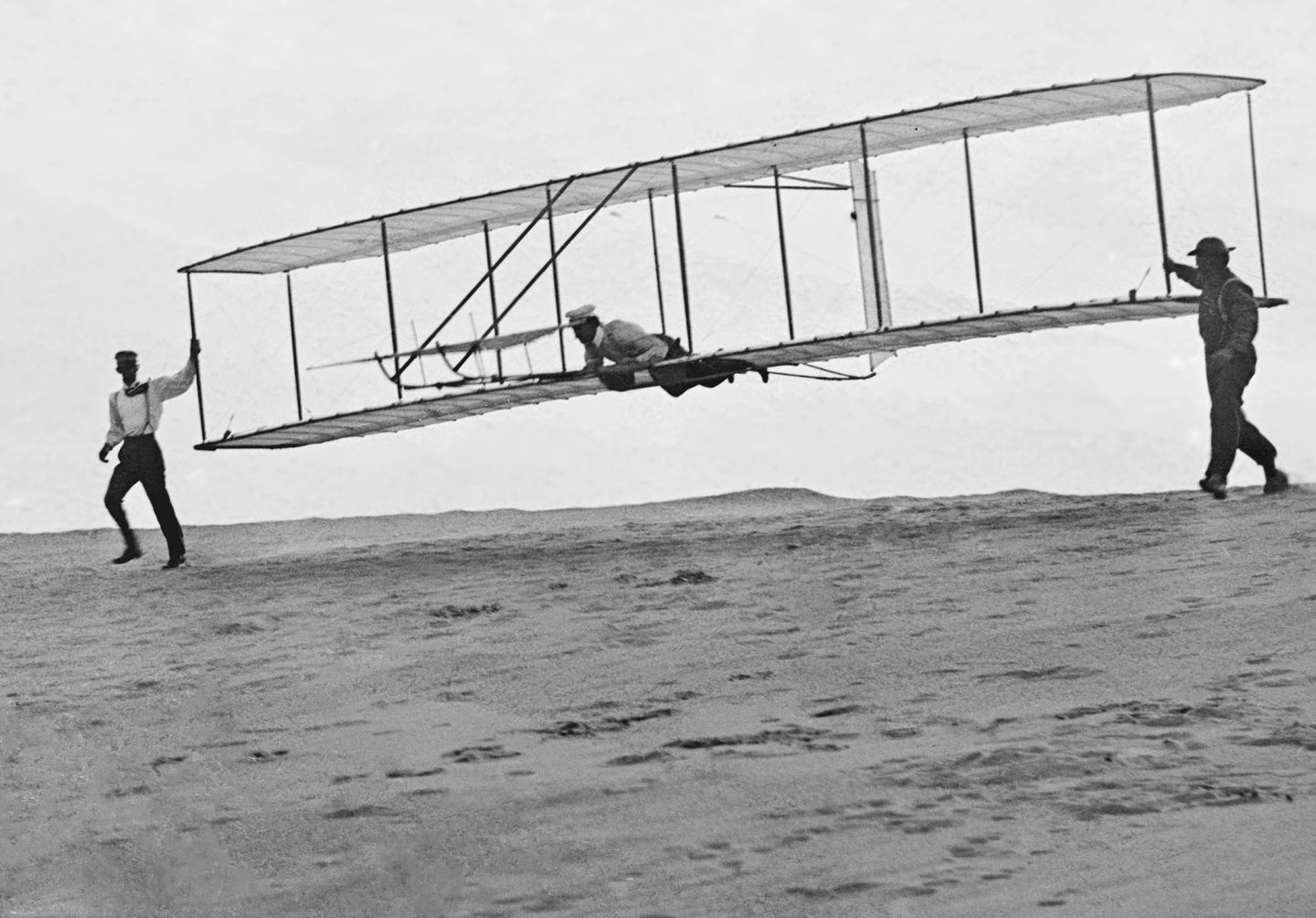
Wilbur Wright at the controls, 1901. Public domain, via Wikimedia Commons
The Flight That Ended All Doubt
On this day in 1908 — Wilbur Wright flew before a French crowd and silenced the European skeptics who had doubted the brothers' claims.
3 min read
On August 8, 1908, Wilbur Wright lifted off from a racetrack near Le Mans, France, and flew for one minute and 45 seconds. The crowd, filled with aviators, engineers, and journalists, watched in stunned silence. Then they erupted in applause. For years, Europeans had dismissed the Wright brothers' claims of controlled, powered flight as American exaggeration. The French aviation community, which considered itself the most advanced in the world, had seen no credible evidence. But now they had. Wilbur's demonstration was not just a flight. It was proof, delivered in person, that two bicycle mechanics from Dayton, Ohio, had solved the problem of human flight while the rest of the world was still debating whether it was possible.
The Wright brothers had achieved the first powered, controlled flight on December 17, 1903, at Kitty Hawk, North Carolina. The flight lasted 12 seconds and covered 120 feet. It was real, it was documented, and it was revolutionary. But the Wrights were intensely private. They refused to demonstrate their aircraft publicly until they had secured patents and potential buyers. For nearly five years, they flew only in secret, conducting test flights near Dayton away from prying eyes. This secrecy fueled skepticism. Without public demonstrations, their claims seemed like hearsay. Some dismissed them as charlatans. Others simply ignored them.
Meanwhile, European aviators were making rapid progress on their own designs. In France, Alberto Santos-Dumont, Louis Blériot, and others were building aircraft and flying them in public. Their flights were shorter and less controlled than the Wrights', but they were visible. The European aviation community saw itself as leading the field. The idea that two unknown Americans had already surpassed them seemed implausible. When the Wrights finally agreed to demonstrate their aircraft in France in 1908, it was less an exhibition than a challenge. Could they really fly, or had they been bluffing all along?
Wilbur's demonstration at Le Mans answered the question definitively. His aircraft, the Wright Model A, was more advanced than anything Europeans had seen. It could turn in smooth, banked curves. It could climb and descend with precision. It was fully controllable, not just in theory but in practice. Wilbur flew for over an hour on subsequent flights, executing figure-eights and demonstrating maneuvers that European aircraft could not replicate. The French press, which had mocked the Wrights weeks earlier, suddenly reversed course. One newspaper wrote that Wilbur Wright was "the master of us all." Another called the flights "a revelation."
What made the Wright brothers' design superior was their focus on control. Other aviators were obsessed with power and lift, building larger engines and longer wings. The Wrights understood that flight was fundamentally a control problem. They developed a system of wing warping and a movable rudder that allowed the pilot to steer in three dimensions. They spent years testing gliders, refining their control mechanisms, before adding an engine. Their approach was methodical, incremental, and obsessively focused on solving the right problem first. By the time they added power, they had already mastered control. Everyone else was still trying to stay in the air.
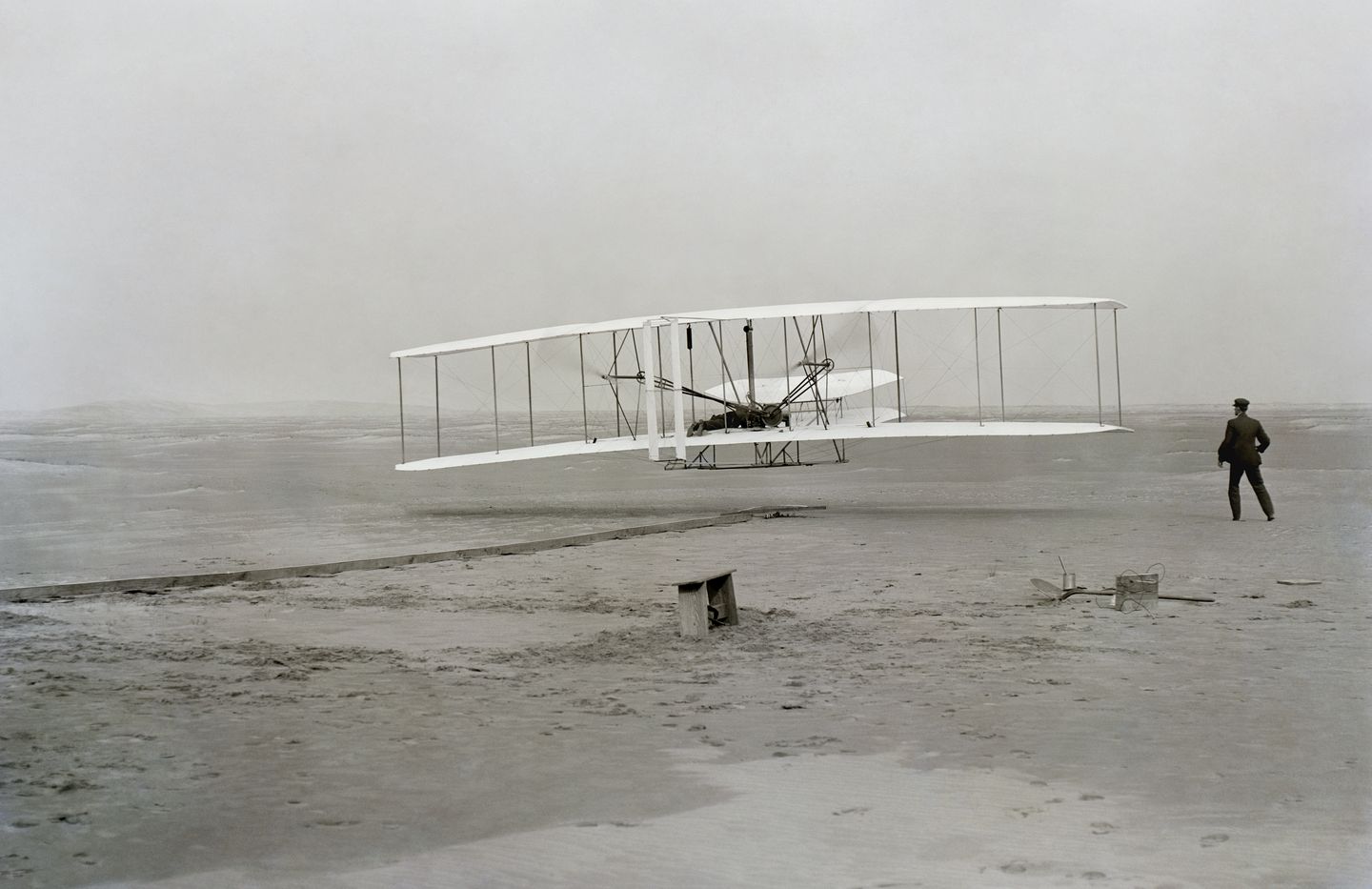
The Wright Brothers' first powered flight at Kitty Hawk, North Carolina, December 17, 1903. orville at the controls, Wilbur at right. John T. Daniels, Public domain, via Wikimedia Commons
Wilbur's demonstration in France had consequences beyond aviation. It marked a shift in how technological innovation was perceived. The Wright brothers were not trained engineers. They had no formal education in aeronautics. They were self-taught, working out of a bicycle shop, funding their experiments with profits from their business. Yet they had solved a problem that the most prestigious universities and well-funded research institutions in Europe had failed to crack. It was a validation of the idea that ingenuity and persistence could rival institutional resources, that the location and credentials of the innovator mattered less than the quality of the work.
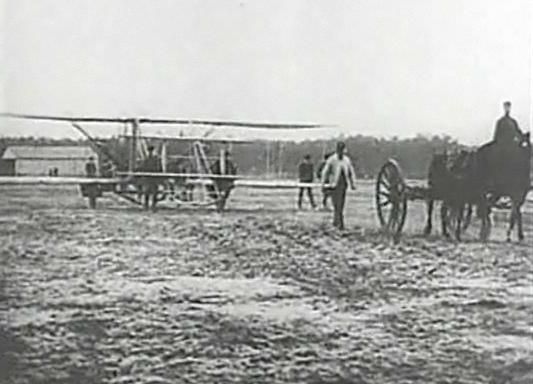
Wilbur Wright flying before crowds at Le Mans, France, in 1908. Léon Bollée, Public domain, via Wikimedia Commons
The flights at Le Mans ended the debate. The Wright brothers were no longer outliers. They were the standard. Within a few years, their control system became the foundation for all aircraft design. The wing warping technique evolved into ailerons, the movable rudder became standard, and the three-axis control system they pioneered is still used in every airplane today. Wilbur returned to the United States in 1909, celebrated as a hero. He had proven something that should not have needed proving. But skepticism is part of the process. Sometimes you have to fly in front of the doubters before they believe you ever left the ground.
studio / on-this-day / Aug 8