studio / on-this-day / Aug 9
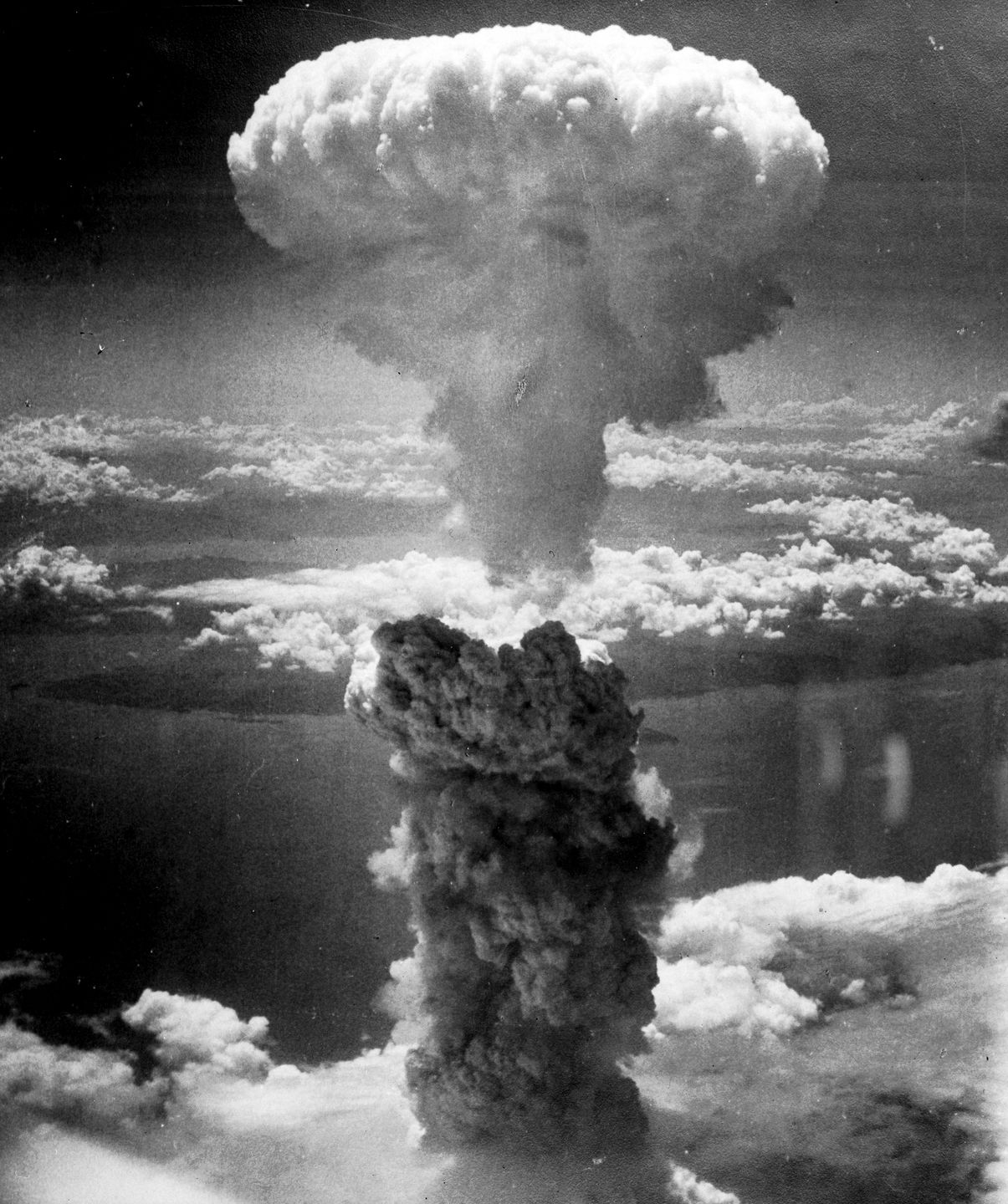
Atomic cloud over Nagasaki, August 9, 1945. Charles Levy, Public domain, via Wikimedia Commons
The Second Sun
On this day in 1945 — an atomic bomb fell on Nagasaki, the second time physics was turned deliberately into a weapon of mass death.
3 min read
On August 9, 1945, at 11:02 a.m., a plutonium bomb codenamed Fat Man detonated 1,650 feet above Nagasaki, Japan. The explosion released the energy equivalent of 21,000 tons of TNT. The temperature at the center of the fireball reached millions of degrees. Everything within a half-mile radius was vaporized. Buildings were flattened up to a mile away. The death toll is estimated between 40,000 and 80,000, with tens of thousands more injured and dying slowly from radiation sickness in the weeks and months that followed. It was the second atomic bomb dropped on Japan in three days, and the last nuclear weapon ever used in war. So far.
Nagasaki was not the primary target. The mission was supposed to hit Kokura, a city with major military installations. But cloud cover obscured the target, and after three unsuccessful bombing runs, the crew diverted to the secondary target. Nagasaki was a shipbuilding center and industrial hub, but it was also a city of families, schools, and neighborhoods. The bomb fell at an angle, detonating over the Urakami Valley rather than the city center. This geographic accident reduced the casualty count. If the bomb had exploded over the intended target, the death toll would have been far higher. Chance and topology decided who lived and who died.
The bomb itself was a design problem solved through industrial-scale collaboration. The Manhattan Project employed over 130,000 people at its peak, working across secret facilities in Los Alamos, Oak Ridge, and Hanford. The challenge was not just theoretical physics but engineering, metallurgy, chemistry, and logistics. Building an atomic bomb required refining uranium, producing plutonium, designing implosion lenses, and coordinating thousands of specialized tasks. It was a project that demonstrated what human ingenuity could achieve when unlimited resources and the best scientific minds were directed toward a single goal. That goal was annihilation.
Robert Oppenheimer, the scientific director of the Manhattan Project, famously quoted the Bhagavad Gita after witnessing the first atomic test in July 1945: "Now I am become Death, the destroyer of worlds." The scientists who built the bomb understood what they had created. Some advocated for a demonstration of the weapon's power without targeting a city. Others argued that only a devastating strike would force Japan's surrender and save lives by avoiding a ground invasion. The decision to use the bomb was ultimately political, not scientific. Physics provided the tool. Policy decided how to use it.
Japan surrendered on August 15, 1945, six days after Nagasaki. Whether the atomic bombs caused the surrender or whether Japan would have capitulated anyway remains a subject of historical debate. What is not debatable is that the bombs demonstrated a new scale of destructive power. A single aircraft carrying a single weapon could destroy an entire city in seconds. Warfare had become instantaneous and absolute. The logic of deterrence, the idea that possessing a weapon so terrible it could never be used would prevent war, became the organizing principle of the Cold War. The paradox was intentional: design a weapon too destructive to deploy, then build thousands of them.
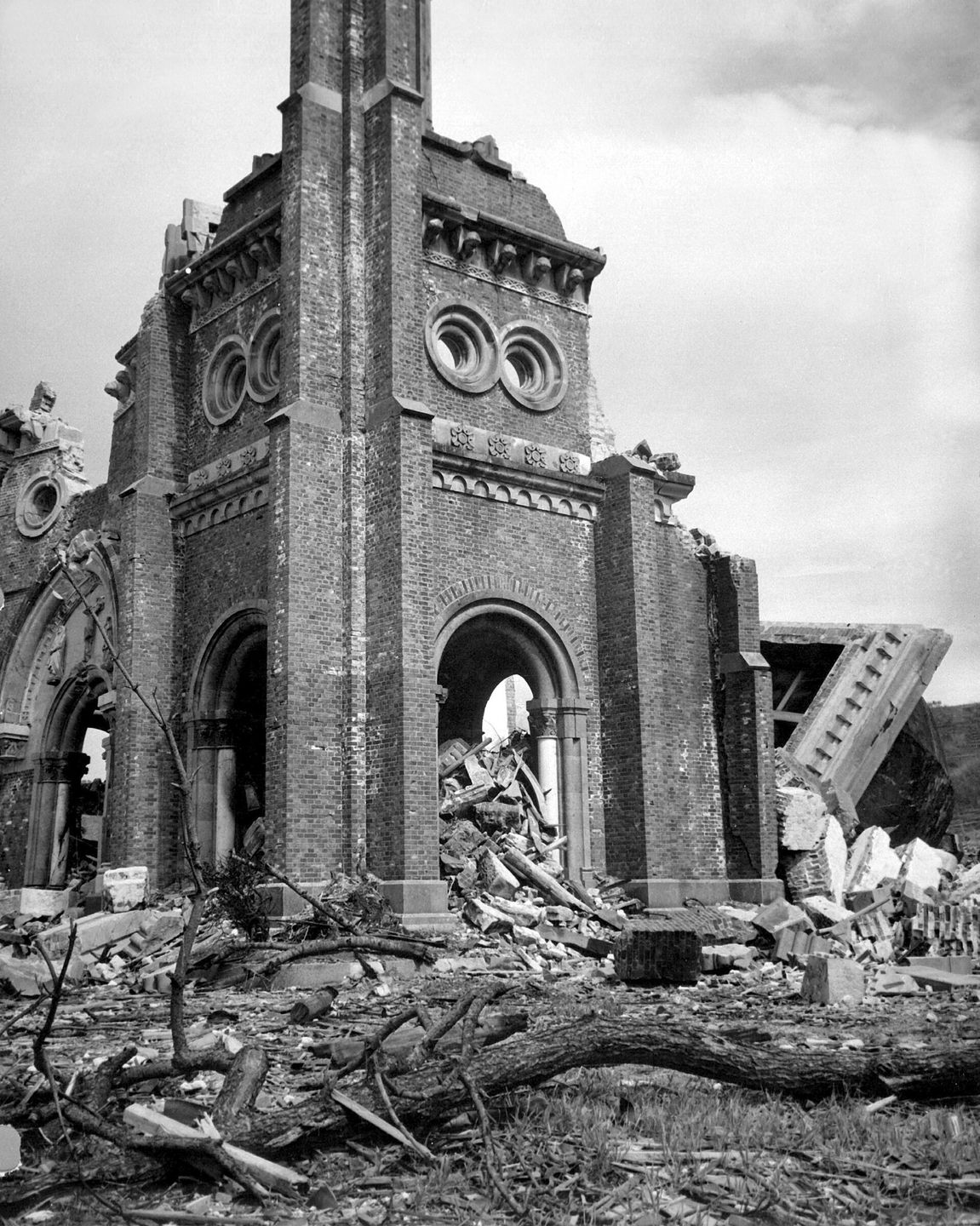
The ruins of Urakami Cathedral, near where Fat Man detonated over the Urakami Valley, Nagasaki, 1945. US Army Corps of Engineers, Public domain, via Wikimedia Commons
The long-term consequences of Nagasaki are still unfolding. Survivors, known as hibakusha, lived with radiation-related illnesses for decades. Their testimonies became a crucial counternarrative to the abstract strategic calculations that justified the bombings. The physical scars healed, but the psychological and cultural scars remain. Nagasaki rebuilt, but it also became a symbol, a warning, a memorial to what happens when technology outpaces ethics. The city's Peace Park and Atomic Bomb Museum are not just commemorations of the past. They are arguments against the future.
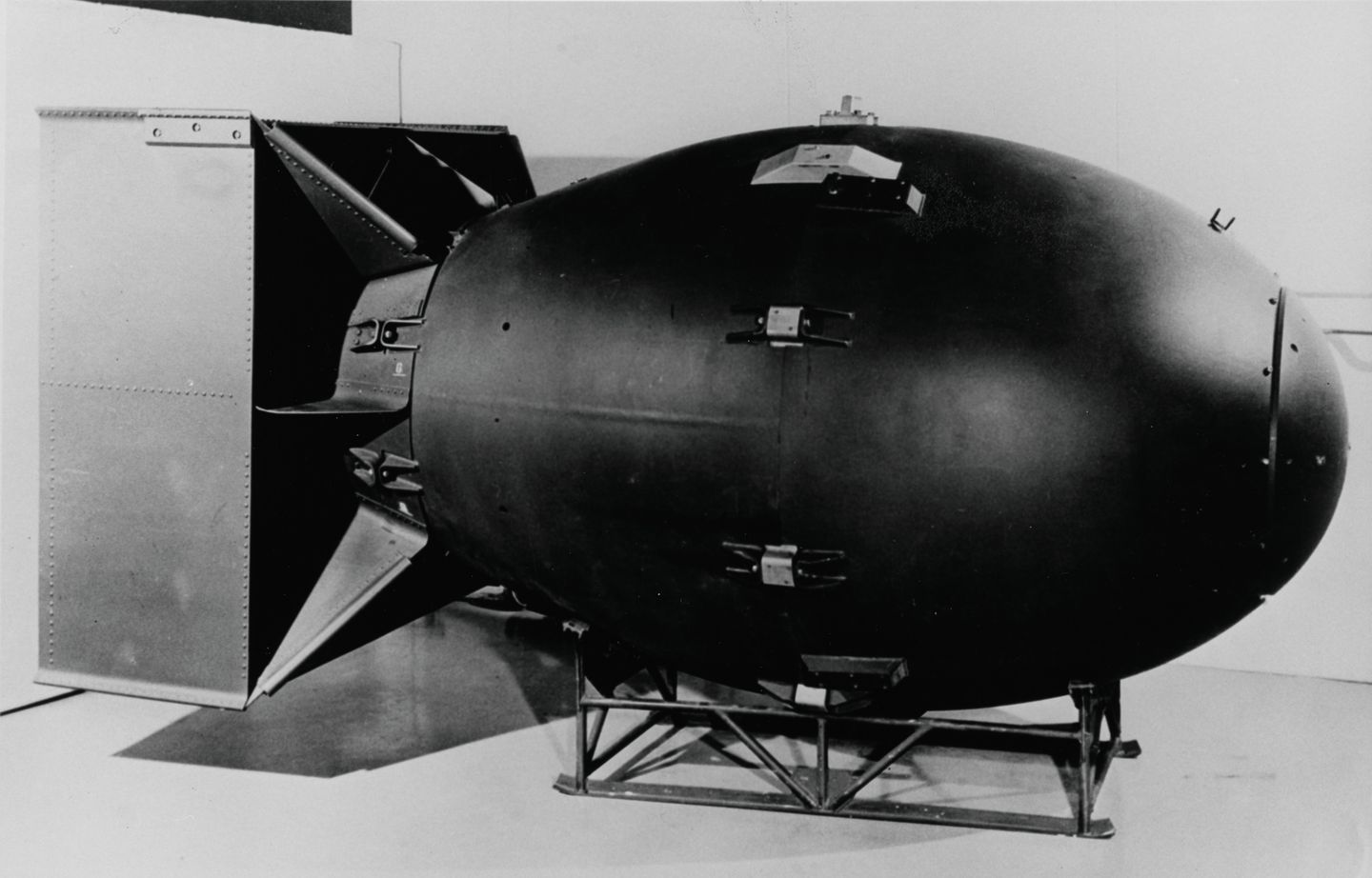
A replica of Fat Man, the plutonium Bomb dropped on Nagasaki on August 9, 1945, on display at the national Museum of the united states air force. U.S. Department of Defense, Public domain, via Wikimedia Commons
The atomic bomb is the clearest example in history of design as a moral question. The scientists who built it were brilliant. The engineering was flawless. The execution was precise. And the result was catastrophic human suffering. Technology is never neutral. Every tool is a choice. Every system has consequences. The bomb that fell on Nagasaki was designed to end a war. It did. But it also began something else: a permanent condition of existential risk, where the tools we build can unmake the world that built them. That condition has not ended. It is still here, waiting in silos and submarines, a designed apocalypse held in suspension, ready to be deployed the moment we forget what it means to be human.
studio / on-this-day / Aug 9