studio / on-this-day / Aug 23
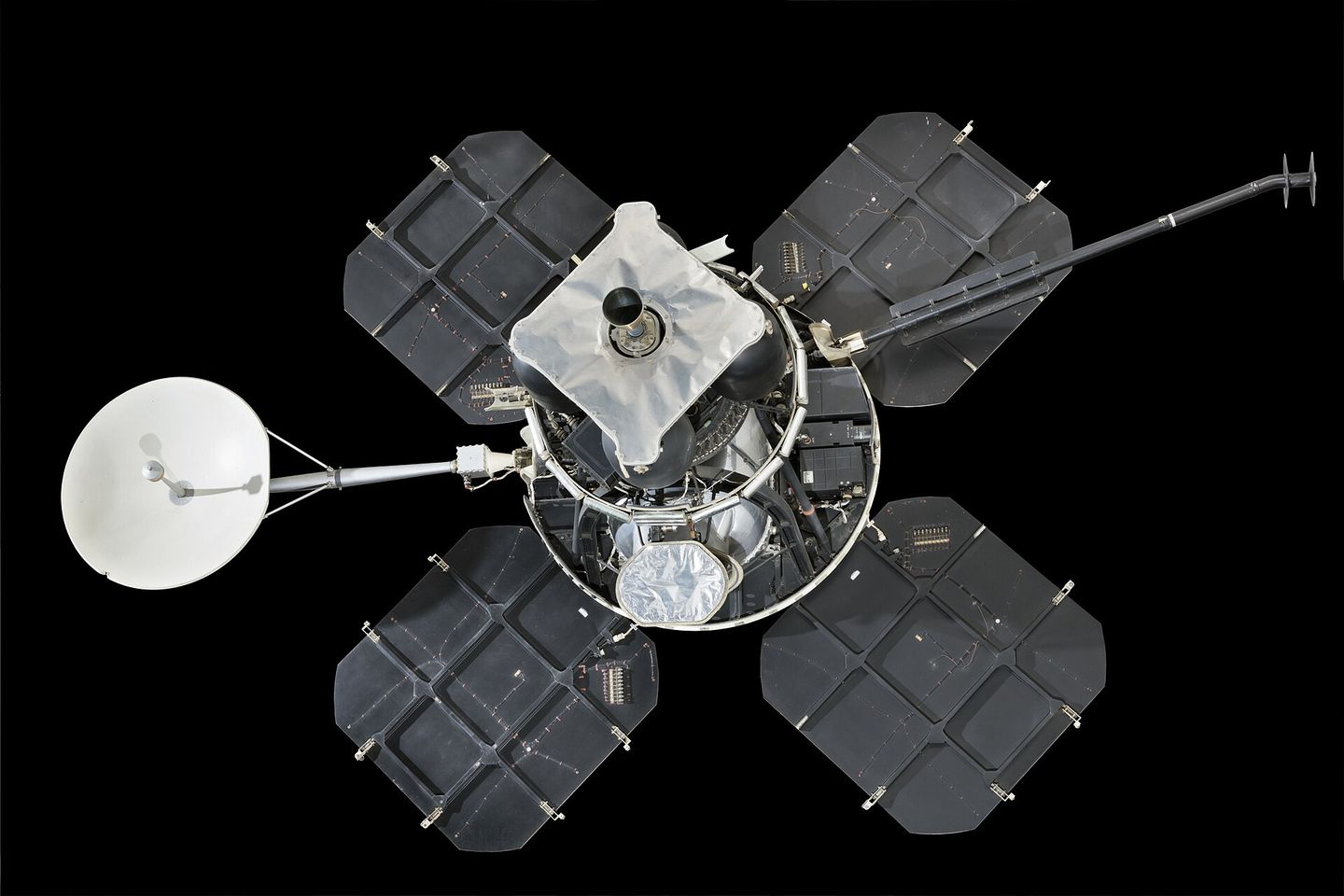
Lunar Orbiter 1, the unmanned NASA spacecraft whose camera transmitted the first photograph of Earth from the vicinity of the Moon on August 23, 1966. National Air and Space Museum, CC0, via Wikimedia Commons
Earth From the Moon
On this day in 1966 — Lunar Orbiter 1 sent back the first photograph of Earth as seen from the Moon.
2 min read
On August 23, 1966, an unmanned spacecraft called Lunar Orbiter 1 transmitted the first photograph of Earth as seen from the vicinity of the Moon. The image showed Earth rising above the lunar horizon, a small blue and white sphere suspended in the blackness of space. It was grainy, transmitted line by line across 240,000 miles, but it fundamentally changed how humans visualized their place in the universe.
Lunar Orbiter 1 was not designed to take pictures of Earth. Its mission was to photograph potential landing sites on the Moon for the upcoming Apollo missions. NASA needed high-resolution images of the lunar surface to identify safe, flat areas where astronauts could land. The spacecraft carried a sophisticated camera system that used film, developed the negatives on board, scanned them electronically, and then transmitted the data back to Earth. It was an analog process in a digital age.
The Earthrise photo was almost an afterthought. Mission planners included it as a test of the camera system and a bonus for public relations. But when the image arrived, it had an impact no one anticipated. Seeing Earth from the Moon made the planet look fragile, isolated, and finite. There were no visible borders, no nations, just a single world floating in an immense void.
The image preceded the more famous Earthrise photograph taken by Apollo 8 astronaut William Anders in December 1968, which showed Earth in full color rising above the lunar surface. That later image became iconic, reproduced on posters, magazine covers, and environmental campaign materials. But Lunar Orbiter 1's photo was first. It proved that machines could extend human vision beyond the immediate, that we could see ourselves from a distance we could never physically reach at the time.
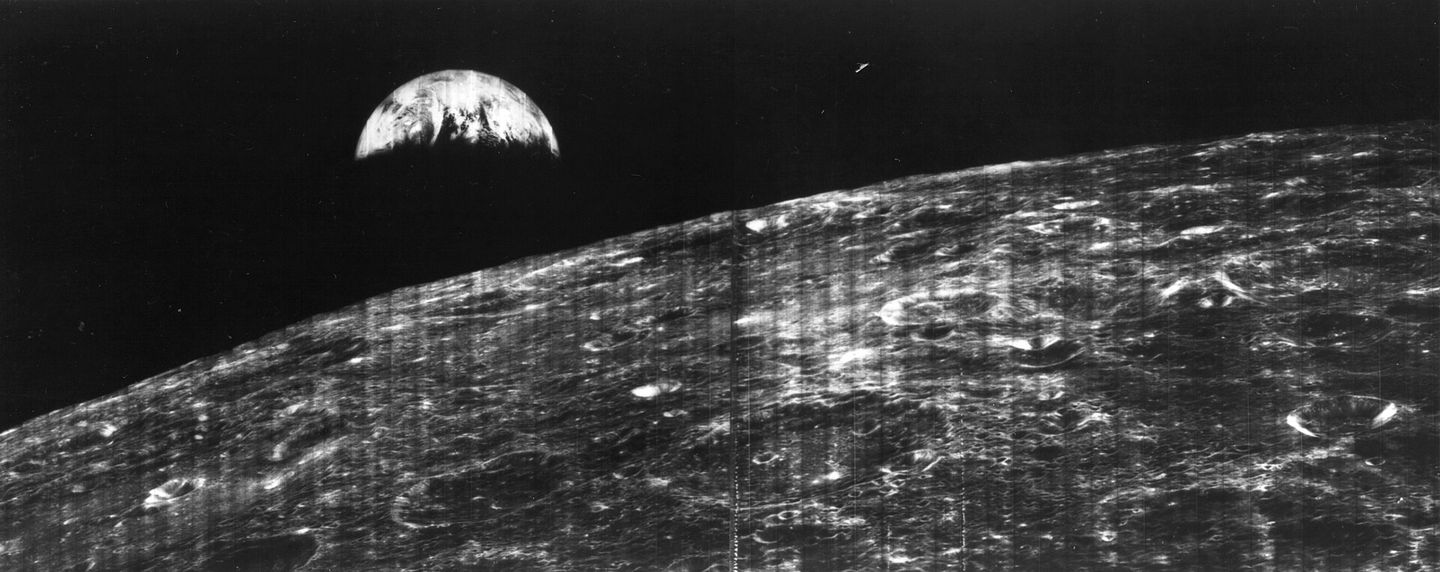
The actual frame transmitted by Lunar Orbiter 1 on August 23, 1966 — Earth rising over the Lunar horizon, scanned line by line and beamed back across 240,000 miles. NASA, Public domain, via Wikimedia Commons
The photograph also had practical value. It demonstrated that the camera system worked and that the lunar environment wouldn't interfere with imaging. This gave NASA confidence to proceed with the Orbiter program, which mapped the Moon in detail and identified the landing sites that would be used for Apollo 11, 12, 14, 15, 16, and 17. Without those images, the Moon landings would have been far more dangerous.
But the symbolic value outlasted the technical. Seeing Earth from the Moon started a shift in perspective that would grow over the next decade. The environmental movement, the Whole Earth Catalog, and the concept of Spaceship Earth all drew from the idea that our planet is a closed system with limited resources. The photograph made that idea visceral. It wasn't a metaphor. It was what we actually looked like from out there.
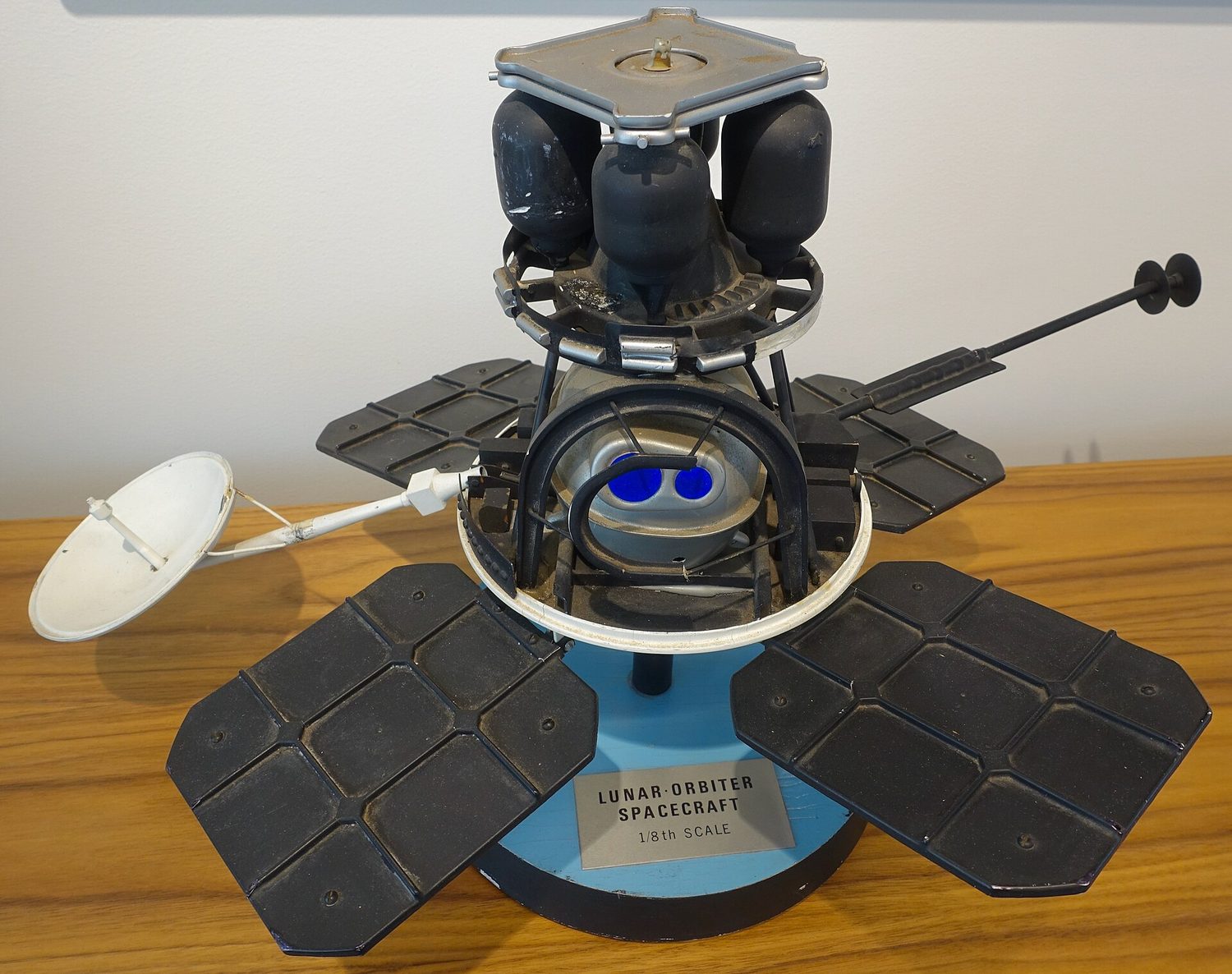
A model of Lunar Orbiter 1, which in 1966 took the first photograph of Earth from the Moon. Wikimedia Commons
The first Earthrise image, transmitted on August 23, 1966, didn't just document a view. It introduced a new way of thinking about design, systems, and interconnection. If Earth is a single object floating in space, then everything on it is part of one system. That realization, made possible by a camera on an unmanned spacecraft, changed how we see not just the planet but the responsibility we have toward it.
studio / on-this-day / Aug 23