studio / on-this-day / Aug 24
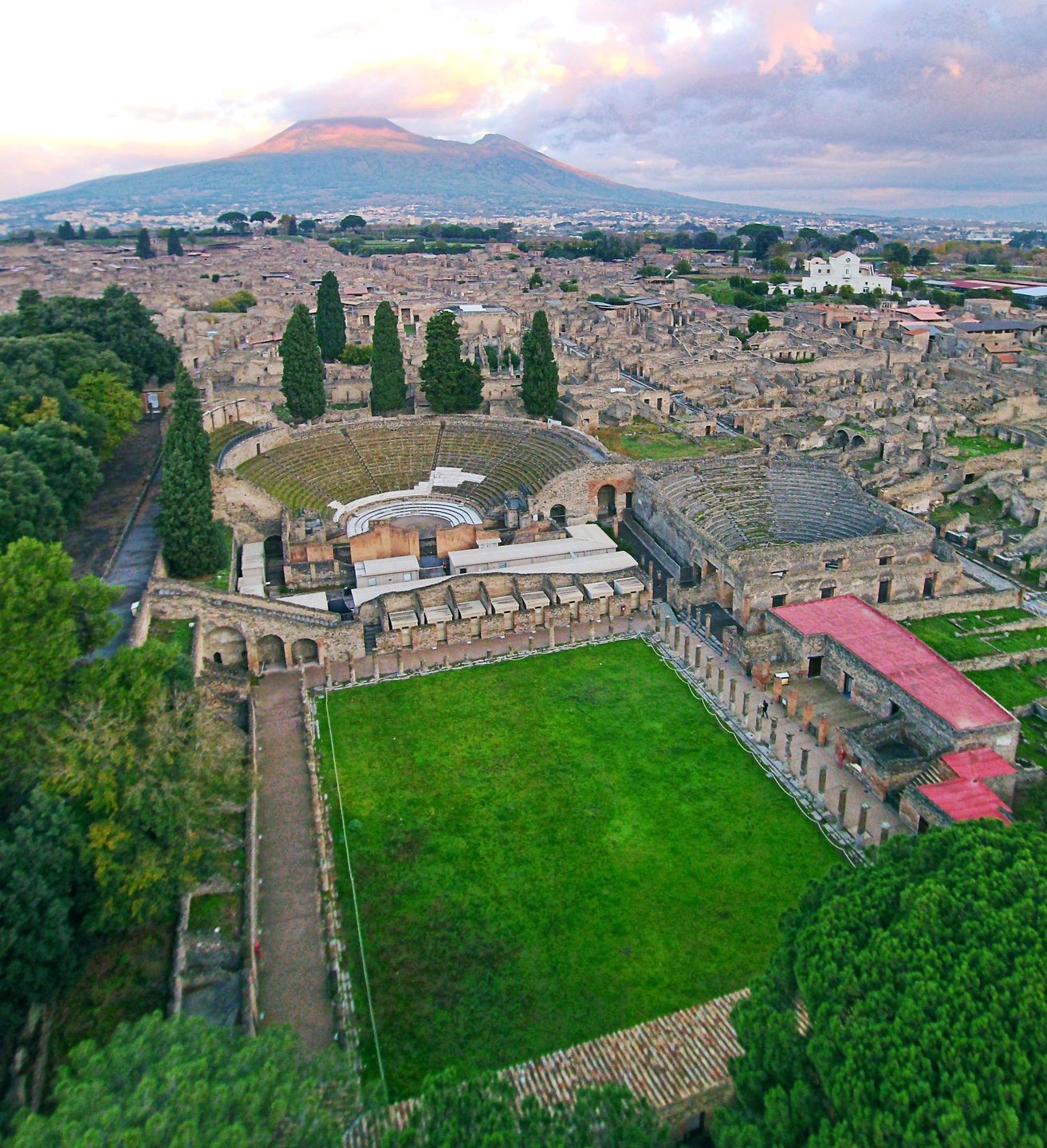
The theatre district of Pompeii, preserved under layers of volcanic ash and pumice since the eruption of Mount Vesuvius on August 24, 79 AD. ElfQrin, CC BY-SA 4.0, via Wikimedia Commons
The City Frozen in Time
On this day in 79 AD — Mount Vesuvius erupted, burying Pompeii. An entire city preserved by the thing that destroyed it.
3 min read
On August 24, 79 AD, Mount Vesuvius erupted with a violence that Roman naturalist Pliny the Younger would later describe as a pine tree made of ash, rising miles into the sky. The eruption buried the Roman cities of Pompeii and Herculaneum under layers of volcanic material. Pompeii disappeared under 13 to 20 feet of pumice and ash. The city's roughly 11,000 residents had little warning. Many who didn't flee immediately were killed by pyroclastic flows, superheated clouds of gas and rock that moved faster than anyone could run.
What made this disaster unique was what it left behind. The ash that killed Pompeii also preserved it. Buildings, frescoes, mosaics, furniture, food, graffiti, everything was sealed under volcanic debris that hardened into a protective shell. The city remained buried for over 1,600 years, forgotten until systematic excavations began in the 18th century. What archaeologists uncovered wasn't just ruins. It was a snapshot of Roman life, frozen at the moment of catastrophe.
Pompeii revealed how ordinary Romans lived. Archaeologists found bakeries with loaves of bread still in the ovens, taverns with wine jars stacked along the walls, homes with gardens and plumbing, public baths with intricate tile work, and amphitheaters where gladiators fought. The city's layout, its infrastructure, its design choices, all remained intact. You could walk the streets and see where merchants sold goods, where politicians campaigned, where citizens gathered to gossip.
The human cost was documented in a haunting way. When excavators discovered voids in the ash where bodies had decomposed, archaeologist Giuseppe Fiorelli developed a technique in the 1860s to fill those voids with plaster. The result was casts of the victims in their final moments: people huddled together, shielding their faces, clutching loved ones, trying to escape. These figures are not sculptures. They are direct impressions of real people, preserved by accident.
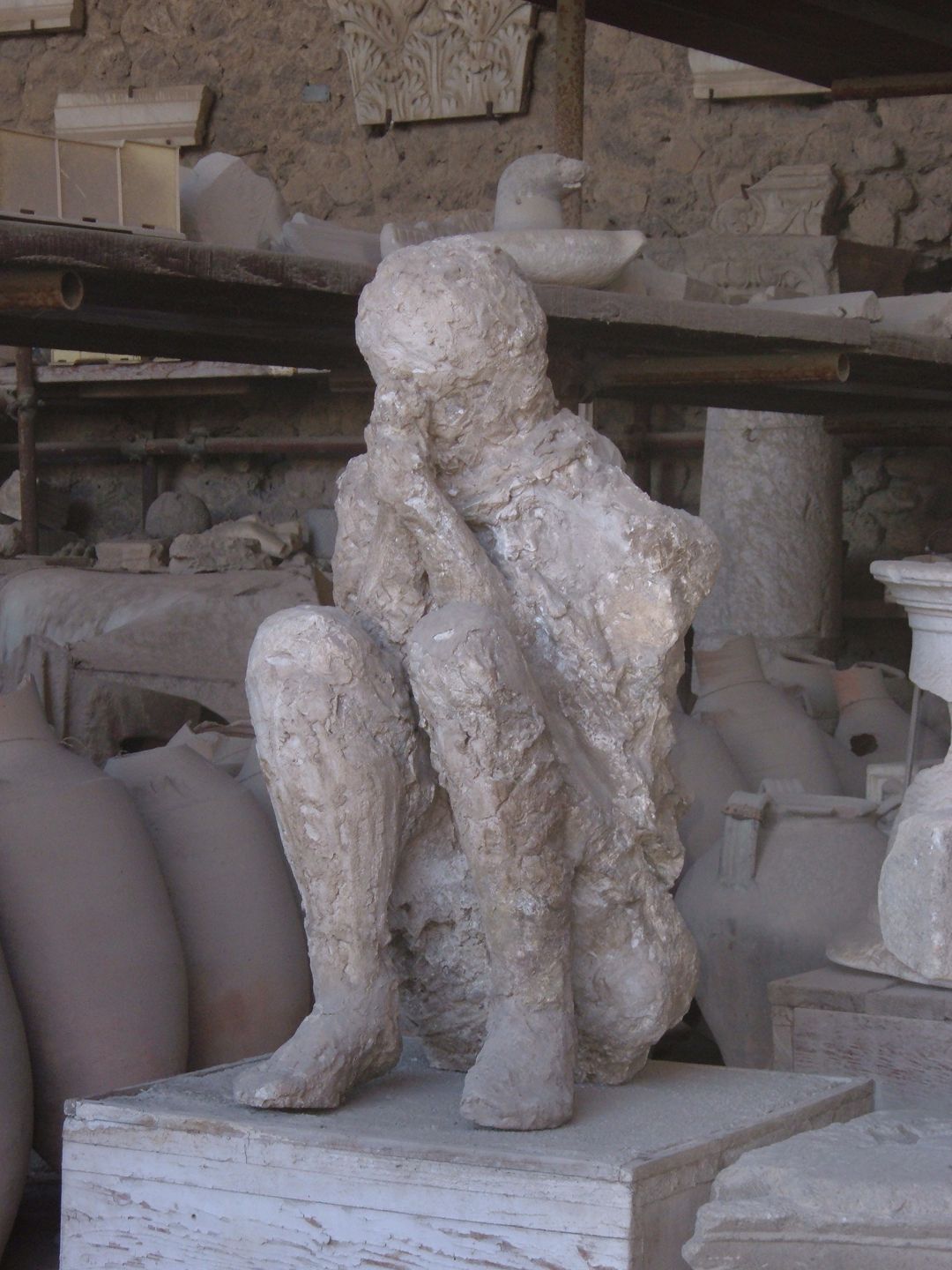
A plaster cast of a victim, created by filling the void left in the hardened ash where a body had decomposed — a technique developed by Giuseppe Fiorelli in the 1860s. Kleuske, CC BY 3.0, via Wikimedia Commons
Pompeii also showed the sophistication of Roman engineering and design. The city had running water delivered by aqueducts, heated floors in wealthier homes, and advanced construction techniques that used concrete and vaulted ceilings. The design of public spaces, the integration of art into daily life, and the emphasis on communal bathing and entertainment revealed a civilization that thought carefully about how people should live together.
The disaster also left a record of information design. Walls throughout Pompeii were covered with graffiti, political slogans, advertisements, and personal messages. Some were crude, some poetic, some practical. They showed that public writing was a normal part of urban life, a way to communicate, advertise, and argue. This street-level documentation provides insight into Roman culture that official records don't capture.
The excavation of Pompeii influenced modern archaeology and our understanding of preservation. Before Pompeii, most historical study focused on grand monuments and elite artifacts. Pompeii showed that everyday objects and ordinary structures matter just as much. The city became a model for how to study the past through material culture, how to reconstruct daily life from the things people used and the spaces they inhabited.
The eruption of Vesuvius was a catastrophe, but the preservation of Pompeii was an accidental gift. The city offers a complete view of a moment in time, not curated or idealized but raw and immediate. It's a design document for an entire civilization, showing how Romans organized space, distributed resources, expressed status, and made their world functional and beautiful.
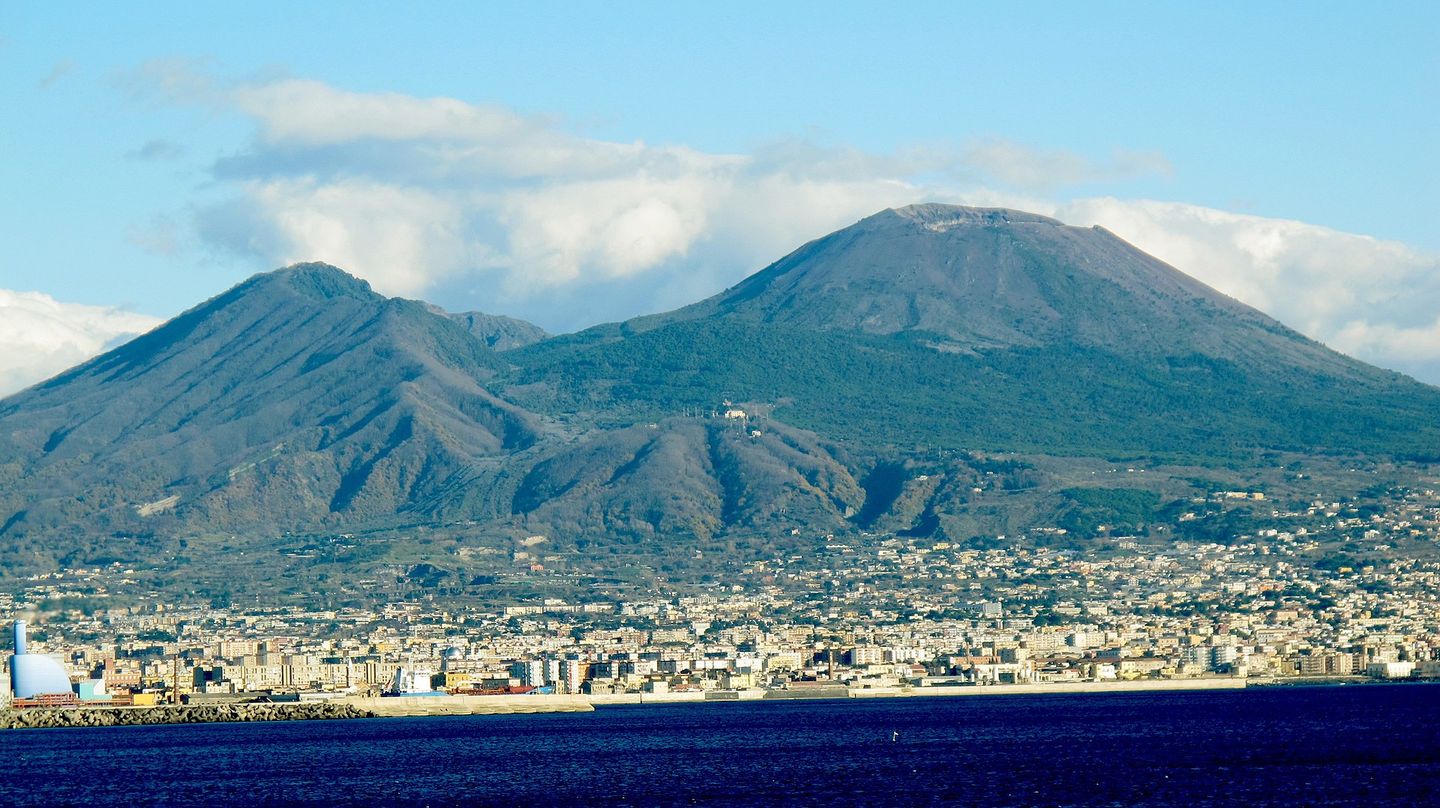
The crater of Mount Vesuvius, the volcano whose eruption on August 24, 79 AD buried Pompeii and Herculaneum — and in doing so, preserved them. Pietro scerrato, CC BY 3.0, via Wikimedia Commons
Pompeii reminds us that preservation happens in unexpected ways. Sometimes the thing that destroys also protects. The city was lost, but in being lost, it was saved. What remains is not just history but a lesson in how fragile and how durable human design can be.
studio / on-this-day / Aug 24