studio / on-this-day / Jul 6
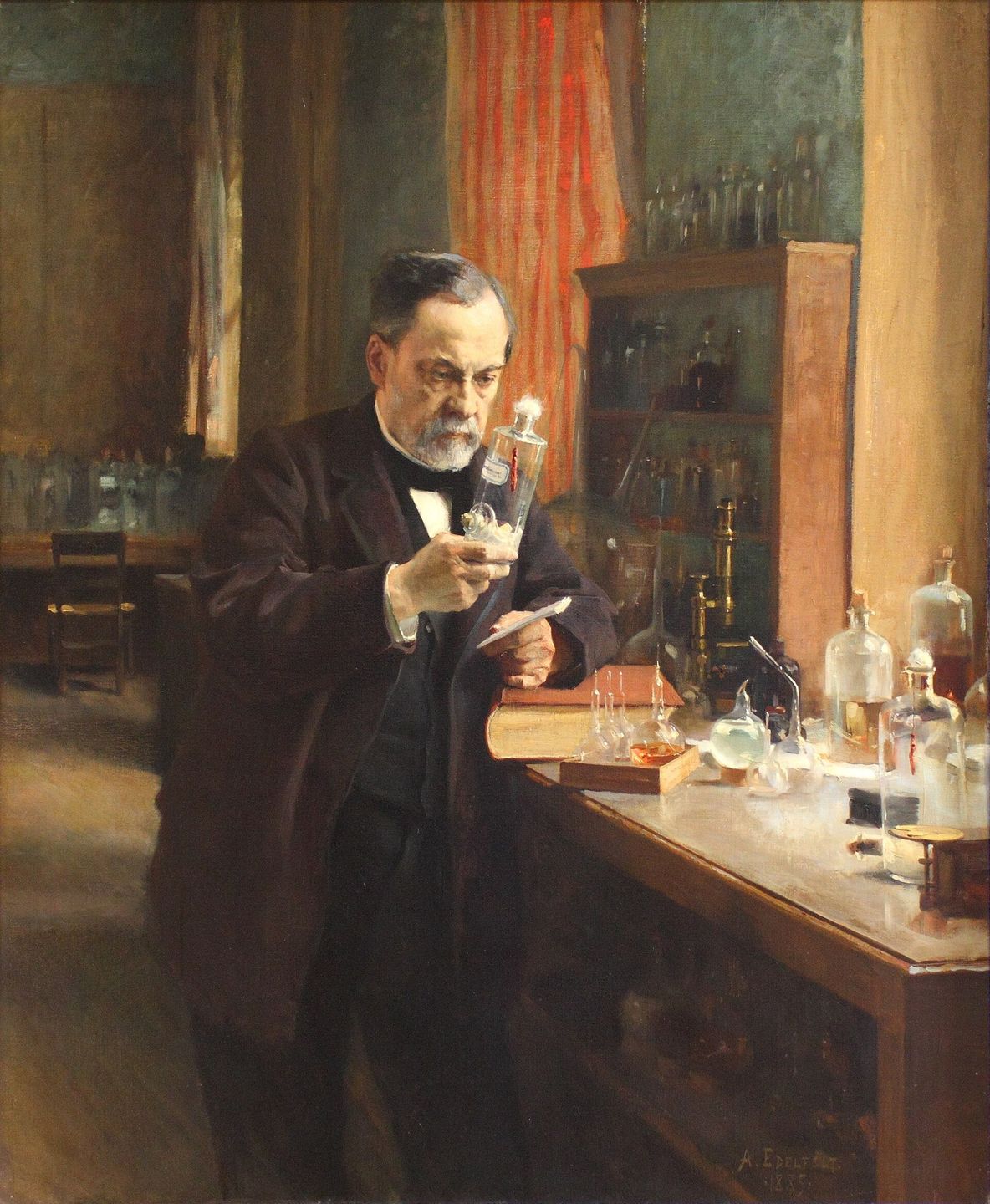
Louis Pasteur, painted by Albert edelfelt in 1885. Albert Edelfelt, Public domain, via Wikimedia Commons
Invisible Enemies, Visible Solutions
On this day in 1885 — Louis Pasteur gambled the first rabies vaccine on a bitten boy, and it worked, turning microbiology into intervention.
3 min read
On July 6, 1885, Louis Pasteur administered an experimental vaccine to a nine-year-old boy named Joseph Meister. Two days earlier, the boy had been bitten fourteen times by a rabid dog. Without treatment, he would almost certainly die, slowly and horribly. Rabies was a death sentence. Once symptoms appeared, there was no cure. Pasteur had developed a vaccine by weakening the rabies virus through repeated passage in rabbit spinal cords, but he had only tested it on dogs. He was not a medical doctor. He had no legal authority to treat human patients. But the boy's mother begged him to try, and he did.
Pasteur gave the boy a series of thirteen injections over ten days, each one containing progressively stronger doses of the attenuated virus. The idea was to train the immune system to recognize and fight the infection before the wild virus could reach the brain. It was a calculated gamble. If the vaccine was too weak, the boy would die of rabies. If it was too strong, the vaccine itself might kill him. Pasteur barely slept during the treatment. He was terrified he had made a mistake. But Joseph Meister survived. He never developed rabies. The vaccine worked.
Pasteur had spent decades studying the invisible world of microorganisms. He proved that fermentation was caused by yeast, not spontaneous generation. He developed pasteurization to kill bacteria in wine and milk. He showed that many diseases were caused by specific microbes, and that these microbes could be controlled. The rabies vaccine was the culmination of that work, the first demonstration that a viral disease could be prevented through deliberate intervention at the microbial level. It was not just medicine. It was design at the scale of molecules and cells.
The success with Joseph Meister made Pasteur famous overnight. People traveled from across Europe to receive the vaccine. Within a year, Pasteur had treated over 2,500 patients. The death rate from rabies among the vaccinated was less than one percent, compared to near certainty without treatment. Governments funded the construction of the Pasteur Institute in Paris, which opened in 1888 and became a global center for microbiological research. The techniques Pasteur developed for weakening pathogens became the foundation for vaccine development for decades.
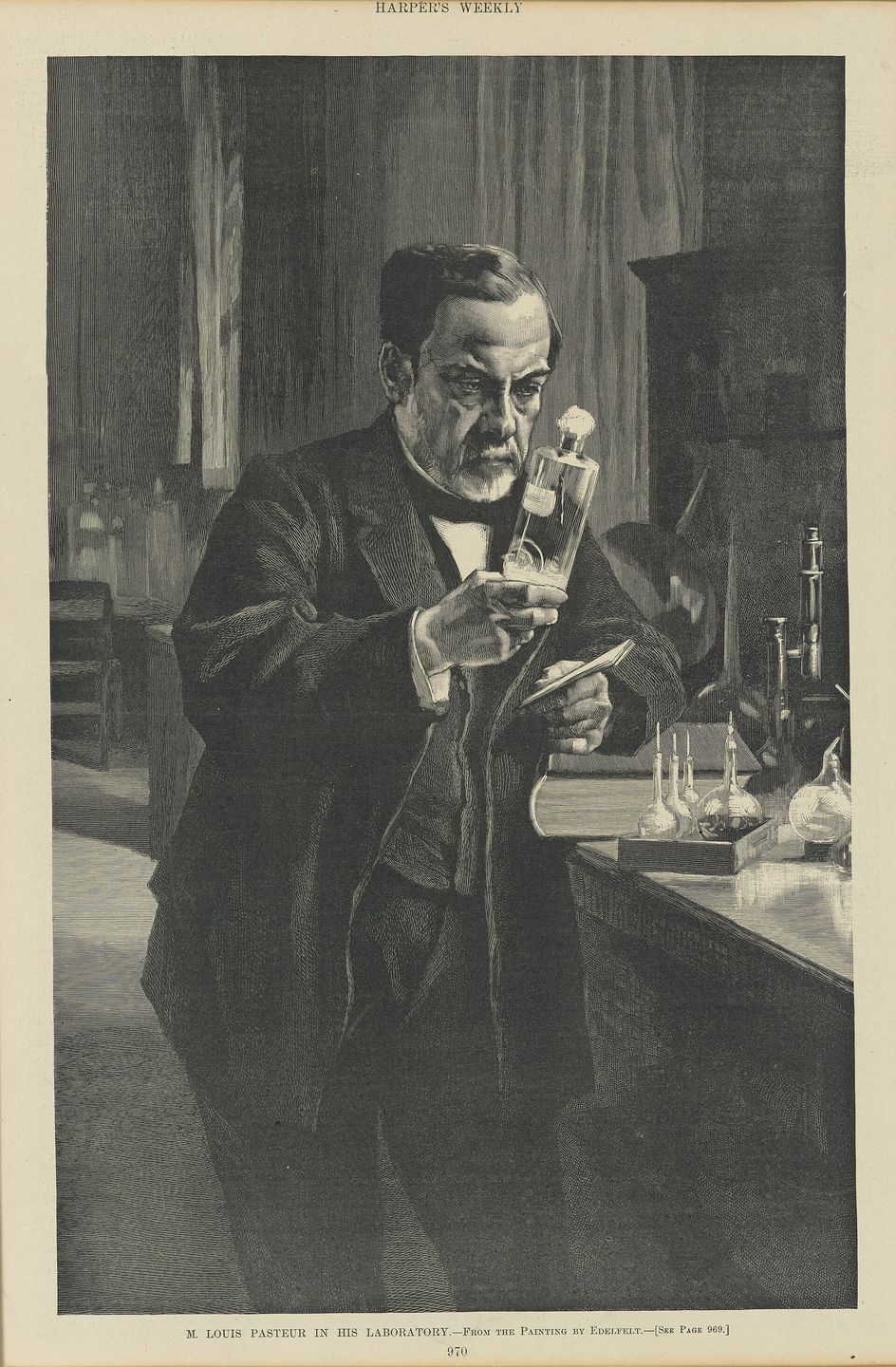
Louis Pasteur in his laboratory. Edelfelt, Albert, 1854-1905, Public domain, via Wikimedia Commons
What makes the rabies vaccine remarkable is not just that it worked, but that it worked without Pasteur fully understanding how. He never saw the rabies virus. It is too small to be visible under the light microscopes available in the 1880s. He did not know how the immune system functioned at a cellular level. He just knew that exposure to weakened pathogens could confer protection against stronger ones. He was working empirically, designing solutions based on observed patterns rather than complete theoretical knowledge. It was engineering in the dark, guided by careful experimentation.
The principle Pasteur demonstrated, that you can train the immune system to fight diseases before they occur, transformed public health. Vaccines for diphtheria, tetanus, polio, measles, and dozens of other diseases followed. Millions of lives were saved. Entire diseases were driven nearly to extinction. Edward Jenner's smallpox vaccine had proven the concept a century earlier, but Pasteur showed it could be systematized, that vaccines could be designed and manufactured for specific pathogens. Medicine became proactive rather than reactive.
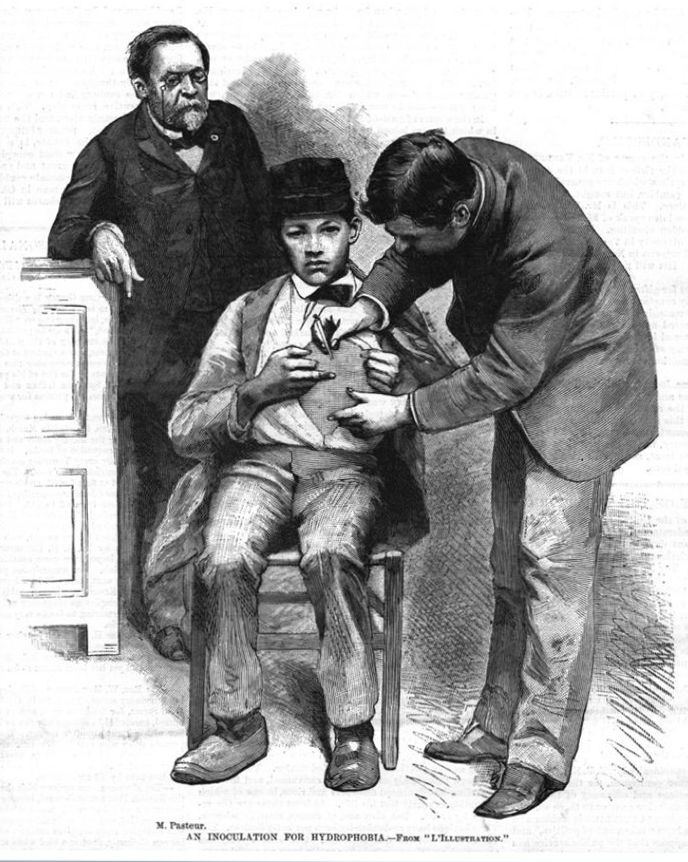
An inoculation of jean-baptiste jupille, the second person Pasteur treated for rabies, weeks after Joseph Meister. Public domain, via Wikimedia Commons
Joseph Meister grew up to become the gatekeeper at the Pasteur Institute. In 1940, during the Nazi occupation of Paris, German soldiers demanded he open Pasteur's crypt. Meister refused and took his own life rather than comply. It is a strange coda to the story of his survival, a reminder that history is never as simple as the heroic narratives suggest. But the vaccine that saved him went on to save millions more, proof that deliberate intervention in biological systems, guided by science and tested through experiment, can reshape the boundary between life and death.
studio / on-this-day / Jul 6