studio / on-this-day / Jan 11
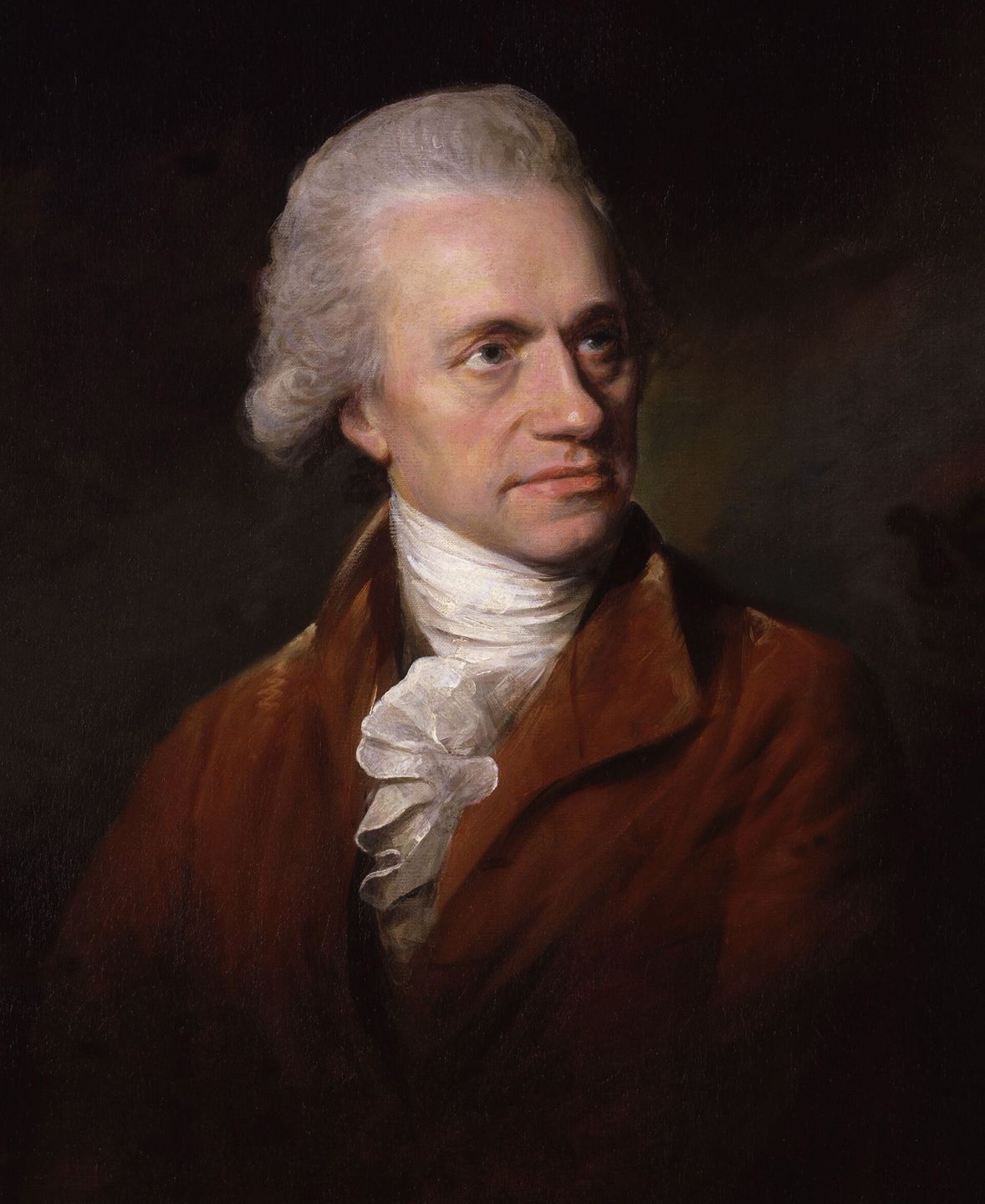
Portrait of william Herschel, astronomer who discovered Titania and Oberon, moons of Uranus, in 1787. Lemuel Francis Abbott, Public domain, via Wikimedia Commons
Shakespeare's Moons
On this day in 1787 — William Herschel spotted two faint moons of Uranus that would wait sixty-five years for their names out of Shakespeare.
3 min read
William Herschel discovered Uranus in 1781, the first planet found in recorded history that wasn't visible to the naked eye. It was an accident. He was systematically surveying the sky with a homemade telescope, cataloging stars, when he noticed an object that moved. At first he thought it was a comet. Other astronomers confirmed it was something else: a new planet, orbiting twice as far from the Sun as Saturn. Overnight, the known solar system doubled in size.
Six years later, on January 11, 1787, Herschel pointed his telescope at Uranus and noticed two faint points of light moving around it. They were moons. Herschel never named them himself. That came decades later, in 1852, when his son John Herschel called them Titania and Oberon, after the fairy queen and king in A Midsummer Night's Dream. It was an unusual choice. Most celestial bodies were named after figures from Greek and Roman mythology. The Herschels chose Shakespeare instead.
The decision set a precedent. When more moons of Uranus were discovered in the 19th and 20th centuries, they were all named after characters from Shakespeare's plays and Alexander Pope's poems. Ariel, Umbriel, Miranda, Cordelia, Ophelia, Puck. The moons of Uranus are the only celestial bodies in the solar system named after literary characters instead of mythological figures. They orbit a planet named after a Roman god in a system where almost everything else follows classical tradition. The literary names feel like an anomaly, a small rebellion against convention.
Herschel was a musician before he was an astronomer. He played the oboe and composed symphonies. He built his own telescopes because he couldn't afford to buy one, grinding and polishing mirrors in his basement. His sister Caroline assisted him, keeping records, making observations, and discovering comets of her own. They worked through the night, every clear evening, methodically mapping the sky.
Titania and Oberon are small, dark, and cold. Titania is the largest of Uranus's moons, but it's still only half the diameter of our Moon. Its surface is cratered ice, marked by enormous canyons that suggest the moon froze and cracked as it cooled. Oberon is slightly smaller, darker, heavily scarred by ancient impacts. They orbit in the plane of Uranus's equator, which is tilted 98 degrees relative to its orbit around the Sun. That means Uranus and its moons roll through space like a ball, with each pole facing the Sun for 42 years at a time.
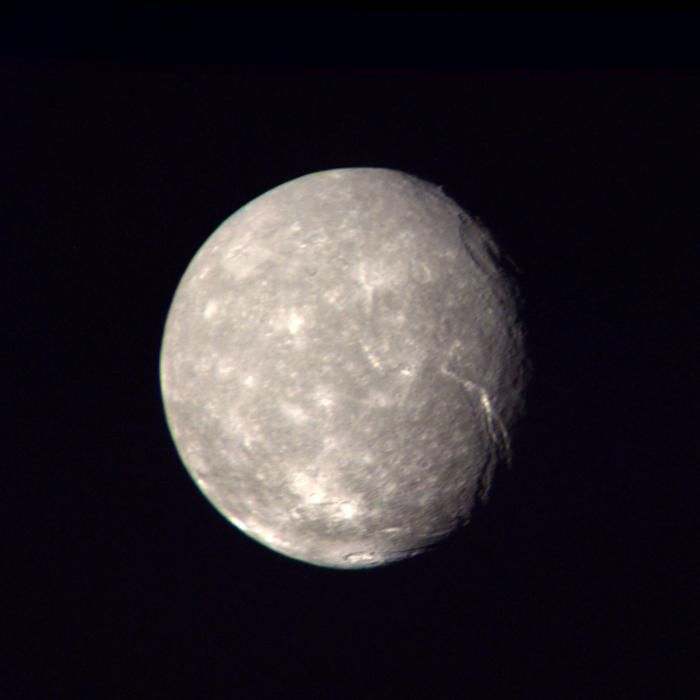
Titania, the largest Moon of Uranus, photographed by Voyager 2 in 1986. NASA/JPL, Public domain, via Wikimedia Commons
Voyager 2 flew by Uranus in 1986, the only spacecraft ever to visit the planet. It sent back the first close-up images of Titania and Oberon, revealing their surfaces in detail for the first time. They looked ancient, battered, frozen. No one has been back since. There are no missions planned to return. The moons Herschel discovered remain some of the least explored objects in the solar system.
What Herschel did was expand the map. He showed that the solar system was larger and stranger than anyone had imagined. And he named his discoveries after stories, connecting the cosmos to human imagination. Just as Isaac Newton connected apples and moons through gravity, the Herschels connected distant moons to Shakespeare's fairies. It was a reminder that exploration is also an act of naming, of making the unknown part of human culture.
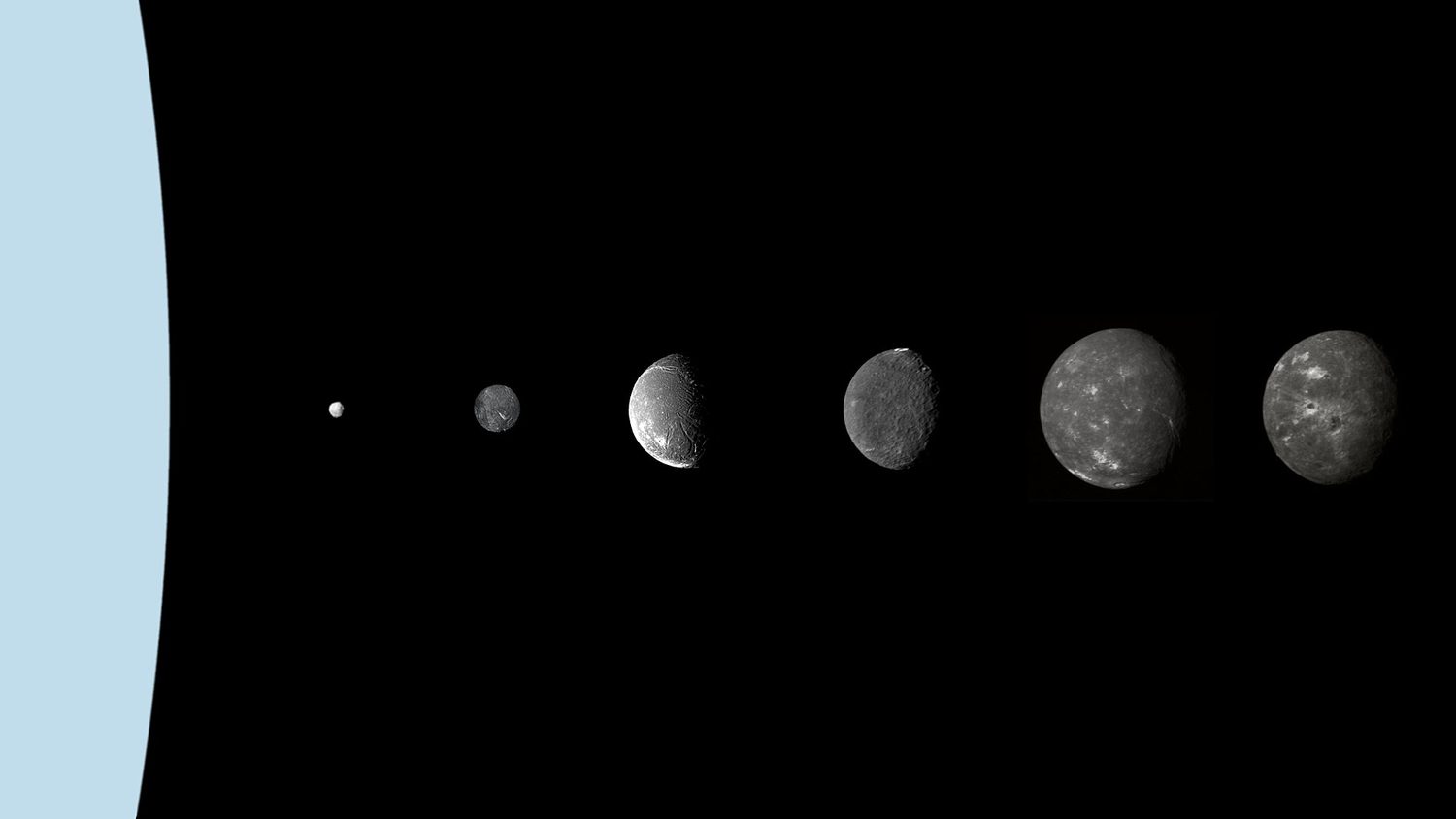
Uranus, whose moons Titania and Oberon Herschel discovered in 1787. Public domain, via Wikimedia Commons
The moons are still out there, orbiting Uranus in the cold outer solar system, carrying the names of fairies from a play written 400 years ago. They are real objects, made of rock and ice, governed by physics. But they are also part of our mythology now, connected to human stories through the arbitrary but enduring act of naming. Titania and Oberon, spinning in the dark, proof that science and poetry are not opposites but companions in the work of understanding the world.
studio / on-this-day / Jan 11