studio / on-this-day / Jul 27
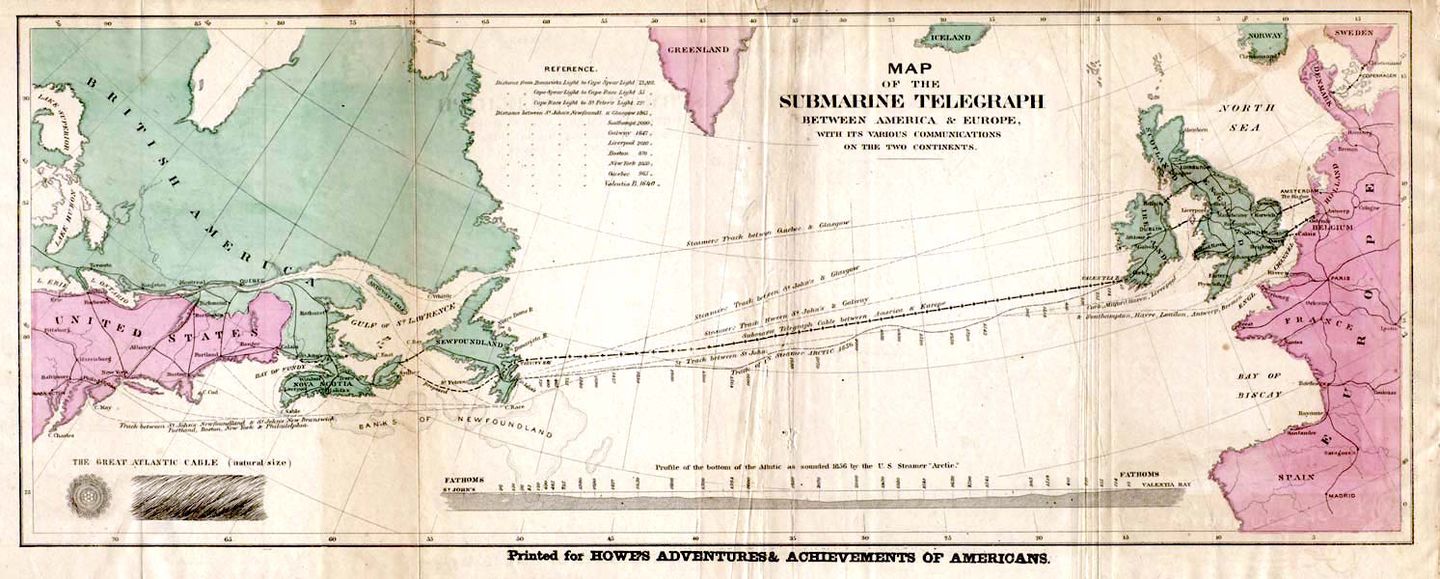
Map of the transatlantic telegraph cable route. Public domain, via Wikimedia Commons
The Cable Across the Ocean
On this day in 1866 — the first lasting transatlantic telegraph cable was completed, and two continents began talking through copper under the sea.
3 min read
On July 27, 1866, the steamship Great Eastern finished laying 1,852 miles of insulated copper cable across the floor of the Atlantic Ocean. The cable stretched from Valentia Island in Ireland to Heart's Content in Newfoundland. When the connection was tested, electrical pulses traveled through the wire in both directions. For the first time, Europe and North America could communicate in minutes instead of weeks. Messages that once required ships crossing an ocean could now be sent as strings of dots and dashes encoded in electricity.
This was not the first attempt. An earlier cable, laid in 1858, had worked briefly before failing. Engineers had celebrated too soon. The wire degraded within months, silenced by the crushing pressure of deep water and the corrosive effects of seawater on imperfect insulation. The failure was expensive and embarrassing. Critics said the project was impossible. The Atlantic was too deep, too cold, too hostile. Cables could not survive there.
Cyrus West Field, an American entrepreneur, refused to accept that. He had spent years raising money, designing better cables, and chartering ships large enough to carry thousands of miles of coiled wire. The Great Eastern, originally built as a passenger liner, was retrofitted to carry the cable. It was the only ship in the world large enough for the job. Field's team improved the insulation, using gutta-percha, a natural rubber-like material, layered over the copper core. They designed machinery to feed the cable smoothly off the ship without breaking it. Every detail mattered. A single flaw could doom the entire line.
Laying the cable required precision. The ship moved slowly, paying out wire at a controlled rate while maintaining a specific depth. Too fast, and the cable would snap under its own weight. Too slow, and it would pile up on the ocean floor, creating slack that could tangle or break. The crew monitored tension constantly, adjusting speed to match the changing topography of the seabed. They worked in shifts, around the clock, for two weeks. When the cable reached Newfoundland, it was secured to shore. The circuit was complete.
The first official message sent across the new cable was from Queen Victoria to President Andrew Johnson. It took sixteen hours to transmit because the signal was weak and the encoding process was slow. Even so, it was faster than any ship. Within days, the cable was carrying commercial traffic. Businesses paid high rates to send telegrams across the Atlantic. Stock prices, shipping schedules, and news crossed the ocean in near real time. The world shrank.
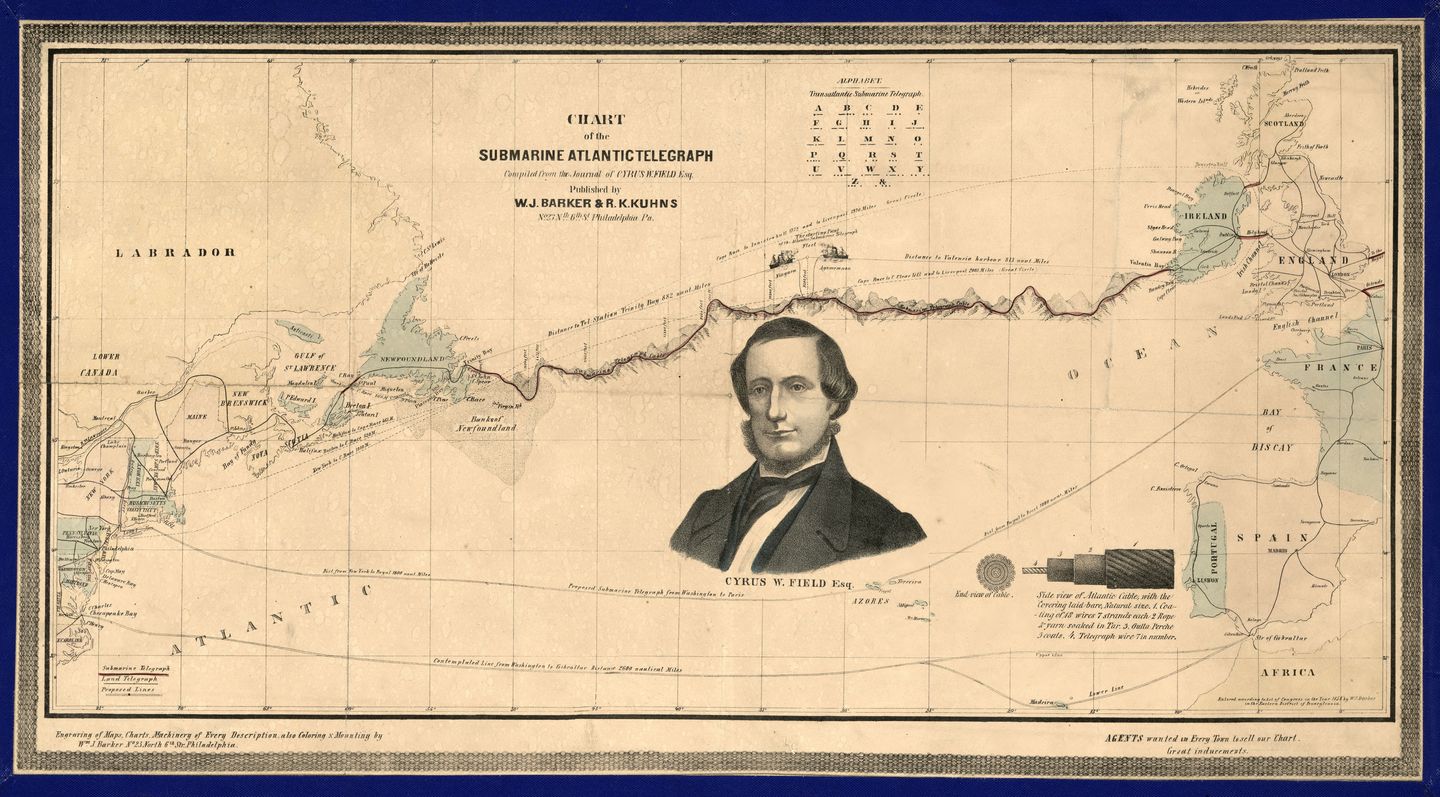
Chart of the submarine Atlantic telegraph route. Barker, Wm. J. (William J.); Barker, Wm. J., Public domain, via Wikimedia Commons
The cable changed how information moved. Before it, news from Europe reached America by steamship, arriving weeks after events occurred. Markets reacted slowly. Decisions were made with outdated information. After the cable, lag time collapsed. Financial markets synchronized. Newspapers could report European events the same day they happened. Communication became infrastructure, a utility as essential as roads or ports.
More cables followed. By the end of the century, a network of undersea telegraph lines connected continents. Messages could be routed through multiple cables if one failed. The system became robust through redundancy. This is how critical infrastructure is designed: build backups, distribute load, plan for failure. One cable is a miracle. Many cables are a system.
The technology evolved. Telegraph gave way to telephone, then to data cables carrying internet traffic. Modern undersea fiber optic cables transmit terabits per second, millions of times faster than the 1866 telegraph wire. But the principle remains the same. Information travels through physical connections laid across the ocean floor. The infrastructure is invisible until it breaks. When a cable is cut, regions lose connectivity. Repair ships are dispatched to locate the break, haul up the damaged section, and splice in new cable. The process takes days or weeks, depending on depth and weather. We depend on these cables without thinking about them.
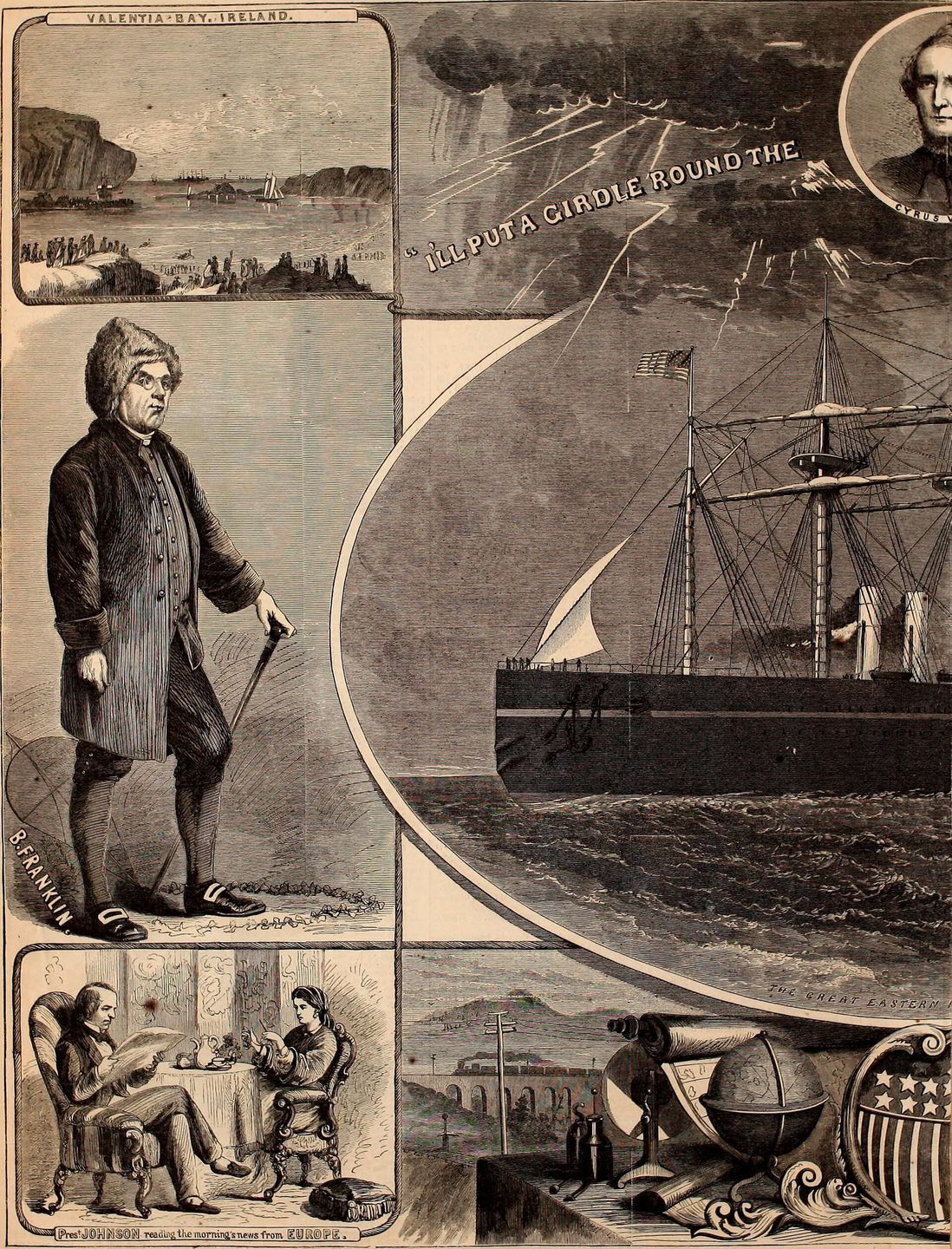
The Great Eastern laying the Atlantic cable, harper's weekly, 1865. Internet Archive Book Images, No restrictions, via Wikimedia Commons
The 1866 transatlantic cable operated for nearly a century before being decommissioned. Parts of it still rest on the seafloor, inert copper wrapped in decayed gutta-percha. It was replaced by better cables, faster technologies, more efficient designs. But it proved the concept. Messages could cross oceans through wires. Distance could be compressed into delay measured in seconds rather than weeks. The world could operate as a connected system rather than isolated regions waiting for ships.
Cyrus Field did not invent the telegraph. He did not design the cable. He organized the project, raised the money, and persisted through failure. His contribution was logistical, not technical. He proved that building infrastructure requires more than good ideas. It requires capital, coordination, and the belief that a difficult thing is worth doing even when the first attempt fails. The cable worked because someone decided it had to, and then spent years making that decision real.
studio / on-this-day / Jul 27