studio / on-this-day / Jul 19
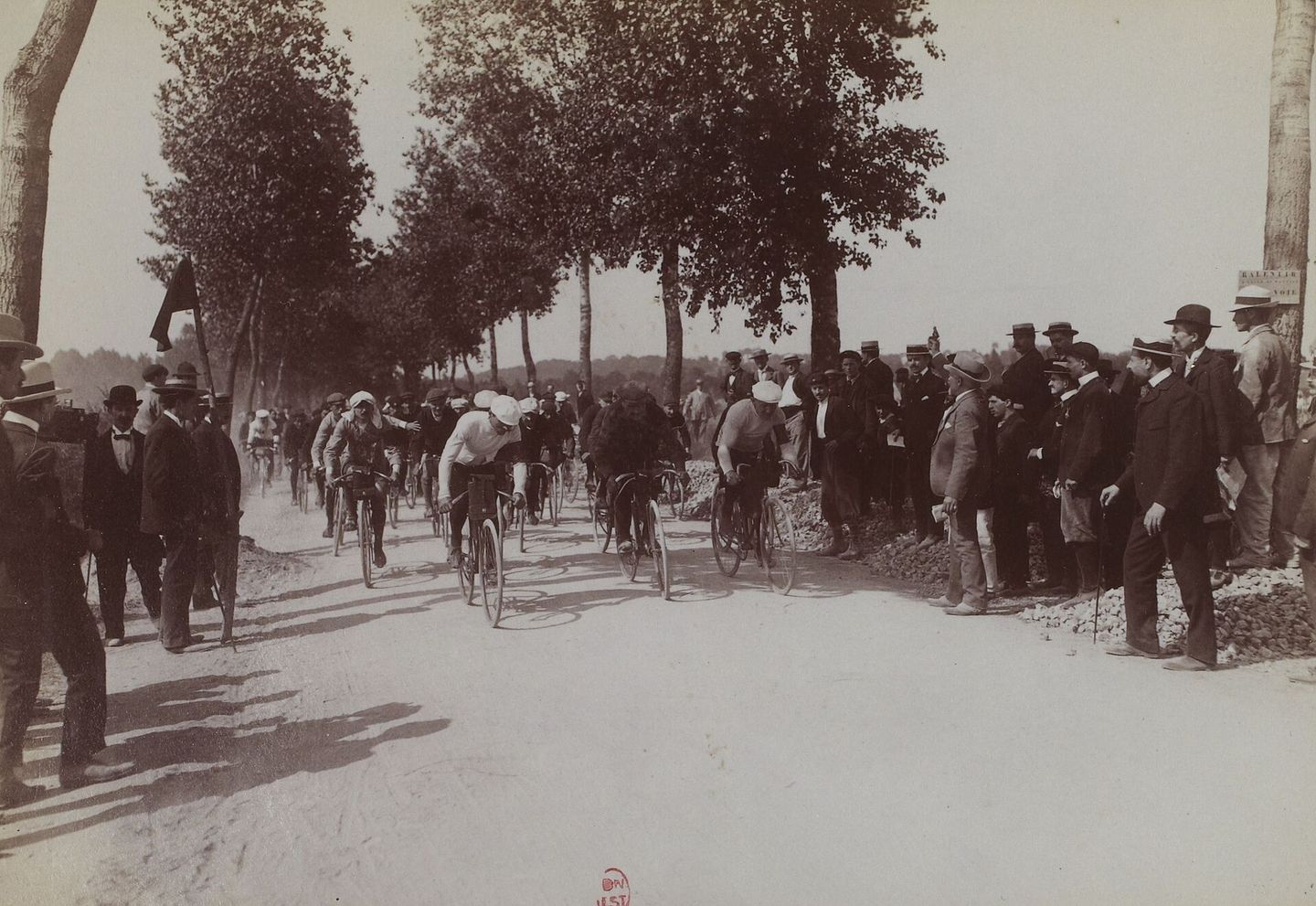
The start of the first stage of the inaugural Tour de France, outside Paris in July 1903. public domain, via Wikimedia Commons
The Race Built to Sell Newspapers
On this day in 1903 — the first Tour de France finished after nineteen days and 1,509 miles, a brutal endurance race invented for one reason: to sell more copies of a struggling newspaper.
4 min read
On July 19, 1903, a chimney sweep turned cyclist named Maurice Garin rolled into Paris to win the first Tour de France. He had been racing, on and off, since the first of the month, six enormous stages covering 2,428 kilometers, roughly 1,509 miles, on roads that were mostly not roads, on a steel bicycle with no gears. He finished nearly three hours ahead of the next man. The race had lasted nineteen days.
It existed because a newspaper was losing. L'Auto, a struggling sports daily printed on yellow paper, was being beaten in circulation by its older rival Le Vélo. A young editor named Géo Lefèvre, over lunch with his boss Henri Desgrange, proposed something absurd: a bicycle race around the whole of France, longer and harder than anything yet attempted, covered day by day in the paper. It was not a sporting idea first. It was a marketing idea that happened to need athletes.
It worked beyond anyone's hope. Readers followed the riders' suffering across the country like a serialized novel, and L'Auto's circulation climbed, then soared. The paper printed on yellow newsprint is the reason the race leader still wears a yellow jersey today. A distribution problem for a newspaper became, almost by accident, one of the most famous sporting events on Earth.
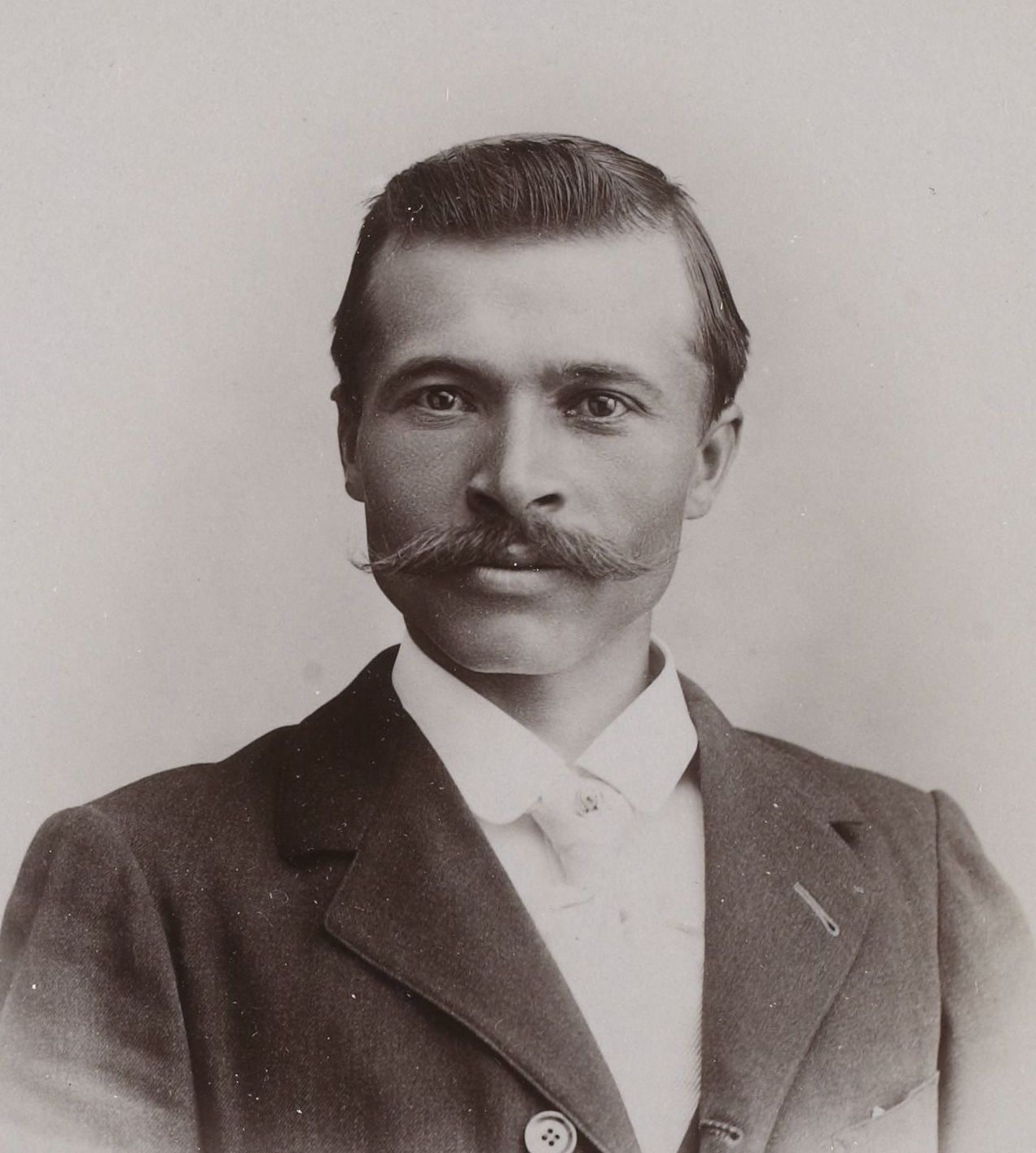
Maurice Garin, winner of the first Tour de France, photographed in 1901. public domain, via Wikimedia Commons
The riders themselves were something new: working men, not gentlemen amateurs. They rode through the night, repaired their own bicycles by the roadside under rules that forbade outside help, ate and drank whatever they could carry or grab, and slept a few hours before starting again. The suffering was the product. The paper sold the suffering, and the public bought it gladly.
There is a lesson in the design of it that has nothing to do with cycling. The race succeeded because it made something invisible, a newspaper's fight for readers, into something you could stand by the road and watch. It turned an abstract business need into a concrete, human, repeatable spectacle. That translation, from a goal into a thing people actually care about, is most of what marketing is, and almost no one does it as cleanly as a man with a lunch idea in 1903.
Le Vélo, the rival it was built to beat, folded a few years later. L'Auto itself is long gone too. But the Tour it invented as a stunt is still run every July, more than a century on, watched by hundreds of millions. The gimmick outlived every reason it was created for.
That is the strange afterlife of a well-made system. Garin won a bicycle race in 1903 and is largely forgotten. The race, designed to solve a temporary commercial problem, became permanent, because it was built well enough to be worth continuing long after the problem was gone.
studio / on-this-day / Jul 19