studio / on-this-day / Jul 18
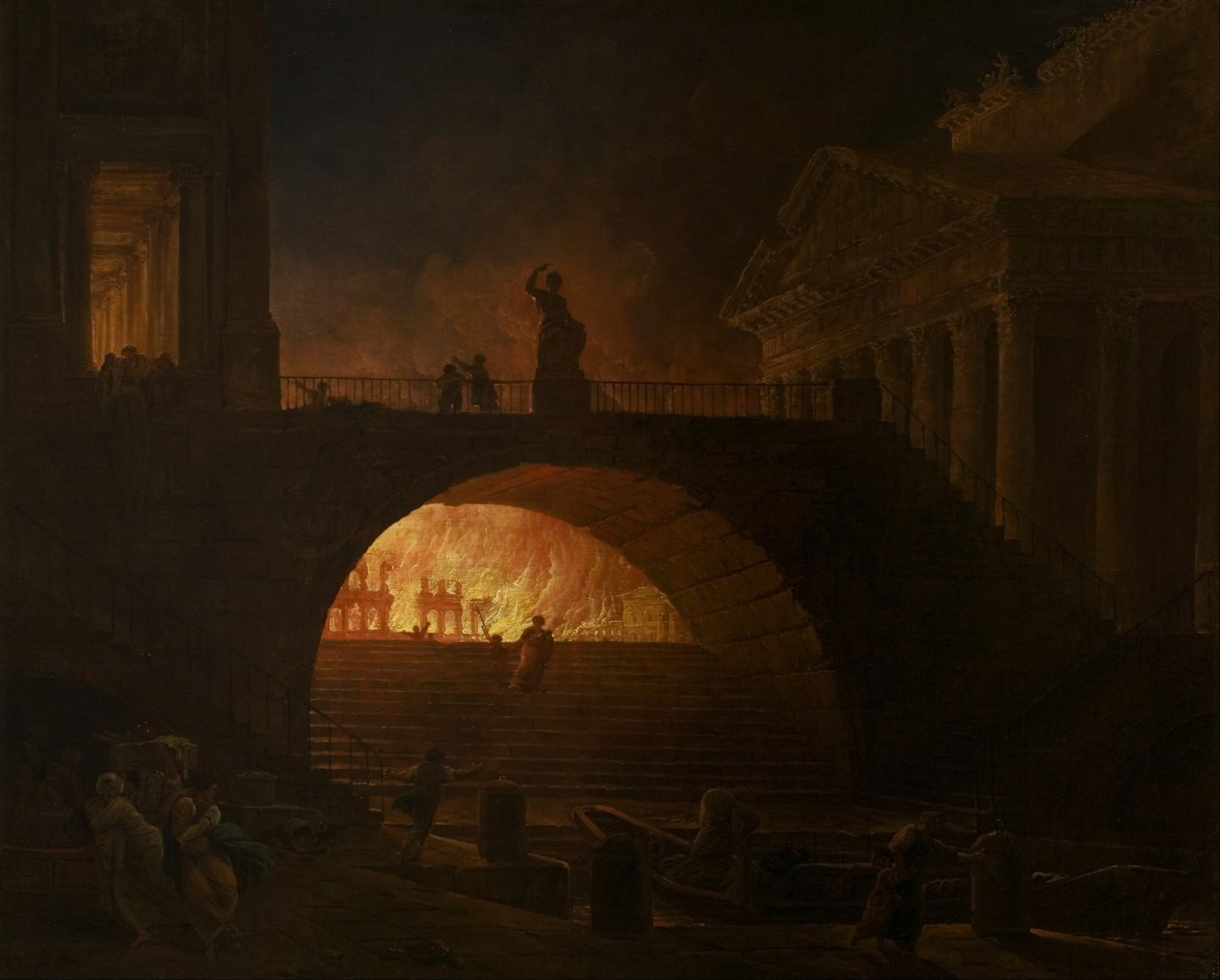
The Great Fire of Rome, painted by Hubert Robert. Hubert Robert, Public domain, via Wikimedia Commons
When Fire Redesigns a City
On this day in 64 — the Great Fire of Rome broke out, and whatever Nero was really doing, the city was afterward rebuilt from the ash.
3 min read
The fire started on the night of July 18 in the year 64, in the merchant shops near the Circus Maximus. Rome was built mostly of wood and packed tight with buildings. Once the flames caught, they spread quickly. The fire burned for six days and seven nights, destroying ten of Rome's fourteen districts. Two-thirds of the city turned to ash. Hundreds of thousands were left homeless. The exact death toll is unknown because nobody was counting the poor.
Nero was at Antium, about 35 miles away, when the fire began. He returned immediately, opened his palaces and gardens to refugees, and organized food distribution. Ancient sources claim he watched the city burn while reciting poetry about the fall of Troy, but those same sources were written by his political enemies decades after his death. The fiddle had not been invented yet, so he could not have played it. What he did do was rebuild.
Before the fire, Rome was a tangle of narrow streets and wooden structures stacked against each other with no plan. Buildings leaned into alleyways so close that sunlight barely reached the ground. Fire was an annual occurrence, usually contained to single blocks. This time was different. When most of the city was gone, Nero saw an opportunity. He imposed new building codes.
The new regulations required wider streets with minimum dimensions. Buildings could not share walls. Structures had to include porticos to provide shade and fire breaks. Height limits were enforced. Wooden beams were replaced with stone. Each building had to maintain a water supply for firefighting. These were not suggestions. They were law, enforced during reconstruction. Rome was being debugged through regulation.
Nero also reserved a large section of the ruined city for the Domus Aurea, his Golden House, a sprawling palace complex with an artificial lake, gardens, and a 100-foot bronze statue of himself as the sun god. This is where the accusations of arson came from. Critics claimed he set the fire to clear space for his palace. The charges were convenient for his enemies but unlikely. The fire started far from where the palace would eventually stand, and Nero was demonstrably absent when it began. Still, perception mattered more than facts. He needed a scapegoat.
He blamed the Christians, a small and unpopular sect at the time. Persecution followed. Some were crucified. Others were covered in pitch and set on fire to serve as torches for Nero's garden parties. This cruelty was remembered, and Nero's name became synonymous with tyranny. The urban planning reforms he implemented were forgotten. History preserved the monster and discarded the city planner.
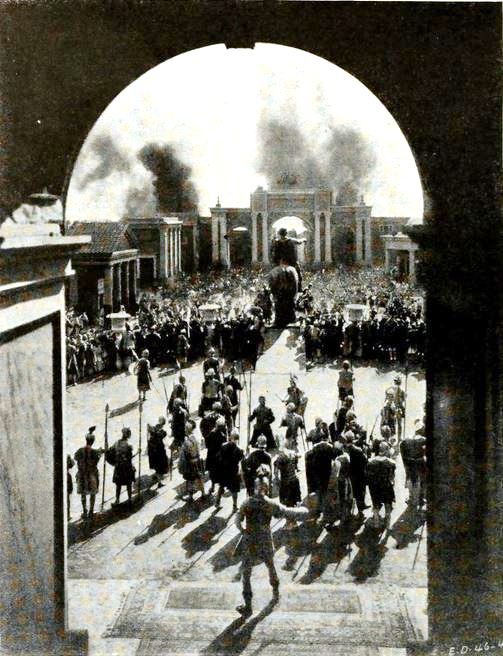
Scene from the 1922 silent Film Nero, depicting Rome in flames. Fox Film Corporation, Public domain, via Wikimedia Commons
The rebuilt Rome was structurally different. Streets were wider and straighter. Buildings were lower and sturdier. Firefighting infrastructure was embedded into the architecture. The changes worked. Rome never burned like that again. The city that emerged from the ashes became the template for Roman urban design across the empire. When new cities were founded, they followed the post-fire regulations. Disaster as design specification.
This pattern repeats. The Great Fire of London in 1666 led to similar reforms: brick instead of timber, wider streets, building codes enforced by law. The Chicago fire of 1871 resulted in steel-frame construction and modern firefighting systems. San Francisco after 1906. Every large-scale urban fire produces two things: immediate tragedy and long-term redesign. The destroyed city is never rebuilt as it was. It cannot be. The old design is what allowed the fire to spread.
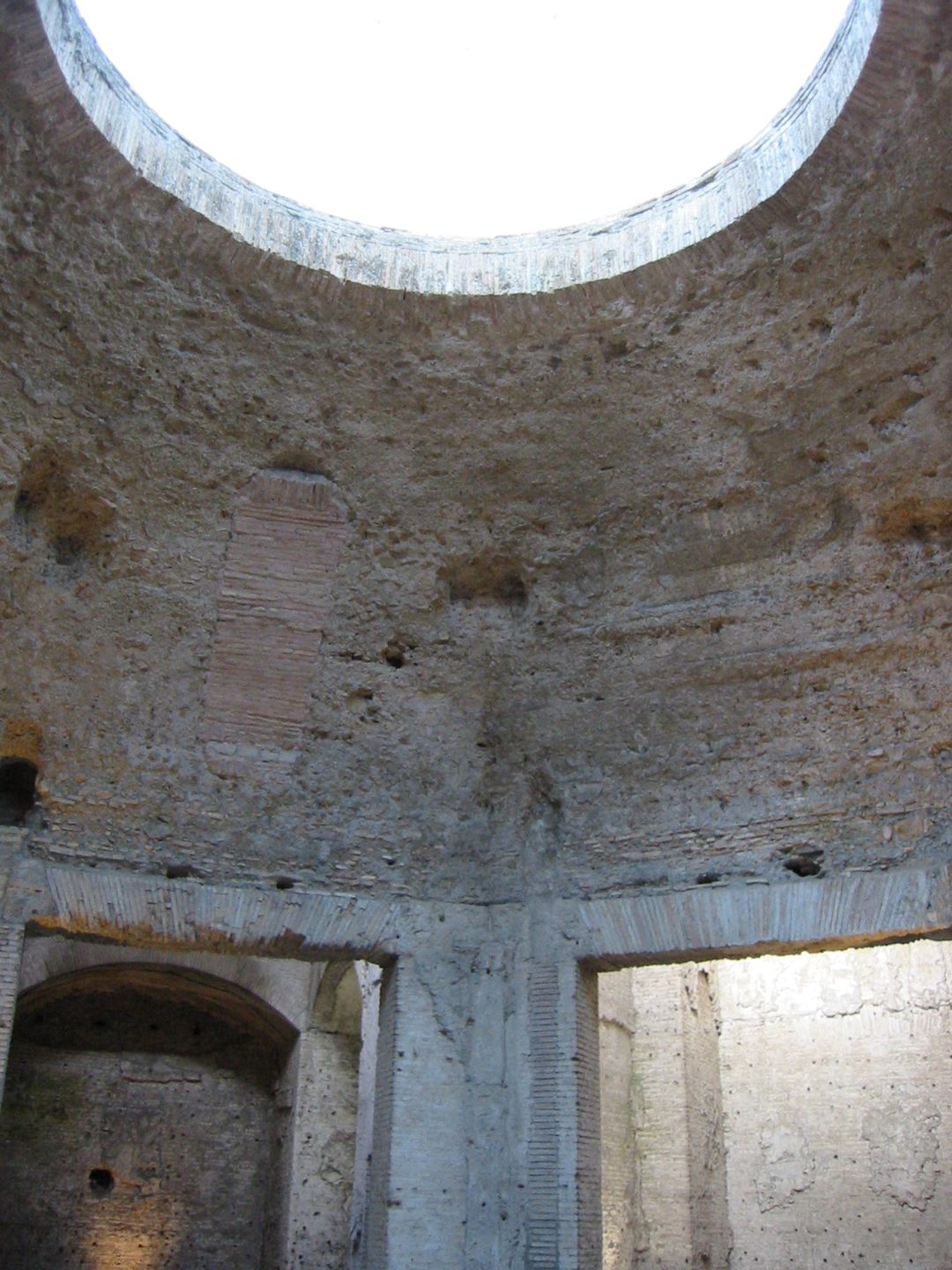
The surviving octagonal room of Nero's Domus Aurea, his Golden House built on land cleared by the Fire. Benjamí Villoslada Gil, CC BY-SA 2.0, via Wikimedia Commons
Nero died four years after the fire, forced to commit suicide as the Senate turned against him. The Domus Aurea was dismantled by his successors. The Colosseum was built on the site of his artificial lake, a public monument where a private palace once stood. The building codes remained. Laws outlast emperors. Systems persist even when the people who design them do not.
Rome burned because it was built wrong. It was rebuilt because someone understood that architecture is a system, and systems can fail. The fire revealed the flaws. The reconstruction addressed them. Design is often a response to failure, a way of encoding lessons into structure so that the same mistake cannot happen twice. Sometimes it takes burning down a city to see what should have been built in the first place.
studio / on-this-day / Jul 18