studio / on-this-day / Jul 17
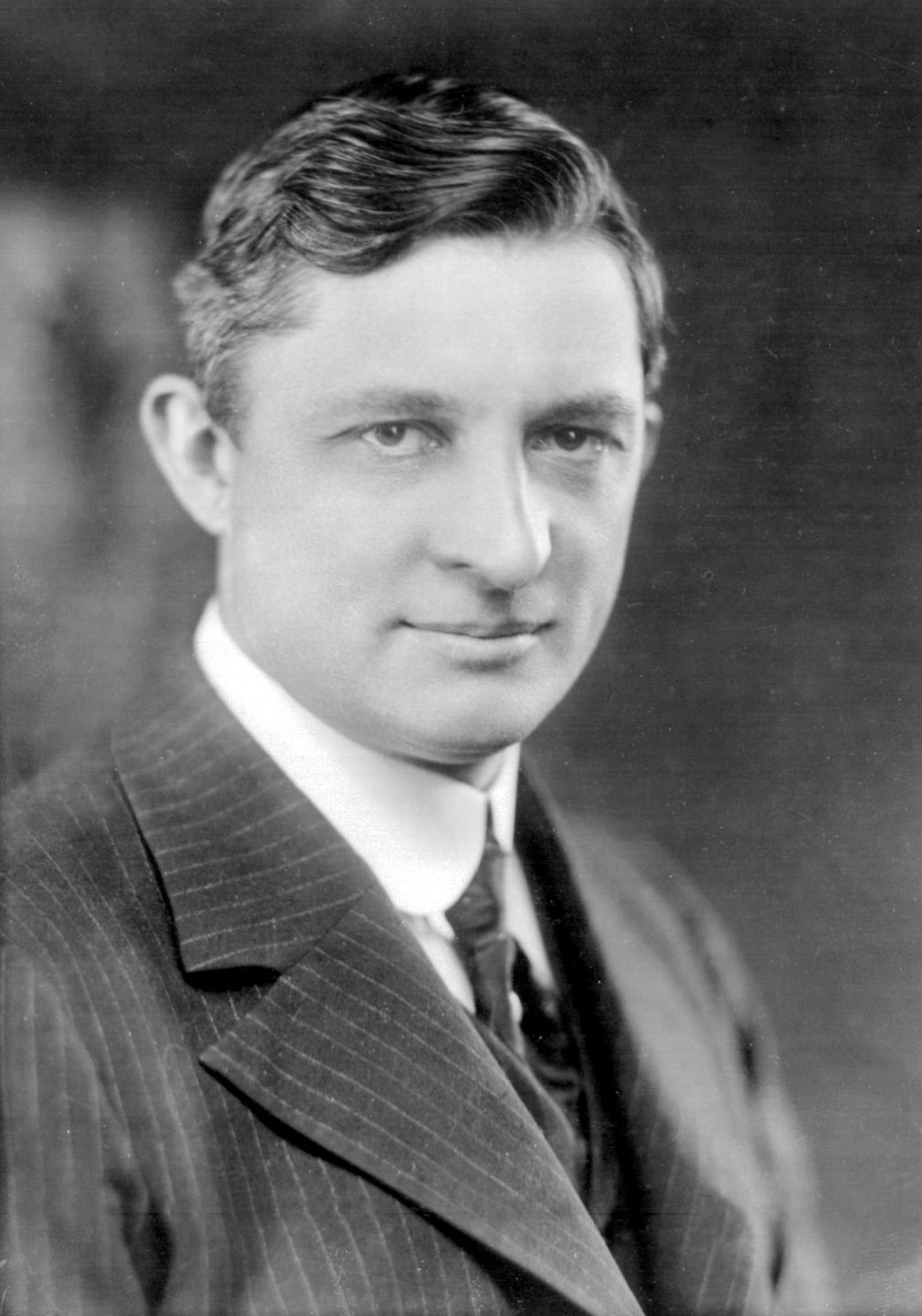
Willis Carrier, inventor of modern air conditioning, circa 1915. 100th Anniversary Press Kit - Carrier Corp, Public domain, via Wikimedia Commons
Engineering the Weather
On this day in 1902 — Willis Carrier designed the first modern air conditioner, and indoor climate became something you could simply set.
3 min read
On July 17, 1902, a 25-year-old engineer named Willis Carrier sat down at his drafting table in Buffalo, New York, and drew a machine that would change where humans could live. He was not thinking about comfort. He was solving a production problem at a printing plant in Brooklyn, where humidity was causing paper to expand and contract, making it impossible to align colors properly. Carrier designed a system that could control not just temperature, but moisture in the air. He called it an apparatus for treating air. We call it air conditioning.
The problem Carrier faced was precise. Sackett & Wilhelms Lithography printed in four colors, requiring the same sheet to pass through the press four times. If the humidity changed between passes, the paper dimensions changed too. Registration became impossible. Ink landed in the wrong places. The entire process broke down because the weather inside the building could not be controlled.
Carrier's solution involved chilled coils that cooled air below its dew point, condensing moisture out like water forming on a cold glass. The air passed through the coils, dried, and was reheated to a precise temperature. For the first time, a machine could hold indoor humidity at a specific percentage regardless of what the weather was doing outside. The printing problem disappeared. Carrier filed for a patent in 1904 and received it in 1906 as U.S. Patent No. 808,897.
What followed was not immediate revolution but gradual realization. Carrier and his colleagues understood they had built something larger than a printing fix. The same system could be applied to any environment where temperature and humidity mattered. Textile mills adopted it first, because thread behaves differently in dry air versus damp. Then came food production, pharmaceuticals, and manufacturing. Each industry discovered that controlling climate meant controlling quality.
The real transformation came when air conditioning moved from factories to public spaces. Movie theaters were early adopters. In the 1920s, cinemas installed Carrier's systems and advertised cool air as the main attraction. People went to the movies in summer not for the films but for the temperature. Retail followed. Department stores became destinations simply because they felt different inside. You could escape the heat by walking through a door. Climate became an amenity.
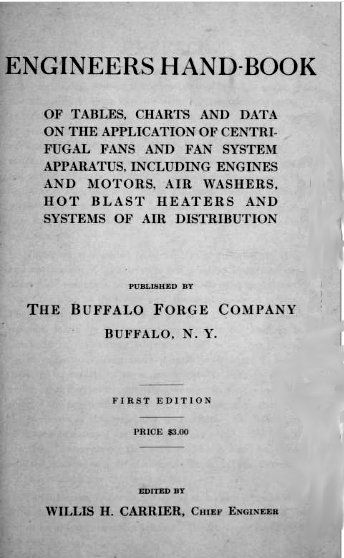
Carrier's rational psychrometric formulae, the engineering handbook that codified air conditioning science. Willis Carrier, Public domain, via Wikimedia Commons
By the 1950s, residential air conditioning had arrived. Homes in the South and Southwest became tolerable year-round. Migration patterns shifted. Cities like Phoenix and Houston, previously limited by their climates, grew into metropolises. The Sun Belt exists because Carrier solved a printing problem in 1902. Geography became negotiable. Just as Henry Ford's assembly line made automobiles accessible, air conditioning made entire regions habitable at scale.
The technology also created new kinds of architecture. Before air conditioning, buildings had to breathe. Windows were positioned for cross-ventilation. Ceilings were high to allow heat to rise. Porches and courtyards were designed to channel breezes. After air conditioning, buildings could be sealed boxes. Glass skyscrapers became possible because the occupants no longer needed to open a window. The curtain wall, that defining feature of modern office towers, only works if you can regulate the interior climate mechanically.
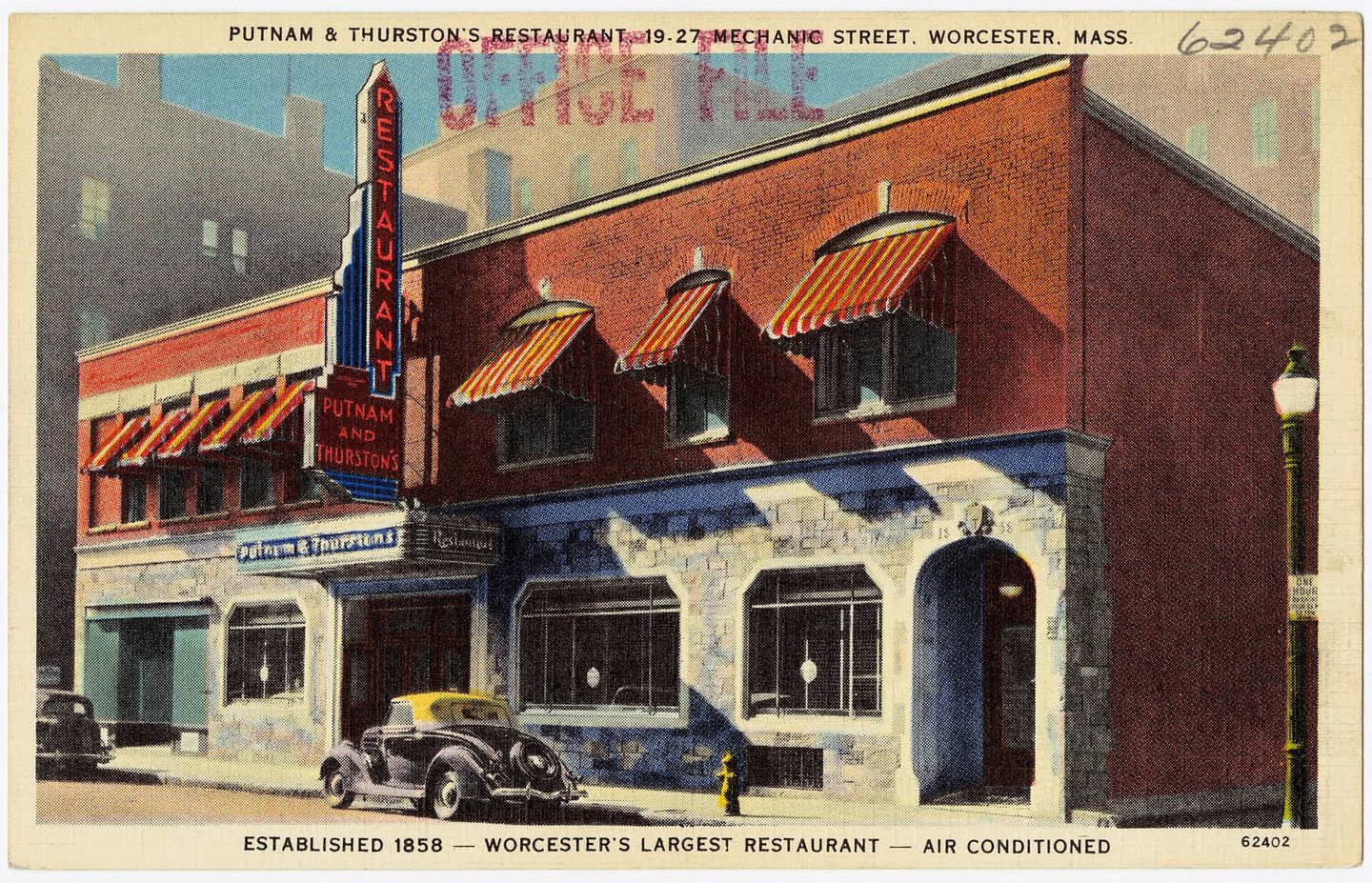
A vintage postcard advertises a Worcester Restaurant as air conditioned, when cool air was a draw worth printing on the storefront. Tichnor Bros. Inc., Boston, Mass., Public domain, via Wikimedia Commons
There is a cost. Air conditioning consumes around 10 percent of global electricity. It is both cause and solution, making certain climates livable while contributing to the warming that makes them less so. The machine Carrier designed to control indoor weather is now one of the reasons outdoor weather is becoming harder to predict. Systems designed to solve one problem often create another at a different scale.
Carrier died in 1950, just as his invention was reshaping cities and continents. His contribution was not cooling but control. He proved that interior environments could be engineered to specification, independent of exterior conditions. Climate became a variable in the design process, something that could be dialed in like any other parameter. We now live in a world where the weather outside and the weather inside are two separate things. That separation began on a July afternoon in Buffalo, when a young engineer decided to treat air like a material that could be designed.
studio / on-this-day / Jul 17