studio / on-this-day / Jul 15
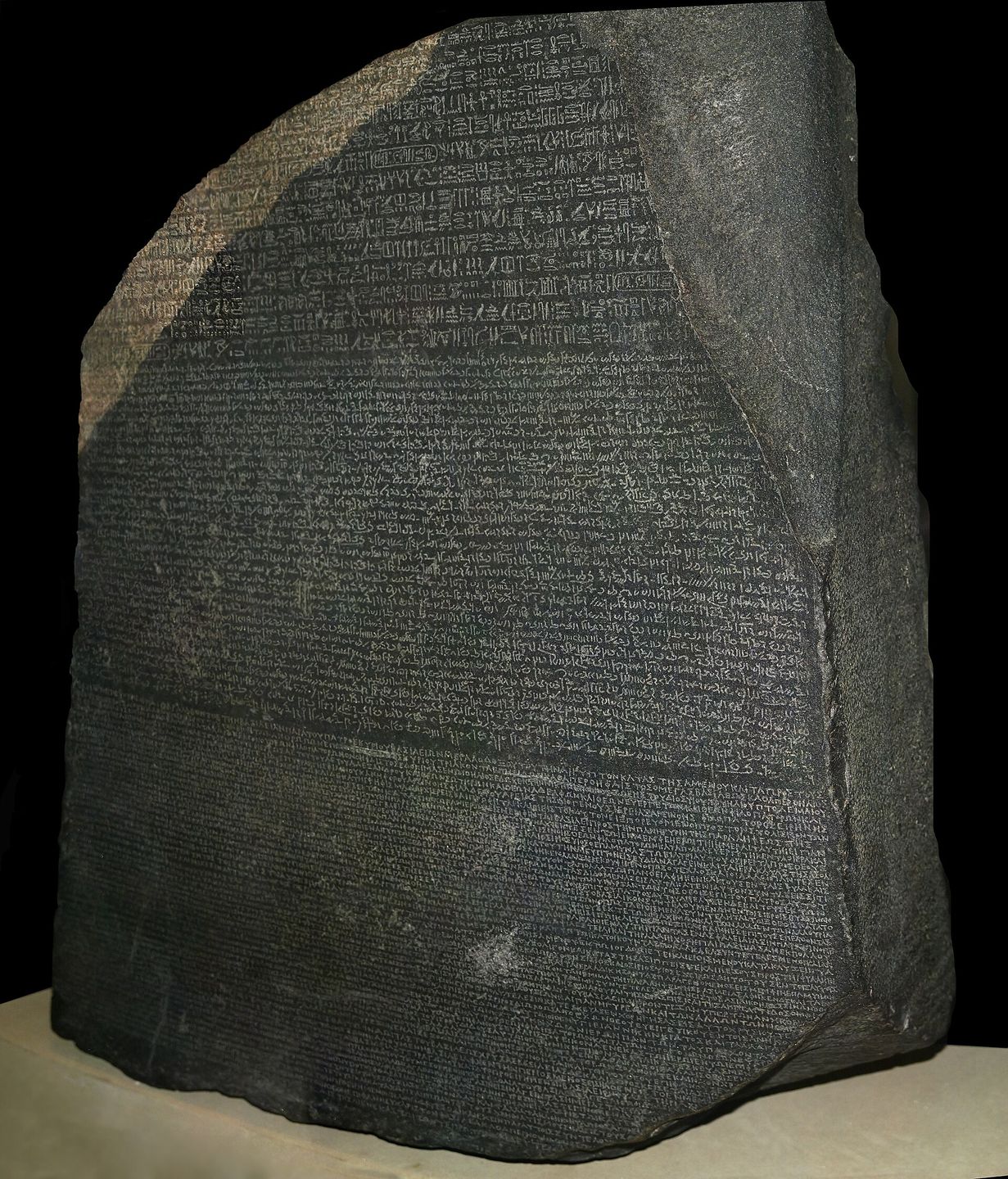
The Rosetta Stone, British Museum. Hans Hillewaert, CC BY-SA 4.0, via Wikimedia Commons
The Translation Key
On this day in 1799 — French soldiers in Egypt turned up the Rosetta Stone, a translation key that had been buried for two thousand years.
3 min read
On July 15, 1799, French soldiers were digging foundations for a fort near the town of Rosetta in the Nile Delta when they uncovered a large stone slab covered in writing. It was about three and a half feet tall, two and a half feet wide, and carved with three different scripts. The top section was in ancient Egyptian hieroglyphs. The middle was in Demotic, a later Egyptian script. The bottom was in ancient Greek. An officer named Pierre-François Bouchard recognized that the stone might be important and had it sent to Cairo. It turned out to be the key to deciphering a language that had been unreadable for over a thousand years.
Hieroglyphs had fascinated scholars since the Renaissance, but no one could read them. The script had fallen out of use by the fourth century AD, and the knowledge of how to interpret it was lost. Without a reference point, the symbols were opaque. They could be pictures, phonetic characters, or something else entirely. What made the Rosetta Stone invaluable was that it contained the same decree in three scripts. The Greek text could be read, which meant the hieroglyphs and Demotic could potentially be translated by comparing them to the known language.
Decipherment took decades. Scholars across Europe worked on copies of the stone's inscriptions. The breakthrough came from Jean-François Champollion, a French linguist who spent years studying the texts. In 1822, he announced that he had cracked the code. Hieroglyphs were not purely symbolic. They were a mixed system, combining phonetic signs with ideograms. Some symbols represented sounds, like letters in an alphabet. Others represented entire words or concepts. The name of Ptolemy, visible in the Greek text, appeared in the hieroglyphic section enclosed in an oval called a cartouche. By matching the Greek names to the hieroglyphic symbols, Champollion was able to work out the phonetic values and eventually read the entire inscription.
The stone itself is not remarkable as an artifact. It is a fragment of a larger monument, probably part of a temple stele. The decree it records is bureaucratic, issued in 196 BC by priests honoring King Ptolemy V. It lists tax exemptions and temple privileges. No one would have cared about the content if not for the accident of its trilingual format. The stone was designed for administrative purposes, not as a tool for future linguists, but that redundancy across languages is what gave it enduring value.
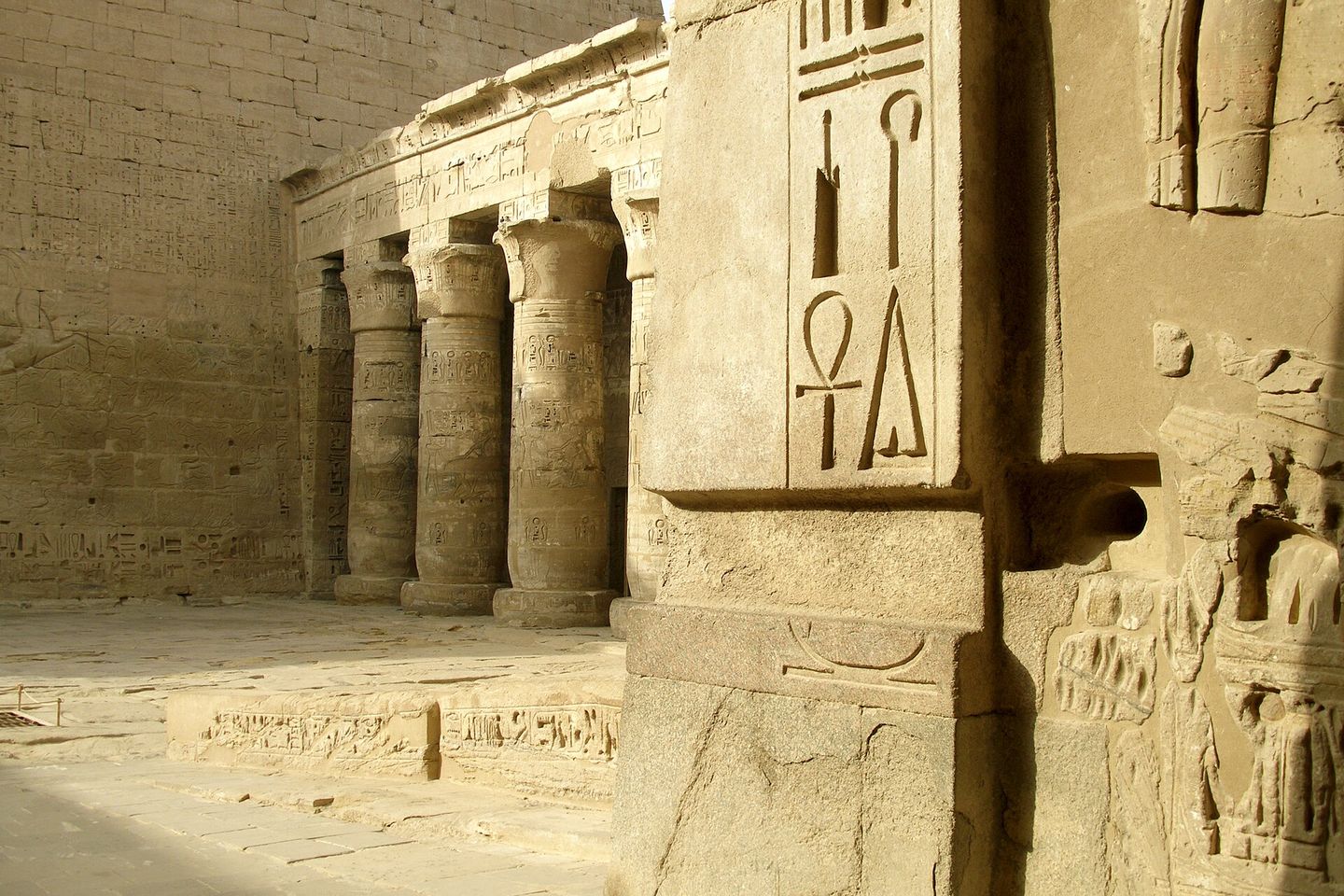
Egyptian hieroglyphs at the temple of ramesses iii, medinet habu, thebes. Vyacheslav Argenberg, CC BY 4.0, via Wikimedia Commons
The ability to read hieroglyphs unlocked three thousand years of Egyptian history. Suddenly, temple walls, tomb inscriptions, and papyrus scrolls could be understood. Myths, medical texts, administrative records, poetry, all of it became accessible. Egyptian civilization, which had been visible only through ruins and artifacts, could now speak in its own voice. The Rosetta Stone did not just decode a script. It restored a culture's ability to communicate across millennia.
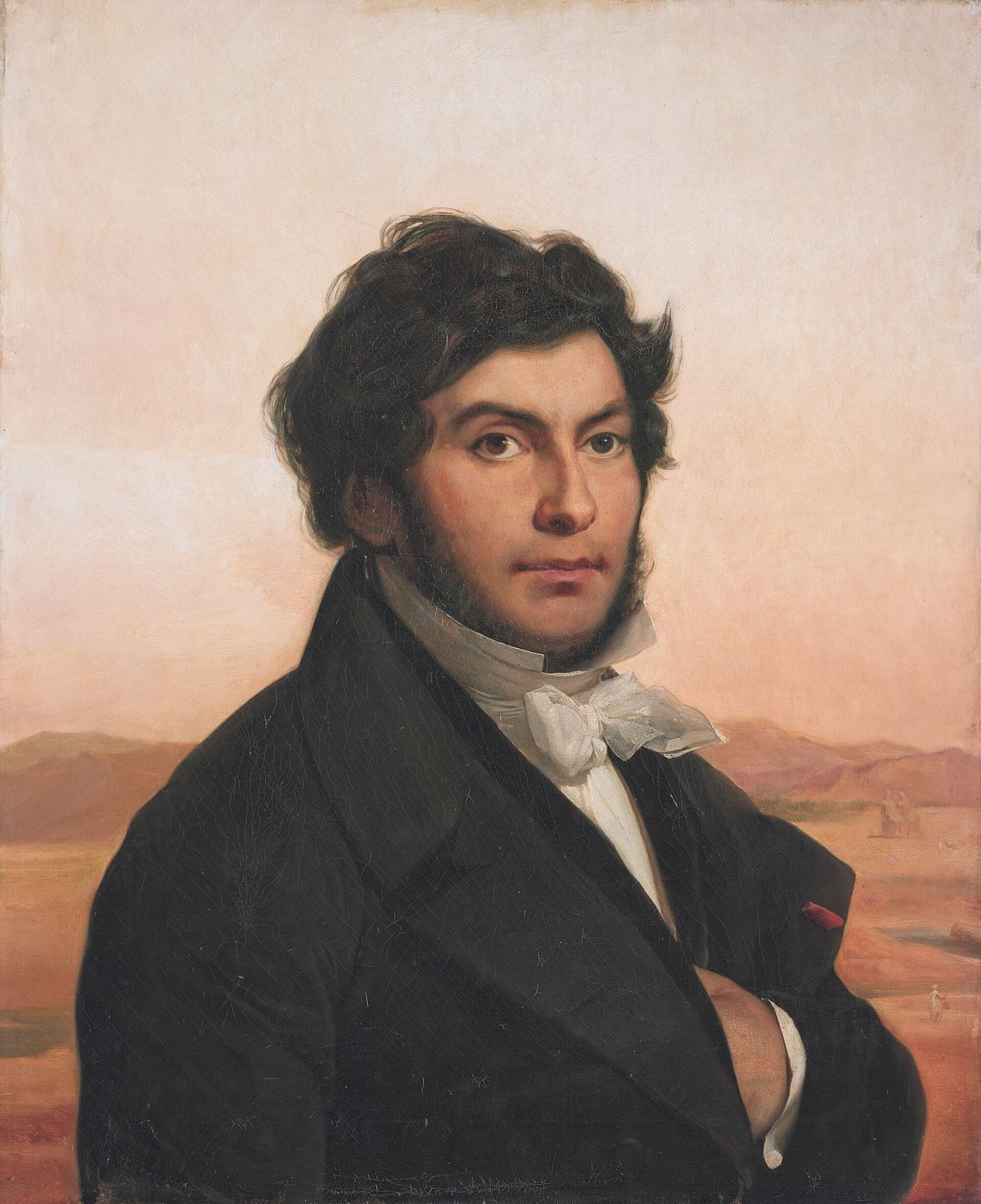
Jean-François Champollion, who deciphered the hieroglyphs in 1822, painted by léon Cogniet. Léon Cogniet, Public domain, via Wikimedia Commons
Translation is a design problem. You need a shared reference, a point of commonality between two systems. Without it, no amount of effort will produce understanding. The Rosetta Stone provided that reference. The same principle applies in software, where interfaces translate between different systems. It applies in communication, where shared context allows ideas to transfer between minds. The stone is now in the British Museum, taken from the French after the British defeated Napoleon's forces in Egypt. Egypt has asked for it back. The debate over who owns it continues, but the information it unlocked belongs to everyone.
studio / on-this-day / Jul 15