studio / on-this-day / Jun 6
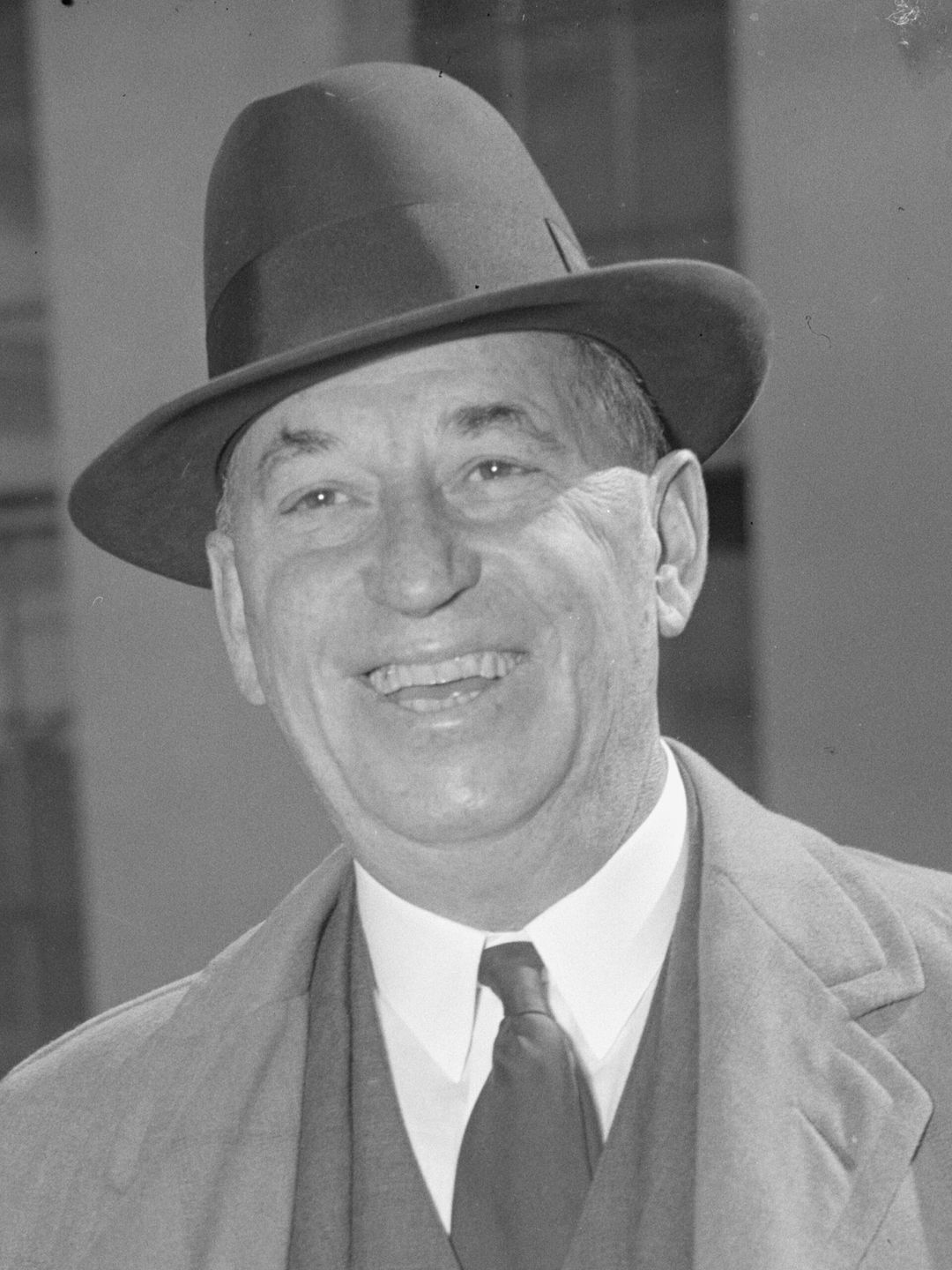
Walter Chrysler, founder of the Chrysler Corporation, 1937. Harris & Ewing, photographer, Public domain, via Wikimedia Commons
Another Machine Shop Empire
On this day in 1925 — Walter Chrysler founded his car company, another machine shop that swelled into an industrial empire.
3 min read
Walter Percy Chrysler was fifty years old when he founded the Chrysler Corporation on June 6, 1925. He had spent his entire career working for other people's companies, fixing their problems, turning around their failures. He had worked for railroads, for Buick, for General Motors. He was a mechanic who understood engineering, a manager who understood labor, and a businessman who understood what customers actually wanted. By 1925, he had saved enough money, built enough credibility, and learned enough about the automobile industry to go out on his own. The Chrysler Corporation was not his first attempt at building cars. It was just the first one under his own name.
Chrysler was born in Kansas in 1875, the son of a railroad engineer. He dropped out of high school to work in the rail yards. He swept floors, then learned to operate machinery, then learned to repair locomotives. By the time he was thirty, he was managing an entire railroad shop. In 1908, he saw his first automobile at the Chicago Auto Show, a Locomobile. He bought it for $5,000, a sum he did not have, borrowing the money and paying it back over years. He did not buy it to drive it. He bought it to take it apart, to understand how it worked, to see whether he could build something better.
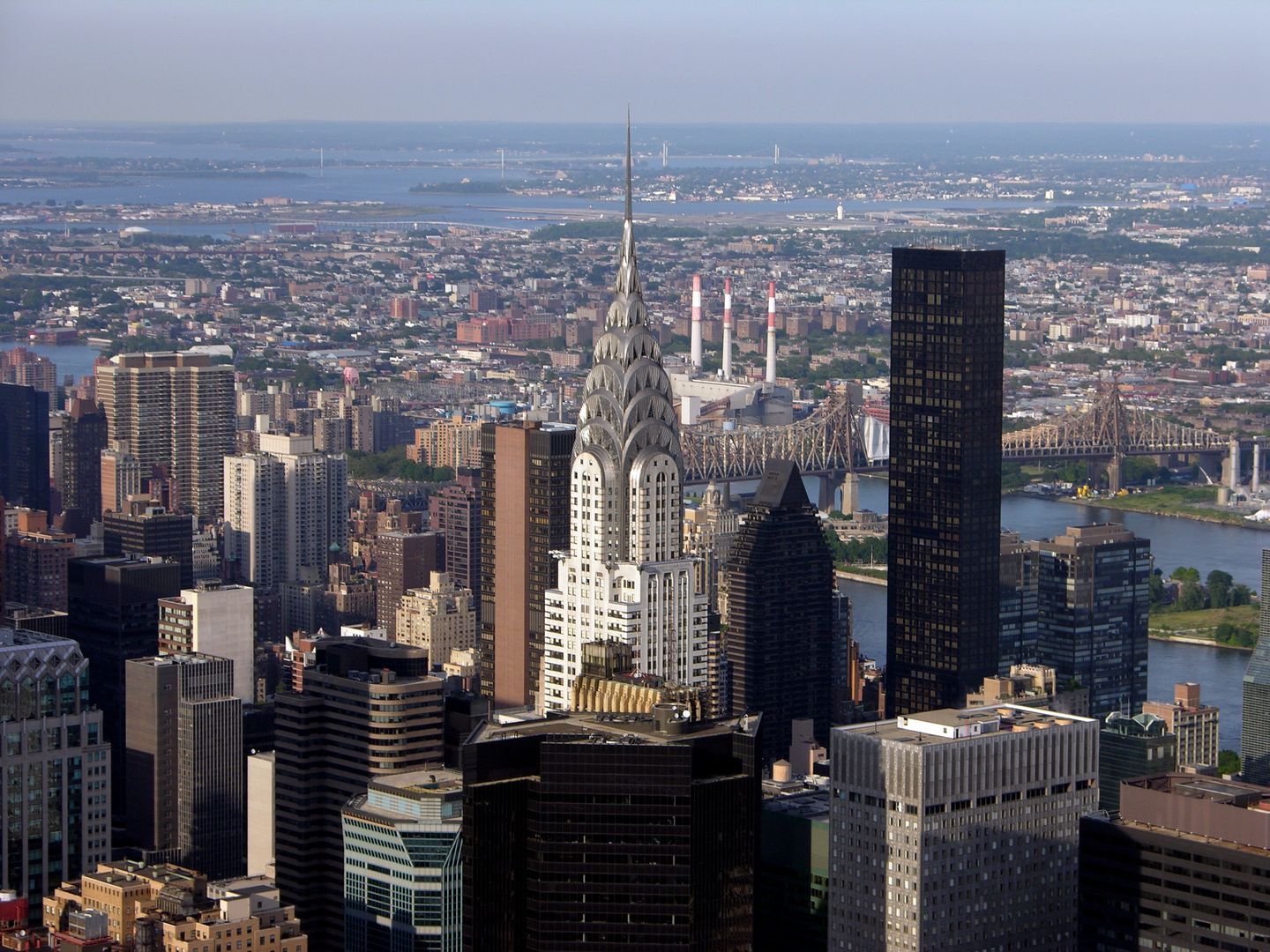
The Chrysler Building, Midtown Manhattan, completed in 1930 — the tallest Building in the world at the time. Misterweiss at English Wikipedia, Public domain, via Wikimedia Commons
In 1911, he joined Buick, a division of General Motors, as the works manager. Within four years, Buick was producing more cars than any other company in the world. Chrysler streamlined production, improved quality, and cut costs. He became president of Buick in 1916 and a vice president of General Motors. But he clashed with GM's leadership, particularly with founder William Durant, whose management style was erratic and speculative. Chrysler left GM in 1920, wealthy but restless.
He did not stay retired. In 1921, he took over the failing Maxwell Motor Company and restructured it completely. He introduced a new car, the Chrysler Six, in 1924. It had a high-compression engine, four-wheel hydraulic brakes, and an affordable price. It sold 32,000 units in its first year. The success gave Chrysler the capital and confidence to start his own company. In 1925, he reorganized Maxwell into the Chrysler Corporation. Within three years, Chrysler had acquired Dodge and launched two new brands, Plymouth and DeSoto. By 1936, Chrysler was the second-largest automobile manufacturer in the United States, behind only Ford and GM.
Chrysler understood that cars were not just transportation. They were design objects, status symbols, expressions of modernity. He hired engineers who focused on performance and safety. He hired designers who made cars look fast even when they were standing still. The Chrysler Airflow, introduced in 1934, was one of the first automobiles designed using aerodynamic principles. It was too radical for its time and sold poorly, but it influenced every streamlined car that came after. Chrysler was willing to fail in public if it meant advancing the craft.
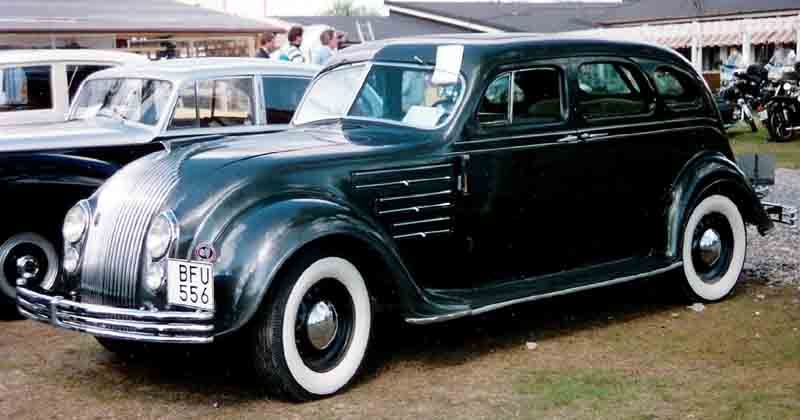
A 1934 Chrysler Airflow Eight sedan — too radical for its time, but it shaped every streamlined car that came after. Lars-Göran Lindgren Sweden, CC BY-SA 3.0, via Wikimedia Commons
He also built the Chrysler Building in New York, completed in 1930. It was, for eleven months, the tallest building in the world, until the Empire State Building surpassed it. The building's Art Deco design incorporated automotive motifs: steel eagle gargoyles modeled after hood ornaments, a spire clad in stainless steel that resembled a radiator grille. It was architecture as advertisement, a skyscraper that announced what the company stood for. Speed, precision, modernity. The building still stands, and it is still more famous than most of the cars Chrysler ever made.
Walter Chrysler retired in 1935 and died in 1940. The company he founded would go on to merge with Daimler-Benz in 1998, then separate, then get acquired by Fiat in 2009. It would declare bankruptcy, get bailed out, and survive in various forms. But the core principle Chrysler established remained: engineering matters, design matters, and the only way to compete is to build something better than what already exists. He did not invent the automobile. He just kept improving it until it looked like the future.
studio / on-this-day / Jun 6