studio / on-this-day / Jun 5
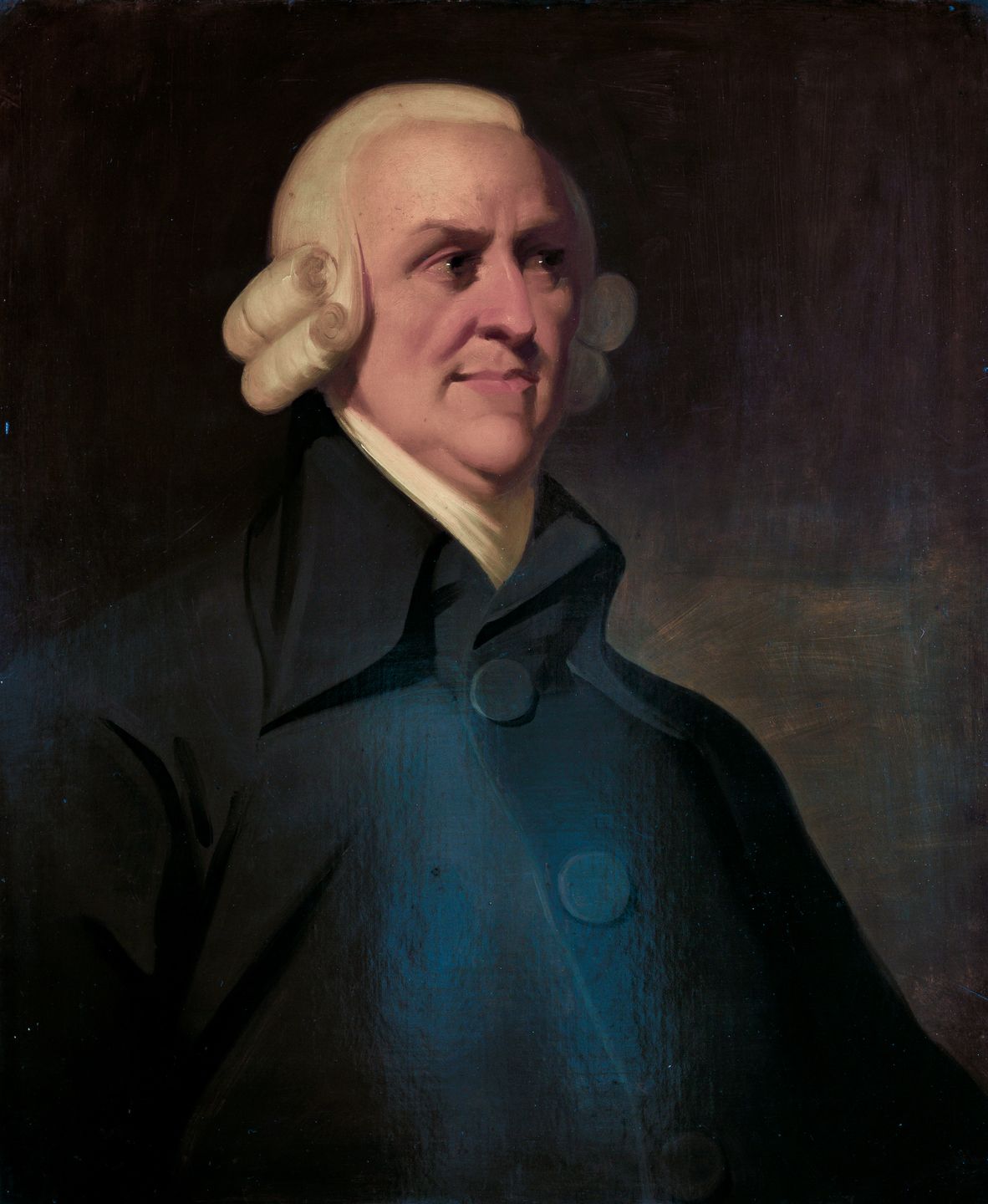
Portrait of Adam Smith, economist and author of the Wealth of Nations. Public domain, via Wikimedia Commons
The Invisible Hand
On this day in 1723 — Adam Smith was born, and would describe an invisible hand, a market that appears to organize itself without a designer.
3 min read
Adam Smith was born on June 5, 1723, in Kirkcaldy, Scotland, a small port town on the Firth of Forth. His father, also named Adam Smith, died before he was born. His mother raised him alone. He was a sickly child, bookish and quiet. At fourteen, he entered the University of Glasgow. At seventeen, he went to Oxford on a scholarship. He spent six years there, mostly reading books the university did not assign. He left without a degree, unimpressed by the institution and its teachers. What he took with him was a method: observe the world closely, identify patterns, and explain them without appealing to divine intervention or tradition. He would spend the rest of his life applying that method to human behavior.
In 1776, Smith published The Wealth of Nations, a book that would become the foundation of modern economics. It was not the first book on political economy, but it was the most comprehensive and the most readable. Smith's central insight was that markets could organize themselves without central planning. Individuals pursuing their own self-interest, when placed within a competitive marketplace, would collectively produce outcomes that benefited society. He called this process the invisible hand, a metaphor for the emergent order that arises from countless individual decisions. No one needs to design the whole system. The system designs itself.
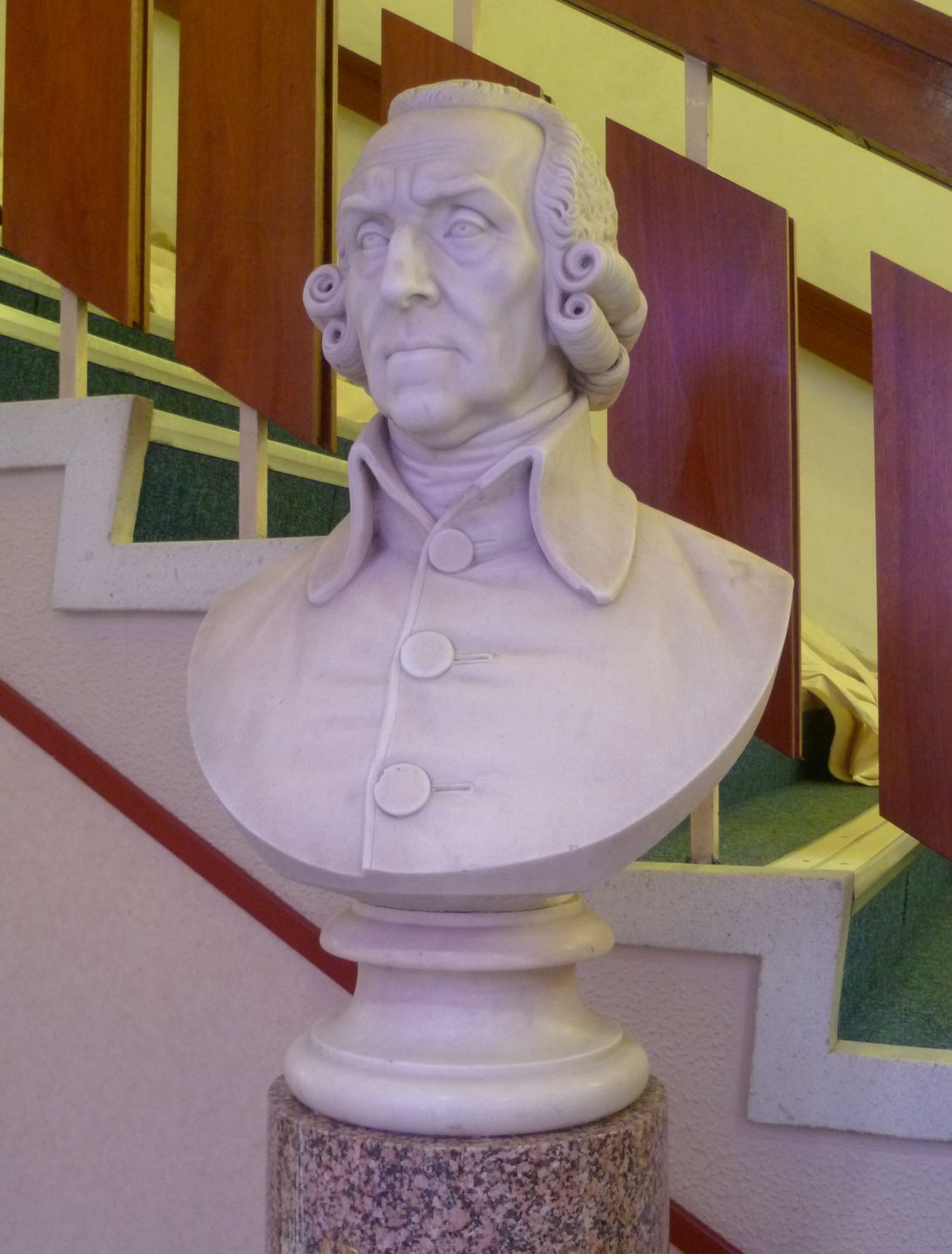
Bronze bust of Adam Smith at the Adam Smith Theatre, Kirkcaldy, Scotland, his birthplace. Kim Traynor, CC BY-SA 3.0, via Wikimedia Commons
Smith was not advocating for greed. He understood that self-interest was distinct from selfishness. A baker does not bake bread out of charity, but in baking bread to sell, the baker produces something others need. A pin factory does not exist to employ workers, but in dividing labor into specialized tasks, it produces pins more efficiently than any individual could alone. The invisible hand was not a moral argument. It was a description of a feedback loop: people respond to incentives, and when those incentives are structured correctly, the results can be both efficient and beneficial.
The Wealth of Nations was over 900 pages long and covered everything from taxation to trade policy to the economics of fisheries. But its most lasting contribution was conceptual. Smith demonstrated that complex systems could emerge from simple rules. He identified division of labor as the engine of productivity. He explained how prices convey information and coordinate behavior. He argued that free trade benefited all parties, not just the winner. These ideas were not entirely original, but Smith synthesized them into a coherent framework and wrote it in prose that could be understood outside academic circles.
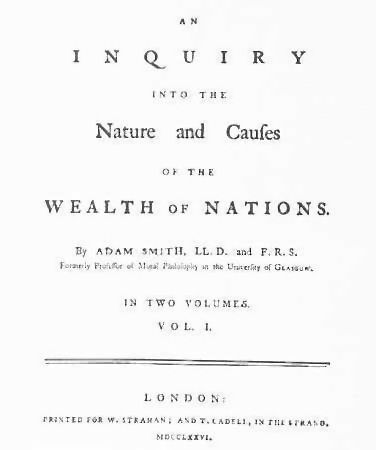
Title page of the first edition of the Wealth of Nations, 1776. Gerhard Streminger, Public domain, via Wikimedia Commons
Smith also wrote The Theory of Moral Sentiments, published seventeen years before The Wealth of Nations. It is a study of sympathy and ethics, an attempt to understand how humans develop moral judgments. The two books are often treated as separate, but Smith saw them as part of the same project. One explained how markets work. The other explained how societies hold together. Both were concerned with the same question: how do individuals, each pursuing their own goals, create systems that function collectively?
Smith died in 1790, fourteen years after publishing The Wealth of Nations. The book was already influential by then, though it would take another century for his ideas to dominate economic thought. He was buried in Canongate Kirkyard in Edinburgh. His grave is simple. His legacy is not. The discipline of economics, as it exists today, traces its lineage directly to Smith. So does the idea that markets, left to operate freely, can allocate resources more efficiently than any planner. That idea has been used to justify everything from deregulation to globalization. It has also been blamed for inequality, exploitation, and environmental destruction.
Smith would likely find both the worship and the criticism excessive. He was not an ideologue. He was an observer. He saw patterns in human behavior and tried to describe them accurately. The invisible hand was not a prescription. It was a recognition that order can emerge without orchestration, that systems can self-organize when the conditions are right. That insight applies beyond economics. It describes ecosystems, neural networks, the internet, and any other complex system built from distributed interactions. The invisible hand is not just economic theory. It is systems theory, articulated two centuries before systems theory had a name.
studio / on-this-day / Jun 5