studio / on-this-day / Jun 4
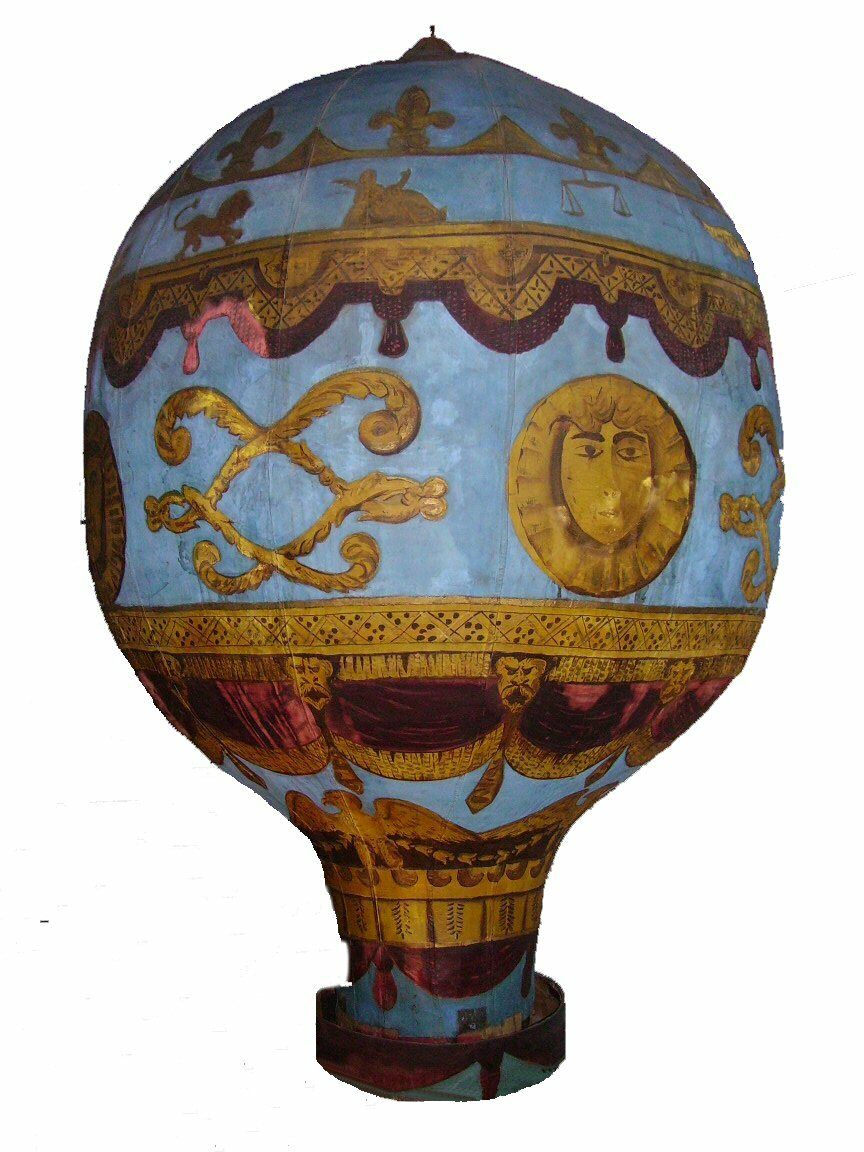
Illustration of the Montgolfier brothers' hot air balloon, 1783. Mike Young at English Wikipedia, Public domain, via Wikimedia Commons
Lighter Than Air
On this day in 1783 — the Montgolfier brothers sent up the first hot-air balloon, and humans left the ground on nothing but heated air.
3 min read
On June 4, 1783, in the market square of Annonay, France, Joseph-Michel and Jacques-Étienne Montgolfier inflated a balloon made of sackcloth and paper, thirty-five feet in diameter, and watched it rise. It climbed to an altitude of nearly 6,000 feet and traveled more than a mile before descending. No one was aboard. It was a proof of concept, a demonstration that buoyancy could lift weight if you heated the air inside an envelope large enough to matter. The brothers had figured out something fundamental: warm air is less dense than cool air, and if you trap enough of it, it will float.
The Montgolfiers were paper manufacturers, not scientists. They had no formal training in physics. What they had was curiosity and access to materials. The story goes that Joseph noticed ash rising from a fire and wondered whether the same principle could lift a person. They experimented with different fabrics, different sizes, different heat sources. By the time they reached Annonay, they had built a working prototype. The flight lasted ten minutes. It was enough to convince the French Academy of Sciences to take them seriously.
Four months later, on September 19, 1783, the brothers demonstrated a balloon in front of King Louis XVI at Versailles. This time, they included passengers: a sheep named Montauciel, a duck, and a rooster. The question was whether living creatures could survive at altitude. The balloon rose, stayed aloft for eight minutes, traveled two miles, and landed safely. All three animals survived. The rooster had a broken wing, but that appeared to have been caused by the sheep kicking it, not the flight itself. The experiment proved that ascent would not kill you.
On November 21, 1783, the first human flight took place. Jean-François Pilâtre de Rozier and François Laurent d'Arlandes climbed into a wicker basket suspended beneath a Montgolfier balloon and lifted off from the Bois de Boulogne in Paris. They traveled five and a half miles in 25 minutes, reaching an altitude of 3,000 feet. They fed a fire beneath the balloon opening to keep the air hot, using straw and wool as fuel. They carried buckets of water and sponges to extinguish embers that landed on the fabric. When they touched down on the outskirts of the city, they had become the first humans to fly.
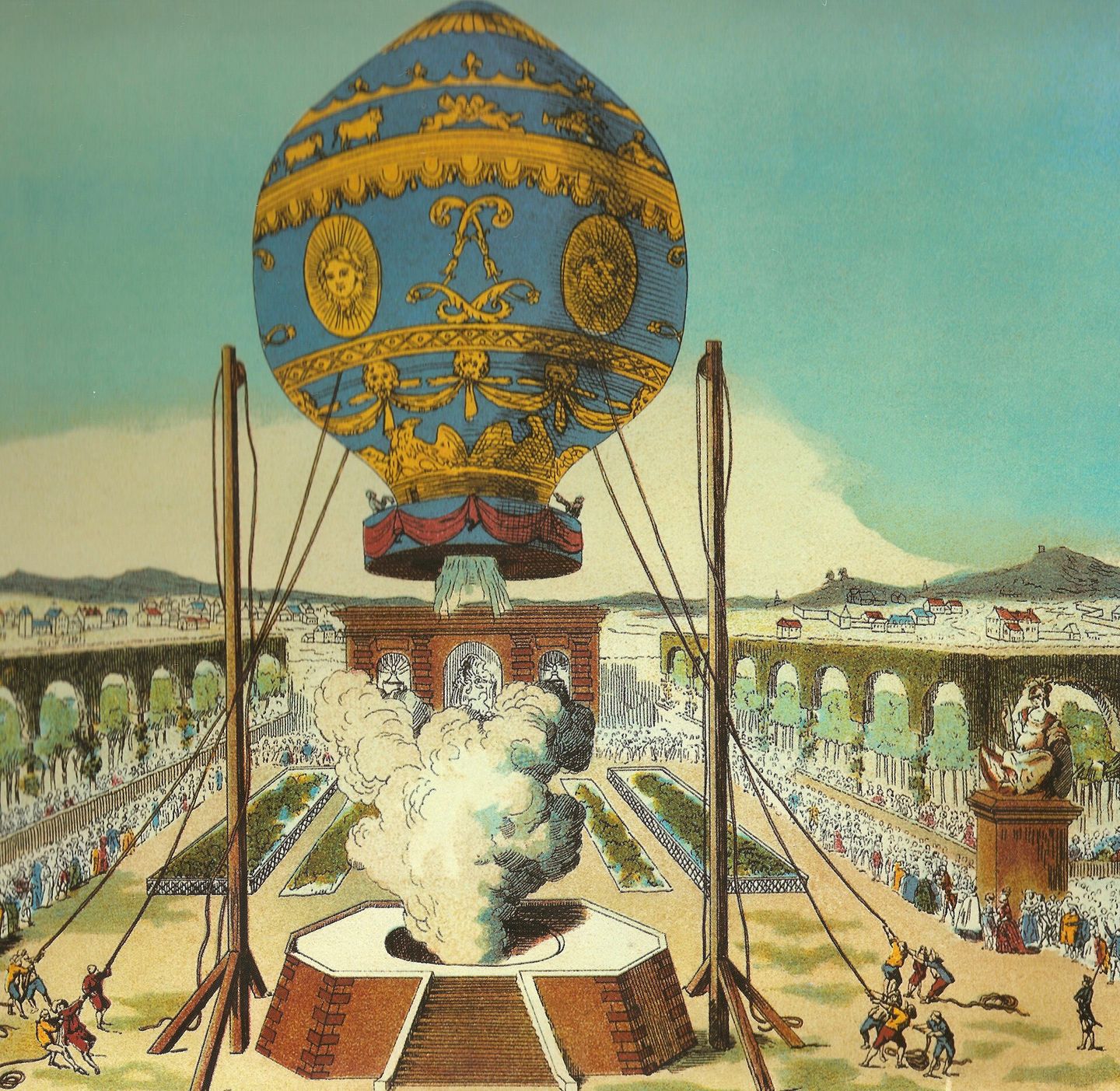
First manned balloon flight by Pilâtre de Rozier and d'Arlandes, Paris, November 21, 1783. Claude Louis Desrais, Public domain, via Wikimedia Commons
The Montgolfier balloon was not the only design under development. Just ten days after the first manned flight, physicist Jacques Charles flew a hydrogen balloon, which was lighter and could stay aloft longer. Hydrogen balloons became the dominant technology for the next century. But the Montgolfiers had been first, and their method, hot air, would eventually return. Modern hot air balloons still use the same principle: heat the air, trap it in an envelope, and let physics do the rest.
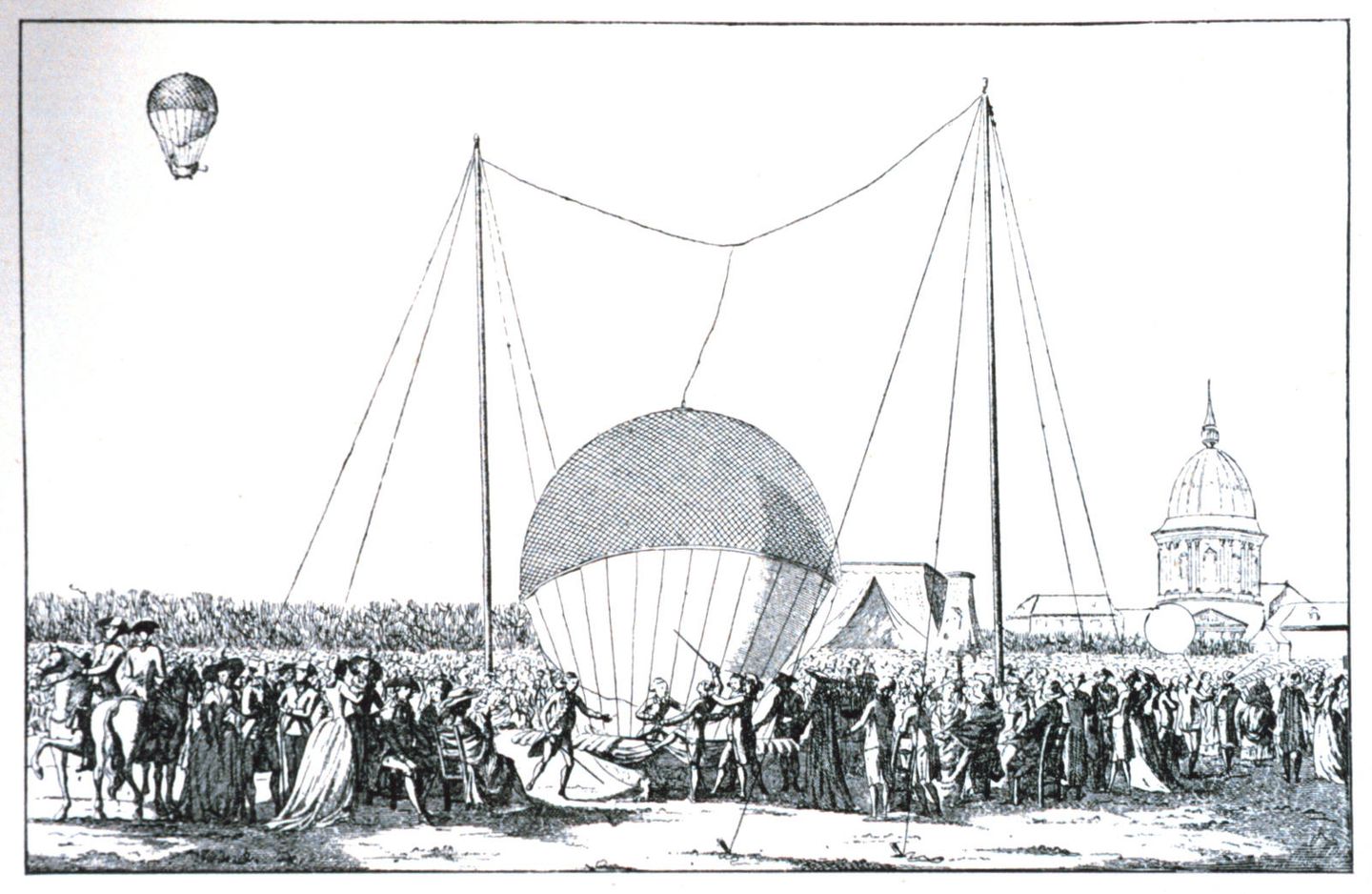
Jacques Charles' hydrogen balloon rising from the tuileries garden, Paris, December 1, 1783. Public domain, via Wikimedia Commons
Ballooning became a spectacle, then a sport, then a tool. Balloons were used for military reconnaissance during the French Revolutionary Wars. They carried scientists to high altitudes to study the atmosphere. In the 19th century, they became a form of entertainment, with aeronauts performing stunts and setting altitude records. The technology advanced slowly. Dirigibles added propulsion and steering, turning balloons into airships. But fixed-wing aircraft eventually replaced them for practical purposes, because wings could go faster and farther with less fuel.
Today, hot air balloons are mostly recreational. They are slow, weather-dependent, and difficult to steer. But they remain the simplest way for a human to leave the ground. No engine required. No wings. Just fabric, a burner, and the physics of buoyancy. The Montgolfiers proved that flight did not require understanding aerodynamics or building complex machinery. It just required recognizing that heated air rises, and being willing to ride it.
studio / on-this-day / Jun 4