studio / on-this-day / May 24
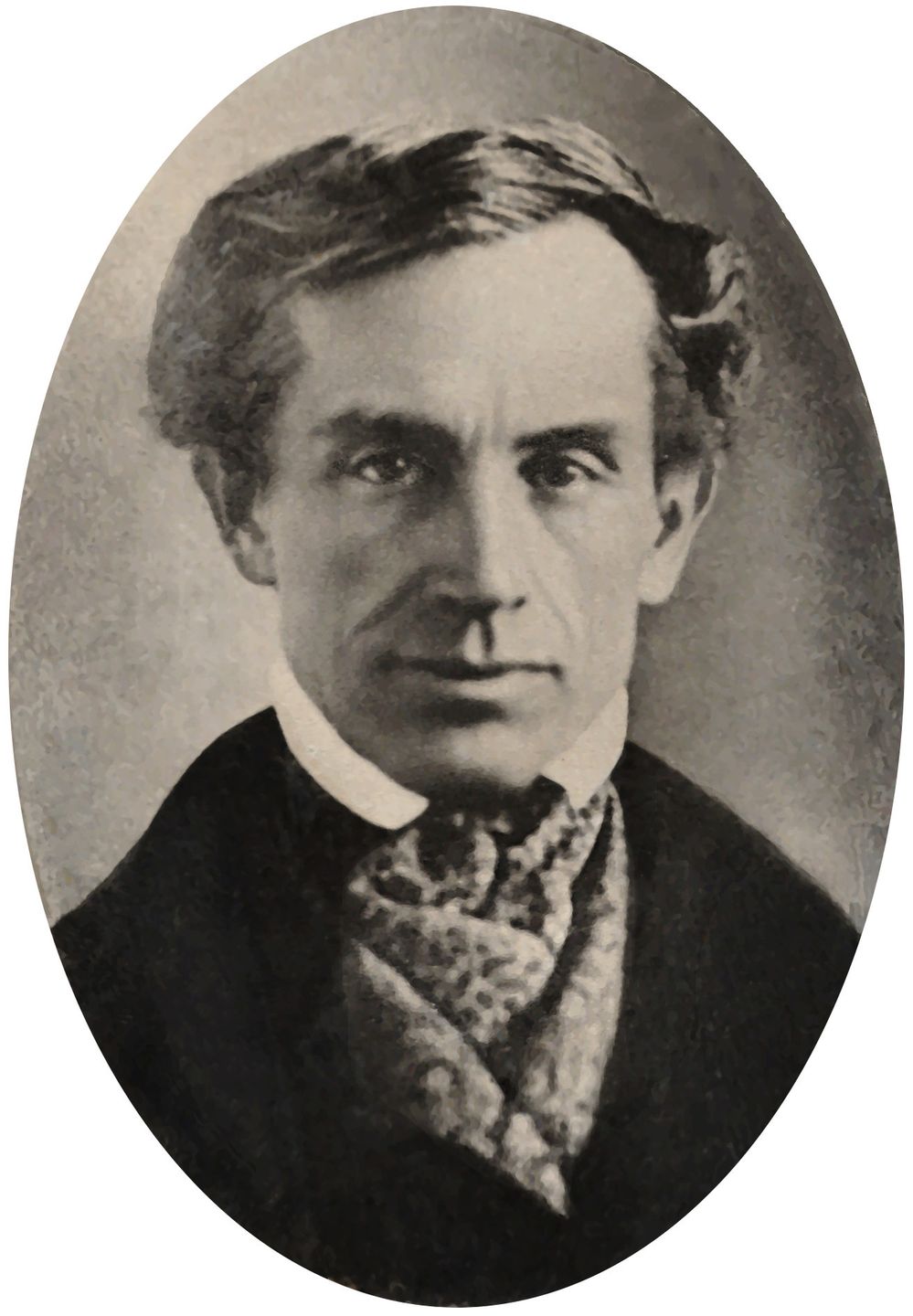
Samuel f.b. Morse, daguerreotype portrait c. 1840, four years before the first telegraph transmission. Unidentified photographer, Public domain, via Wikimedia Commons
What Hath God Wrought
On this day in 1844 — Samuel Morse sent the first telegraph message: "what hath god wrought." Long distance communication began.
3 min read
On May 24, 1844, Samuel Morse sat in the Supreme Court chamber in the U.S. Capitol building in Washington and tapped out a message using a device he had spent years perfecting. The message traveled over a wire to Baltimore, 40 miles away, where his assistant Alfred Vail received it and sent a reply. The message was a biblical verse, Numbers 23:23: "What hath God wrought." It was the first official telegraph transmission, and it changed the speed of information forever.
The telegraph was not a single invention. It was a system. Morse didn't invent the idea of sending electrical signals over wires. That concept had been explored by others. What Morse created was a practical, reliable, and scalable implementation. He designed a code that translated letters into patterns of short and long pulses, dots and dashes. He built a key to send the signals and a register to record them on paper. He convinced Congress to fund the first experimental line between Washington and Baltimore. The technology worked because the entire system worked.
Morse code was brilliant in its simplicity. Each letter was represented by a unique sequence of dots and dashes. The most common letters, like E and T, had the shortest codes. A single dot for E, a single dash for T. Less common letters like Q and Z had longer, more complex codes. It was compression before the concept existed, optimized for speed and efficiency. And because it was based on timing rather than complex machinery, it could be transmitted over long distances with minimal signal degradation.
The impact was immediate. Before the telegraph, information traveled at the speed of physical transportation. A message from New York to California took weeks. News of battles, elections, and disasters arrived long after they had happened. The telegraph collapsed that delay. By the 1850s, telegraph lines crisscrossed the country. By the 1860s, a transatlantic cable connected North America to Europe. Information became nearly instantaneous, and the world shrank.
The telegraph didn't just speed up communication. It changed what communication could do. Stock prices could be transmitted in real time, creating synchronized markets. Newspapers could report on events as they happened, not days later. Railroads could coordinate schedules across thousands of miles, making complex logistics possible. The telegraph was infrastructure, the same way Theodore Maiman's laser would later become infrastructure for fiber optics. Once it existed, entire industries reorganized around it.
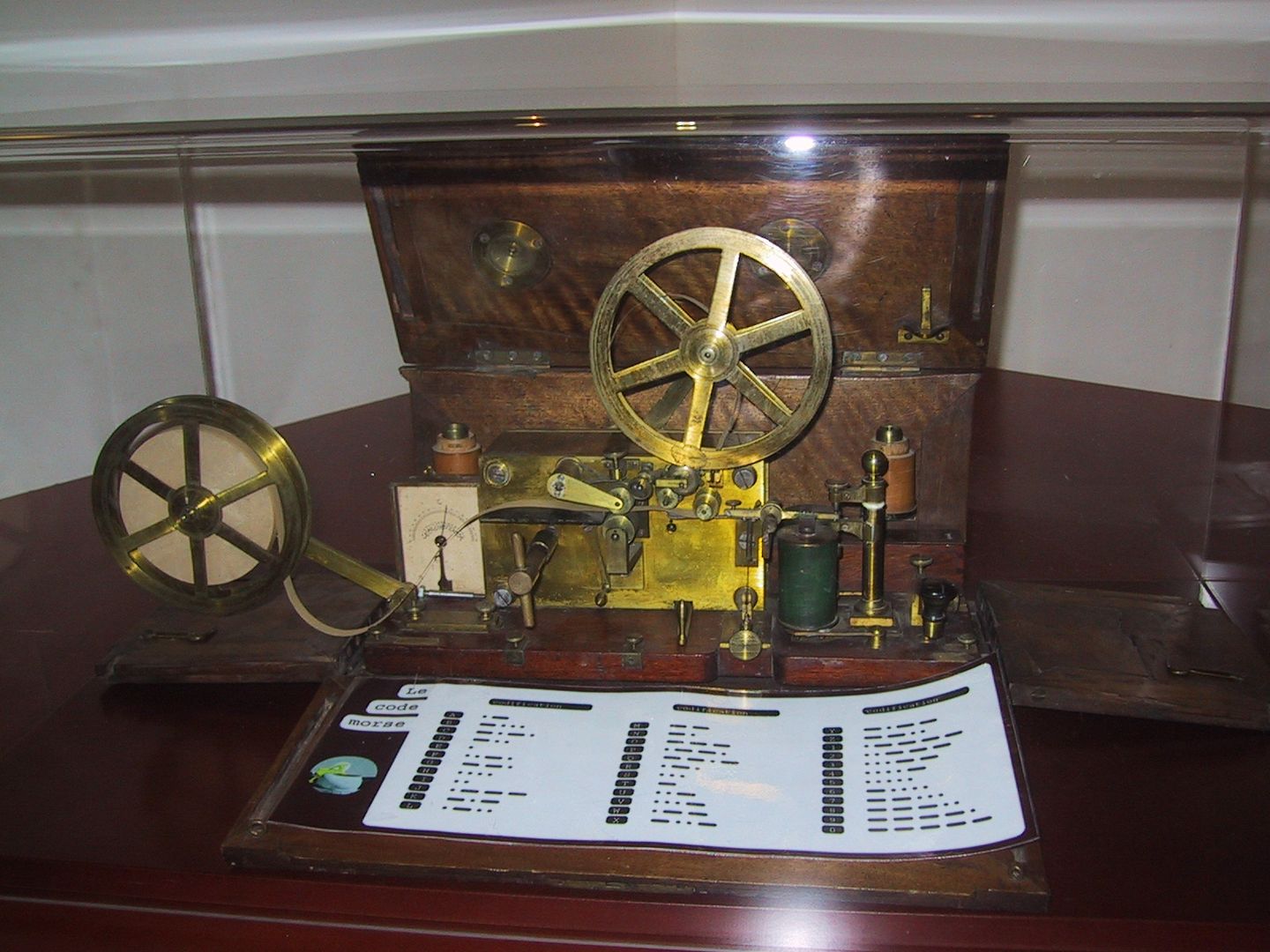
Samuel Morse's original telegraph prototype, 1837, on display at the national museum of American history. (c) 2006 Zubro, CC BY-SA 3.0, via Wikimedia Commons
Morse himself was an unlikely inventor. He had trained as an artist and spent years painting portraits. He became interested in telegraphy after his wife died while he was away, and he didn't receive the news until days later. That delay haunted him. He believed that faster communication could prevent such suffering. It's a reminder that technology often emerges from personal need as much as from abstract curiosity.
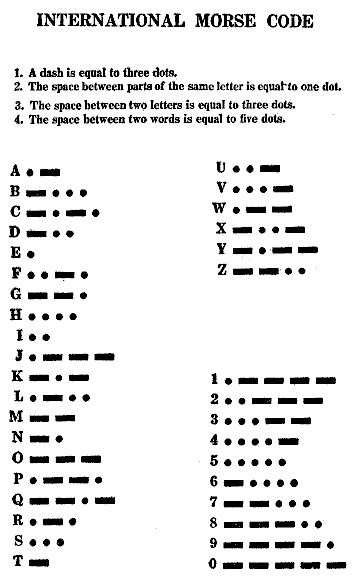
The Morse code alphabet, with each letter mapped to a sequence of dots and dashes. Rhey T. Snodgrass and Victor F. Camp, Public domain, via Wikimedia Commons
The message "What hath God wrought" was chosen by Annie Ellsworth, the daughter of a friend who had supported Morse's work. It's a strange choice for the first telegraph message. It's reverent, almost anxious, as if acknowledging that something significant and possibly disruptive had just been set in motion. And it had. The telegraph was the first digital communication system, the first technology to separate information from physical objects. A letter required paper. A telegraph required only a pattern of electrical pulses.
Morse died in 1872, by which time the telegraph had become ubiquitous. His code outlasted the telegraph itself, remaining in use for ship-to-shore communication well into the 20th century. SOS, the international distress signal, is Morse code: three dots, three dashes, three dots. The system he designed was so efficient, so elegantly simple, that it survived long after better technologies replaced it. That's the mark of good design. It works, and it keeps working, long after its creator is gone.
studio / on-this-day / May 24