studio / on-this-day / May 23
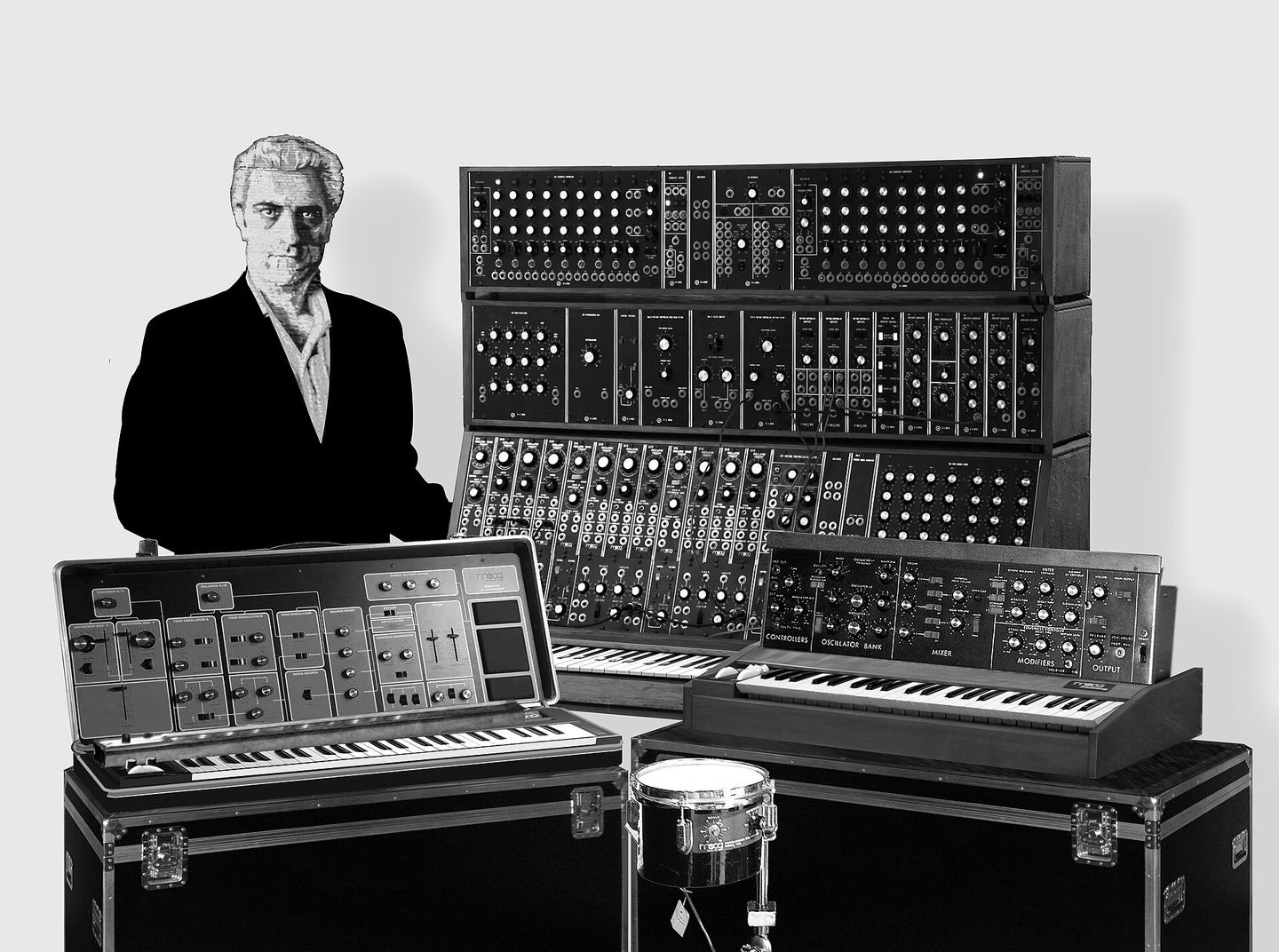
Robert Moog with his Moog modular synthesizer, the instrument that transformed the sound of modern music. CC BY 4.0, via Wikimedia Commons
Sound as Design Material
On this day in 1934 — Robert Moog was born, and would build the synthesizer that turned raw electricity into a new material for music.
3 min read
Robert Moog was born in New York City on May 23, 1934, and grew up building Theremin kits from magazines. The Theremin, invented in the 1920s, was the first electronic instrument, played by moving your hands near two antennas that controlled pitch and volume through electromagnetic fields. Moog sold the kits through the mail while studying physics and electrical engineering. By the time he finished his Ph.D., he understood that sound could be synthesized, that waveforms could be shaped, and that music didn't have to come from strings, reeds, or hammers striking metal. It could come from voltage.
In 1964, Moog introduced the Moog synthesizer, a modular system that used voltage-controlled oscillators, filters, and amplifiers to generate and sculpt sound. It wasn't the first synthesizer, but it was the first to feel like a musical instrument rather than a science experiment. It had a keyboard, which made it accessible to musicians who didn't want to patch cables and adjust knobs blindly. It had a richness and warmth that earlier electronic instruments lacked. And most importantly, it was playable. You could perform with it.
The breakthrough was the voltage-controlled design. Instead of using fixed circuits to generate tones, Moog's synthesizer allowed musicians to modulate frequency, amplitude, and timbre using electrical signals. Turn a knob, and the pitch rises. Flip a switch, and the waveform changes from sine to sawtooth. Patch a cable from one module to another, and you route control signals in ways the designer never anticipated. The instrument was a system, and the musician became a designer, shaping sound in real time.
Wendy Carlos brought the Moog into the mainstream with the album Switched-On Bach in 1968, performing classical compositions entirely on synthesizer. The album was a commercial success, proof that electronic music could be more than novelty. But it was rock musicians who truly embraced the Moog. Keith Emerson used it onstage with Emerson, Lake & Palmer, treating it like a lead instrument. Kraftwerk, Pink Floyd, and Yes all integrated synthesizers into their sound. By the mid-1970s, the synthesizer was everywhere, from prog rock to disco to film scores.
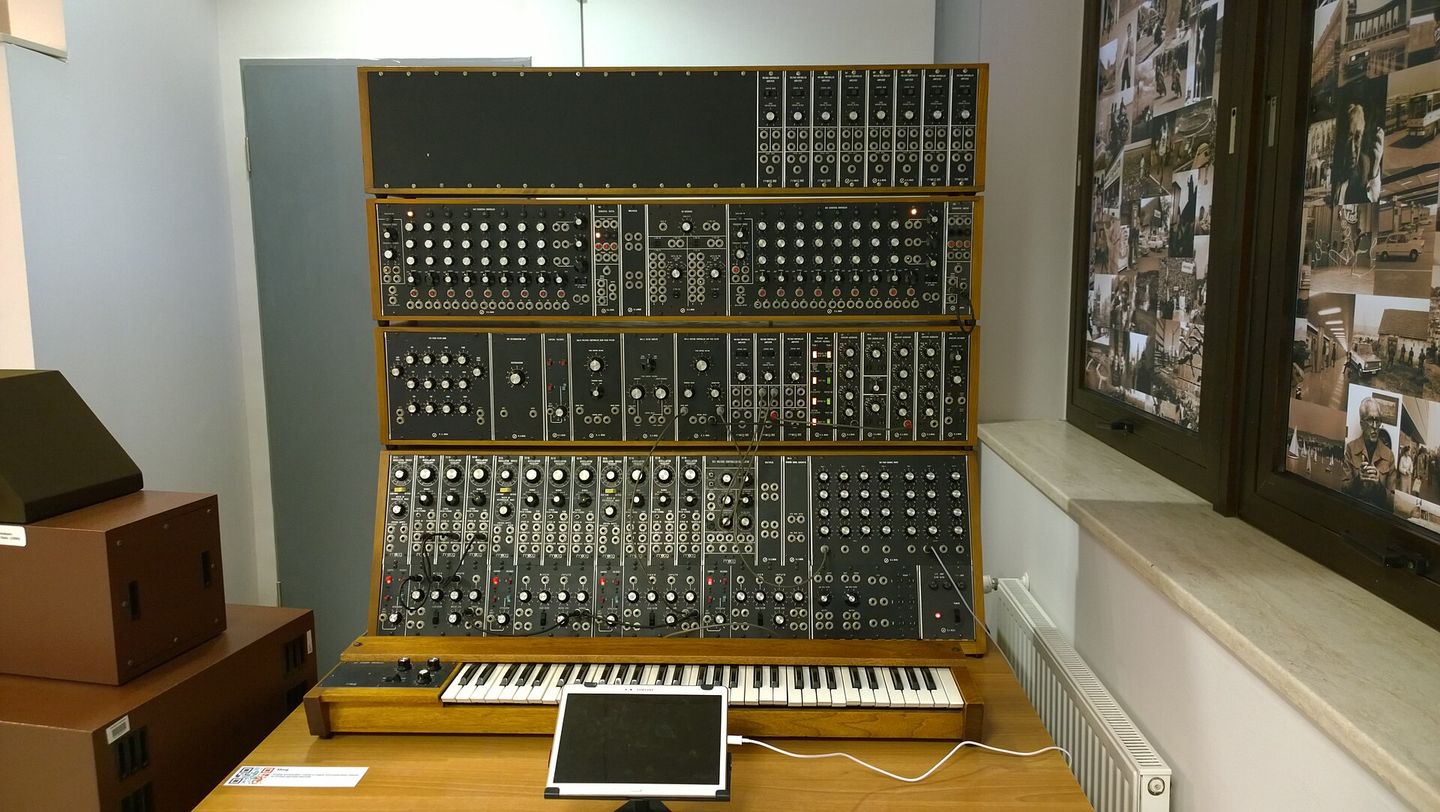
A 1973 Moog modular system, its modules linked by patch cables that let musicians route control signals in ways the designer never anticipated. Attila SzáSz, CC BY-SA 4.0, via Wikimedia Commons
What made the Moog significant was not just what it could do but how it reframed the relationship between sound and music. For centuries, musical instruments had been physical objects: wood, metal, strings, membranes. The sound they made was a byproduct of their material properties. A violin sounds like a violin because of how wood vibrates. A trumpet sounds like a trumpet because of how brass resonates. The Moog synthesizer broke that connection. Sound became a signal, a voltage, an abstraction that could be shaped independently of any physical object.
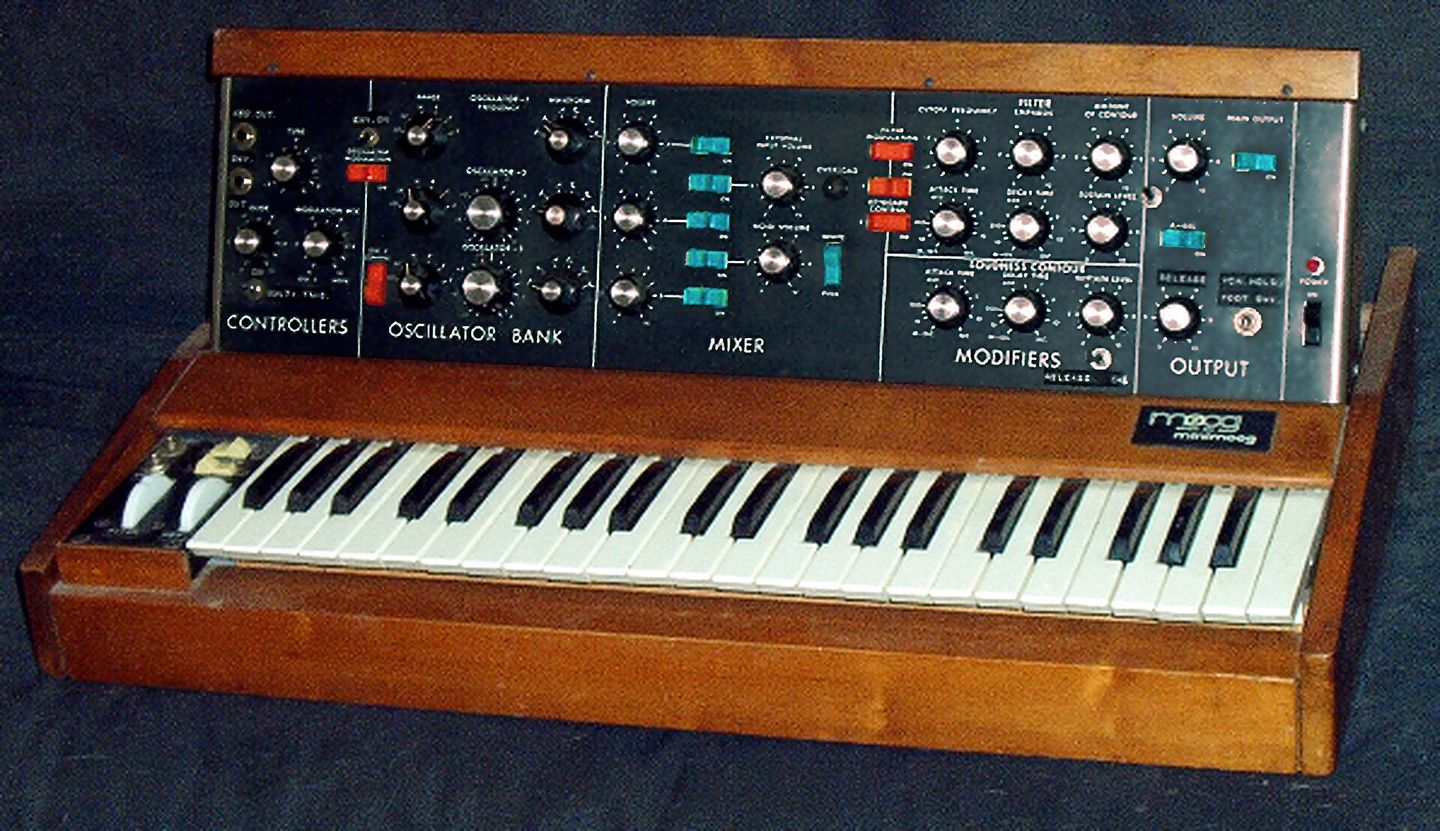
The minimoog model d, Moog's portable synthesizer introduced in 1970, which brought synthesis to a wider audience. Krash, Public domain, via Wikimedia Commons
Moog spent the rest of his life refining and expanding his designs. He never became wealthy from his inventions. Competitors copied his ideas, and he struggled to keep his company afloat. But he kept building, kept experimenting. He believed that electronic instruments would become as expressive as acoustic ones, and he was right. Modern digital audio workstations, software synthesizers, and sample libraries all descend from the principles Moog established: that sound is a material, and synthesis is a design process.
Moog died in 2005, by which time the synthesizer had become so ubiquitous that most people didn't think about where it came from. But every bassline in electronic music, every pad in ambient music, every processed vocal in pop music owes something to the voltage-controlled oscillators Moog pioneered. He didn't just invent an instrument. He created a design space, a new set of tools for making music that didn't exist before. Sound stopped being something you found in the physical world and became something you could build from scratch, electron by electron.
studio / on-this-day / May 23