studio / on-this-day / Apr 25
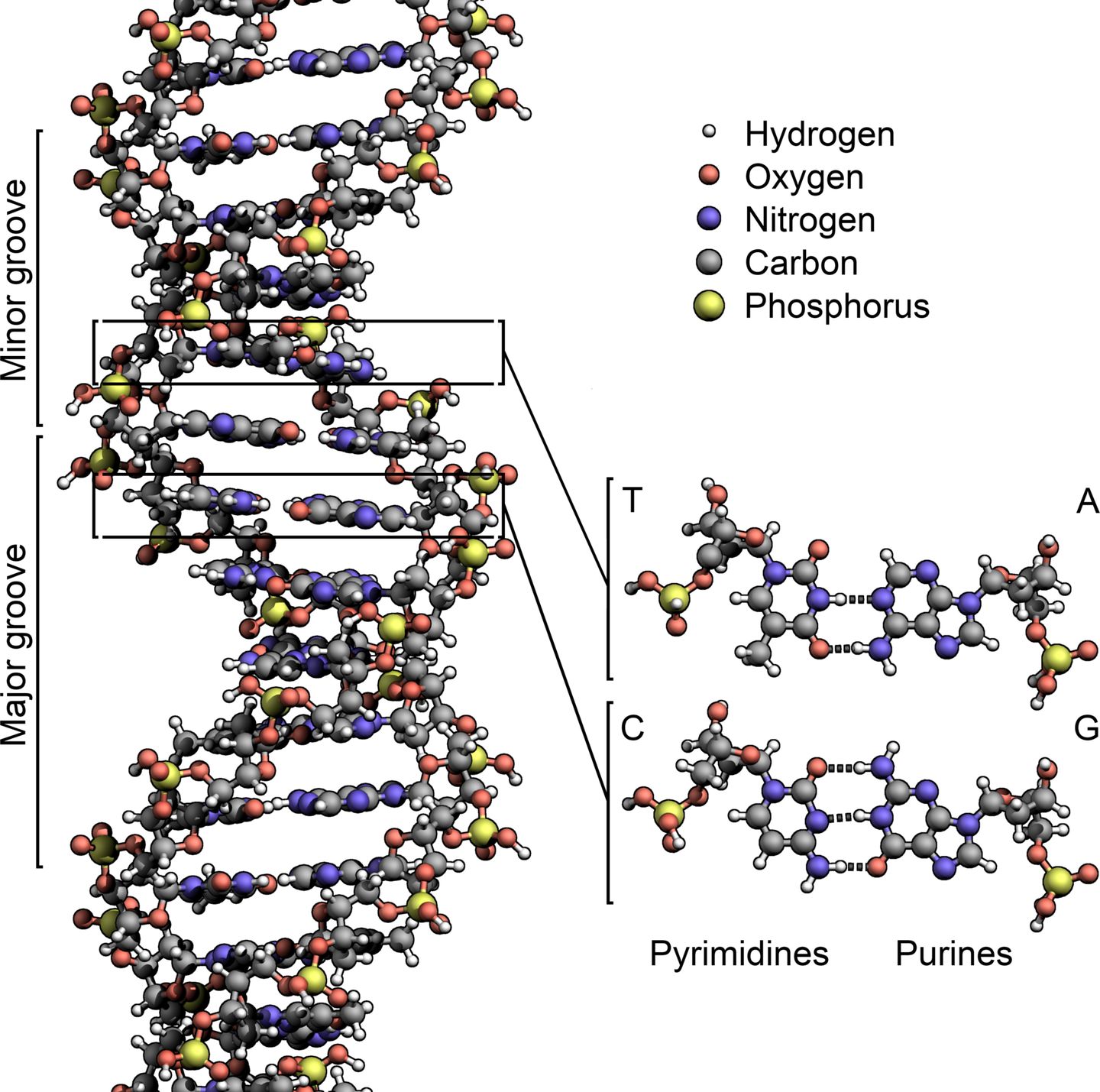
Diagram of the DNA double helix with labeled components. The specific base pairing — adenine with thymine, guanine with cytosine — is the key to the molecule's ability to copy itself. Zephyris, CC BY-SA 3.0, via Wikimedia Commons
900 Words That Decoded Life
On this day in 1953 — Watson and Crick published the structure of DNA in barely nine hundred words, quietly decoding how life copies itself.
3 min read
On April 25, 1953, the journal Nature published a one-page paper titled "Molecular Structure of Nucleic Acids: A Structure for Deoxyribose Nucleic Acid." The authors were James Watson and Francis Crick, two researchers at Cambridge University. The paper was 900 words long. It described DNA as a double helix, two strands of nucleotides wound around each other like a twisted ladder. The structure was elegant, simple, and immediately suggested how genetic information could be copied. The paper ended with one of the most understated sentences in scientific history: "It has not escaped our notice that the specific pairing we have postulated immediately suggests a possible copying mechanism for the genetic material."
The discovery was not theirs alone. Rosalind Franklin, a chemist at King's College London, had produced the clearest X-ray diffraction images of DNA ever captured. Her Photo 51 showed the molecule's helical structure with unmistakable clarity. Watson saw the image without her permission and used it to confirm the model he and Crick were building. Franklin died in 1958, before the significance of the work was fully recognized. Watson and Crick shared the Nobel Prize in 1962 with Maurice Wilkins, who had shown Watson the photograph. Franklin's contribution was acknowledged only in retrospect, a pattern that repeats in the history of science.
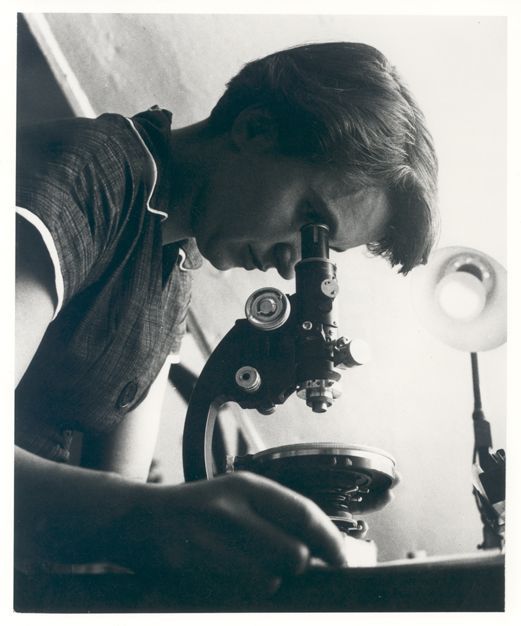
Rosalind Franklin, whose x-ray diffraction photograph of DNA — Photo 51 — provided the critical evidence Watson and Crick used to build their model. She died in 1958 and was never nominated for the Nobel Prize. MRC Laboratory of Molecular Biology, CC BY-SA 4.0, via Wikimedia Commons
What Watson and Crick figured out was not just the shape of DNA. It was the logic. The molecule is made of four nucleotides: adenine, thymine, guanine, and cytosine. They pair in a specific way. Adenine bonds with thymine. Guanine bonds with cytosine. This pairing is the key. If you know the sequence on one strand, you can deduce the sequence on the other. The molecule is self-explanatory. It carries its own instructions for replication. Unzip the helix, and each strand becomes a template for a new partner. That is how cells copy their genetic material. That is how inheritance works. The structure explained the function.
The implications unfolded over decades. DNA is a code. It is written in an alphabet of four letters. Those letters are read in groups of three, called codons. Each codon specifies an amino acid. Amino acids chain together to form proteins. Proteins do everything in a cell: catalyze reactions, transport molecules, defend against infection, signal between cells. The sequence of nucleotides in DNA determines the sequence of amino acids in proteins, which determines the structure and function of every living organism. Life is software running on biochemical hardware.
The discovery transformed biology into an information science. Before DNA's structure was known, genetics was descriptive. Traits were inherited, but the mechanism was mysterious. After 1953, genetics became a question of sequence. You could, in theory, read an organism's DNA and understand its design. By the 1970s, researchers had developed techniques to sequence DNA. By the 1990s, they were sequencing entire genomes. The Human Genome Project, completed in 2003, mapped all three billion base pairs in human DNA. It cost $2.7 billion and took over a decade. Today, you can sequence a genome for a few hundred dollars in a few hours. The speed is exponential, and the applications are still unfolding.
What DNA teaches designers is that information and structure are the same thing. The molecule does not just carry information. It is information, encoded in physical form. The sequence of bases is the message. The double helix is the medium. Change the sequence, and you change the organism. This is true for any system where form and function are tightly coupled. Code is structure. Architecture is a set of decisions made material. A typeface is a visual encoding of language. Every designed object is a set of constraints that produces behavior.
The ethical complications are still being worked out. Once you understand DNA as code, you can edit it. CRISPR, a tool developed in the 2010s, allows precise changes to genetic sequences. You can remove genes that cause disease. You can insert genes that confer resistance to pests in crops. You can, in theory, design custom organisms from scratch. The line between therapy and enhancement is blurry. The line between human and post-human is blurrier. Watson and Crick's 900-word paper opened a door. We are still deciding what to do with the room on the other side.
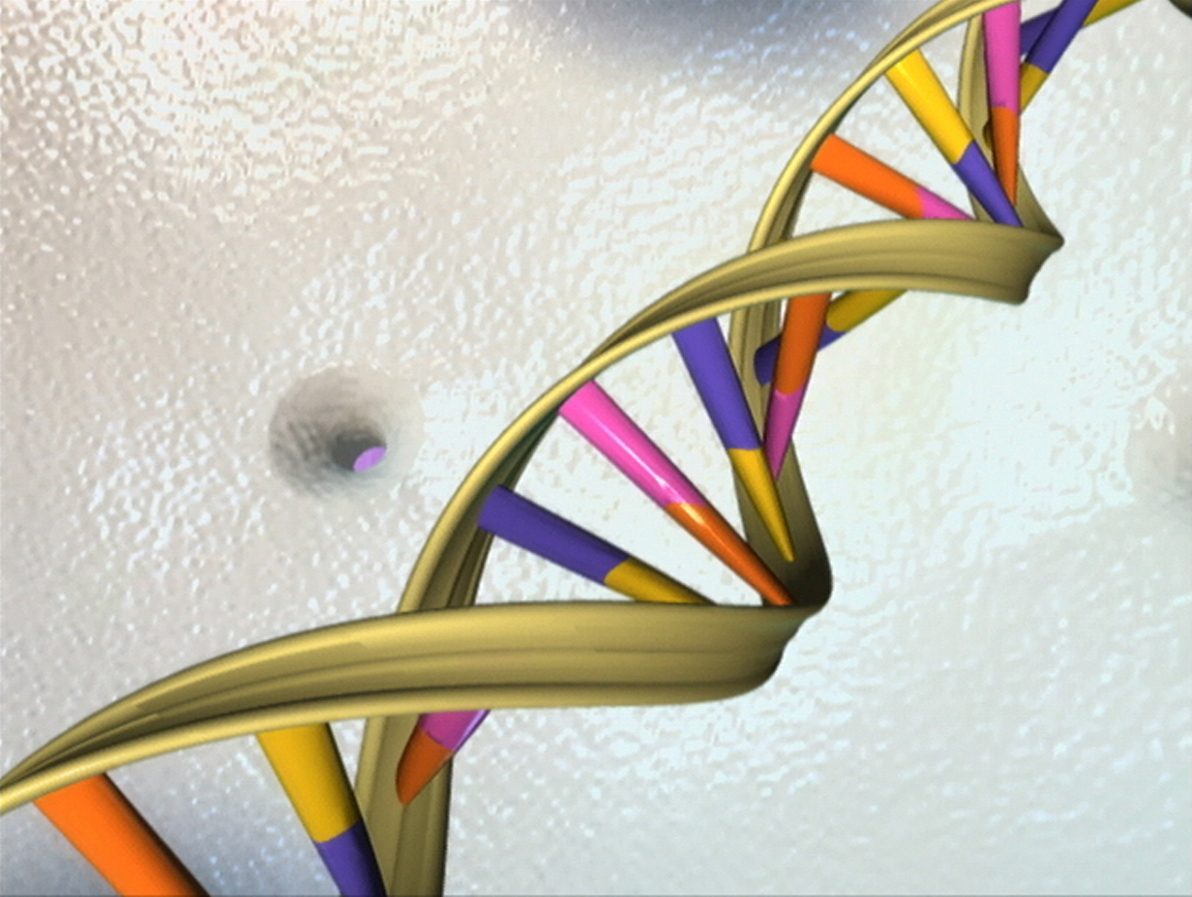
The double-helix structure of DNA, published by Watson and Crick in 1953. Public domain, via Wikimedia Commons
What remains remarkable is the brevity. 900 words. A single diagram. No lengthy derivations. No exhaustive references. Just a model, clearly explained, with the implications left for the reader to infer. That is how good design communicates. It does not over-explain. It shows the structure and lets the structure reveal the function. The double helix is beautiful because it is obvious once you see it. Two strands, complementary bases, a twist that holds it together. Life copies itself because the blueprint is also the machine. That insight, compressed into a single page in a scientific journal, changed everything. Biology is still unpacking it.
studio / on-this-day / Apr 25