studio / on-this-day / Apr 24
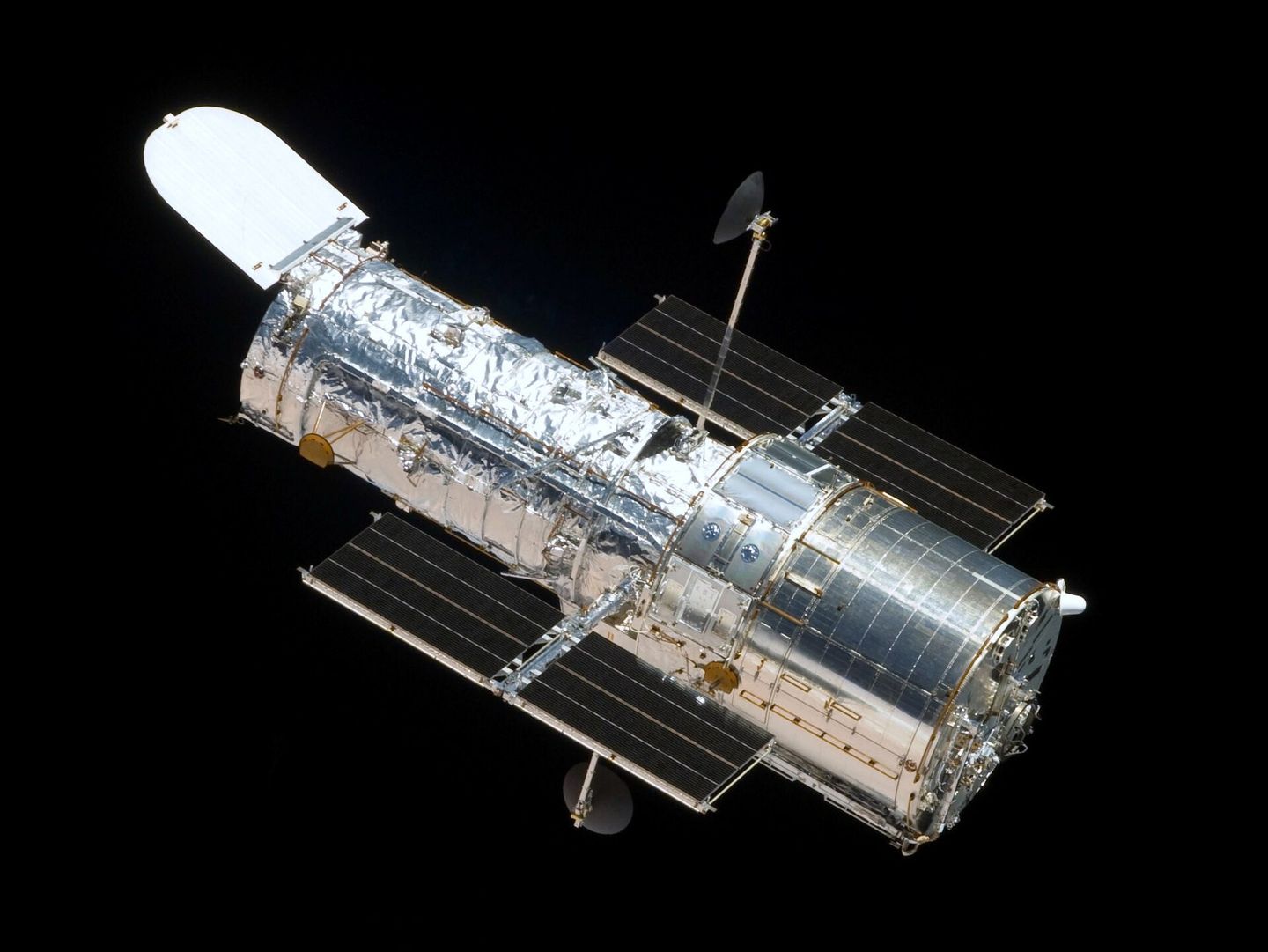
The Hubble Space Telescope photographed during servicing mission 4 in 2009. Hubble was deliberately placed in low Earth orbit where astronauts could reach it — built not for perfection but for maintenance. Ruffnax (Crew of STS-125), Public domain, via Wikimedia Commons
Seeing Through the Flaw
On this day in 1990 — the Hubble Space Telescope launched with a subtly flawed mirror, and still went on to redraw the visible universe.
3 min read
On April 24, 1990, the space shuttle Discovery lifted off from Kennedy Space Center carrying the Hubble Space Telescope. It was the size of a school bus, weighed eleven tons, and cost over $1.5 billion. The plan was simple: place a telescope in orbit above Earth's distorting atmosphere, giving astronomers an unobstructed view of the cosmos. Within weeks of deployment, scientists realized something was wrong. The images were blurry. The mirror, polished to within a millionth of an inch of perfection, was the wrong shape.
The flaw was microscopic but devastating. The primary mirror was too flat at the edges by about 2.2 microns, roughly one-fiftieth the width of a human hair. This error, caused by a miscalibrated testing instrument during manufacturing, rendered the telescope nearly useless for its primary scientific goals. The press called it a disaster. Congress held hearings. NASA's credibility was at stake. After decades of planning and billions of dollars, the most advanced telescope ever built could not focus.
The mistake was not discovered until after launch because testing a mirror that large is nearly impossible on the ground. Gravity distorts it. Atmospheric pressure affects it. The only way to know if it worked was to put it in space and look through it. When the first images came back, fuzzy and ringed with halos of scattered light, engineers traced the problem to spherical aberration. The mirror was ground to the wrong curvature. It had been tested meticulously, but the testing equipment itself was flawed, and no one caught it.
What saved Hubble was not fixing the mirror. It was designing a fix for the flaw. In 1993, astronauts aboard the shuttle Endeavour installed corrective optics, essentially a set of precisely shaped mirrors that compensated for the primary mirror's error. It was like giving the telescope eyeglasses. The repair mission was one of the most complex ever attempted. Five spacewalks over eleven days, working with tools designed for tasks that had never been done before. When the new optics were in place and the first corrected images arrived, they were flawless. Hubble could see.
What Hubble has shown us since is difficult to overstate. The Hubble Deep Field images revealed thousands of galaxies in a patch of sky the size of a pinhead held at arm's length. The telescope observed the expansion rate of the universe, helping confirm the existence of dark energy. It captured images of stellar nurseries, dying stars, and colliding galaxies. It measured the age of the universe with unprecedented precision. It found evidence of supermassive black holes at the centers of galaxies. Every major astronomy textbook published in the last thirty years is filled with Hubble's images.
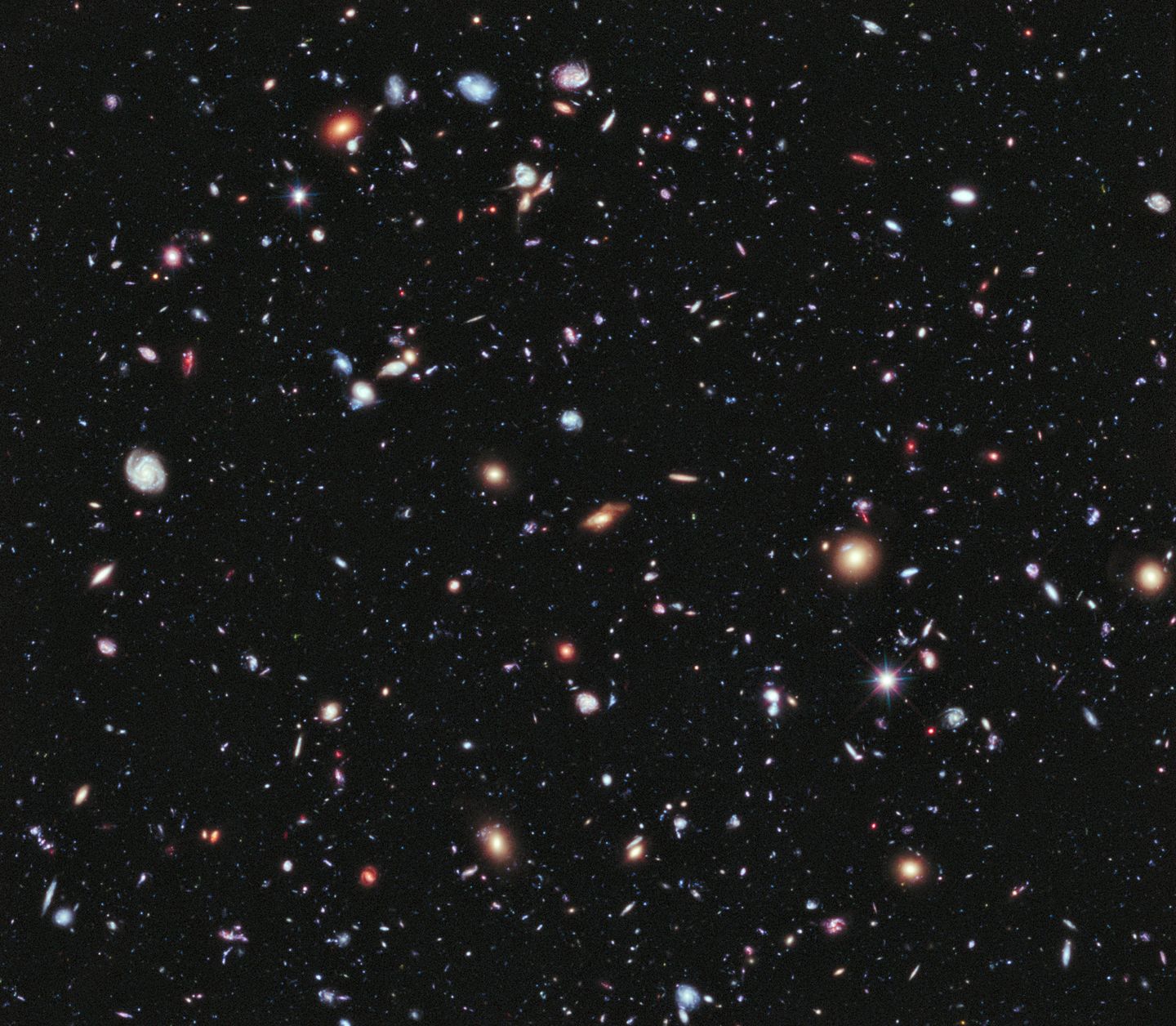
The Hubble extreme Deep Field (2012), a composite of ten years of exposures totaling two million seconds of observation time. Nearly every object in the image is an entire galaxy. Public domain, via Wikimedia Commons
The lesson is not that flaws do not matter. They do. The lesson is that systems can be designed to accommodate flaws, and sometimes the accommodation is more important than the original design. Hubble was built to be serviced. Unlike every other space telescope, it was placed in low Earth orbit where shuttles could reach it. Astronauts upgraded its instruments five times over two decades, replacing cameras, gyroscopes, and batteries. Each upgrade extended its life and expanded its capabilities. A telescope designed in the 1970s was still doing cutting-edge science in the 2020s because it was built to evolve.
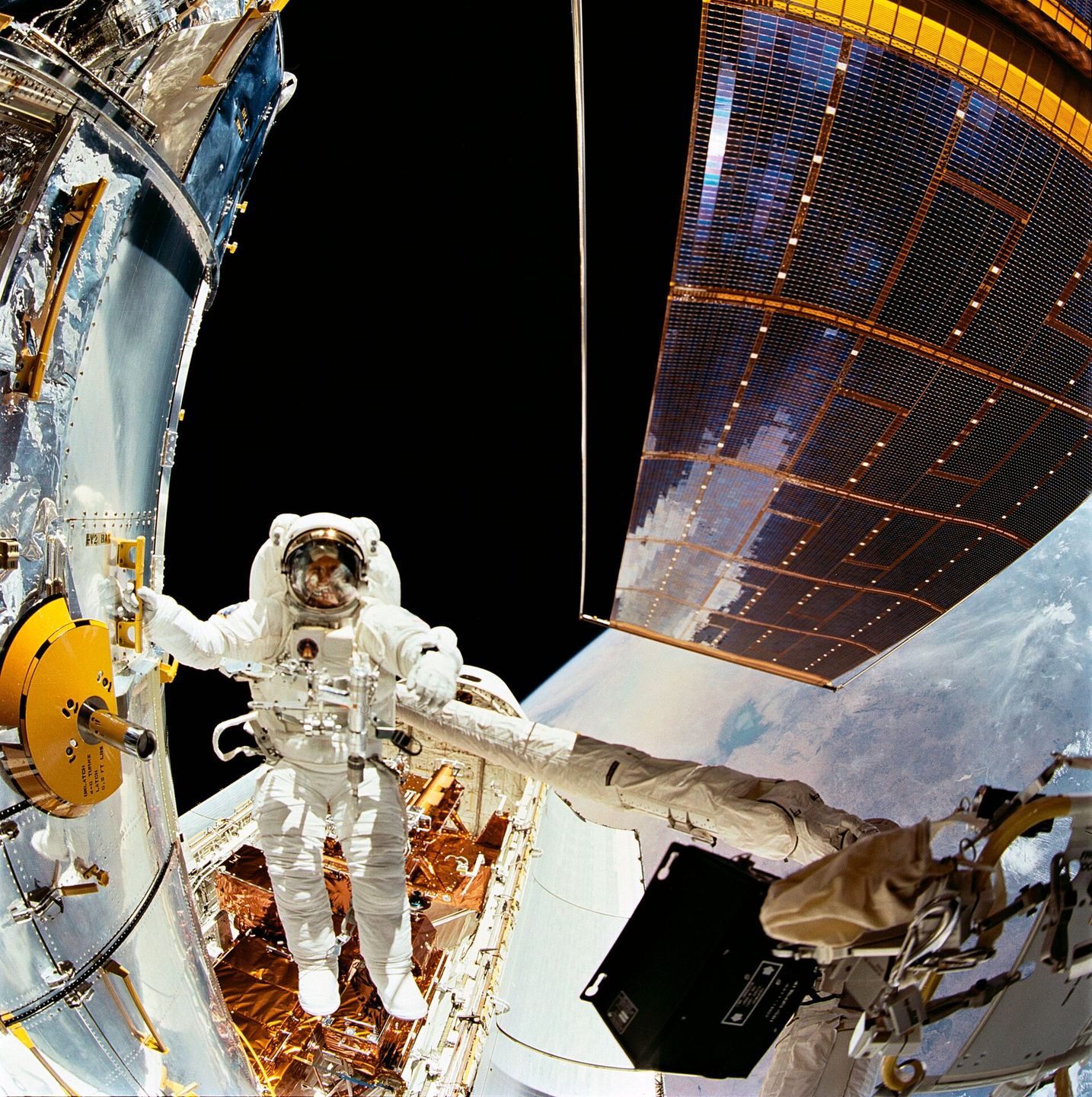
Astronaut story musgrave perched on the shuttle Endeavour's robotic arm during the first spacewalk of the 1993 servicing mission that gave Hubble its corrective optics. NASA Hubble Space Telescope, Public domain, via Wikimedia Commons
Software development operates on similar principles. Code ships with bugs. Systems have edge cases. No product launches perfect. What separates successful systems from failures is not the absence of flaws but the ability to patch them, iterate on them, and keep the system running while repairs are made. Hubble's corrective optics were a patch. The servicing missions were updates. The telescope itself was infrastructure, expensive to deploy but designed for long-term maintenance. That is the model for anything meant to last.
Hubble is still in orbit. It has outlived its original mission timeline by decades. Its instruments are aging, and it will eventually fail. When it does, it will be deliberately deorbited, sent into the atmosphere to burn up over the ocean. But the images it captured, the data it collected, those will persist. A flawed mirror, corrected in orbit by engineers improvising solutions in real time, gave humanity the clearest view of the universe it has ever had. That is the thing about design. Perfection is optional. Adaptability is not.
studio / on-this-day / Apr 24