studio / on-this-day / Apr 22
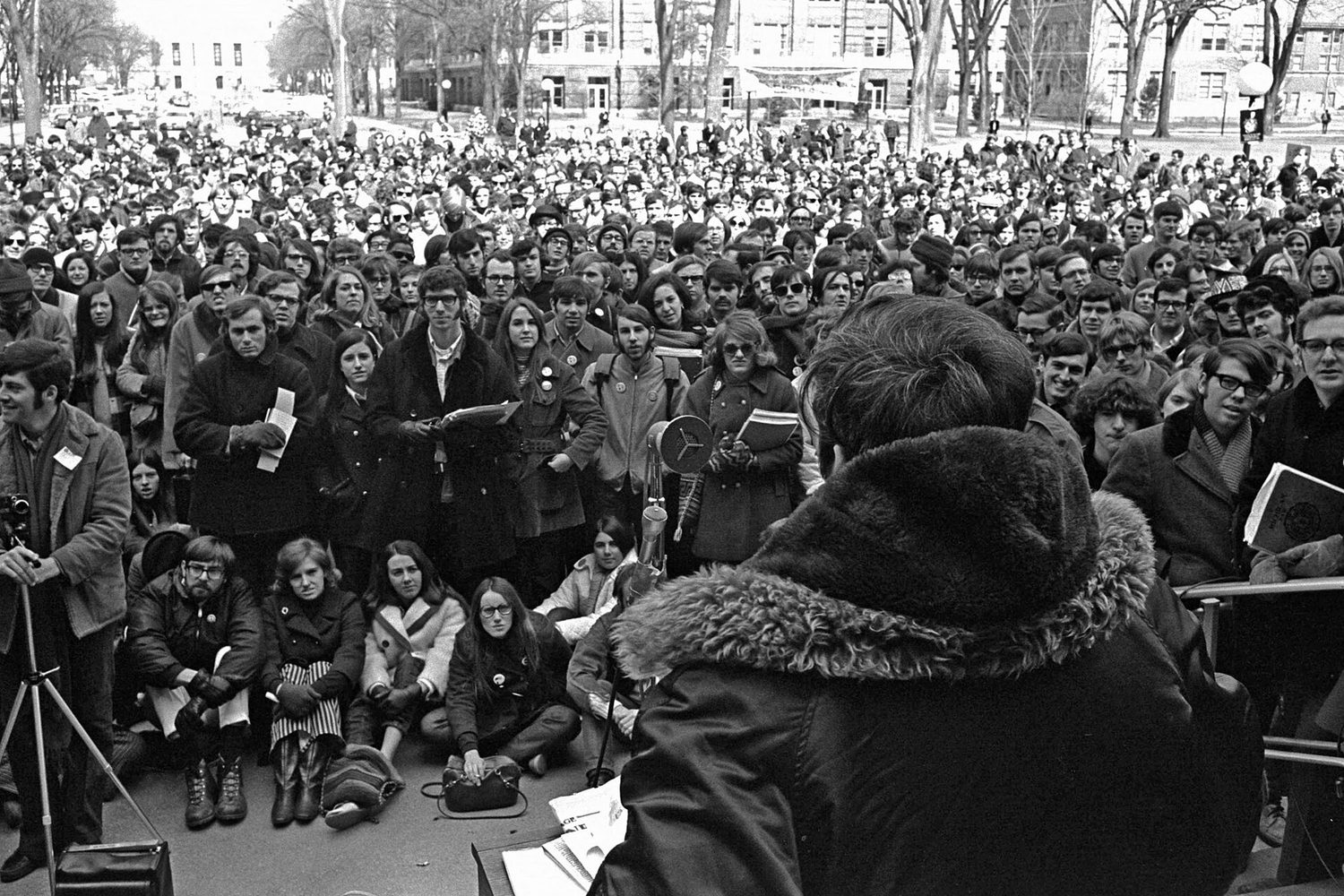
A 1970 Earth Day event; the first Earth Day drew some twenty million Americans out into the streets. University of Michigan School for Envi, CC BY 2.0, via Wikimedia Commons
Redesigning the Relationship
On this day in 1970 — twenty million Americans marked the first Earth Day, and a nation began renegotiating its relationship with the planet.
3 min read
On April 22, 1970, an estimated twenty million people across the United States participated in the first Earth Day. They gathered in parks, marched on highways, cleaned rivers, and listened to speeches about pollution, pesticides, and the disappearance of wilderness. It was the largest organized demonstration in American history to that point. College campuses held teach-ins. Cities closed streets to cars. In New York, Fifth Avenue was shut down for hours. People walked where traffic normally roared. For a day, the priorities flipped.
Earth Day was not spontaneous. It was designed. Senator Gaylord Nelson of Wisconsin conceived it after witnessing the damage from the 1969 Santa Barbara oil spill. He wanted a national teach-in on the environment, modeled on the anti-war protests of the 1960s. Nelson recruited Denis Hayes, a young activist, to organize it. Hayes built a coalition, secured funding, and coordinated thousands of local events. The date, April 22, was chosen deliberately. It fell between spring break and final exams, maximizing college student participation. It was a Wednesday, a workday, forcing people to choose between business as usual and showing up. The event was engineered to make participation visible.
What made Earth Day effective was not the protests themselves. It was the framing. The environmental movement up to that point had been fragmented. Conservationists focused on preserving wilderness. Anti-pollution activists targeted factories and smog. Wildlife advocates fought to save specific species. Earth Day unified them under a single concept: the planet as a system. Pollution in one place affected air and water everywhere. The extinction of one species weakened the whole web. The environment was not a collection of separate issues. It was infrastructure, and infrastructure could fail.
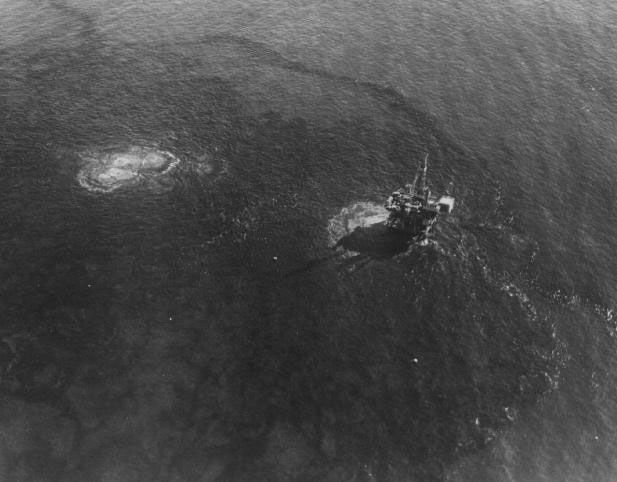
The 1969 Santa Barbara oil spill, which coated beaches and killed thousands of seabirds. Witnessing the damage led senator Gaylord Nelson to conceive Earth Day. USGS, Public domain, via Wikimedia Commons
The imagery of Earth Day borrowed from the space program. In 1968, Apollo 8 astronauts had photographed Earthrise, the image of the planet floating in the void, fragile and finite. That photograph became an icon of the environmental movement. It reframed the Earth not as an infinite resource but as a closed system, a spaceship with limited supplies. The metaphor was powerful because it was accurate. There is no resupply mission. The air, water, and soil we have are all we get. If the system breaks, we break with it.
The political response was immediate. Within months, President Nixon established the Environmental Protection Agency. By the end of 1970, Congress had passed the Clean Air Act. The Clean Water Act followed in 1972. The Endangered Species Act came in 1973. These were not minor adjustments. They were structural changes to how the United States regulated industry, treated waste, and valued ecosystems. Earth Day did not cause these laws, but it created the political pressure that made them possible. It turned environmental concern from a niche interest into a mainstream expectation.
What Earth Day demonstrated was that you can redesign culture if you design the event well. The teach-in model made environmentalism educational, not just emotional. The scale made it impossible to ignore. The timing capitalized on existing activist energy. The framing connected disparate issues into a coherent narrative. It was not enough to care about pollution. You had to understand that pollution, deforestation, and species loss were all symptoms of the same problem: treating the planet as externality instead of infrastructure.
Fifty years later, Earth Day is still observed, though its meaning has shifted. The existential urgency has faded into routine. Corporate sponsors use it for branding. Schools treat it as an educational opportunity rather than a call to action. The radical reimagining of 1970, the demand to fundamentally change how industrial society operates, has been absorbed into the calendar as a reminder rather than a reckoning. That is the pattern with designed movements. They create change, and then the system adapts, incorporating just enough to neutralize the threat. Earth Day changed laws, but it did not change the underlying logic of extraction and growth. It redesigned the relationship between humans and the environment just enough to keep the existing system running. The planet is still treated as a resource. We just regulate it better now.
studio / on-this-day / Apr 22