studio / on-this-day / Apr 21
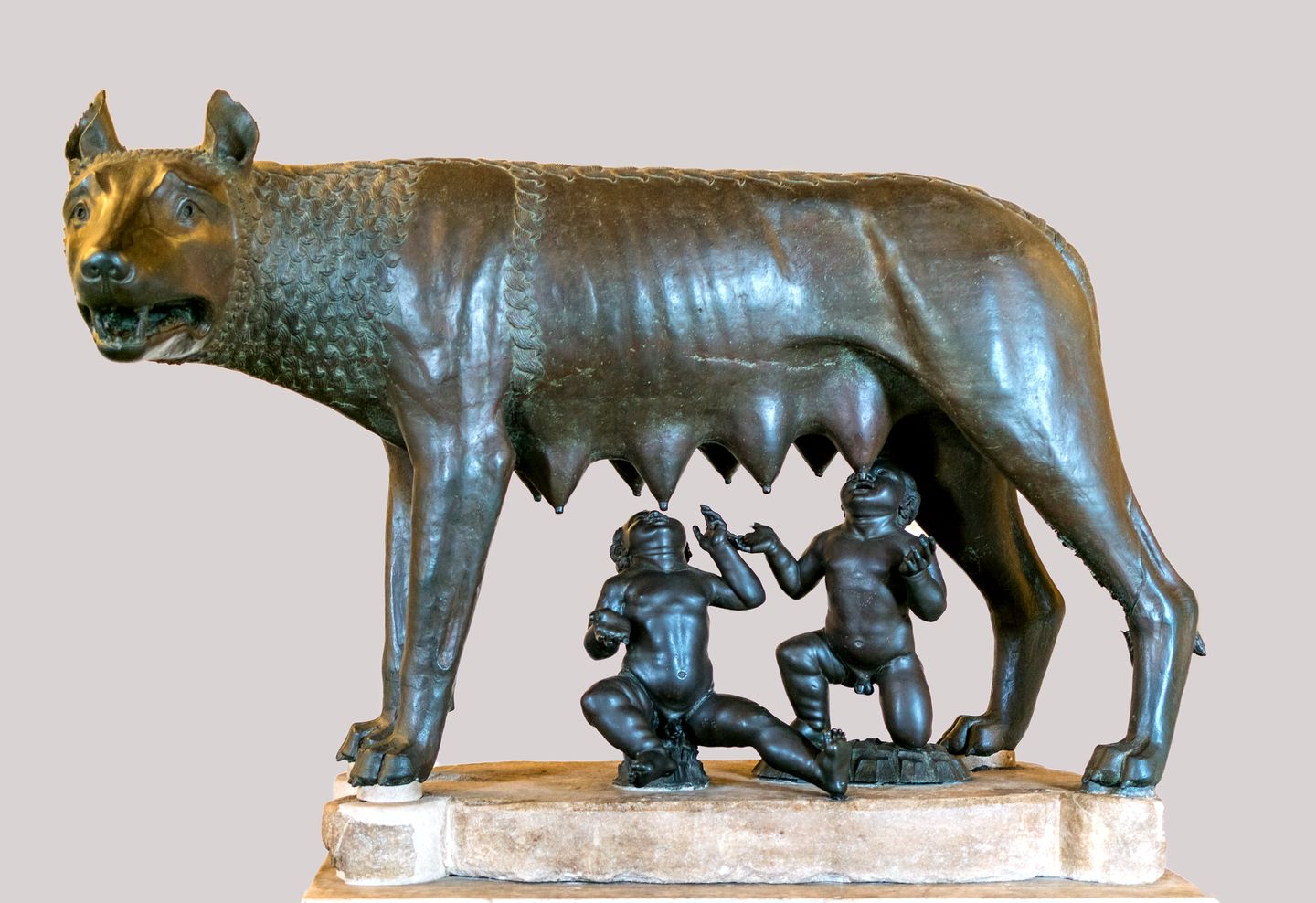
The capitoline wolf — the iconic bronze sculpture of the she-wolf nursing Romulus and Remus, the mythological founders of Rome. The sculpture is now in the capitoline museums in Rome. Rabax63, CC BY-SA 4.0, via Wikimedia Commons
Systems Begin With Stories
On this day in 753 BC — Rome was founded, by legend, a reminder that even the most enduring systems begin as a story people agree to tell.
3 min read
According to Roman tradition, Rome was founded on April 21, 753 BC, by Romulus, who killed his twin brother Remus in a dispute over where the city should be built. Romulus chose the Palatine Hill. Remus preferred the Aventine. They consulted the gods through augury, reading the flight of birds. Romulus saw twelve vultures. Remus saw six. The numbers settled it. Romulus began marking the city's boundary with a plow. Remus, mocking the shallow furrow, jumped over it. Romulus killed him on the spot. The city was named after the survivor.
None of this happened. Not the way the story tells it. Rome did not appear in a day, founded by divine twins raised by a wolf. Archaeological evidence shows the site was occupied by scattered villages centuries before 753 BC. The city emerged gradually, a coalescence of settlements on adjacent hills. But the Romans needed an origin story, a founding myth that explained not just when the city began, but why it had the right to rule. A story about divine favor, ruthless ambition, and the sanctity of boundaries. The myth was a design document.
What the story of Romulus encodes is a set of principles. First, legitimacy comes from the gods. The augury, the reading of vultures, gave Romulus divine approval. Second, boundaries are sacred. Crossing the furrow was not a joke. It was a violation that demanded death. Third, strength is measured by the willingness to enforce rules, even against family. These were not accidents of narrative. They were the operating system of Roman identity. You could not be Roman without believing that Rome had a right to exist, that its borders mattered, and that order was more important than sentiment.
The date itself, April 21, was chosen deliberately. By the time the myth solidified, Rome was already an empire. The early chronologists, trying to give Rome an official birthday, worked backward from known dates, calculating when the founding must have occurred. They picked a date in spring, during the festival of Parilia, a pastoral celebration of purification and renewal. Linking the city's foundation to an agricultural festival reinforced Rome's connection to the land, to cycles of growth and harvest. The story was retrofitted to match the calendar, making the myth feel inevitable.
Every major system has a founding myth. The United States has the Declaration of Independence and the image of the Founding Fathers as philosopher-kings, even though the reality was messier, more compromised. The internet has the ARPANET and the vision of decentralized communication, even though the first message crashed after two letters. Apple has the garage and Steve Jobs, a narrative of genius rising from nothing, which omits the teams, the capital, and the decades of iteration. These stories are not lies. They are compressions, simplifications that communicate values faster than history ever could.
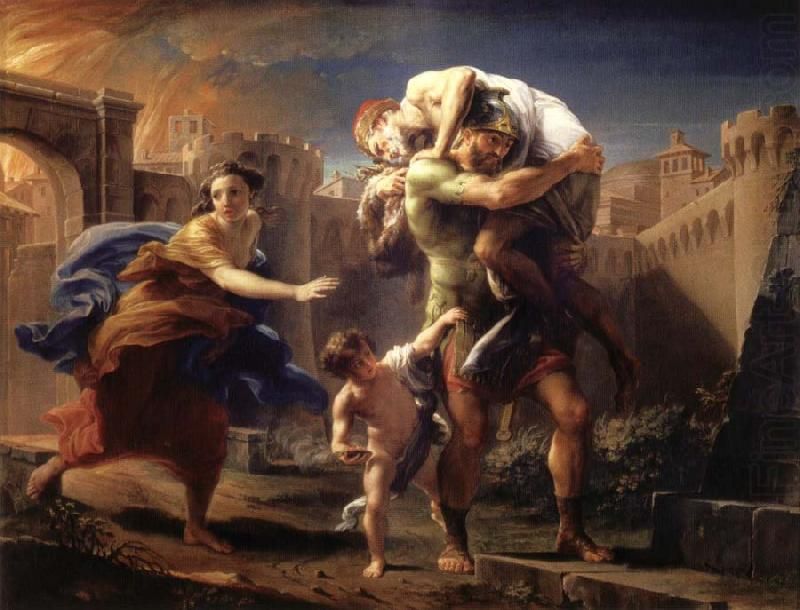
Aeneas fleeing from troy (pompeo Batoni, 1750) — Rome's Founding myth traced its origins even further back to aeneas, a trojan hero, giving the city divine lineage and a claim to legitimacy stretching back centuries. Pompeo Batoni, Public domain, via Wikimedia Commons
The function of a founding myth is not accuracy. It is alignment. A story about origin gives everyone in the system a shared reference point, a reason why the system exists and what it is supposed to do. Rome was founded by a man who killed his brother to protect a boundary. That told every Roman what mattered: order, borders, and the willingness to act. The details, whether Romulus was real, whether the date was correct, those were secondary. The story did its job. It told people how to think about being Roman.
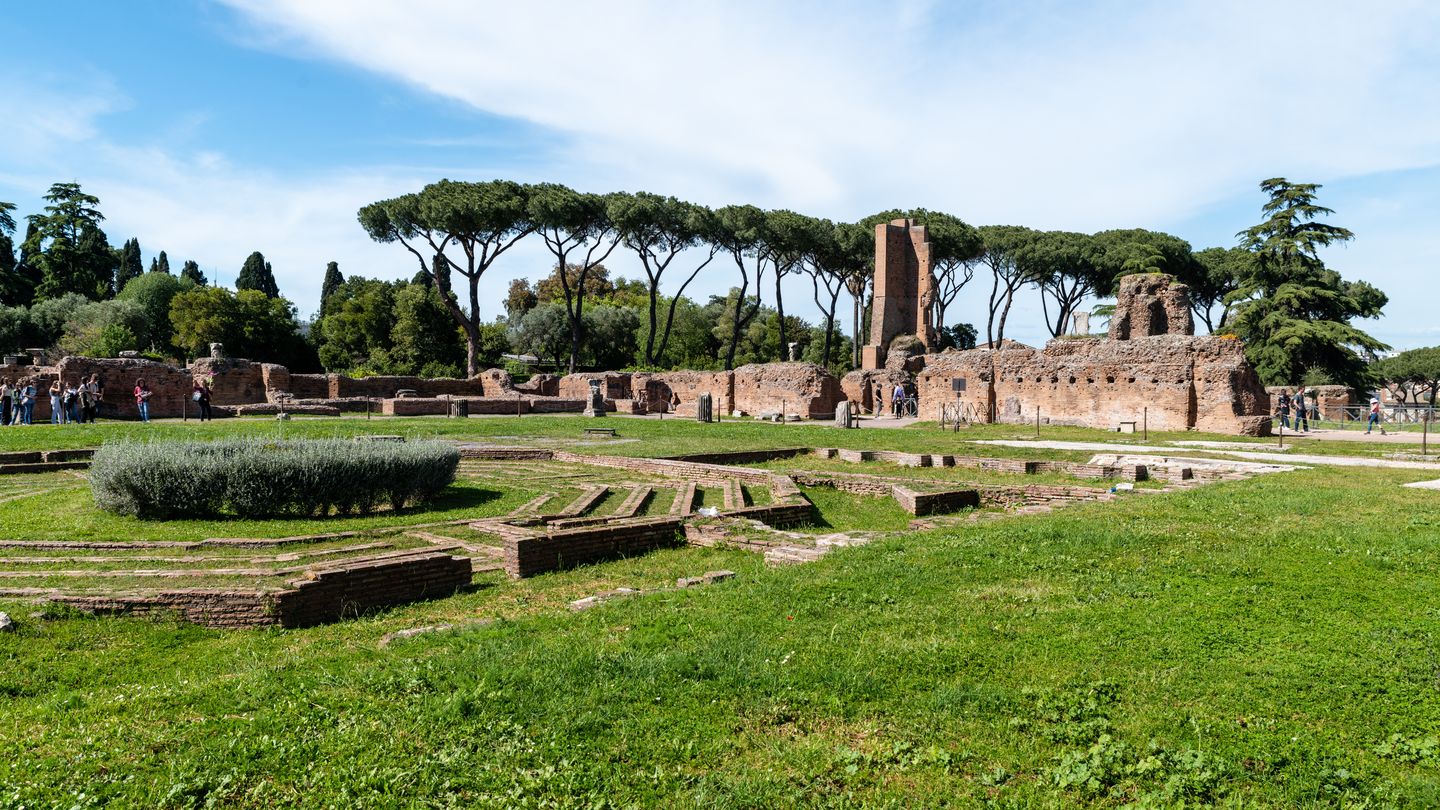
Ruins on the Palatine Hill in Rome — the Hill Romulus chose for his city. Archaeology shows scattered villages occupied the site for centuries before the legendary Founding date of 753 BC. Christoph Strässler, CC BY-SA 2.0, via Wikimedia Commons
Modern organizations still operate this way. A startup tells a story about the moment the founders realized the problem they wanted to solve. A company has a mission statement, a narrative about why it exists beyond profit. Open source projects have origin stories about the first commit, the late nights, the collaborative breakthroughs. These are all myths in the technical sense. They are formative stories that encode values and set expectations. They are how a system explains itself to itself.
What Rome teaches is that stories are infrastructure. The myth of Romulus and Remus lasted longer than the Roman Republic, longer than the Empire. It survived into the Renaissance, into the Enlightenment, into the modern imagination. A story told well enough becomes the thing itself. You do not remember the messy, incremental process of hilltop villages merging into a city. You remember the wolf, the brothers, the plow, and the murder. That is what sticks. That is what builds belief. Every great system starts with a story, and the story decides who stays and who leaves.
studio / on-this-day / Apr 21