studio / on-this-day / Apr 14
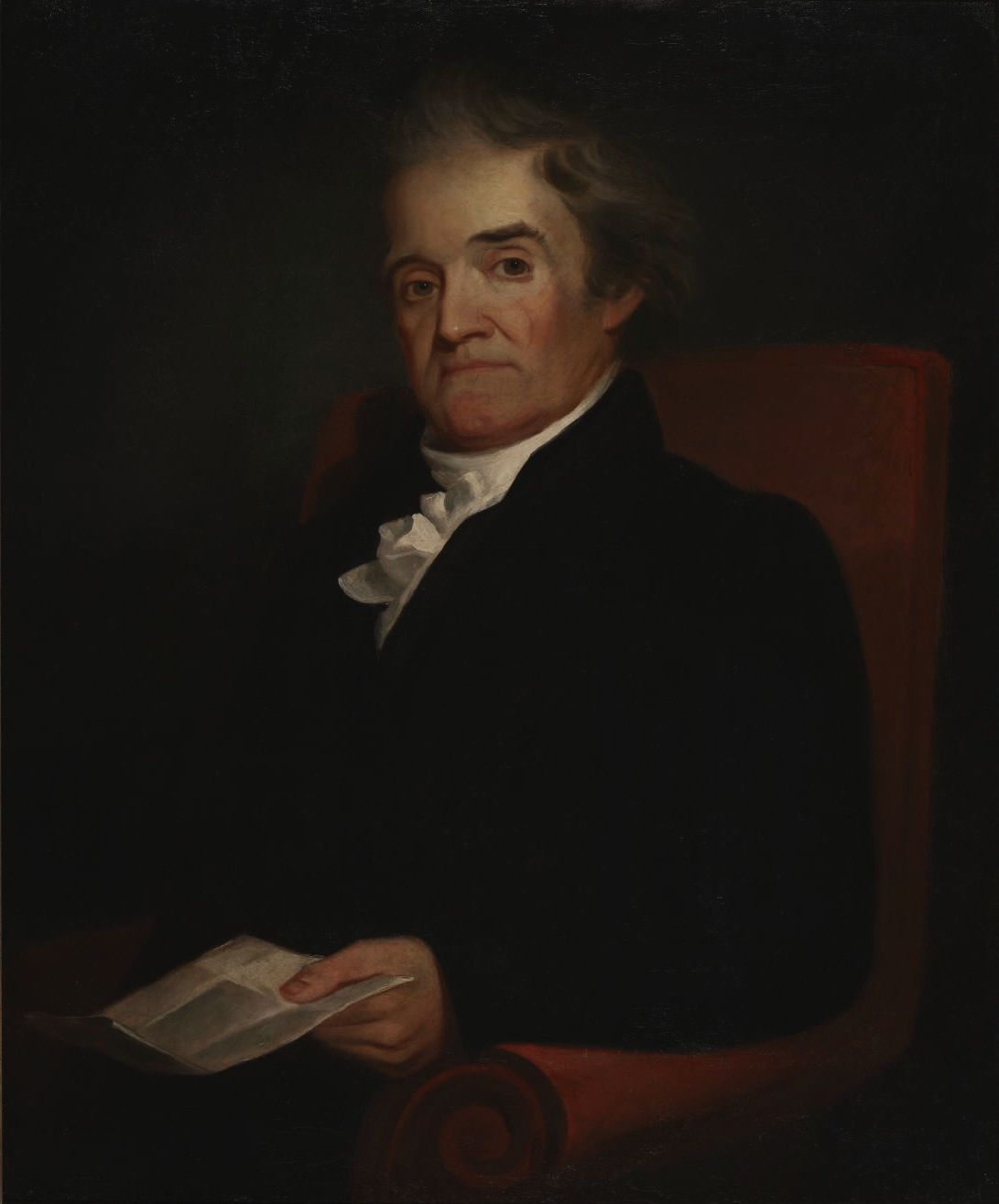
Noah Webster, who spent 27 years compiling the first American Dictionary, published on April 14, 1828. he learned 26 languages to trace word etymologies. Samuel Finley Breese Morse, Public domain, via Wikimedia Commons
Language as Infrastructure
On this day in 1828 — Noah Webster published the first American dictionary, treating a shared language as a piece of national infrastructure.
3 min read
On April 14, 1828, Noah Webster published "An American Dictionary of the English Language," a two-volume work containing 70,000 entries. It was the culmination of 27 years of research, during which Webster learned 26 languages to trace the etymologies of English words. He was 70 years old. The dictionary didn't just define words. It standardized American English, establishing spellings, pronunciations, and meanings that diverged from British usage. Webster believed language was infrastructure, and he set out to build it.
Before Webster, Americans used Samuel Johnson's "A Dictionary of the English Language," published in 1755. Johnson's dictionary was authoritative, elegant, and British. It spelled "colour" with a u, "centre" with an re, and "plough" with unnecessary letters. Webster hated that. He believed American English should reflect American values: efficiency, simplicity, and independence. He dropped the u from "colour," changed "centre" to "center," and simplified "plough" to "plow." These weren't arbitrary changes. They were design decisions aimed at making the language more phonetic and easier to learn.
Webster's obsession with language started early. He published "A Grammatical Institute of the English Language" in 1783, a three-part series that included a speller, a grammar book, and a reader. The speller, commonly known as the "Blue-Backed Speller," became one of the best-selling books in American history, selling over 100 million copies by the early 20th century. It taught generations of American children how to spell, read, and think in a distinctly American way. Webster's speller was nation-building through literacy.
The dictionary was a harder sell. It was expensive, costing $20 at a time when most books cost a dollar or two. It was massive, requiring two volumes. And it was controversial. Critics accused Webster of inventing words, simplifying spellings unnecessarily, and promoting American exceptionalism at the expense of linguistic tradition. Webster didn't care. He believed a common language was essential for national unity. If Americans spoke the same language with standardized spellings and definitions, they could communicate more efficiently, govern more effectively, and think more clearly.
Webster's dictionary was also a technological achievement. He worked alone, without research assistants, compiling definitions from classical texts, scientific treatises, legal documents, and everyday usage. He cross-referenced words across multiple languages, tracing their origins through Latin, Greek, Hebrew, and beyond. He developed a phonetic key to indicate pronunciation, a system still used in dictionaries today. He treated lexicography as engineering, building a system that could scale and adapt over time.
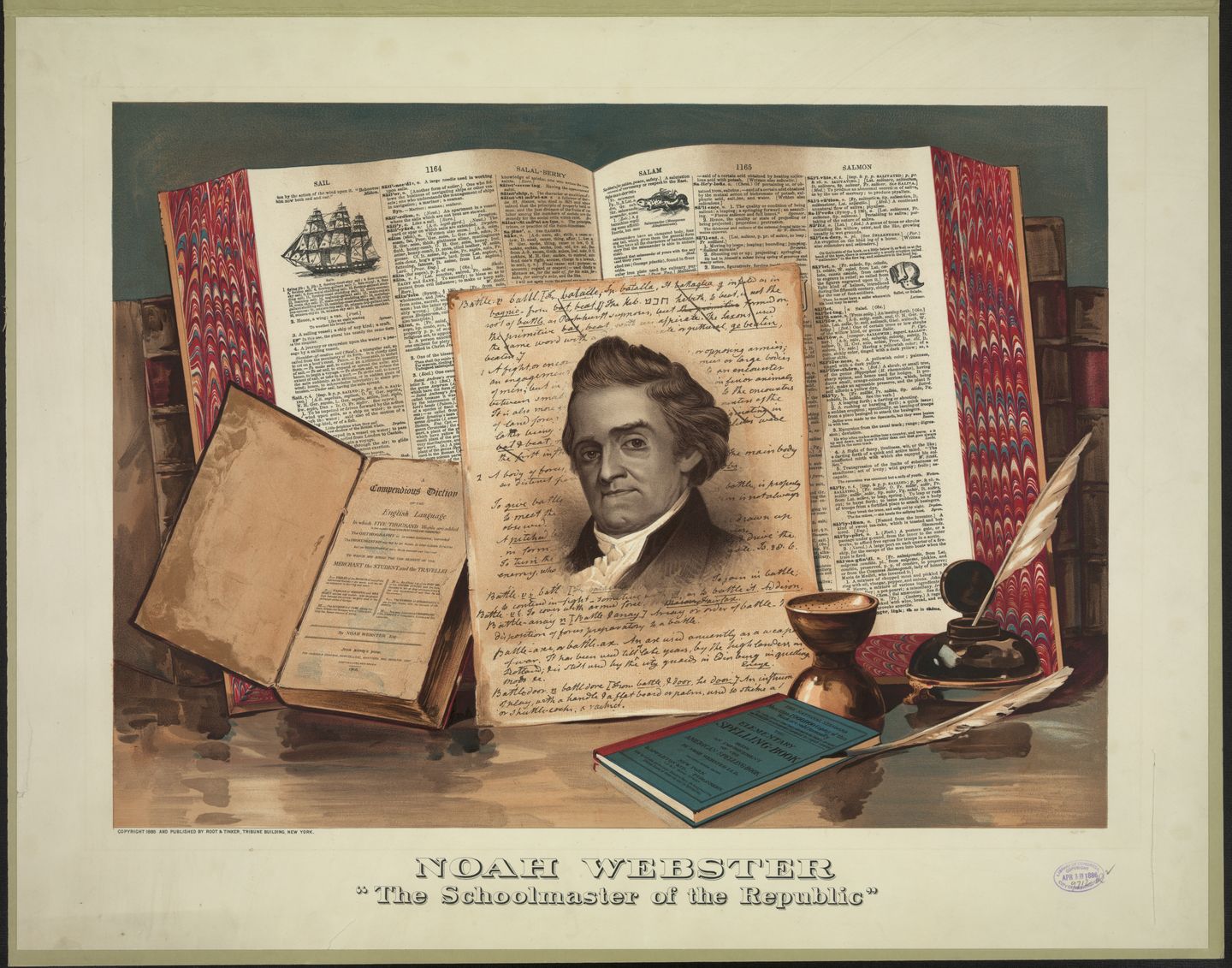
Noah Webster, nicknamed "the schoolmaster of the republic," whose Blue-Backed Speller sold over 100 million copies and taught generations of Americans to read and write in a standardized way. Root & Tinker, Public domain, via Wikimedia Commons
The dictionary didn't become dominant overnight. It competed with other dictionaries, including revised editions of Johnson's work. But over time, Webster's approach won. Schools adopted it. Publishers referenced it. Courts used it to settle legal disputes. By the mid-19th century, "Webster's Dictionary" was the standard reference for American English. The name became so synonymous with dictionaries that "Webster's" is still used generically, even though the original company has changed ownership multiple times.
Webster's influence extends beyond spelling. He included technical terms, scientific vocabulary, and Americanisms that other dictionaries ignored. He defined "congress" and "senate" in ways that reflected American government. He included words like "skunk," "hickory," and "chowder" that were uniquely American. He treated the dictionary as a living document, recording language as it was used rather than prescribing how it should be used. That philosophy, descriptive rather than prescriptive, became the foundation of modern lexicography.
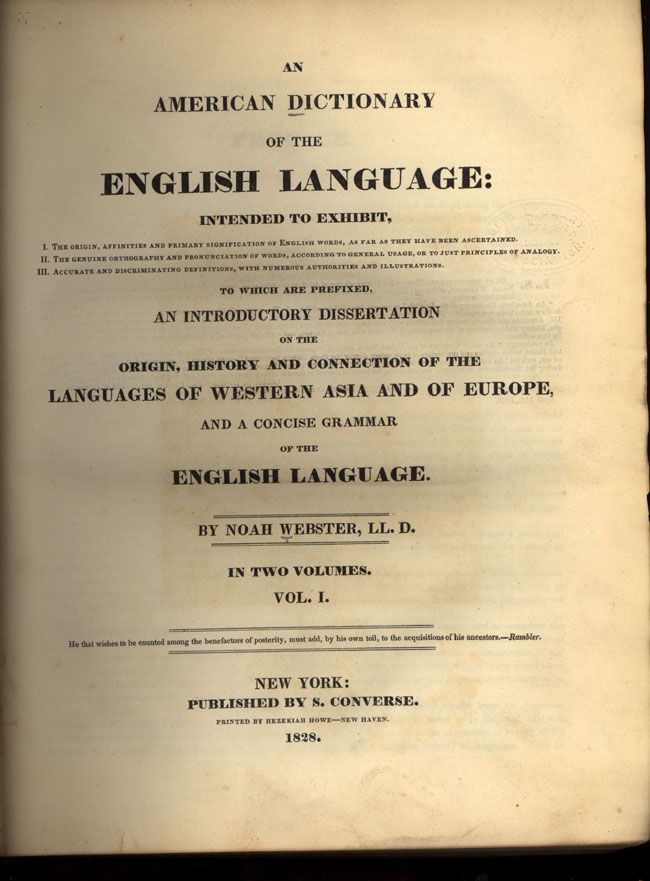
The title page of "an American Dictionary of the English Language," the two-volume work Webster published on April 14, 1828. Noah Webster, Public domain, via Wikimedia Commons
Language is infrastructure in the same way roads and bridges are infrastructure. It enables communication, commerce, and culture. Standardizing it doesn't restrict creativity. It creates a foundation on which creativity can build. Webster understood that. He didn't invent American English. He documented it, organized it, and made it accessible. He turned a collection of regional dialects and borrowed British conventions into a coherent system. On April 14, 1828, he published the blueprint. Americans have been building on it ever since.
studio / on-this-day / Apr 14