studio / on-this-day / Apr 10
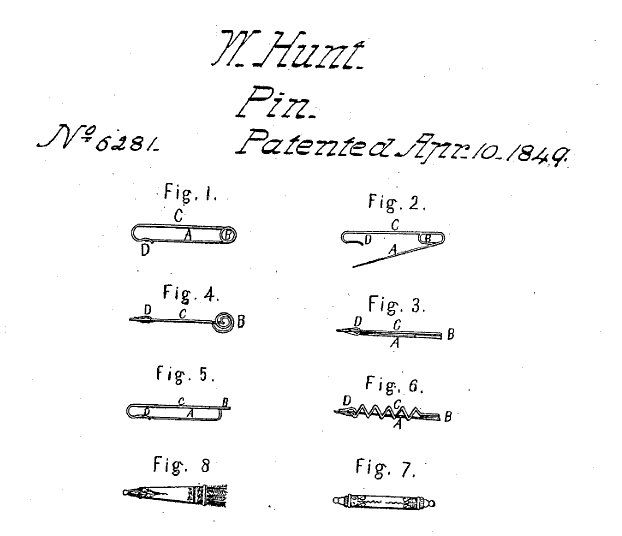
Patent no. 6281 — walter Hunt's original safety pin patent drawing, filed April 10, 1849. he sold the rights for $400 to pay off a $15 debt. U.S. Patent Office - inventor Walter Hunt, Public domain, via Wikimedia Commons
Invention Out of Debt
On this day in 1849 — Walter Hunt patented the safety pin, dreamed up in a few hours to clear a fifteen-dollar debt, then sold off cheap.
2 min read
Walter Hunt owed a man $15. It was 1849, and $15 was significant money. Hunt was an inventor with a reputation for brilliance and poor business sense. He had invented a sewing machine years before Elias Howe, but never patented it. He had designed a repeating rifle before Winchester. He had ideas constantly, but rarely capitalized on them. Now he needed cash fast.
The man he owed told him to invent something, anything, and sign over the rights in exchange for clearing the debt plus $400. Hunt sat down with a piece of brass wire and started twisting. Three hours later, he had the safety pin. A single piece of wire, coiled at one end for a spring, with a clasp at the other to shield the sharp point. Simple, elegant, and immediately useful. He sketched the design, filed for a patent on April 10, 1849, and sold the rights. He got his $400. The man who bought the patent made millions.
Hunt's safety pin wasn't the first pin, but it was the first safe pin. Regular straight pins had been used for thousands of years to fasten cloth, but they were dangerous. They could stab you, come loose, or fall out entirely. The Romans had fibulae, decorative brooches that functioned like safety pins, but those were complex and expensive. Hunt's design was cheap to manufacture, reliable, and impossible to stab yourself with accidentally. It solved a problem that had existed for millennia.
The safety pin became ubiquitous within a decade. Mothers used them to fasten diapers. Tailors used them to hold fabric during fittings. Soldiers used them to repair uniforms in the field. Punk rockers used them as fashion statements in the 1970s. It became one of those objects so common it's invisible, a tool you don't think about until you need one and don't have it.
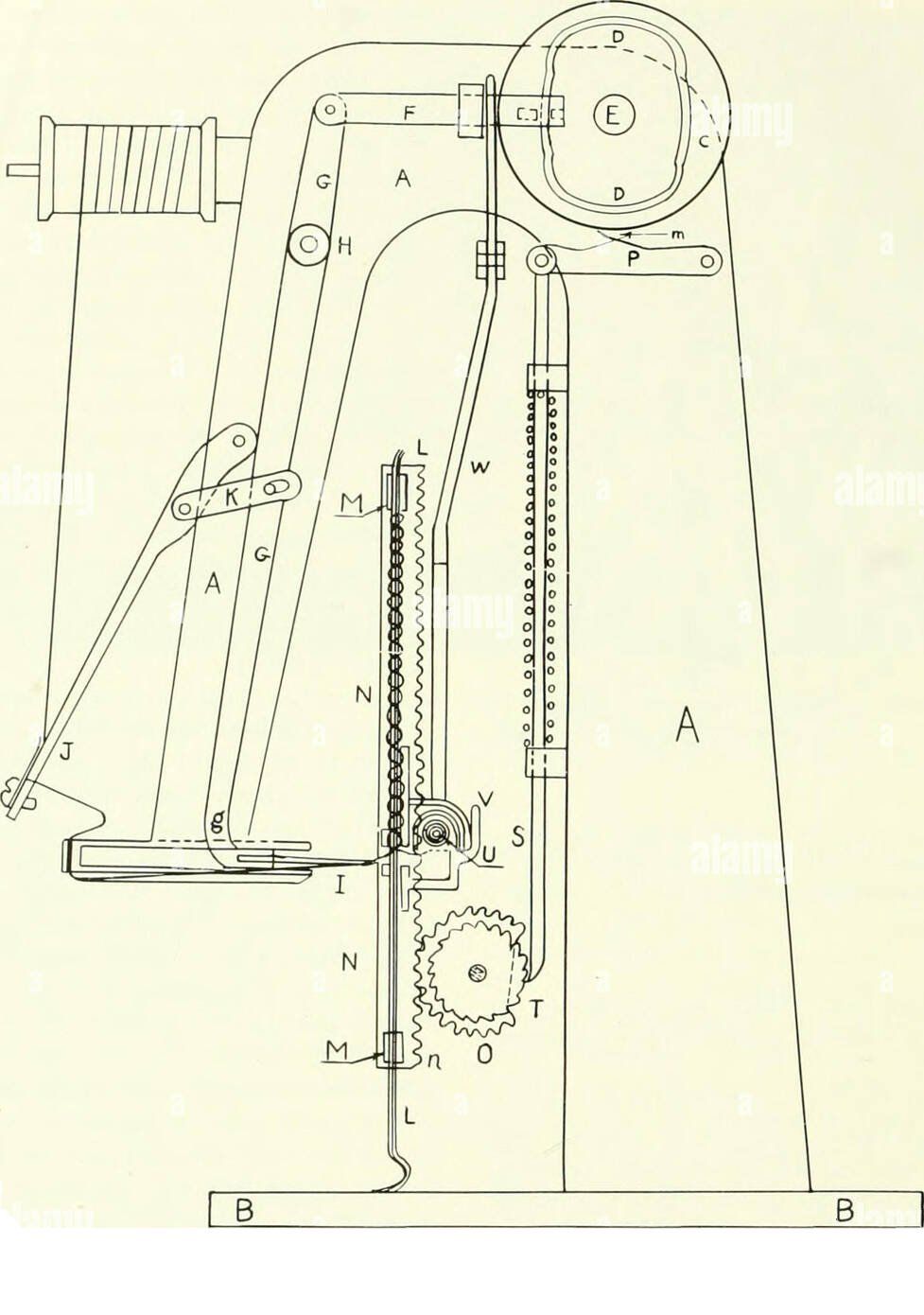
A sketch of Hunt's lockstitch sewing machine, designed in the 1830s — years before Elias Howe. He never patented it, and the idea slipped away like so many others. Public domain, via Wikimedia Commons
Hunt never benefited from his invention. He sold the patent outright, a decision he repeated throughout his life. He invented a paper collar, a street-sweeping machine, an ice plow, a knife sharpener, a nail-making machine, and a velocipede, an early bicycle. Most were commercially successful. None made him rich. He died in 1859, largely forgotten. The safety pin outlasted him by centuries.
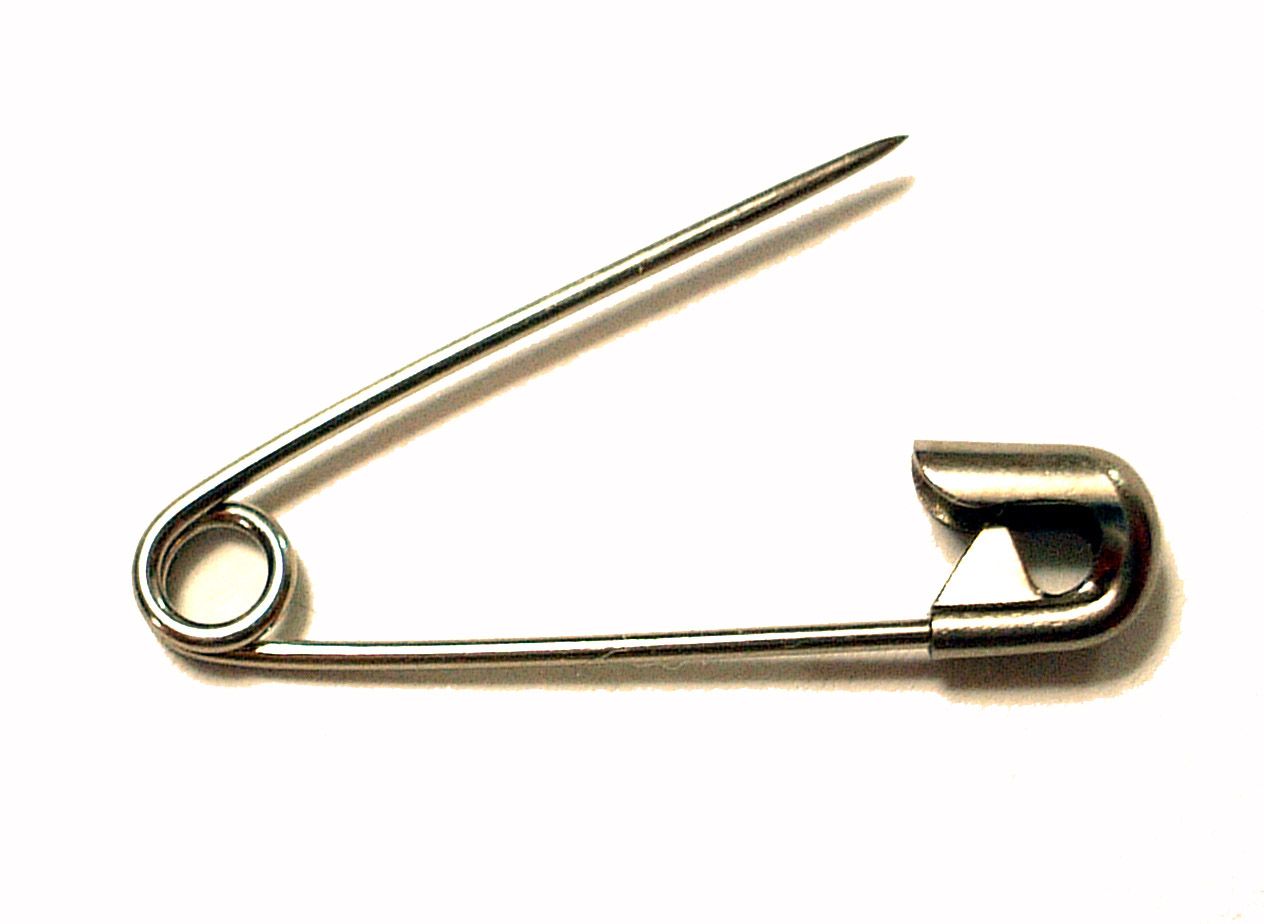
The modern safety pin: a single bent wire with a coil spring at one end and a protective clasp at the other. Hunt's design from 1849 remains essentially unchanged. Haragayato, CC BY-SA 3.0, via Wikimedia Commons
The story of the safety pin is a reminder that invention and wealth are not the same thing. Hunt was prolific, creative, and capable of solving problems in hours that had stumped others for years. But he lacked the ruthlessness or business acumen to profit from his ideas. He invented out of necessity, not ambition. The safety pin exists because he needed $15, and he happened to be the kind of person who could twist a piece of wire into a solution. That kind of brain doesn't turn off, even when it should. Hunt kept inventing until he died, leaving behind a trail of objects the world uses every day, none of which bear his name.
studio / on-this-day / Apr 10