studio / on-this-day / Apr 9
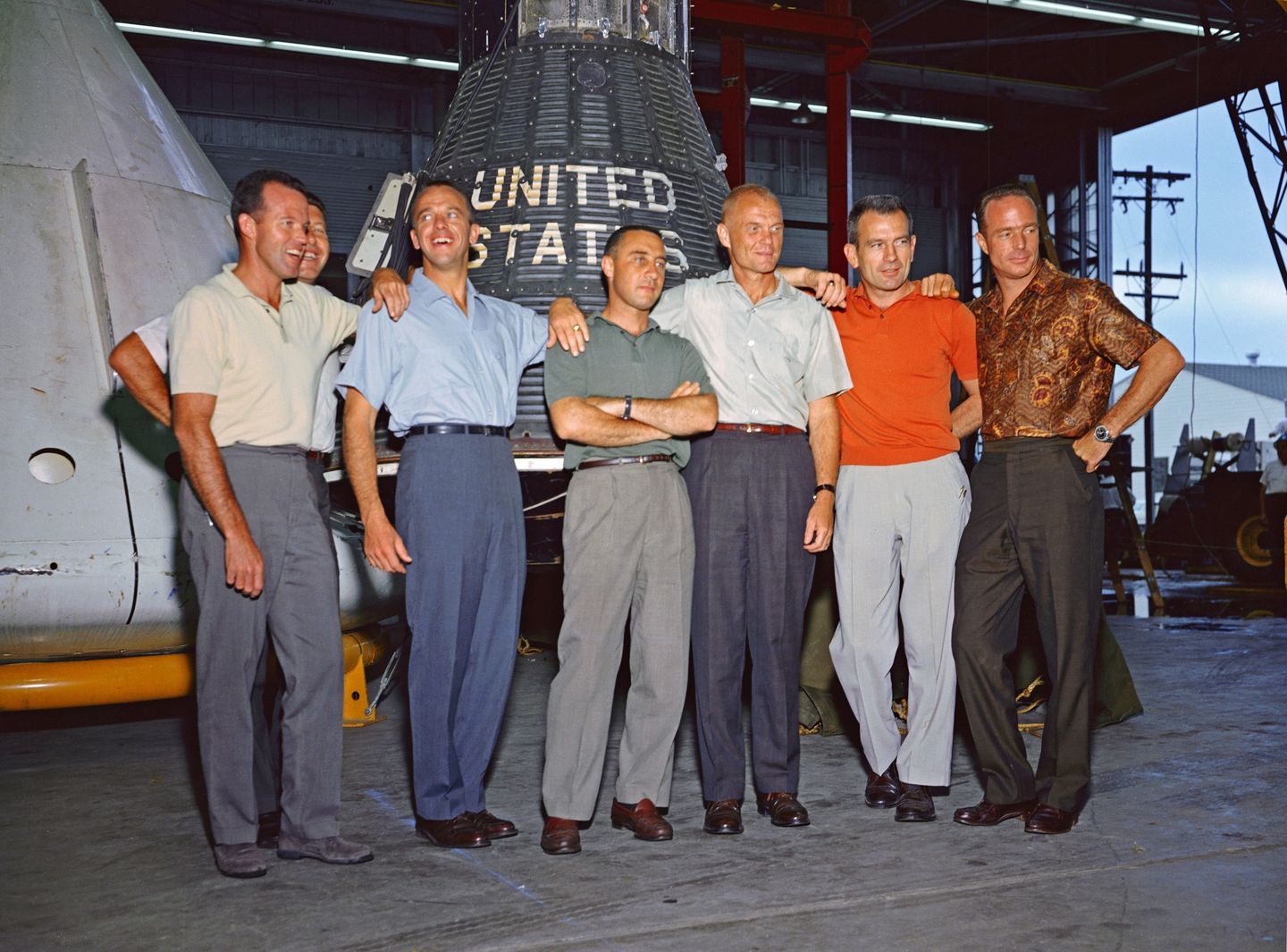
The Mercury Seven, NASA's first astronaut class announced on April 9, 1959. front row: walter Schirra, donald Slayton, John Glenn, scott Carpenter. Back row: Alan Shepard, virgil Grissom, Gordon Cooper. NASA, Public domain, via Wikimedia Commons
Seven Humans Designed to Leave Earth
On this day in 1959 — NASA introduced the Mercury Seven, the first Americans selected, quite literally, to be launched off the planet.
3 min read
On April 9, 1959, NASA introduced seven military test pilots to the world. They were the Mercury Seven, the first astronauts selected to fly into space. Their names: Scott Carpenter, Gordon Cooper, John Glenn, Gus Grissom, Wally Schirra, Alan Shepard, and Deke Slayton. They stood in front of reporters in civilian suits, trying to look ordinary while representing something unprecedented. They were test subjects, public icons, and prototypes all at once. NASA had designed them to leave Earth.
The selection process was brutal. NASA started with 508 military test pilots, all with engineering degrees and at least 1,500 hours of jet time. The requirements were specific: under 40 years old, under 5 feet 11 inches tall to fit in the tiny Mercury capsule, in peak physical condition, and psychologically stable enough to handle isolation, danger, and media scrutiny. They underwent medical exams that bordered on invasive, psychological tests designed to break them, and interviews that probed every aspect of their lives. Out of 508, only seven made it.
What NASA was really designing was a human-machine interface. The Mercury capsule was barely large enough for one person. There were no windows, just a periscope. The astronaut would lie on a contoured couch, surrounded by instruments and switches, sealed inside a metal can and launched on a rocket that could explode at any moment. The capsule was automated. The astronaut's job, initially, was to survive and observe. Engineers called them passengers. The pilots hated that.
The Mercury Seven pushed back. They were test pilots, trained to control aircraft in impossible situations. They demanded manual controls, a window, an escape hatch they could open themselves. NASA resisted, then compromised. The final Mercury design included a small window, a manual control stick, and systems the astronaut could override. The capsule became collaborative rather than fully automated. The astronauts weren't just payload. They were pilots.
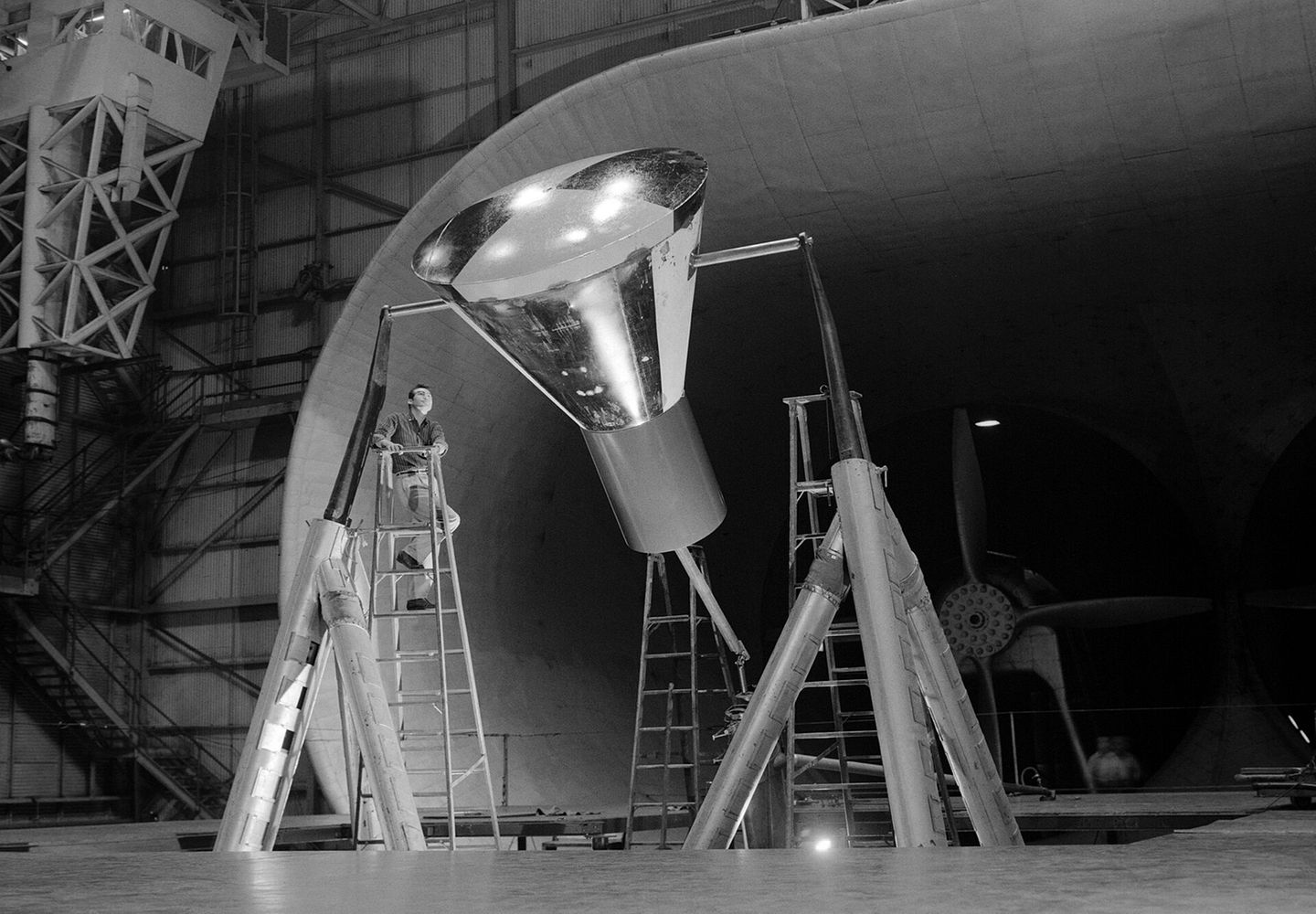
A Mercury Space capsule — barely large enough for one person, with no windows and a contoured couch the astronaut lay on. The Seven pilots fought NASA to add a window, a manual control stick, and an escape hatch they could open themselves. NASA/LARC/Taub, Public domain, via Wikimedia Commons
The public loved them immediately. They were young, confident, and photogenic. Life magazine bought exclusive rights to their personal stories. They became celebrities before they flew a single mission. The media framed them as heroes, cowboys of the space age, representing American courage against Soviet technological advancement. The reality was more complicated. They were skilled professionals doing an extremely dangerous job for a fraction of what they could have earned as commercial pilots. They did it because it was the most interesting problem available.
Two years after their introduction, Alan Shepard became the first American in space, a 15-minute suborbital flight aboard Freedom 7. He experienced five minutes of weightlessness and became a national icon. John Glenn followed in 1962, orbiting Earth three times in Friendship 7. He was the first American to see the planet from orbit, watching the sun rise and set multiple times in a single day. His flight made him a hero. He later became a senator and, at 77, returned to space aboard the Space Shuttle, the oldest person to fly in space.
Not all of the Mercury Seven flew. Deke Slayton was grounded due to a heart irregularity detected during training. He became NASA's Director of Flight Crew Operations, selecting and training every astronaut who flew during the Gemini and Apollo programs. He finally flew in 1975 during the Apollo-Soyuz mission, the first joint American-Soviet space flight. Gus Grissom died in 1967 when a fire broke out during a launch pad test for Apollo 1. He never made it to the moon, but his work on spacecraft design helped those who did.
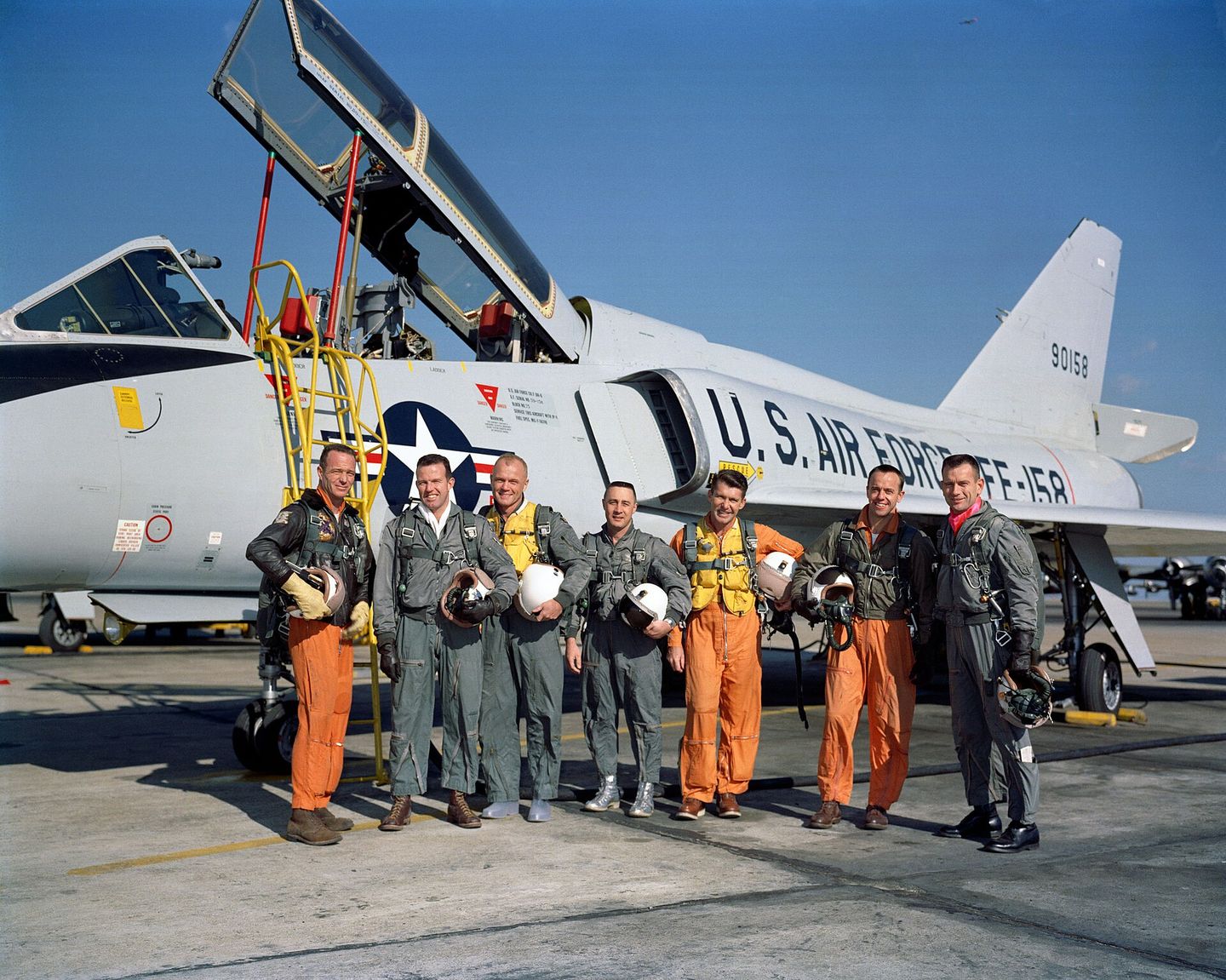
The Mercury Seven astronauts — all military test pilots — posing with a U.S. air force aircraft. They pushed NASA to give them manual controls and pilot authority over the automated Mercury capsules. NASA, Public domain, via Wikimedia Commons
The Mercury Seven were the first humans to be designed as components of a larger system. They were tested, trained, and integrated into a machine built to solve the problem of leaving Earth. But they weren't passive. They shaped the system as much as it shaped them. They demanded control, insisted on windows, fought for the title of pilot instead of passenger. They proved that human spaceflight wasn't just about surviving the journey. It was about designing the journey to include the human. On April 9, 1959, NASA introduced seven men who would redefine what it means to explore. They weren't just going to space. They were designing how humans would go.
studio / on-this-day / Apr 9