studio / on-this-day / Sep 10
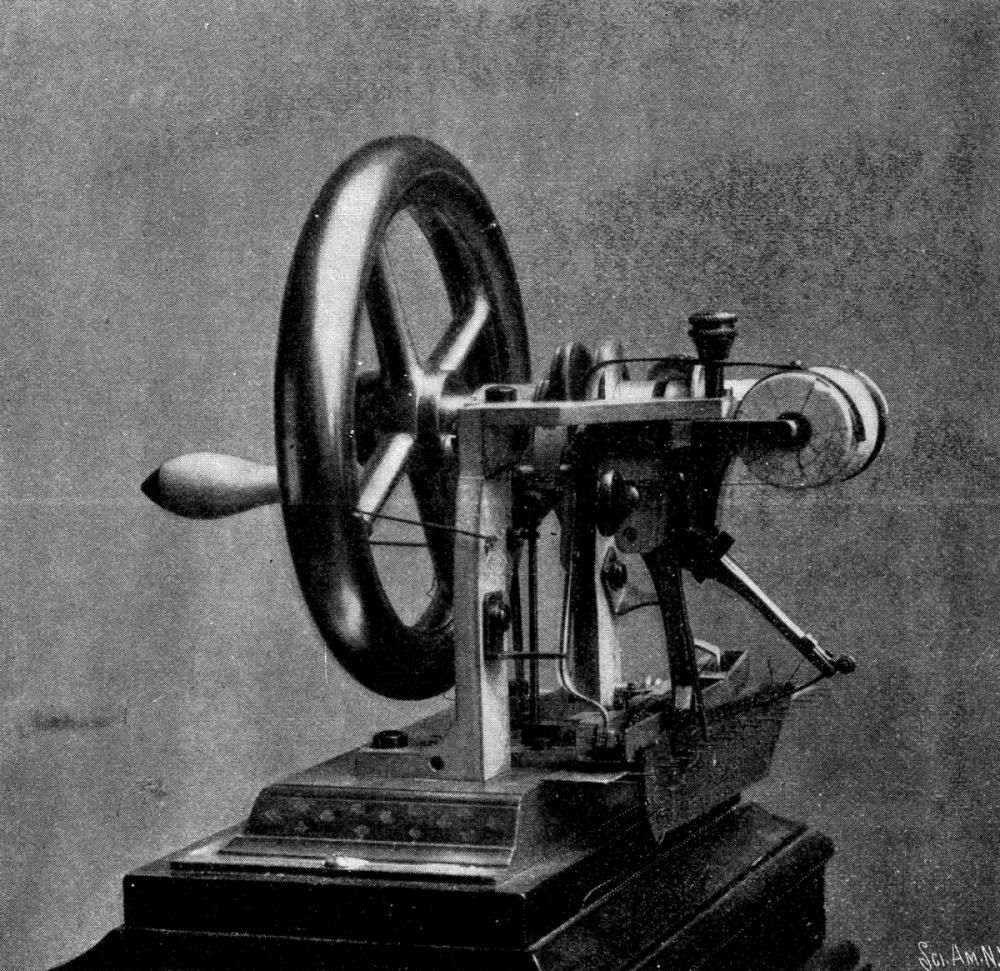
Elias Howe's sewing machine patent drawing, 1846. Public domain, via Wikimedia Commons
The Machine That Stitched the Modern World
On this day in 1846 — Elias Howe patented the sewing machine, and the making of clothing left the hand and entered the factory.
3 min read
On September 10, 1846, Elias Howe Jr. received U.S. Patent No. 4,750 for a sewing machine that used a lockstitch mechanism. The invention did not make him rich immediately, and it was not the first sewing machine ever built. But it was the first one that worked reliably and could be manufactured at scale. Within a few decades, the sewing machine had transformed the textile industry, redefined domestic labor, and made ready-made clothing affordable for the first time in human history.
Sewing by hand is slow. A skilled tailor in the 1840s could make about 50 stitches per minute. Howe's machine could make 250. That fivefold increase in speed was not just a productivity gain. It was a fundamental shift in how clothing was produced. Before the sewing machine, every garment was custom-made. After it, mass production became possible. The machine did not eliminate the need for skilled labor, but it changed what that labor looked like. Operators no longer needed years of apprenticeship to produce high-quality stitching. They needed to learn how to operate a machine.
Howe's design was elegant in its simplicity. It used a needle with the eye at the point, rather than at the base like a hand-sewing needle. The needle passed through the fabric, creating a loop on the underside. A shuttle carrying a second thread passed through that loop, locking the stitch in place. The mechanism was automatic, repeating the same motion hundreds of times per minute. It was the kind of design that seems obvious in retrospect but required someone to see the problem differently. Sewing by hand mimics the motion of a human arm. Sewing by machine does not. It redesigns the entire process from first principles.
Howe struggled to commercialize his invention. He tried to sell it to tailors, who saw it as a threat to their livelihoods. He tried to license it to manufacturers, who ignored him. He traveled to England, where he sold the British rights to a corset maker, then returned to America to find that other inventors had copied his design and were selling their own versions. Howe spent years in court fighting patent infringement cases. He won most of them, and by the 1850s, he was earning royalties on nearly every sewing machine sold in the United States.
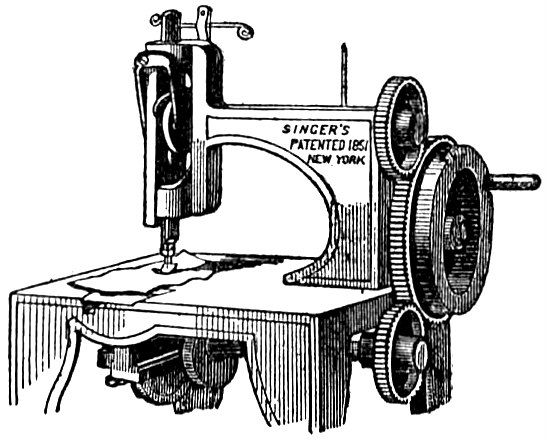
Singer's original sewing machine — the design that turned Howe's invention into a consumer product. Public domain, via Wikimedia Commons
The real boom came during the Civil War. The Union Army needed uniforms at a scale no one had ever attempted before. Hand-sewing could not keep up with demand. Sewing machines could. Factories sprang up across the North, employing thousands of workers operating rows of machines. The sewing machine became essential wartime technology, as critical to the war effort as rifles or railroads. After the war, those factories did not shut down. They shifted to civilian production, churning out shirts, dresses, coats, and trousers at unprecedented volumes.
The sewing machine also changed the home. By the 1870s, domestic models were being marketed to middle-class families as labor-saving devices. Women could make their own clothes faster, repair garments more easily, and take on piecework for extra income. The machine was sold as a tool of empowerment, though it often meant more work, not less. Expectations for what a household should produce increased to match the new capabilities. A woman who could sew ten times faster was expected to sew ten times more.
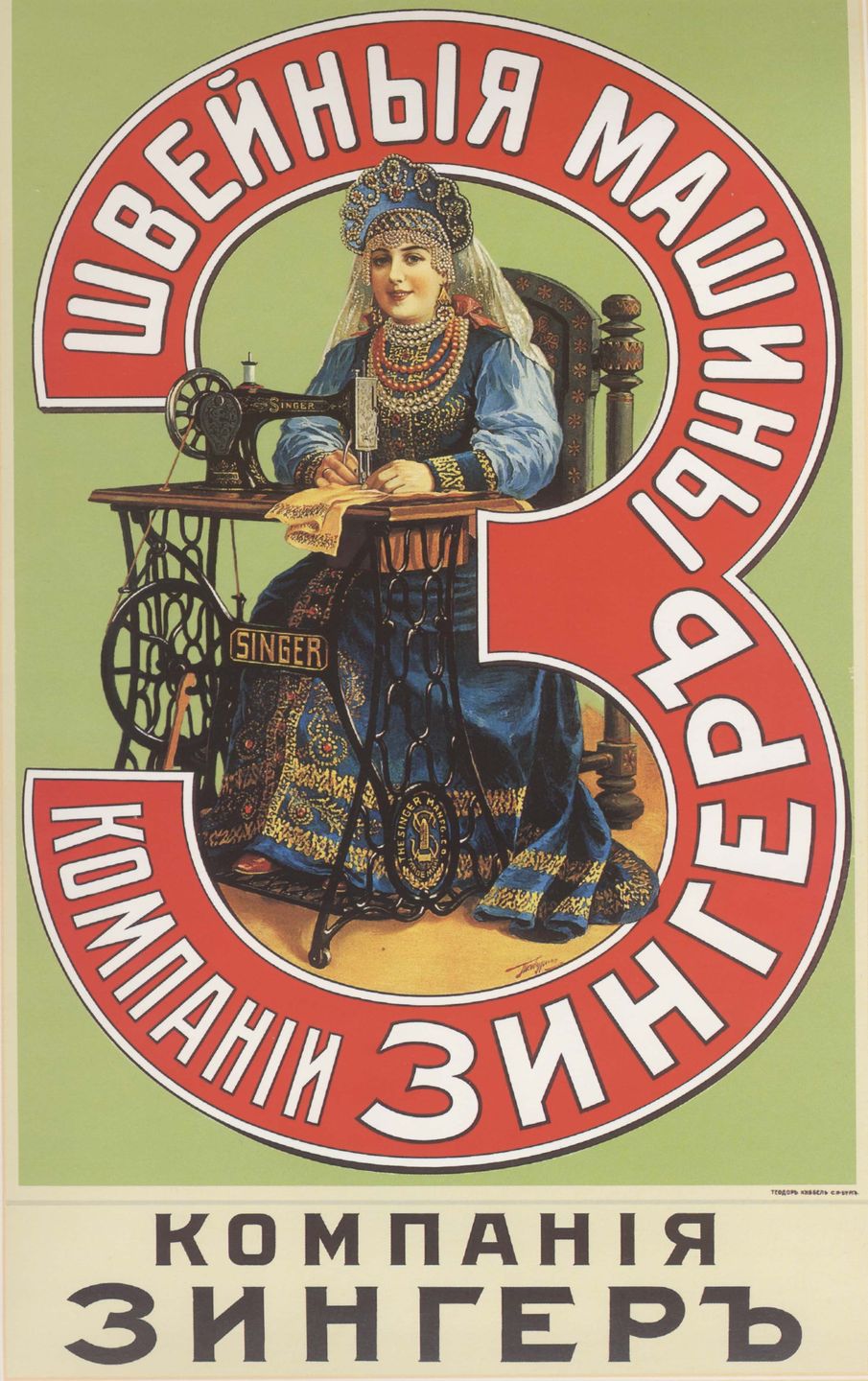
A Singer advertisement aimed at the Russian market, 1900s — the brand sold the machine worldwide on credit and clever marketing. Vladimir Tabourine, Public domain, via Wikimedia Commons
Isaac Singer, one of Howe's competitors, turned the sewing machine into a consumer product through aggressive marketing and an early version of installment payments. Customers could buy a Singer machine for a small down payment and pay the rest over time. It was one of the first examples of consumer credit being used to sell durable goods. Singer also pioneered the concept of the branded product, with distinctive machines, recognizable logos, and a network of sales agents and repair technicians. By 1900, Singer was the largest sewing machine manufacturer in the world.
Howe died in 1867, wealthy from his patent royalties but largely forgotten by the public. The sewing machine became so ubiquitous that people stopped thinking about who invented it. It was just there, a piece of household infrastructure, like a stove or a clock. The machine had done its job so well that it became invisible. That is the fate of successful design: to be taken for granted. The sewing machine stitched together the modern world, one lockstitch at a time, and no one notices anymore.
studio / on-this-day / Sep 10