studio / on-this-day / Apr 1
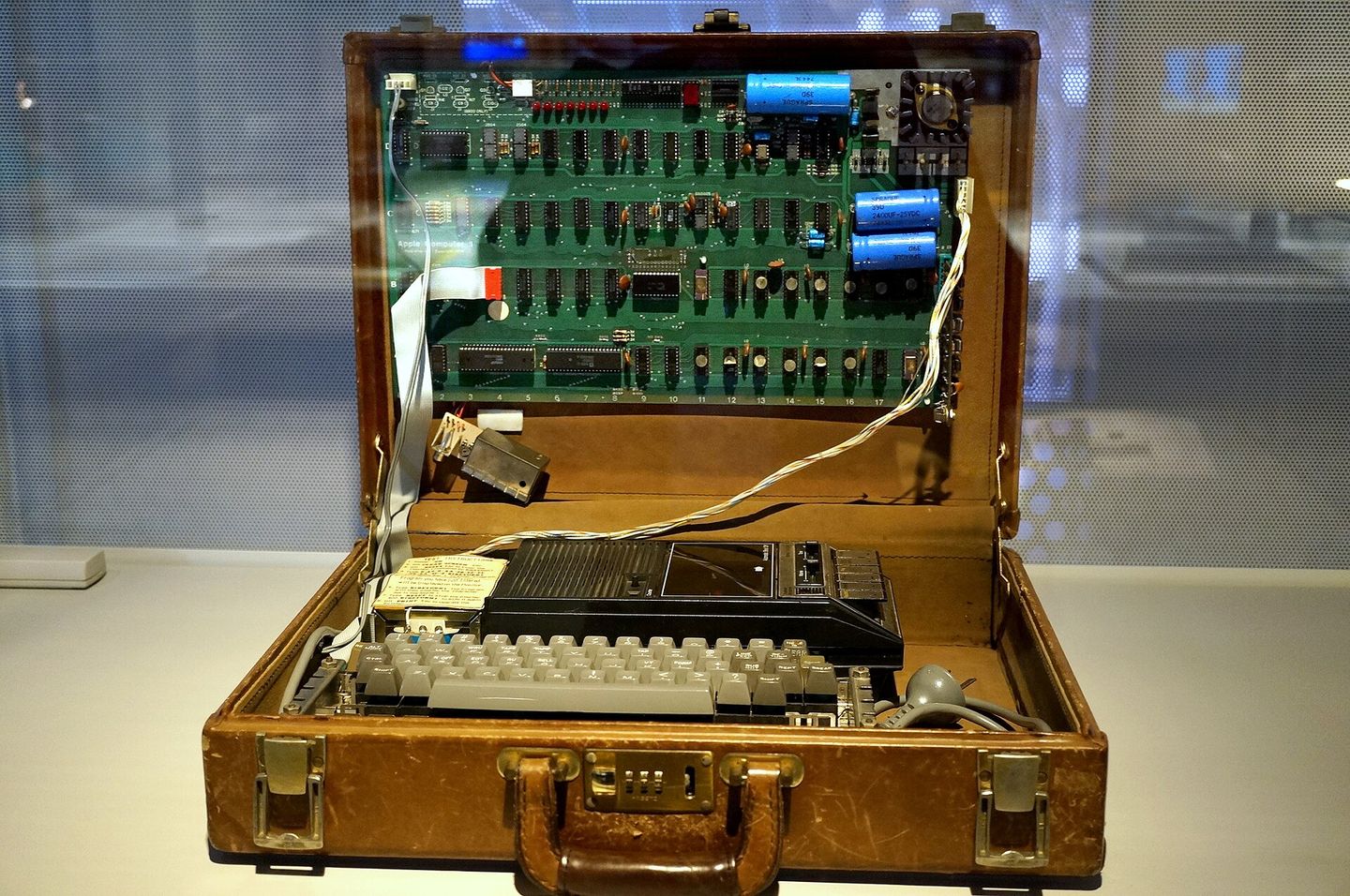
The original 1976 Apple 1 Computer, powerhouse Museum, sydney. Binarysequence, CC BY-SA 4.0, via Wikimedia Commons
A Garage in Los Altos
On this day in 1976 — Steve Wozniak and Steve Jobs started Apple, turning a Los Altos garage into the launchpad for personal computing.
3 min read
On April 1, 1976, two young men in their twenties filed papers to form a company they named Apple Computer Company. Steve Wozniak was 25 and had just built a computer in his spare time. Steve Jobs was 21 and convinced his friend they could sell it. Their third partner, Ronald Wayne, provided administrative oversight and a tiebreaker vote. He would sell his 10% stake two weeks later for $800, a decision that would haunt him for decades.
The machine Wozniak had designed was unlike anything available to hobbyists at the time. Most computer kits in 1976 arrived as bags of parts with circuit diagrams. The Altair 8800, the first commercially successful personal computer, had no keyboard, no screen, just rows of toggle switches and blinking lights. Programming it meant flipping switches in binary. Wozniak thought that was absurd.
His design, later called the Apple I, came fully assembled on a single circuit board. It had a keyboard interface and could connect to a television for output. You could type on it and see letters appear on a screen, a small miracle that seems unremarkable now but represented a philosophical shift then. Computers weren't supposed to be easy. Wozniak made them conversational.
Jobs understood something Wozniak didn't care much about: presentation. The Apple I was sold as a bare board, but Jobs insisted on clean design, professional documentation, and a price point that signaled value rather than hobbyist kit. They priced it at $666.66, not as a provocation but because Jobs liked repeating digits and it gave wholesalers a standard markup. Paul Terrell, owner of The Byte Shop, ordered 50 units, giving Apple its first real customer and enough cash flow to keep going.
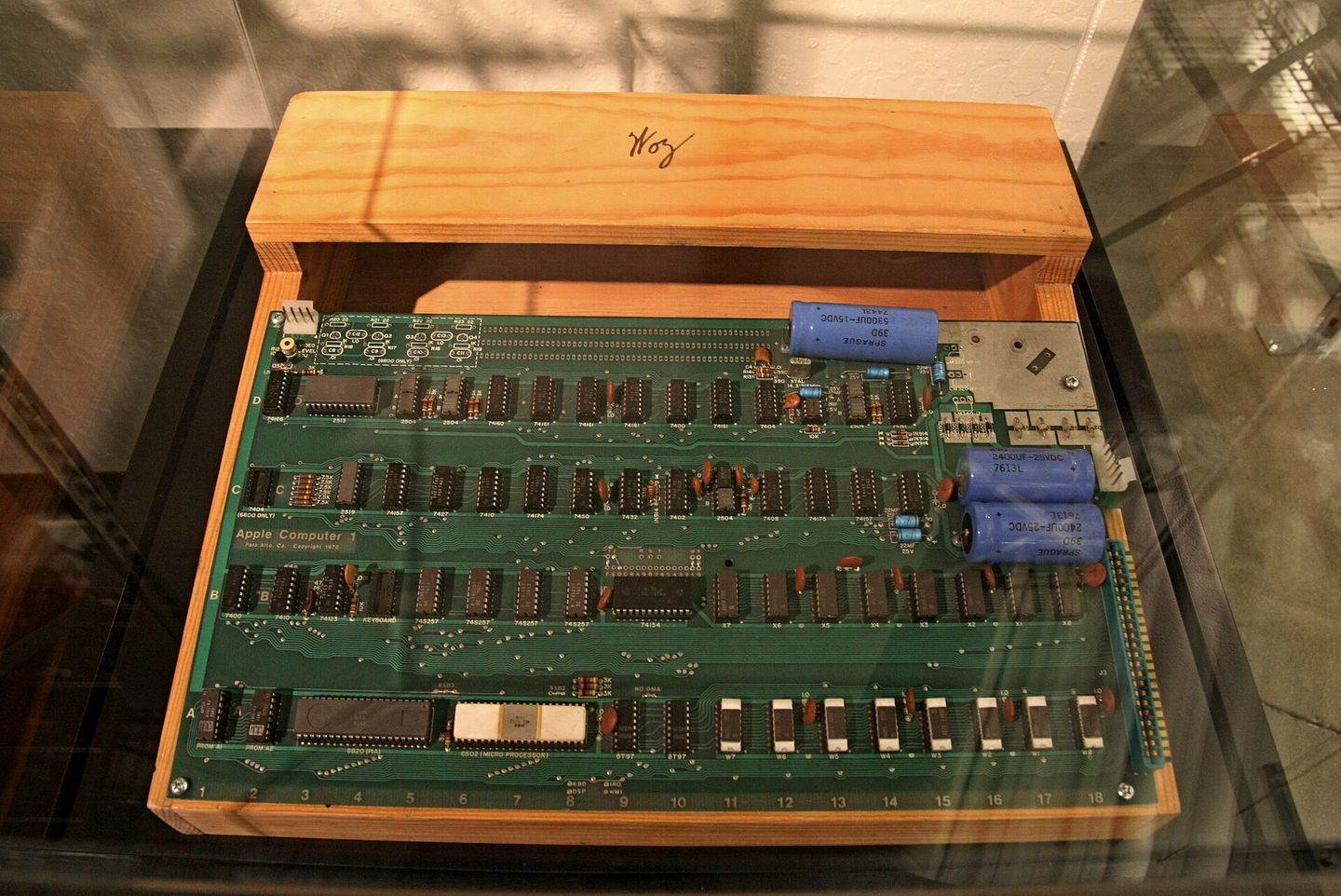
Apple i circuit board and wooden case with Woz sign, Computer History Museum. Kazuhisa OTSUBO, CC BY 2.0, via Wikimedia Commons
The garage at 2066 Crist Drive in Los Altos, where Jobs's family lived, became the mythological birthplace of Apple. In reality, most of the early work happened in Wozniak's apartment and at Hewlett-Packard, where Wozniak worked as an engineer. But myths have power, and the image of two kids building a computer empire in a suburban garage became shorthand for American entrepreneurial ambition. It was true enough.
What made Apple different wasn't the technology alone. Plenty of engineers were building computers in 1976. What made Apple matter was the belief that computers should be for everyone, not just engineers. Wozniak designed for simplicity. Jobs designed for people. Together they created something that felt less like a machine and more like a tool, a bicycle for the mind, as Jobs would later describe it.
The Apple I sold around 200 units before being discontinued in 1977. It was replaced by the Apple II, a fully enclosed machine with color graphics, sound, and expansion slots. The Apple II would become one of the most successful computers of its era, turning Apple from a garage project into a company that would redefine personal computing. But it started here, on April 1, with a handshake, a partnership agreement, and a circuit board that treated the user like a person rather than an engineer.
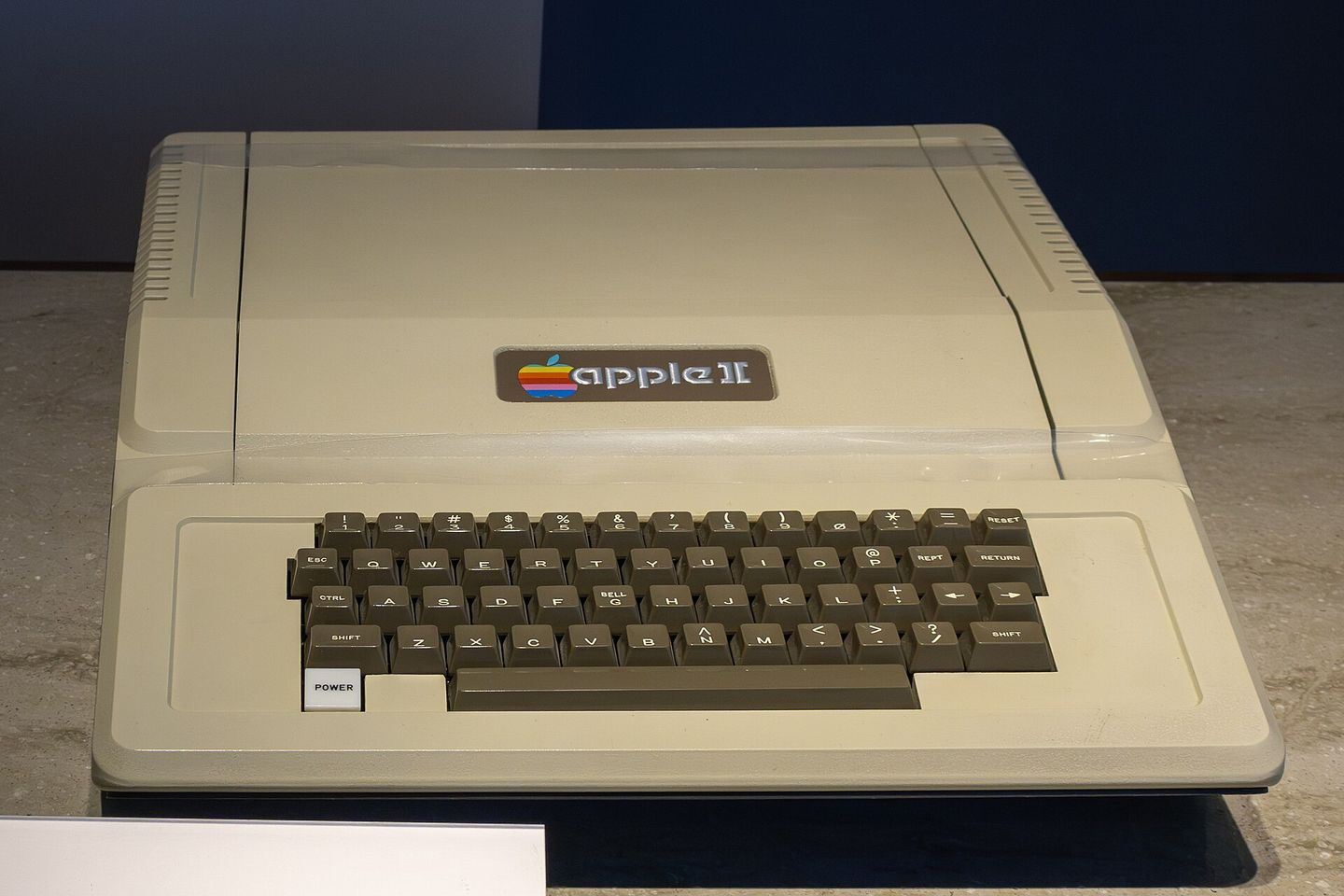
The Apple II, 1977, Computer History Museum — the machine that carried Apple out of the garage. The wub, CC BY-SA 4.0, via Wikimedia Commons
Ronald Wayne later said he left because he didn't want the risk. Jobs and Wozniak were young and had nothing to lose. Wayne was older, had assets, and feared being liable for debts the company might incur. He drew the original Apple logo, wrote the partnership agreement, and walked away. His $800 became a cautionary tale about betting against the future. But the real story isn't about what he lost. It's about what Wozniak and Jobs built when they decided that computing could be personal, accessible, and designed for humans instead of machines. April Fools' Day turned out to be the least foolish date in technology history.
studio / on-this-day / Apr 1