studio / on-this-day / Apr 2
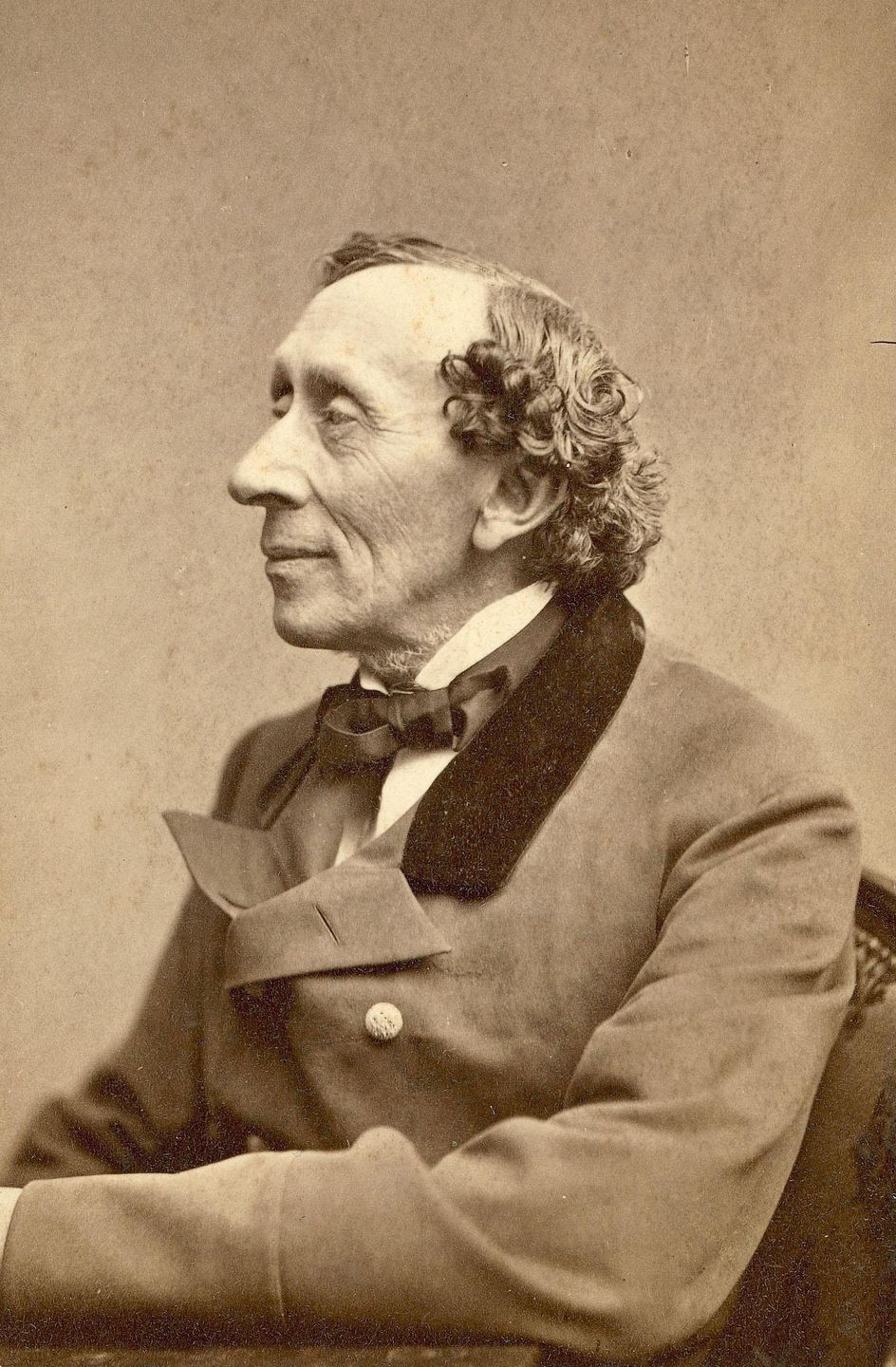
Hans Christian Andersen, portrait by carl bloch, 1869. Thora Hallager, Public domain, via Wikimedia Commons
Small Machines for Feeling
On this day in 1805 — Hans Christian Andersen was born, and would build fairy tales that work like small, precise machines for feeling.
3 min read
Hans Christian Andersen was born on April 2, 1805, in Odense, Denmark, in a house so small he could touch both walls from his bed. His father was a shoemaker who read him The Arabian Nights. His mother washed clothes in the river. He grew up poor, awkward, and convinced he was meant for something larger than the narrow streets of his childhood.
At 14, he left for Copenhagen with almost no money and a head full of ambition. He wanted to be an actor, a singer, a dancer, anything that would let him perform. He was terrible at all of it. He was tall, gangly, and socially uncomfortable. Directors rejected him. Audiences ignored him. But he kept writing, filling notebooks with plays, poems, and stories that nobody wanted to publish.
His breakthrough came not from the stage but from the page. In 1835, he published a small volume called "Fairy Tales Told for Children." It included "The Tinderbox," "Little Claus and Big Claus," "The Princess and the Pea," and "Little Ida's Flowers." Critics dismissed them as trivial. Children loved them. Andersen kept writing.
What made his stories different was their honesty. Fairy tales before Andersen followed formulas: the hero wins, the villain loses, virtue is rewarded. Andersen wrote about loneliness, rejection, and the cruelty of beauty. "The Ugly Duckling" was a self-portrait. "The Little Mermaid" traded her voice for legs and lost everything. "The Little Match Girl" froze to death on New Year's Eve while people celebrated indoors. His stories didn't comfort children. They prepared them.
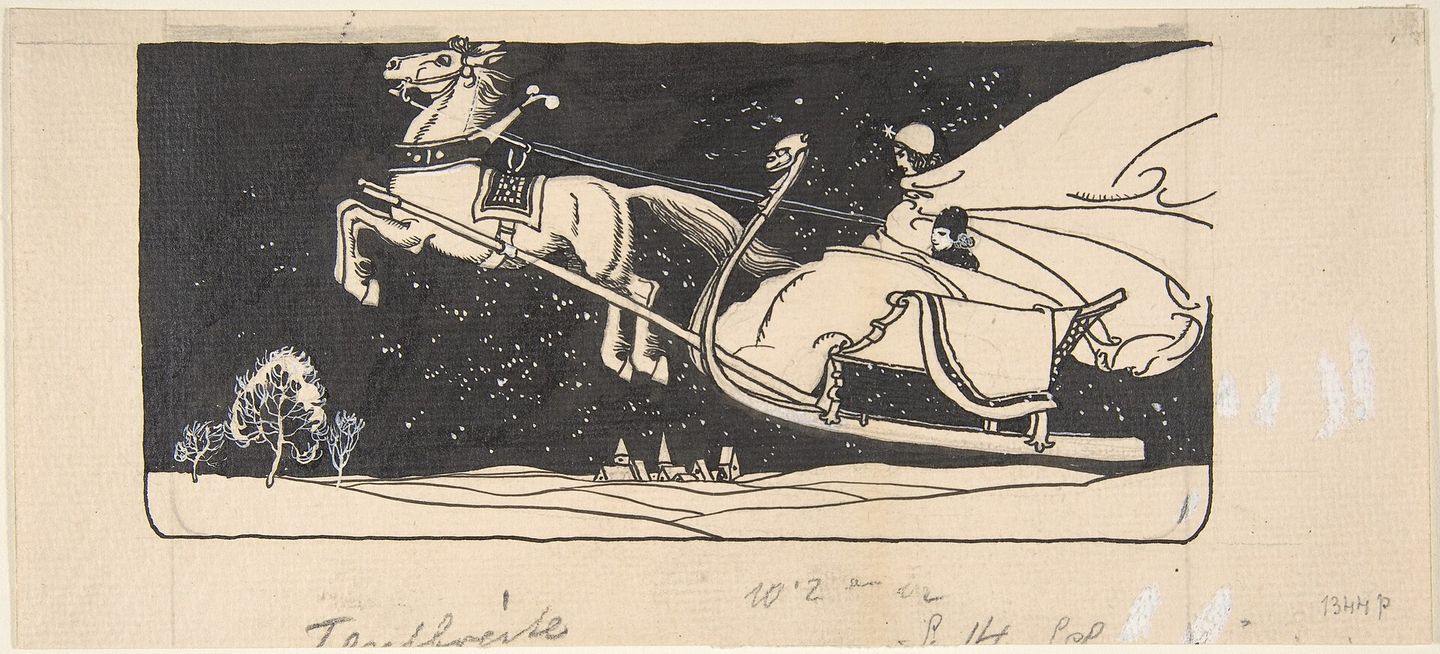
Illustration to "the Snow Queen" by Hans Christian Andersen, Metropolitan Museum of Art. Franz Wacik, CC0, via Wikimedia Commons
Andersen understood that stories are emotional architecture. Each tale was built to produce a specific feeling: wonder, sorrow, recognition. He used simple language but complex structures. "The Snow Queen" unfolds across seven interconnected stories. "The Red Shoes" escalates like a horror film. "The Emperor's New Clothes" is a satire disguised as a children's story, a critique of authority that still reads like a manual for skepticism.
He wrote 156 fairy tales over nearly 40 years. Some were based on Danish folklore. Many were original. All carried his fingerprints: melancholy, wit, and a deep suspicion of happy endings. He believed that beauty often comes with a cost, that transformation requires sacrifice, and that the world is indifferent to suffering. His stories didn't lie to children. They treated them like small adults capable of handling difficult truths.
Andersen never married, never settled, never stopped feeling like an outsider. He traveled obsessively, filling passports and notebooks. He fell in love repeatedly, usually with people who didn't love him back. He kept a rope in his luggage in case of hotel fires, a small paranoia that followed him everywhere. He died in 1875, famous across Europe but still convinced he was misunderstood.
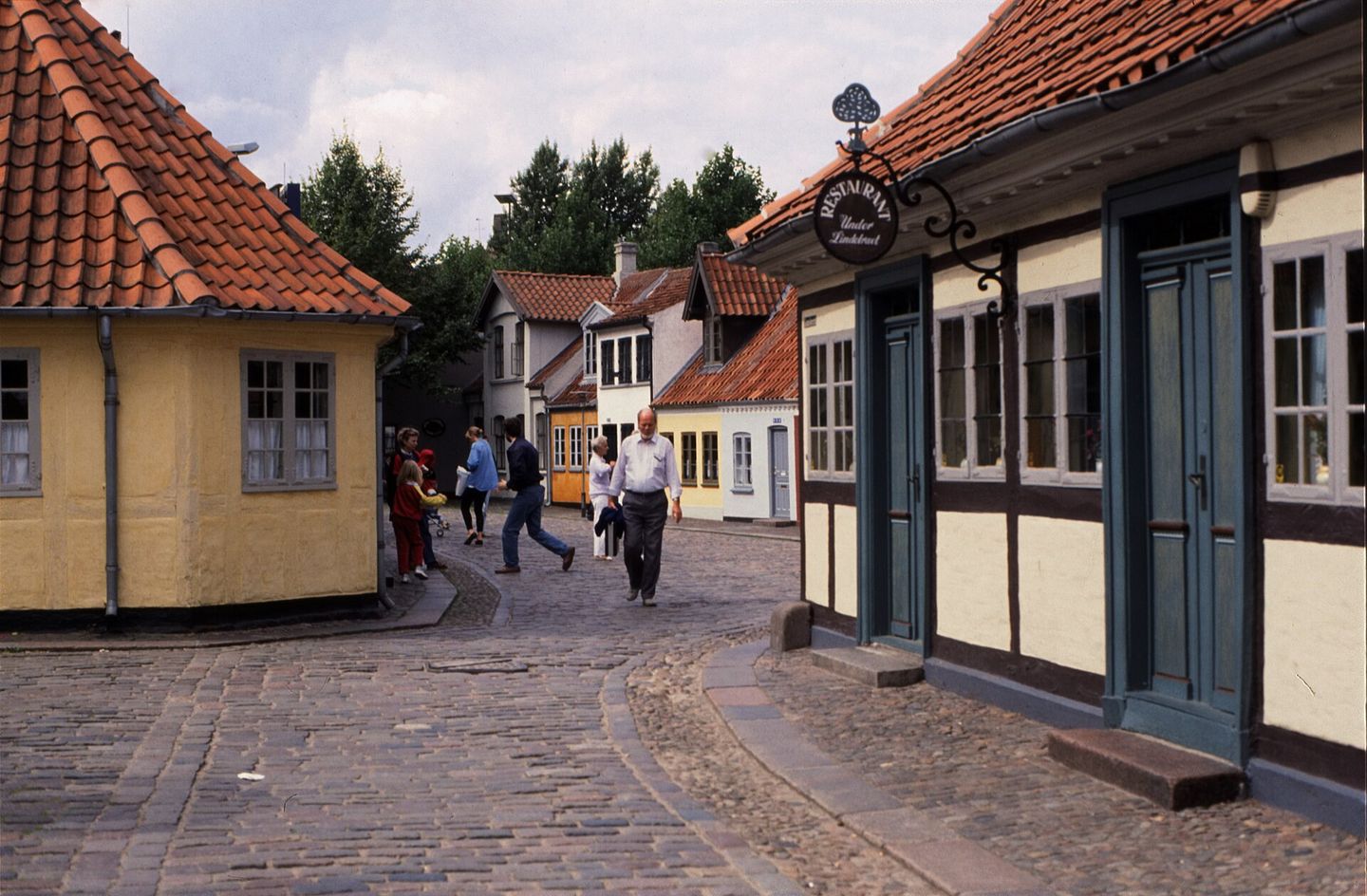
The house in Odense where Andersen was born in 1805, now a Museum. Rüdiger Stehn, CC BY-SA 2.0, via Wikimedia Commons
Today, his fairy tales are everywhere. Adapted into films, operas, ballets, and theme park rides. Stripped of their darkness and repackaged as entertainment. But the originals remain, small machines built to generate feeling. Read them again as an adult and you'll find they're not really for children at all. They're for anyone who has ever felt too tall, too strange, too much. Andersen wrote for the ugly ducklings, the little mermaids, the match girls shivering in the cold. He wrote for people who know that the world doesn't owe you a happy ending, but a well-told story might be enough.
studio / on-this-day / Apr 2