studio / on-this-day / Mar 4
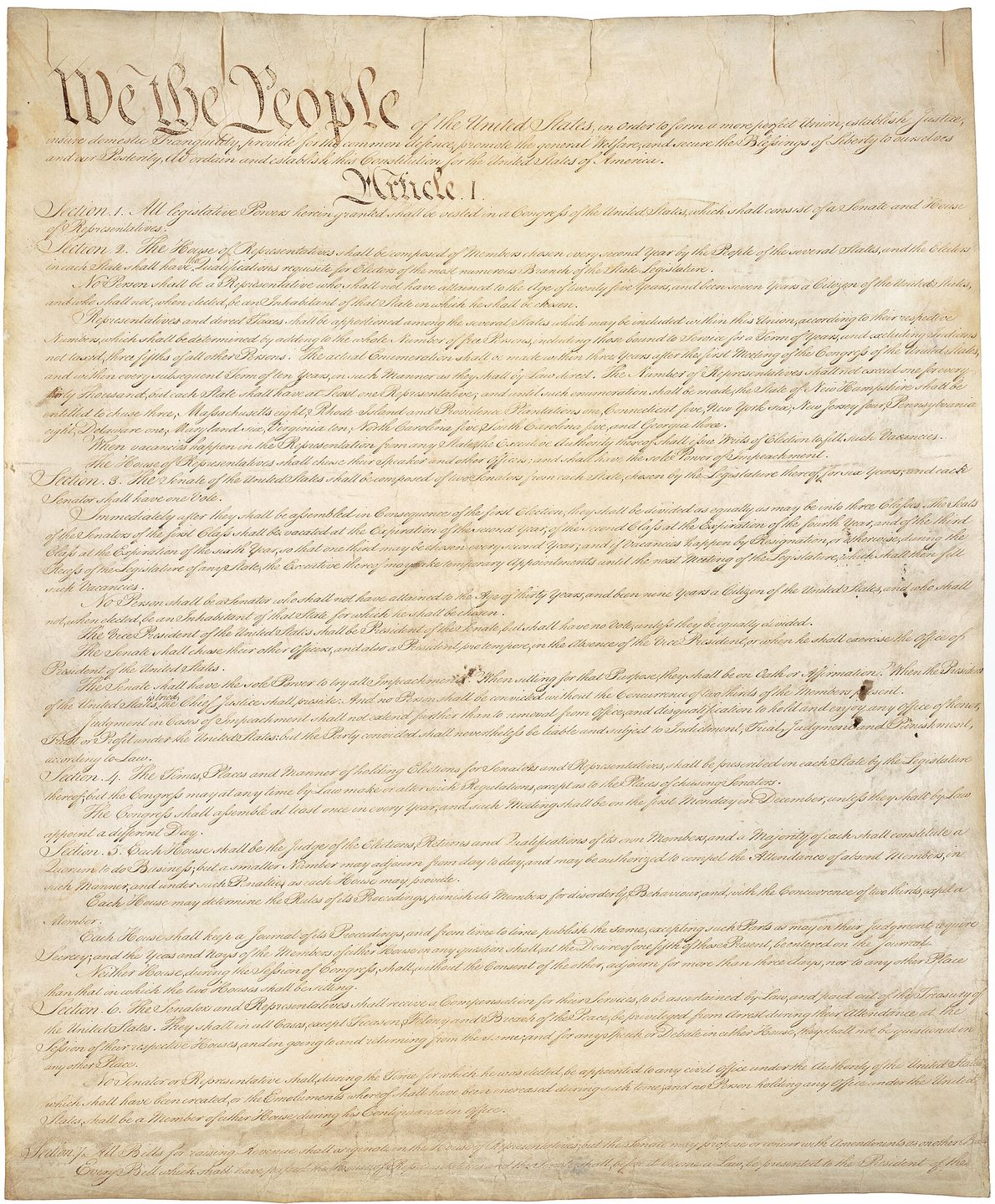
The first page of the United States Constitution. Public domain, via Wikimedia Commons
The Day the System Went Live
On this day in 1789 — the U.S. Constitution took effect and the first Congress met, the moment a plan on paper had to start running as a real machine of government.
4 min read
On March 4, 1789, a new plan for running a country was scheduled to switch on. The Constitution had been written in Philadelphia two years earlier, argued over line by line, and ratified state by state. But a document is only a proposal until the day it is meant to start working. March 4 was that day: the first Congress of the United States was to convene in New York, and the machine described on the parchment would either run or it wouldn't.
It is easy, from here, to treat the Constitution as inevitable, a finished monument. At the time it was a bet. Nothing quite like it had been tried at that scale, a large republic governed not by a person or a bloodline but by a set of written rules, with power deliberately split so that no single part could seize the whole. Plenty of thoughtful people expected it to fail, to collapse into squabbling or drift back toward a king. A system that exists only on paper has never actually been tested. This was the test.
The launch did not go smoothly. Congress was supposed to convene that day and couldn't: too few members had made it through the mud and the bad roads to form a quorum. The House didn't reach one until the start of April, the Senate a few days after that. The first act of the new government was, in effect, to sit around waiting for enough people to show up. The machine sputtered before it caught.
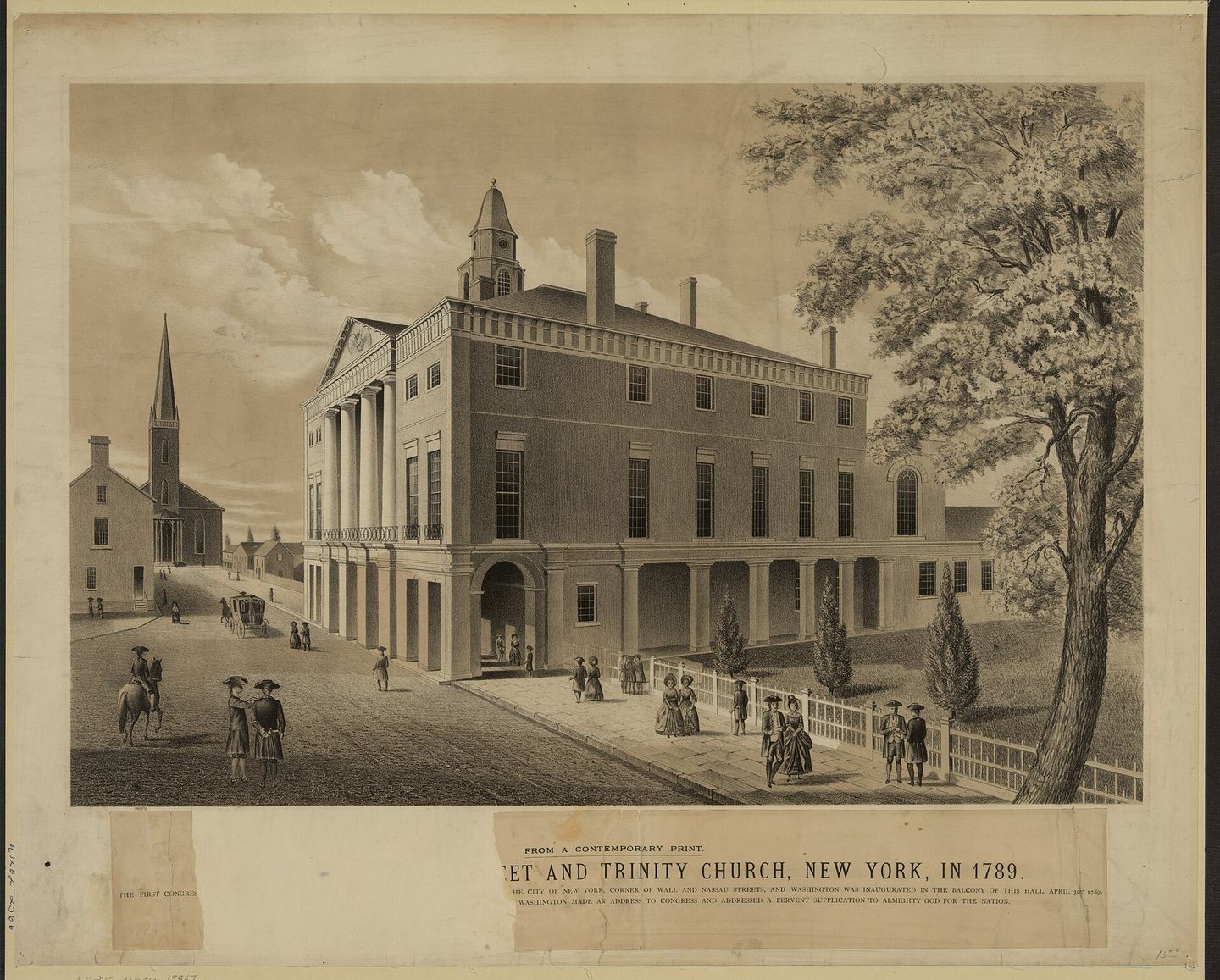
Federal Hall in New York, where the first Congress convened in 1789. public domain, via Wikimedia Commons
But it caught. Over the following months the abstractions on the page turned into working parts. Congress wrote the first laws, created the departments, stood up the federal courts, and almost immediately drafted the first ten amendments, the Bill of Rights. It could do that because the design already included a way to revise itself. The document had shipped with a patch mechanism, which turned out to matter more than any single clause in it.
What held the whole thing together was less any particular rule than a shared agreement to follow the rules at all, especially when you lost. Power changed hands according to the document instead of according to force. That is the quiet, radical part of a constitutional system: it asks the powerful to accept limits written down in advance, and to lose gracefully, on the theory that a predictable process is worth more over time than any single victory.
The design has been amended, stretched, argued over, and at times has badly failed the people living under it. It was written by men who counted other human beings as property, and it took a war and centuries of pressure to force the system anywhere near its own stated ideals. A constitution is not a guarantee. It is a framework, and a framework only works as well as the people willing to be bound by it.
Still, the thing has been running, more or less without interruption, for well over two centuries, which is a long uptime for any system, let alone one improvised by a few dozen people in a hall in New York. Just as Benjamin Franklin treated institutions as designed objects, with interfaces and failure modes, the founders shipped a governing operating system and then, on a muddy March morning, switched it on and waited to see if it would boot. It did, and for all its flaws, it is still the same core running today.
studio / on-this-day / Mar 4