studio / on-this-day / Mar 3
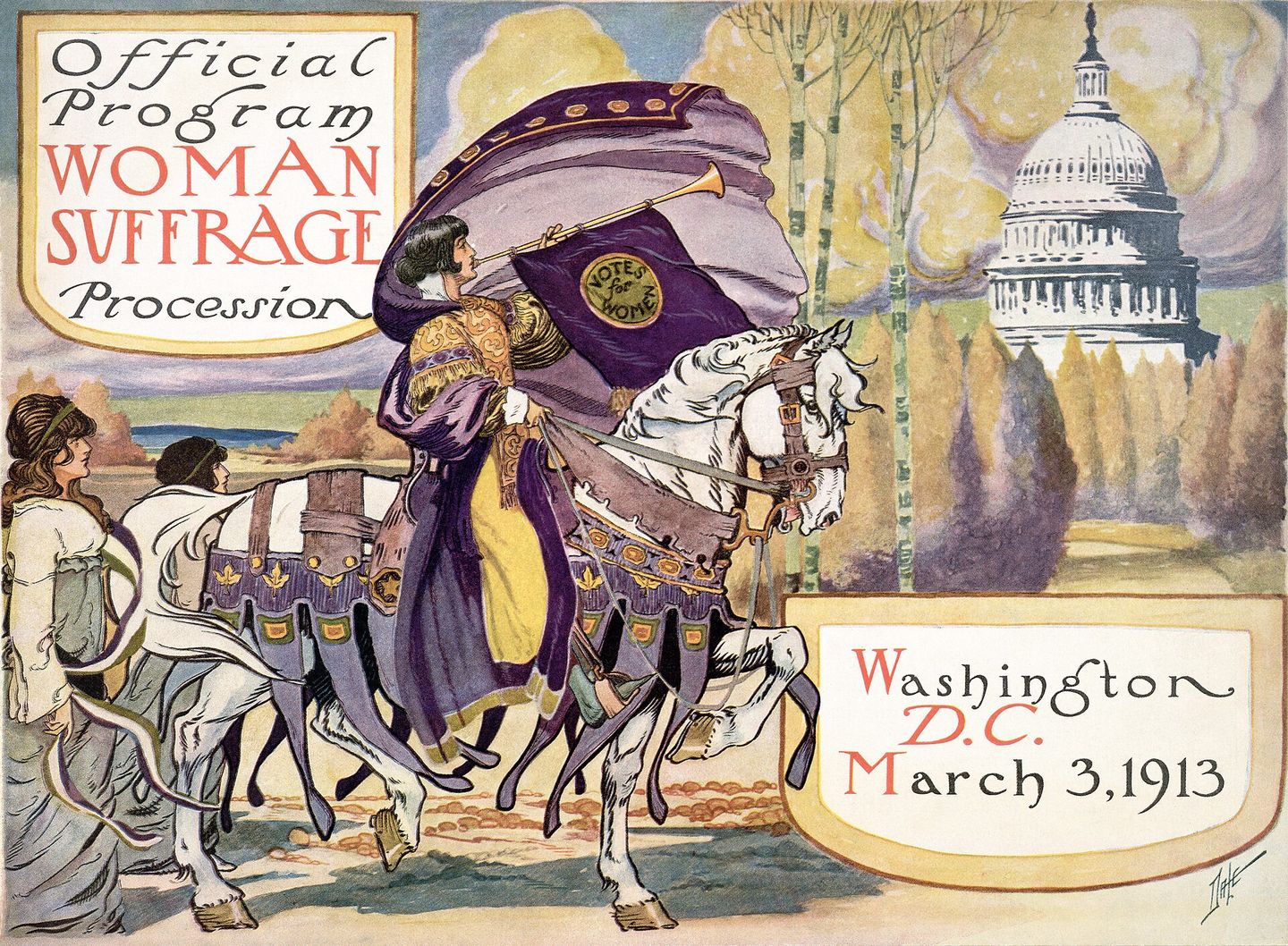
The official program for the Woman Suffrage Procession of March 3, 1913. public domain, via Wikimedia Commons
The March Timed for Maximum Attention
On this day in 1913 — thousands of women marched up Pennsylvania Avenue for the vote, staged the day before the presidential inauguration on purpose, and turned a hostile mob into a national story.
4 min read
On March 3, 1913, several thousand women marched up Pennsylvania Avenue in Washington, D.C., in a grand, deliberately theatrical procession demanding the right to vote. The date was not an accident. It was the day before Woodrow Wilson's presidential inauguration, when the capital was already packed with press and visitors. The organizers had chosen the one moment when the whole country's attention was pointed at Washington, and then stepped into it.
The chief organizer was Alice Paul, a young activist who understood publicity as a kind of engineering. She and her collaborators designed the march as spectacle: floats, banners, mounted heralds, sections organized by profession and by state, a herald on a white horse at the front. It was built to photograph well and to read clearly, to turn an abstract demand into an unforgettable image. This was message design, decades before anyone used the phrase.
What made it a national story, though, was the crowd's reaction. As the women marched, a largely male crowd turned hostile, then violent, spitting, shoving, tripping, and assaulting marchers while the police mostly stood by. The orderly, dignified procession was set against an ugly, jeering mob, and that contrast, captured by reporters and photographers, did the organizers' work for them better than any speech could have.
The outrage was immediate and useful. Newspapers covered the disorder; there were congressional hearings about the failure of the police; the suffragists, who had been struggling for attention, suddenly had the country's eyes. Paul had, in effect, engineered a situation in which her opponents' worst behavior became her movement's best argument. The violence meant to shut the march down amplified it instead.
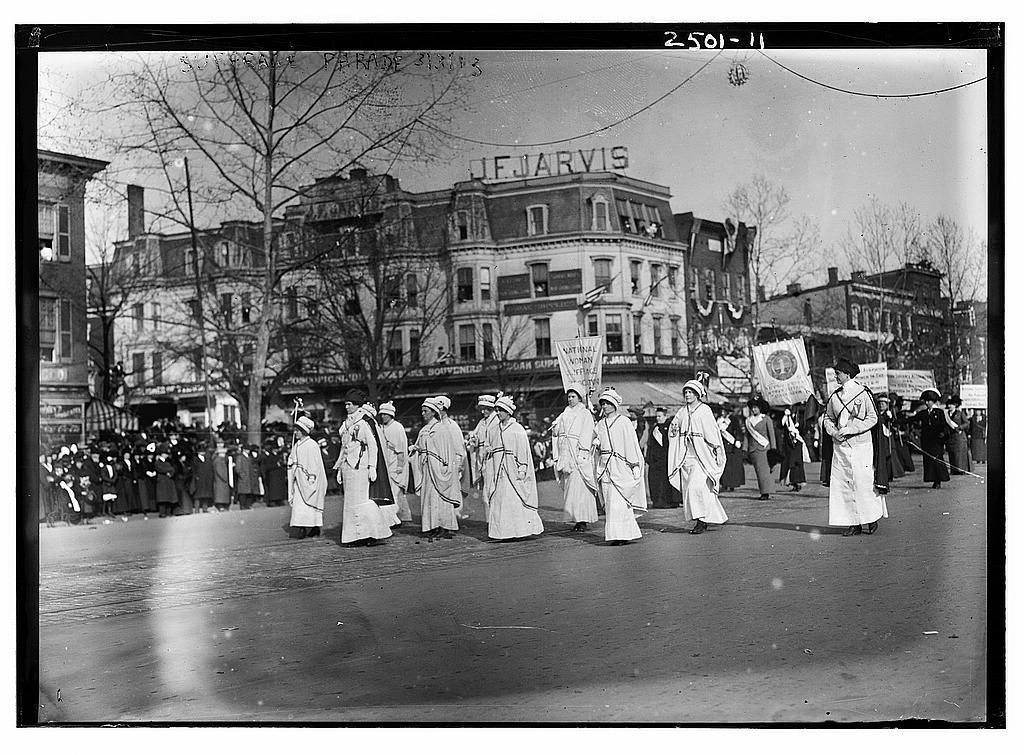
Marchers in the 1913 Woman Suffrage Procession in Washington, D.C. public domain, via Wikimedia Commons
There is a hard-edged strategic intelligence in that which is easy to miss behind the sashes and floats. The procession was not merely an expression of feeling; it was a designed intervention, timed, staged, and located to extract the maximum political value from a fixed amount of effort. The suffragists could not out-vote or out-fund their opponents. So they out-designed them, choosing the moment and the framing so that even the backlash worked in their favor.
It also marked a shift in tactics. Paul represented a younger, more confrontational wing of the movement, willing to be disruptive and to court arrest, and the 1913 procession announced that wing's arrival. The pressure it helped generate fed, over the next seven years, into the campaign that produced the Nineteenth Amendment in 1920.
The women who organized it understood something every builder eventually learns: that the same content lands completely differently depending on when and how it is delivered. They had a just demand and almost no power, and they compensated with impeccable timing and staging. On March 3, 1913, a movement that could not command attention decided to engineer it instead, and it worked.
studio / on-this-day / Mar 3